Showing posts with label Elmore Leonard. Show all posts

Thursday, September 2, 2021

Elmore Leonard's Best Book From Each Decade

 By Jay Stringer


This past week I was the guest over at Grab This Book, adding my choices to the Decades feature. The hook is an author picks the best book from each decade, for five consecutive decades, helping to compile the ultimate library. Go over and take a look, there are a number of great lists and authors

In order to avoid going insane I imposed a couple extra rules on myself. One of them was not to simply pick an Elmore Leonard book from each decade. Because...seriously, I could. Elmore Leonard, along with Lawrence Block, is the main reason I write crime fiction. 

Today I'm writing a companion piece. Which Leonard book would I have chosen from some of the decades I featured? Play along at home. Criticise, debate, correct my choices. 


1970's. Swag. 


Vinatge Leonard. The template of so much that would come to follow. Street level, blue collar, funny-as-hell, a little bit of grit. Crime fiction boiled down to something real and relatable. Two normal guys decide on a life of crime as bank robbers, after writing down a list of rules for success one drunken night. And the rules work. And keep on working. Everything is fine until they start bending the rules...

It's worth also throwing in a criticism. Women weren't particularly well served in Leonards early crime novels. It's something he himself became aware of, after a comment from his wife, Joan. He put in the work to improve, and would later give us a cast of great women. But when reading Swag now -and you should- it's worth bearing that element in mind. 


1980's. LaBrava. 


Freaky Deaky tends to get the attention from the 80's books. And deserves it, with it's comic timing, it's mix of burned out radicals, criminals, and high explosives. And City Primeval shows that Leonard was exploring toxic masculinity long before we called it toxic masculinity. But for my money, LaBrava is the purest shot of 80's Leonard. It catches the sweet spot, the right balance of the quirks, the humour, the realism and the politics. Yes, I said politics. For some reason Leonard doesn't get talked about as a political writer. I find this as strange as the people who criticise his plotting. Leonard is operating on another level. I'd be tempted to use the words 'transcend' and 'genre' if I felt like trolling book twitter. You come to read Leonard, you better come to read subtext. 

LaBrava brings certain themes to the fore. It's about people being good at things. About people changing lanes later in life. About people feeling burned out and wondering if it's too late to do something wild. 

1990's. Rum Punch. 


My gateway drug. Probably the gateway drug for a lot of people, after Quentin Tarantino turned it into Jackie Brown in 1997. I've always loved this book, but for over two decades I thought it was just because it was my first taste, and because it was fun. Re-reading it at 40, the book hit me on a whole other level. This is a book about getting old. There's a great scene in the movie, in which Pam Grier and Robert Forster sit at a table talking about hitting middle-age. With the book as a distant memory, I had started to believe this was a scene created for the film, based around the ages of the two actors. But on revisiting the book I found the same scene there, almost word for word. And that's the heart of the matter. The characters in this book are ageing. They're feeling it. They're worried about getting stuck in a rut, held in place by all their decisions, and wondering: is it too late to change


2000's. Pagan Babies. 

This book made my list over at Grab This Book. Not because I think it's Leonards best book. In fact, I think all the books I've mentioned so far today are better. But rather, because it's the one that stayed with me the longest. The one I had to think about the most. From it's opening page detailing genocide in Rwanda, through it's seemingly by-the-numbers caper plot set in Detroit, through to the come-to-jesus (or not) personal realisations of the closing chapters, this feels like Leonard's summational book. His final attempt at boiling down his themes and passions to their most basic and pure. After this, in the last decade of his career, he became more self indulgent. He began revisiting characters for one last ride -like Jack Foley, Cundo Rey, and Dawn Navarro in Road Dogs- and wrote a couple books that took him right back to his childhood interest in the John Dillinger era. They're all fun and interesting, but they feel like a victory lap, compared to Pagan Babies, which felt like the author saying the thing he'd kept trying to say. 


BONUS CONTENT. 

I filmed a quick video yesterday showing my editing process, the way I read every single chapter out loud to listen for bad notes. Let's see what random facial expression YouTube chooses to present my work to the world. 


Monday, March 11, 2019

The 3 Essential Principles of Storytelling

I’ve been actively pursuing a career in writing for more than a decade and have read countless books on writing. I’ve read Stephen King’s On Writing, Elmore Leonard’s 10 Rules, and was a devotee of Lawrence Block’s column on fiction writing in Writer’s Digest.

plants growing out of a manual typewriter
Photo credit: Shelby Miller on Unsplash
In all that time, I’ve boiled down what I’ve learned into three general principles. The overarching idea is to keep the reader reading.

The reader wants to be entertained. If your story does that (and your reader is hoping it does), then you will reap the rewards.

But all too often, a writer will violate one of these three principles, and the reader gets pulled out of the story. They stop reading.

When that happens, they don’t leave glowing reviews. They don’t recommend it to their friends. And they don’t buy your next book.

So before you submit your book to your publisher, or hit publish on KDP, take time to ask whether your story passes muster on these three points.

Principle #1: Don’t bore the reader.

Life is short. There are too many great books out there for your reader to waste time on a boring story. So you better make damn sure your story isn’t boring.

a bored man sitting in front of a taxi cab
Photo by Julian Howard on Unsplash
Elmore Leonard said he left out the parts that readers skipped over. He didn’t want to bore his readers. Which is why he would sometimes sum up bits of dialogue with a line of narration. Because maybe we already know what the characters would say.

If Raylan Givens tells a cop who just showed up on the scene what just happened, we don’t necessarily need to hear three pages of Raylan recounting what we already witnessed as readers.

So Elmore Leonard might instead just say, Raylan told Officer Jones what just happened, leaving out all the boring parts.

Info dumps also tend to be boring, especially in the middle of a scene. It’s like racing down the street and suddenly killing the engine for no reason. The action abruptly stops. The thrill is gone, baby. The reader tosses the book aside. Next!

Without giving the readers a full accounting of our character’s histories at the beginning of the book, we’re afraid we will pull the readers out of the story. But doing so can put readers in a coma.

The best way to fix this is by identifying the absolutely critical elements in the info dump, intersperse those bits into action and/or dialogue, then toss the rest. Because readers are smarter than you think. They are used to figuring things out from context. And what they don’t figure out right away can introduce a sense of intrigue that will keep them reading.

Also, look at how you describe characters. Does the reader need to know that the receptionist in the office has blond hair? Or is it more revealing that his clothes are rumpled? See what I just did there? You were assuming the receptionist was a woman, huh?

Describe characters in ways that reveal who they are, not just what they look like. Jim Butcher is especially good at this. He can tell you three things about a character, and you know as much about their personality or history as what they look like.

Okay, enough on this principle. You get the point. I don’t want to bore you.

Principle #2: Don’t insult the reader or their intelligence.

a woman with shocked expression staring at a laptop
That whole thing about writing what you know? It's bull hockey! Well, to an extent.

It's okay to write about things you don't have personal experience with, provided you do the proper research. This applies to writing about space exploration, police procedures, and locations you've never visited.

One of my pet peeves are scenes where someone’s house has been broken into and the cop says, “The lock doesn’t appear to be picked. There are no scratches on the lock.”

Granted most people aren’t as familiar with lockpicking as I am (long story for another time). Thing is, unless a burglar is a complete klutz, they won't be scratching up the outside of the lock. The picks go INSIDE the cylinder.

If you don't want to look like a fool, do your research and have an expert in the field beta-read your story to check for glaring errors. Because readers will tell you when you screw up and ding you in reviews. Better to learn about it before it goes out to the world.

woman holding a rainbow pride flag
Photo credit: Sharon McCutcheon on Unsplash
The same goes for writing about marginalized communities of which you are not a member. As an outsider to that community, you are missing a lot of context—lingo, cultural references, and social taboos, just as an example.

So if you are writing about a transgender woman, do your freakin’ research on what it’s like to be transgender in this day and age. There are lots of YouTube channels from trans people who share what they face on a day-to-day basis.

I can’t count the number of poor representations of trans characters I’ve read or seen on the screen. Trans women stumbling around in heels or the trans hooker trope, that kind of crap. It just turns me off.

Once you’ve done your research and have written as authentic a character as you can, have a sensitivity reader take a look at it. Not only will they help you avoid alienating readers, but they will help you create a more nuanced, authentic character.

Principle #3: Don’t confuse your readers (at least not for too long)

Stranger Things logo
It took me three or four episodes before I had any clue what was going on in the Netflix series Stranger Things. A lot of people quit watching after one episode because it was too confusing. Eventually, I caught on and fell madly in love with the show.

I also struggled quite a bit reading the first book in Jim Butcher’s Cinderspire series because the world was so different than what I could relate to. And I’m a big fan of his Dresden Files novels.

If you throw so much at your readers at once that they get completely confused, they will stop reading.

A little confusion is okay and can generate intriguing questions in the reader’s mind, propelling them through the story. But if you push it too far, they will toss the book aside. Readers don’t mind figuring things out from context, but don't make them do advanced calculus along the way.

I struggled with this a little bit with my outlaw biker series. There is a lot of lingo that is foreign and confusing to non-bikers. What’s a bitch seat? What does it mean to ride sweep? What’s a cut? What are twisties? What does it mean to scrape the pegs? I knew what they were because I'm a biker. But most of my readers are not.

So much of this is a balancing act. You don’t want to bore the readers or insult their intelligence by overexplaining things. At the same time, you don’t want them so confused that they throw your book at the wall in frustration. So how do you know where the happy medium is?

Get feedback from critique partners or beta-readers, especially people who may not be as versed as you are on the topic.

Final Thoughts and Parting Shots

Your book is a partnership between you, as the author, and the reader. Your goal is not only to tell a story, but to tell it in a way that keeps the reader reading. Because if they stop reading, they probably won't leave a review. They won't recommend it to their friends. And they won't buy or read your next book. So keep the readers reading. Follow these three principles.


photo of dharma kelleher
As one of the few transgender authors in crime fiction, Dharma Kelleher writes gritty stories for misfits, oddballs, and eccentrics. 

She is the author of the Jinx Ballou bounty hunter series and the Shea Stevens outlaw biker series. You can learn more about Dharma and her work at https://dharmakelleher.com.

Friday, January 29, 2016

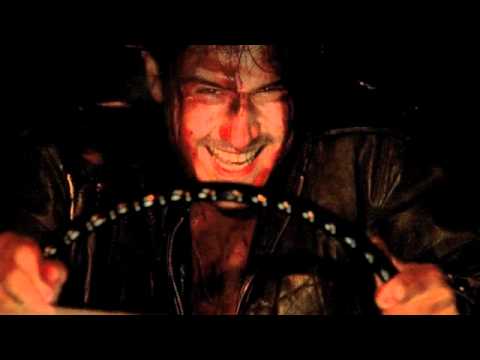
Roadracers

My dirty little secret is that, as far as crime fiction goes, I'm largely uneducated on the classics. I was a young teenager when Tarantino blew up. I talked my dad into renting every Robert Rodriguez movie I could find at the video store when I was at his place. My introduction to crime fiction came on VHS, and movies are my biggest influence when it comes to the genre. I only started on Elmore Leonard because Tarantino made Jackie Brown. The nineties were a pretty solid time for crime movies, and I don't really have any regrets (though it can get embarrassing when crime writers start talking about books I've never read, authors I know I should know).

Last week it came to my attention that Netflix had Roadracers - one of Robert Rodriguez's early efforts - one I had never seen. When I mentioned I was watching From Dusk Till Dawn (yeah, I'm bringing it up again, if I go too long without bringing it up I start itching) and someone suggested it. Well, it's been rec'd, I have easy access, and it's Rodriguez, so here I go.


I've mentioned before the sort of things I think make criminal protagonists fun to root for - the primal part of us longs to be selfish. The fact that most of us grew up being sold a version of the "American Dream" that doesn't seem to exist makes their greed satisfying. What Roadracers gets right is the other element - we like angsty motherfuckers who can't fit into a society that's trying to wring everything different about them out into the gutter. Rodriguez's protagonist, Dude, would rather live in the gutter than let them win. There's some real beauty in how the fifties setting works to highlight issues that still exist today (even if I did spot what appeared to be a Toyota Tercel in the background of one shot).

Dude takes a lot of heat because his girlfriend is Mexican. Rodriguez doesn't shy away from showing exactly how nasty people can be to Latina woman. The other women in the film don't hesitate to throw slurs at her, the men seem to feel entitled to grabbing her, kissing her, and then talking about her like she isn't there - the sad truth is, Latina women are at higher risk for assault like this. More likely to be viciously catcalled, more likely to see violence as a result of their defiance in such situations. If that's true now, I imagine Donna's situation in the film might actually be a little lighter than what a Mexican woman might have faced in an all-white town in the fifties.


Maybe her understanding of what it is like to be an outsider is what draws her to Dude, a dirty greaser in a broken down convertible who always seems to be in trouble. Most of the film centers around his feud with the local cop's son. We discover this cop has it out for him, because he had it out for Dude's absentee father. What I've always loved about Rodriguez's films is the way he quietly inserts big moments and profound thoughts into these violent, over the top movies. Sure, there's a scene where the two groups of teens are drag racing down Main Street and one of the women's hair is on fire - but there's also an expert juxtaposition of the film Invasion of the Body Snatchers and Dude's big dilemma. He wants to get the hell out of Dodge, but the anger in him, the lack of self respect, is driving him to continue this feud that's sure to end badly for all involved.

His instinct to be true to himself hobbles him at every turn. He has an almost Holden Caufield like disdain for people who go with the grain. At one point, he says, "I want to make music that scares the Hell out of people." Even as you watch him blow it for himself again and again, dammit, you want him to succeed. You want him to break free of the suburban bullshit  that's threatening to strangle him, the baggage saddled on him by his deadbeat dad, the doubts he has over his musical talent. More than anything, you want to see him beat the smirk off that asshole cop's son.


When shit gets real and the film turns, when we see the path Dude takes, it's hard not to be happy for him. I won't get into spoilers, because the movie is on Netflix and you really need to see it. The music is phenomenal, and in a true testament to Rodriguez's talent as a director, David Arquette is cooler than cool in the lead role (plus - Selma Hayek. There is never enough of Selma Hayek). What makes the movie special, aside from being an awesome rockabilly ride for folks who are into that, is that it hits on racism, police corruption, small town bullshit, shattered dreams, and so much more all while pumping you up with knife fights and drag races and all the shit that makes Robert Rodriguez movies so much fun to watch.

Maybe sometime I'll regale all of you with my favorite profound moment from the Spy Kids franchise.


Friday, October 23, 2015

An Ode to the TBR

By Renee Asher Pickup

Ah, the TBR pile.

The digital age hasn't made it easier to get through that long list of "To Be Read" but it's made it a hell of a lot easier to grow it. My relationship with the TBR is a mix of excitement and horror - every time I open a new book I think of all the others left behind, waiting, collecting dust.

Here are some of the books that have been on my TBR list for too long.


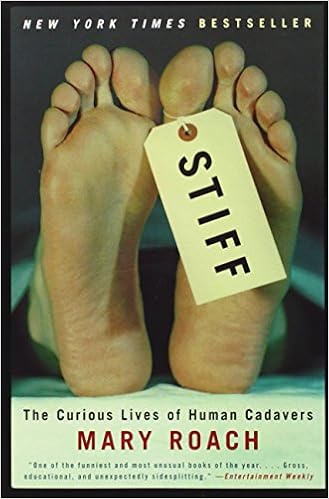
It's been over ten years since I worked at Borders book store in Columbia, Maryland, which is where I first encountered STIFF, shelving books. I'd worked in the schoolhouse where the USMC and Army trained service members to retrieve casualties and done a few morgue visits, and an interest in death, dying, and bodies remained. Mary Roach has gone on to pen several other books I really want to read, and haven't actually gotten around to. 

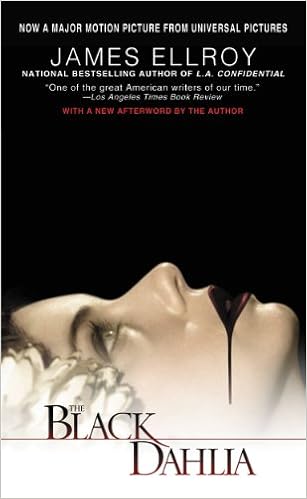
As soon as I added the photo for this book I felt like I had to duck - the readers of Do Some Damage are very likely throwing rotten vegetables at me for skipping this one. If not, wait for this - I've never read ANY Ellroy (if I'm not here next week it's because I've been asked politely to leave). I don't know how something like this happens. I know I should read Ellroy. I actually really want to read Ellroy. My growing interest in true crime says - for chrissakes, woman, read Black Dahlia! Yet, here it sits in the TBR, under a book I borrowed so I really, really need to read it before I get to anything else.


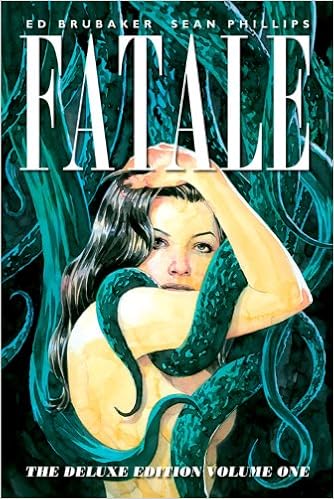
I look at this book every day. It is on a shelf in the living room and I can't walk into that room without looking at this book and yet... Ed Brubaker doing a mix of crime noir and Lovecraftian horror, somehow isn't the first thing on the TBR. I went back and read Deadpool vs. The Marvel Universe but didn't read Fatale. This blog entry is starting to make me feel bad about my life choices.


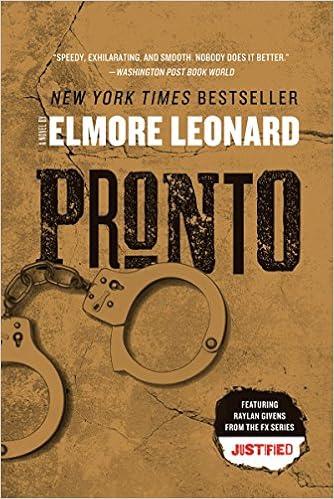
In addition to never reading Ellroy, I also never watched Justified. Not on purpose, really, I just didn't. I'm a big Elmore Leonard fan, though, and according to Goodreads I'm "currently reading" Pronto. Except, I'm not. A few years ago I downloaded the Raylan novels to see what the fuss was about, and apparently had really high hopes for tearing through them without delay. I also seriously intended to watch Justified. The intricacies of Raylan Givens remain unknown to me.


I've been a huge Stephen King fan since I was ten years old, sneaking books off the shelf. I have a huge collection of first editions, promotional items, and other random book-nerd junk I'm really proud of. Somewhere along the way though, King stopped being an author I bought and read overnight and became an author with a spot saved on the TBR. 11/22/63 was the first King novel to go TBR, and each subsequent release has followed. It's like I don't even know who I am anymore.


This is just a small selection from my ever-growing TBR. If I were to combine the actual pile with the digital list, and look at it long enough - I'm sure the length of the resulting list would make me feel my mortality in a very real way. The "To-Be-Read" is like a pile of hopes for the future and failures yet-acknowledged. 

What's been in your TBR for too long?


Friday, August 23, 2013

Elmore Leonard

by Russel D McLean

“I once asked this literary agent what kind of writing paid the best.  He said, “Ransom notes.”” 
– Harry Zimm, Get Shorty

For me, Elmore Leonard – who died on 20/08/13 – was and will remain the most influential crime writer I read. His place in history is assured, and while Chandler and Hammett may have invented modern America crime fiction, Leonard (after a brief time writing westerns) took it to places that I don’t think anyone expected. He really did give murder back to the people who did it right, and more than that, he wrote in their language and he didn’t (often) filter his crime through the lens of the procedural.

In fact – US Marshals Givens and Sisco aside – I’m having trouble remembering too many cop characters who took the lead in Leonard’s work. The ones who stick in the mind are the characters who’d be bad guys in any other novel: Harry Arno, Chili Palmer, Bobby Deo, Ray Barboni. Leonard treated his criminals with a respect that is rare in crime fiction. Even his sociopaths felt real. Bobby Deo, from Riding the Rap, could have been a simple one-joke character – a criminal who likes to cut people’s fingers off with his gardening shears and has fantasies about facing off with Marshall Givens in a High Noon-style climax – but Leonard isn’t afraid to make him charming and occasionally normal. Deo is fascinating, and the banality of his sociopathy is far more chilling than if he’d been a scene chewing, blood spattering psycho.

“That’s right, you got a divorce. You remarried – what about your present husband?”
“He died last year”
“You go through ‘em,” Nicolet said. “What kind of work did he do?”
“He drank,” Jackie said
Jackie Brown

Like Chandler, Leonard had a habit of creating fireworks on every page. Even when the plots were paper thin (and they occasionally were) you read for the verbal sparring of his characters. Leonard wrote dialogue the way Mozart wrote Symphonies. Most of the time you didn’t need a dialogue tag to know who was speaking, and you could feel your eyeballs moving with the pace of a character’s speech.

First time I encountered this was when my Dad gifted me a copy of Mr Majestyk when I was 16 or 17. He wanted me to try other things apart from the Science Fiction I was devouring on a daily basis. I wasn’t so sure, but I took the book and made a promise to read it. It wound up in a pile of books I meant to read someday. Then, a few months later, I saw the John Travolta starring Get Shorty, based on another of Leonard’s books and immediately started devouring my dad’s backlist of Leonard novels. I had a lot to choose from.

“Majestyk didn’t say anything. He gave the guy a little smile. He had enough to think about.” 
– Mr Majestyk


When I was younger, me and mum would buy dad an Elmore Leonard novel every birthday or Christmas (so it seemed) and what I would do every time was decide which one he’d read based on the distinctive two tone colouring of the covers. At that time, Leonard covers were cool and striking

and you could tell which one’s he’d read by which colours were on the cover. But as I discovered fast, there was more to Leonard than just cool covers. Maybe the association helped ease me into Leonard’s world, but I doubt it. You could come cold to Leonard and still admire his ferocious skill.

What Leonard wrote weren’t Agatha Christie novels, or books where the cops always won out and locked up the bad guys in time for tea. These weren’t even “subversive” books about the point of view of sadistic bad guys. They were books about knock-around guys and working criminals. The kind of characters you could meet almost anywhere but who had chosen a life that revolved around breaking – or more usually bending – the law.

But there was something else about Leonard that really affected me: the man could be screamingly funny. For a while, I thought that was his schtick; he was the guy who wrote the funny crime novels. But Leonard wasn’t a one trick pony. Novels like Touch and Killshot showed a more serious side, and while perhaps they weren’t as well received, I still think they were masterfully constructed. For all its flaws, I still think Touch is an underrated book, and the fact that it’s about a guy suffering from Stigmata actually adds a layer of interest rather than detracting from what many would have seen as Leonard’s style.

“I have a character in one of my books tell how she used to write historical romances "full of rape and adverbs.”
– Elmore Leonard

More than anything, Leonard was a storyteller par-excellence. One of the oft quoted blurbs on his books has him “sidling up like a bar-room buddy with a story to tell” and that’s how it always felt. You could always rely on Leonard. He had a voice. A voice that never interfered with the story he was telling, that always masterfully disguised itself within the action of a narrative, within the words of his characters. A Leonard book was always unmistakeably a Leonard book, but it was also its own entity. He allowed his characters to tell their stories. He never judged. Never manipulated. Just let them speak.

His list of 10 writing “rules” remain important to me. Although I believe I may have broken his second (“avoid prologues”) a few times. But I still think that those ten aphorisms are more important than anything one could ever learn on a creative writing course. To this day I still cringe when I find myself using the word “suddenly” but I’m proud to say that I’m fairly certain I never used “all hell broke loose” right behind it. He’s also the reason that, as a writer, I avoid writing in a Scots “patois”, instead suggesting accent through cadence and rhythm. As to adverbs, well, I quite those suckers long ago. Never looked back.

I never met Leonard. He was one of my “to meet” list writers (so far I’ve managed one, and chickened out of meeting another) and now I’ll never get to tick him off that list. By all accounts he was a good guy, well liked by people. But it’s his writing that I and many others will remember him for. Because he could write. Brilliantly and consistently (whoops, there go those adverbs). His novels – even into his 80s – were often more energetic and effortlessly cool than writers of half his age. My proudest professional moment was having a magazine review I wrote of COMFORT TO THE ENEMY quoted on Leonard’s publisher’s website: “An excellent read….Concrete evidence of a master crime writer still at the top of his game.”

And that, for me, was a truism about Leonard the writer. Sure, some books were not quite as a good as others, but he was always entertaining, always worthwhile. Where some writers vary in wuality from book to book or find themselves dropping off, Leonard was always exciting. A lesser Leonard was a still brilliant book by any other standard. I can count on one finger the books that I wasn’t so keen on. Yes, I even loved his Floridian comedy, Maximum Bob.

Maybe all of this is why Leonard’s passing feels so oddly personal to me. I never met the man, but I knew his writing. A new Leonard book was like meeting with an old friend and finding they were just as dynamic and interesting as ever. For me, he felt like a permanent part of the world. Bookstores and publishers and pretenders to the throne came and went, but Leonard stayed. Until now.

So thank you, Mr Leonard. As a writer, I was inspired by your works. But more importantly, as a reader, I was consumed and enthralled by them. You were – and will remain – one of the few writers whose books I read and re-read, whose characters I reference in conversation, whose dialogue always brings a smile to my face .

Elmore Leonard, 1925-2013

5 Elmore Leonard Novels you should read

Riding the Rap – it’s a later Leonard, but for me, Bobby Deo is the ultimate bad guy. And his fate had me gasping halfway between shock and laughter.

Get Shorty – The sequel was inferior, but the original book is a sharp and savage Hollywood satire.

Mr Majestyk – the first book my dad gave me, it’s a short, sharp tale of revenge. Bloody brilliant.

Out of Sight – effortlessly sexy tale of the attraction between a US Marshall and a professional bank robber who’s on the run. Like, Get Shorty, this was made into a successful movie, and its easy to see why when you read the book.

Rum Punch – Filmed as Jackie Brown, its an effortlessly cool entry into the Leonard Canon.

Thursday, June 2, 2011

The Art of Simplicity

Eddie Vedder just came out with a new album. It's called Ukulele Songs. It's a very simple album featuring a few new songs, a scathing Pearl Jam "cover," and some older covered songs. It's incredible. At least I find it incredible. It's incredible in it's simplicity.

Just a guy and a uke and a voice.

As most of you know, I'm a big fan of craft beer too. Different kinds of beer, I'll try pretty much everything. A lot of the craft beer stuff is now going extreme: Bourbon barreled stouts, whiskey infused ales, sours. Artisan stuff. And that's all nice and good to try, but when it comes down to it, I just want a nice simple Ale (and no, no Bud Light or Coors Light)... just a well made Pale Ale or IPA (recommended SixPoint Bengali Tiger).

Give me that and I'm happy.

I feel that way about my books too. The story can be complicated. In fact, the more twisty the better... but the writing... the writing needs to be simple. I don't want to be impressed by the writing. I'm not reading a book to break down the language. I'm not reading a book to be blown away by descriptions.

That has it's place and all, it does, but rarely is it for me. (Sometimes I'll break away and usually I'm impressed and enjoy it...)

But I want to be sucked into the story. Give me good characters. Give me brief descriptions. Show me, don't tell me. And give me a story. I don't want to be distracted by all your awkward similes when I can try to figure out what the character is going to do next.

And sometimes I feel being that simple, being that effortless is an art in itself. An author has to work hard to cut out the hoopdedoole (as Elmore Leonard calls it.). If a character makes me laugh, cry, gasp, or just plain turn the page you got me.

There's a simplicity there. There's an art to it. And sometimes it's hard to come across... but when you do... man. It's a thing to see.

What do you look for when you read?

(Speaking of music: "You've Got to Hide Your Love Away" just came on my iTunes. Come on, we all know the simple stuff was the Beatles best stuff. Give me that song any day over "I am the Walrus".)

Wednesday, October 20, 2010

Elmore Leonard's Djibouti

by
John McFetridge


I'm far too big a fan of Elmore Leonard to write anything close to a review. I've liked all his books, even the ones that have received the most mixed reviews like Mr. Paradise and Up In Honey's Room.

In the case of Mr. Paradise the lukewarm reviews usually talk about the "thin" plot and complain there isn't enough backstory in the characters. I don't agree, but that may just be taste.

What I find really odd is that very few reviews of Elmore Leonard's recent novels have much to say about what he's doing with the language. It may be a case of genre, people coming to crime novels with a certain set of expectations and the fact the author has different priorities creates this gap.

But make no mistake, Elmore Leonard is pushing the bounds of langage in the novel as much as any post-modern literary novelist.

(or maybe this is just a convesation we have more often in Canada because so many of our novelists started out as poets, I don't know)

And he's also doing some really interesting things with the idea of storytelling itself. His novels are always in the voices of the charactrs and more and more lately the characters are telling other characters what has happened rather than being in the middle of the action.

I remember in the novel Be Cool, Chili Palmer was on his way to confront some Russian mobsters but then it didn't happen. Or rather, it wasn't described as it happened, we find out what happened later when Chili is in bed with studio exec, Elaine, and he tells her. Of course, we get his version of events, but we also see how it affectd him and how his telling of it affects her. And him. And how it affets their relationship.

(in fact, Be Cool is as much about storytelling as it is about its plot - Chili Palmer saying how he's "plotting" as he goes and putting the story together, and the book is a sequel in which the story is about a guy making a sequel to the film the first book was turned into and, well, you could write a literary dissertation about this stuff - if you wanted to suck all the fun out of it ;)

Well, that kind of thing started to happen more and more in Elmore Leonard novels until we get to Djibouti and almost all the "action" in the story takes place in a hotel suite where a documentary filmmaker and her assistant are watching the film they've shot of Somali pirates, a Texan billionaire on his yacht with his model girlfriend, an Arab guy from London who claims to be negotiating for the return of the ships the pirates have siezed, a guy who may be in al Queda, and, well, lots of other people.

Sure, there are some scenes with these characters described as they happen.

But Elmore Leonard has made some very interesting choices. Why are some scenes described as they happen and others in retrospect, looking at them on the computer in the hotel room?

The reviews (admittedly mostly amateur Amazon reviews) that don't like this don't seem to have given much thought to why the story is being told this way.

I don't think it's simply because Elmore Lonarard has written 45 novels and he's bored. He's certainly not interested in telling the same stories over and over and he's not interested in using the same language book after book.

Another thing that's interesting here is the use of theme. In some interviews Elmore Leonard has said that he doesn't think about themes for his books and he didn't even know what they were until Scott Frank wrote the screenplay adaptations and told him.

Now that's just funny. That's a guy daring people to call him out. And they don't. Did we really need to have crabby Martin Amis point out to us that Elmore Leonard is really doing something special?

So now, in Djibouti, he has the fimmmaker, Dara Barr, and her assitant (six foot six, seventy-two year old black guy) Xavier LeBo watching the footage and putting the story of the documentary togther and Xavier actually says at one point, "That's your theme coming out out there."

Come on, that's funny.

I'm not much of a fan of the "beautiful language" style of literary novel because I'm old and from the "truth is beauty" school and I don't find much truth in that overdone "beautiful" language, but I find plenty of truth in Elmore Leonard's language.

And one more thing. Djibouti is the first book I bought on my new iPad.


I preordered it using the Kindle App from Amazon and when I woke up on Tuesday morning, the day the book was released, there it was waiting for me.

The iPad isn't e-ink, it's a backlit screen so if I ever get two hours to sit and read uninterrupted I'll get some eye strain. By the time that happens, though, I'll probably be making the font so big it'll be okay. I'll fall asleep long before the eye strain sets in.

Friday, June 25, 2010

Skipping

By Russel D McLean

(please excuse any grumpiness this week, Russel's dealing with the trauma of leaving his twenties behind as of the beginning of next week)

Two things caught my attention this week.

#1 was egotistical, a review of THE GOOD SON on The Drowning Machine. A nice review, but here’s the line that caught my attention:

One of the things I most like about this book is that the author doesn't get in the way of his story. He knows when to shut up.

Its that last part. Knows when to shut up. Believe me when I say that’s a huge compliment.

And it brings me to #2.

Over on twitter, I’m following the supremely talented Anthony Neil Smith (once you’re done here, do yourself a favour and go buy his books. And while you’re waiting on them, go read his incredible zine, Plots With Guns­). Now, Smith’s clearly a guy who’s shy with his opinons, so it was interesting to read his reactions to THE GIRL WITH THE DRAGON TATTOO:

Tried reading DRAGON TATTOO. Bored myself silly for 130 pages. Gave up and shook my head at the world's collective bad taste.

It brought me back to something I’ve always said about that book: It doesn’t start for at least 100 pages.

Larsson is of course a publishing phenomenon. And I have said some nice things about the books. But with more time to reflect, I have come to realise that for all the intriguing stuff going on, by God, those books could have been edited down. I couldn’t quote you a line of dialogue from any of them, although I could tell you that I liked the character of Lisbeth Salander a lot, and it was really her that kept me going through the books.

Both of these things – the review and ANS’s reaction to GWTDT reminded me of that rule of Elmore Leonard’s I keep telling people:

Leave out the parts the reader tends to skip.

I am a huge believer in that rule. I find I love it as a reader, and as a writer it disciplines me to get straight to the point, to say what needs to be said. And no, its not about attention span, its about clarity. Not simply of prose but of purpose. A story doesn’t need to trap itself in purple prose and overlong explanatory passages. It needs to punch the reader, to get them to sit up and pay attention. To really focus on the words by making each one as important as the last.

Otherwise, we’re bulking up the story so that readers can drift in and out. So that they don’t have to pay attention. So that they can be spoonfed.

I remember – although I can’t find it – an interview with David Simon in The Guardian where he talked about how the audience had to watch every scene to get the pay off, how they couldn’t leave the room to make coffee or chat on the phone for five minutes, how he wanted to change the way we watch television.

To work with the show. Not passively observe on a surface level.

This is how it should be with stories. The reader should do some lifting, because in the end the real reward we get from a book comes not from the passive act of reading but from the way we engage – emotionally and intellectually – with the text. And if we’re skipping swathes of text or reading them so they can fill in the parts we didn’t want to work to understand, then are we really just wasting time with these things?

So what’s the lesson today?

Make every word count.

Don’t lose your reader because they feel they can drift in or out.

In the end, if it’s a good story, it doesn’t matter whether you’ve written one hundred thousand or one hundred and fifty pages. If every word counted, your readers will thank you.

Thursday, March 18, 2010

Review: Justified

by Dave White

The F/X show JUSTIFIED premiered last night on F/X. It's the story of Raylen Givens, a US Marshal who is transferred back to his home state (and most likely city). He is immediately thrust into a case that involves people he knows (who have become Neo-Nazis).

It's a very good set-up, but as with all Elmore Leonard adaptations, what really sells it are two things: the characters and the dialogue they speak.

Givens (played by Timothy Olyphant) drops enough tough guy dialogue to give Bogart a run for his money. He plays it right, tough and sincere, making you fear him, but also know he's not as hard as granite. There's a caring side in him. He wears a stupid hat, dumber than what Givens wears in the text, but it works.

Also in the story are the typical Leonard bad guys. Hicks, dummies. Guys who are successful at crime, but so dumb, they don't know when they're funny. Which is--of course--what makes them funny.

There is plenty of atmosphere, noir, dialogue and tough guy action scenes to carry this story along. I cannot WAIT for the next episode.

I haven't been this excited for a series in a long time.

What did you think?

Friday, February 19, 2010

Cover Stories

By Russel D McLean

I’ve talked about this before on me main blog, but again I’m thinking about covers. Following my reading recently of Barry Eisler’s “open letter” to his French publishers (and all publishers) I’ve found myself thinking about covers. And its true that covers affect the way I think about a book.

One of my favourite series of covers, as anyone whose heard me wax lyrical on the subject will know, was the sequence of covers that Serpent’s Tail did the early books of George Pelecanos. Indeed, it was the cover of the sublime King Suckerman that persuaded me to get into Pelecanos in the first place.

The immediately recognisable reminded me just a little of the old Elmore Leonard covers I used to buy my dad when I was a kid. They were two tone, simple designs, and absolutely striking. Strange as it sounds, one of my main memories is me and mum trying to decide which Leonard to buy him based on the colours of the covers (we couldn’t have told you the titles – I was too young and mum, well, she wasn’t a Leonard reader). I’ll be honest with you, much as I love Leonard’s books, the covers have never really been as striking since.

I love the idea of branding in that sense. Not every Leonard book is the same inside, but outside you knew you were getting a Leonard. Same with Pelecanos – an author who, despite some hiccups, has generally had his own branding from the brilliance of Serpent’s Tail through to the simple “crime tape” tagging of a couple of years back to the stark white and blue covers that predominate his current incarnation. And I couldn’t go without mentioning the old Richard Stark covers – the ones with the bullet hole in the front and the tagline: “A novel of violence”. Everything you need to know, believe me.

I also love the whole-series branding that is happening in the Hard Case Crime Line-up. Not every cover painting stands equal (some I like less than others), but again you are hard pressed* to mistake them for anything else.

Interesting aside note – I managed to grab an early copy of one of HCC’s first books – Allan Guthrie’s excellent Two Way Split – which was actually part of print run that was somehow damaged. The cover wore easily, cracked and peeled. But the strange thing is that given the nature of the HCC design, this really looked right and the edition now stands proud among the real old pulps that clutter my bookshelf, looking like it belongs, like it was truly part of the era it is echoing.

But I digress. And to return to covers, let’s boil it down like this: I like strong images. I like an uncluttered feel. I like something original. Something that says: this is what’s going on. So in one sense, myself and Mr Eisler agree on that: a cover should not only be strong, it should vibe what’s inside the book.

Where we disagree of course, is over his choice of cover preference. While Eisler prefers his UK covers, I find them overly busy and muddy. The French cover – while, perhaps, not capturing the mis-en-scene of an Eisler novel, is less cluttered and more clear to my eyes. Which goes to show that sometimes, cover art is in the eye of the beholder.

So how would one convey an action cover well?

I do like the cover to Sean Black’s recent thriller, Lock Down. The cover is busy and explosive, but the focus is on the title and the central explosion, unlike the Eisler covers where the eye is not drawn to any one thing in particular (other than the title, but beyond that? I just see a morass of colours).

One of the best covers I’ve seen in ages plopped its way into my inbox recently – the cover for the upcoming Busted Flush anthology, Damn Near Dead 2. It’s an absolute doozy, and conveys precisely the tone of the anthology while managing to stand out from the crowd effectively. In fact, I’d say that as BF are continuing, their covers are getting better and better. Simple, clear and effective. Not branded in an HCC sense but perfectly adapted to their authors.

And I think that’s the key – so many covers fail to create a proper sense of the book inside through sloppy design or inappropriate imagery. There is more to cover design than you might believe, even if so many houses seem to believe that copying another author’s style may be the key (step forward the Da Vinci Code Rip Offs and the Lee Child Alikes, please). Those that get it right create mini masterpieces. Does it tell you anything that I have a collection of old paperbacks collected not for the stories inside, but for the love of the covers, of the moods and ideas they represent?

And, of course, inkeeping with this week’s theme, I give unto you the cover of a book by a guy who’s a hell of a writer… oh, yes, we warned you it was McFetridge week here at DSD…

*was that a pun? It was nearly a pun.

Friday, August 7, 2009

When Icons Disappoint

by Scott D. Parker

I encountered two living icons this summer. Both times I was disappointed. I’m trying to figure out why.

Earlier this summer, Elmore Leonard published his latest novel, Road Dogs. Jack Foley’s in this one. If you hadn’t read the book, Out of Sight, you probably know this character as the one George Clooney played brilliantly in the movie version of the same name. It also starred Jennifer Lopez in her pre-J-Lo days. Mr. Leonard doesn’t stop there. He also brings back two other characters from two other books: Cundo Rey (from LaBrava) and Dawn Navaro (from Riding the Rap). Here’s the gist: Foley and Rey are doing time in the same prison. They become “road dogs,” guys who’ll watch each other’s backs while in stir. Rey gets a hot-shot lawyer to reduce Foley’s sentence to almost nothing. The end result is that Foley will be getting out a month ahead of Rey. The short Cuban tells Foley to go to California and get with his common-law wife, Dawn, and start working out a few schemes. Foley’s done robbing banks but knows, in his bones, Rey’s going to call in his chip. Meanwhile, Dawn wants to use Foley to abscond with all of Rey’s money. For Foley, there’s only one question: what’s a guy to do?

Leonard is a brilliant writer with over forty-five books to his name so clearly, he knows what he’s doing. A couple of his early westerns—Valdez is Coming and Hombre—are modern masterpieces demonstrating the economy of writing. They go down easy but say so much more. He can write dialogue like nobody else in the field. You hear a snippet of dialogue that’s hip and cool, it’s probably Leonard. You could even make the case that without Leonard, Quentin Tarrentino’s style of movie doesn’t exist. Leonard’s Rules of Writing are legendary and I have a copy posted near my desk (or in my head) whenever I write. The man is a genius.

I almost didn’t finish Road Dogs. It just went nowhere. Leonard has said numerous times that he likes to get some characters together in the same room, have them talk, and figure out the plot later. The problem with Road Dogs was the former: all they did was talk. Yeah, it was some hip and witty banter and the reader of the audio book, Peter Francis James, was quite good at the dialogue. (BTW, listening to Leonard is the best way to gulp down his books. They *sound* great.) But there was no story. When the story ended, I just sat there, in traffic, and felt disappointed. I kept waiting for the “Aha” moment, that special moment after you’ve read a book when you get it. I am still waiting.

Speaking of waiting, I’ve waited a long time to see Bob Dylan. An icon if there ever was one, I am a late-comer to the Dylan party. I’m one of those fans who never “got” Dylan until his 1997 CD “Time Out of Mind,” the start of his late-career renaissance. Sure, I knew the man, made fun of the way he sang, but I preferred his songs sung by someone else. Hendrix’s version of “All Along the Watchtower” stands head and shoulders above the original as does Springsteen’s “Chimes of Freedom” from 1988. Since 1997, I’ve purchased every new Dylan CD and gone back and picked up many classic back-catalogue titles such as Blonde on Blonde and the raucous live 1966 recording “The Royal Albert Hall.” But I had never seen the guy in concert.

Until last weekend. When I saw that The Bob Dylan Show starring Willie Nelson and John Mellencamp was scheduled for Houston, I was not going to miss it. Sure, it’s August. Sure it’s hot. But, hey: that’s Texas in the summer. Suck it up. Nelson was his subtle best, playing that nylon-stringed Martin guitar as good as anybody. Mellencamp shined like he always does, even bringing out an acoustic set with just him and a guitar, playing a new song he wrote just three weeks ago. Late in the evening, when Dylan’s set started and the lights died and the music boomed from the speakers, I kid you not that a thrill shot through me when I saw the bard from Minnesota standing there, center stage, guitar in hand, blasting out “Leopard-skin Pill-box Hat.” The band was tight, the music loud, and there was Bob Friggin’ Dylan.

Two songs in, however, Dylan got behind a keyboard…and never left. I longed for a song with just him and the guitar. Didn’t happen. He abdicated the stage and appeared as just one of the band. The band were consummate professionals…but lifeless. And Dylan himself? Well, you know what they say about his singing, that he can’t carry a tune. You listen to his studio recordings, however, especially the modern ones, the man can still sing. Not on stage, apparently. He growled more than he sang. And there were no back-up singers either to even out the sound from the stage. It was just Dylan, his growl, and the music. A couple of times, it wasn’t until the chorus when I figured out “Oh, he’s playing that song?”

I almost left early. I didn’t, but I almost did. I’ve read reviews of the concert in the week since and folks glowingly praise the show. A glance at the set list for the following night and Dylan changed over 80% of the songs. That’s the kind of musical act I appreciate. But, for one night, I was disappointed.

So, what does all this mean, what am I really trying to say about two icons of our times? I’m not sure. Part of it comes down to expectations. The past few Leonard books, starting with Cuba Libre and especially The Hot Kid, were great books containing good stories. In the meantime, I’d read some older Leonard classics and marveled at the work of a master. Ditto for Dylan: his CDs from the 2000s are wonderful and his 2006 CD, “Modern Times,” hits the zeitgeist of this decade smack in the middle of the face. When you experience the work of a master, you expect everything to be amazing. It simply can’t happen that way. We’re all human, right?

I guess what I’m getting at is this: Do we, as readers and listeners (and movie goers and television watchers), expect too much from our icons? Have we put them so high that they can’t have an off-night or an off-book? Is that the evil truth of our modern celebrity culture?


Oh, you might be wondering, with all this wafting in disappointment and let down, if I’ll be in line for the next Leonard book or the next Dylan concert. Without a doubt.