Showing posts with label Dave White. Show all posts

Wednesday, May 29, 2019

The Godfather by Mario Puzo: a Coppola crime writers read the classic novel (pun for Dave White)

Dave White, best known for the Jackson Donne series and his relentless barrage of terrible puns, said he was going to read The Godfather, because he had not. Neither had I, so I said I would join him. I'm about 120 pages in. I'm not sure if Dave has opened the book. He's too busy grilling ribs, watching Rutgers basketball, and trying to come up with a pun about it.

The Godfather novel gets a lot of crap. Even Francis Ford Coppola compares it to Harold Robbins in his introduction, in an edition published after Mario Puzo's death, which is about as classy as suing a child star who was raped by director Victor Salva to make the victim complete a film, which is something Coppola also did, so let's not expect any sort of integrity from the guy. I've read several takedowns of the novel. The most memorable states that the opening of the book "obsesses on a woman with an oversized vagina". 

I've read past that part. The opening chapters are set at the wedding of Don Corleone's daughter, and practically mirror the film adaptation. Coppola begins with Amerigo beseeching the Don, because "I believe in America" is a great opening line. In the book, there are a few others who take advantage of the Don on the occasion of his daughter's wedding, including Johnny Fontaine. And Sonny, who is described as a swinging dick not only in attitude but in endowment, has a tryst with the aforementioned woman, who happens to be the maid of honor. She seeks out Sonny because after her single previous sexual encounter, her uncouth partner complained that is was like parking his Karmann Ghia in a two-car garage. Sonny packs a stretch Cadillac Fleetwood Brougham, and they are made for one another. This takes a page, perhaps two.

Is it necessary? Probably not, but starting off a book with a bang, whether from a pistol or a pistola*, is a time-honored tradition to grip the reader, and since it's another hundred pages before someone is beaten to a bloody pulp with brass knuckles or a horse is decapitated, Puzo decided to go with establishing Sonny's character, or lack thereof, by having the married son of the Don have passionate sex with the maid of honor at his sister's wedding reception. Tom Hagen has to interrupt him to being him to the Don's side. It sets things up for Sonny's downfall later on. His passions will get the better of him.

So I don't think it was that gratuitous. If anything, Puzo was playing up the passionata of his people. This was 1969, when Italians were only a decade from being Hollywood's go-to juvenile delinquents in films like 12 Angry Men. We were known for big noses, garlic, La Cosa Nostra, and being passionate lovers. He describes the mountains of food, too. The novel will focus on our people's least admirable stereotype as violent underworld goons--one still mined deeply in crime fiction today, even by the wokest of the woke; like Russians, we're okay to use as your criminal cannon fodder--so he may as well dwell on one of the "good" stereotypes, that we're all good lovers. 

As I said, I'm only up to the infamous horse head scene, but so far the book is like the working script for the movie, so I think Mr. Coppola doth protest too much. He's got a chip on his shoulder. He also mentions an encounter with some cafone in the street who grabbed him by the lapels and said, "you didn't make him [Puzo]! He made YOU!" (Come on, we know this isn't true. Coppola had made the immortal Finian's Rainbow and Dementia 13 before The Godfather fell in his lap.)

He's kind enough to praise Puzo's "terseness," in his introduction, recalling the scene where Clemenza is cooking Sunday sauce: Coppola wrote "Clemenza browns some sausage..." and Puzo scratched it out, writing, "Gangsters don't BROWN! Gangsters FRY!" This edit obviously stings Francis over forty years later. He also praises Puzo's skills as a collaborator, when they worked together on The Godfather, Part Two which is cobbled from unused storylines from The Godfather and Coppola's own desire to show a back and forth story of father and son at different ages. I won't argue that the sequel is a great film. They also worked together on The Godfather III, which Coppola wanted to call The Death of Michael Corleone, and he is at least respectful enough to not blame the film on his dead co-author. He also seems to think the problem with that movie is the name, so I'll leave the value of his critical faculties for you to judge.

Next week I'll let you know how the middle of the novel holds up, and whether Dave White has begun reading it, or if he's The Clodfather.

* the cavo donna. the cazzo dura. Google Translate is your friend.

Thursday, July 5, 2018

Podcast Summer

By Steve Weddle

As you may have heard, the DoSomeDamage Podcast Network is back with 7 Minutes With, coming to you every two weeks. In each episode I chat with three crime fiction authors about music, movies, and television. Find us on SoundCloud and iTunes and elsewhere.

The new episode with Jedidiah Ayers, Holly West, and Chris F. Holm should be in your ears by the end of the week, as long as you subscribe to the podcast.

Eryk Pruitt and company just launched The Long Dance Podcast, which you can find here. This is a true crime story about an unsolved murder case from the 1970s.
On February 12, 1971, in Durham, North Carolina, a 20-year-old nursing student and her 19-year-old boyfriend left a Valentine’s Dance to park down a secluded lover’s lane. They never returned. Two weeks later, their bodies were found deep within the Carolina pines. They had been strangled, tortured, and murdered. Their murders have never been solved.
THE LONG DANCE is the story of the lives touched by the murders of Patricia Mann and Jesse McBane. Produced by crime fiction author Eryk Pruitt, investigative reporter Drew Adamek, and sound engineer Piper Kessler, it uses recorded interviews to tell the tragic tale of North Carolina’s most baffling murder case.
In creating THE LONG DANCE, we had a very simple goal: To create the substantive record about the lives and deaths of Patricia Mann and Jesse McBane, as well as the forty-six year investigation into their murder, and the stories of those people touched by their deaths. Not only were we fortunate enough to record several hundreds of hours of interviews with our subjects, but we also became active participants in the investigation by helping to secure the DNA profiles of the three suspects who had never been eliminated. We have partnered with the Orange County Sheriff’s Office who believes this may be the final chance to close the book on the forty-six year old murder case. >>
If you want to hear crime writers in conversation with each other, be sure to check out Angel Colon's excellent podcast, The Bastard Title.  He's chatted with former DSDers Holly West and Dave White, as well as current DSDer Renee Asher Pickup.

And be sure to check out the Defectives CRIMEFRICTION podcast here, hosted by DSD co-founder Jay Stringer and the brilliant Chantelle Aimée Osman. You can subscribe on the iTunes here.

And, of course, you've got the Writer Types podcast with S.W. Lauden and Eric Beetner, as well as JDO's JDO interview show here & Luca Veste and Steve Cavanaugh's Two Crime Writers show here.

That should keep you busy.

Oh, and here's a taste of the upcoming DSD 7 Minutes with podcast, featuring Jedidiah Ayres, Holly West, and Chris F. Holm.

Thursday, December 17, 2015

Dave White talks BAD BEAT with Rob Hart and Alex Segura


By Alex Segura

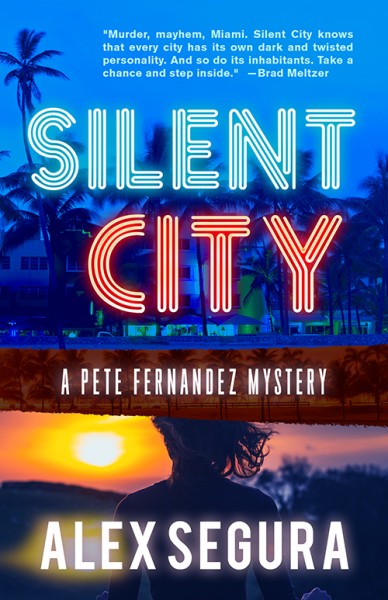
What happens when you get two crime writers talking about comic books? They start brainstorming crossovers of their own. At least that’s what happened earlier this year when I got a bite with fellow novelist (and Polis Books author) Rob Hart. Aside from being friends, we were also fans of each other’s work. I dug Rob’s debut Ash McKenna novel, New Yorked, and Rob said a few nice things about my first Pete Fernandez book, Silent City.

The idea seemed almost too good to be true: a story that featured both our series stars, set before both debuts and timed to hit in advance of the Polis reissue of Silent City and Rob’s second Ash novel, City of Rose. We ran the idea by Polis head honcho Jason Pinter and we were set. The theoretical story would also feature teases for both Silent City and New Yorked, serving as a teaser trailer for our debuts.

Now we just had to write the damn thing. A little crime caper that would eventually become Bad Beat.

Collaboration is always where things get interesting. Everyone, in theory, likes the idea of working with another creative person. But the fact is, writing is a solitary and personal thing, at least when it comes to novels and prose. Luckily, Rob and I both come from a journalistic background. I’ve also written a bunch of comics - we were used to getting feedback and adapting to hit a larger goal. We’re also both kind of workaholics. The ideas flowed easily and the writing happened fast, creating a final product that was unique and gave a fair share of screen time to both Ash and Pete, allowing readers a peek into their lives before New Yorked and Silent City. Most importantly, aside from making the work good, was that the story counted - it’s an essential and important chapter in Ash and Pete’s lives - and made for a tasty appetizer to fans that might be interested in reading their ongoing adventures.

Bad Beat is a dark, dirty short pulled from the New Jersey gutters that features backroom deals, old friends, kidnapping and the dark side of college football - all told through the prism of Ash and Pete’s first meeting. I guess “first” implies there’ll be more…

We wrangled fellow Polis author Dave White (pre-order An Empty Hell!) to serve as DSD’s own James Lipton for a quick interview with Rob and I. Hope you enjoy.


Dave: So, how did the idea for Bad Beat come around?

Alex: It was pretty organic. Rob and I had dinner and were talking shop, which veered into comic books. We both grew up reading comics and I work in the industry, too. We were going on about how cool crossovers were, and we wondered aloud why that didn't happen much with mysteries. Then we started theorizing about having our characters interact and it grew from there. We pitched Jason Pinter, our publisher at Polis Books, on the idea and away we went.

Rob: I sort of assumed it wouldn't happen! Alex and I are both pretty busy with our day jobs, and most things sound good over a couple of drinks (I'm sure I had a couple of drinks). But it turned out, we're pretty simpatico on a lot of things, in terms of process, and keeping our egos in check. That helped keep things moving.


Having already read Silent City and New Yorked, it strikes me that Ash McKenna and Pete Fernandez are very different protagonists.  Did their differences help or hinder the story coming together?

Rob: The difference between Ash and Pete is what makes it work. If they were too similar, there wouldn't be anything for them to do. It'd be two tough guys posturing the whole time, or two quieter guys unwilling to make a bold move. Ash likes to hit things. Pete likes to think things through. They compliment each other well.

Alex: I think it helped. They provide contrast to each other. We'll get into the timeline of it all later, but when you see Pete in this story, he's very different. Kind of proto-Pete in relation to Silent City and its sequel, Down the Darkest Street. So, having Ash, who's more of a bruiser and less emo than Pete really helped propel the story, and hopefully it worked the other way, too. I had a fun time writing Ash - and it really did have the same feel as those older Marvel comics, where the heroes meet, disagree/fight, then join forces against a common enemy. Plus football.


Where in the chronology of your two books does Bad Beat come into play?  Was it more difficult getting into your characters' mindsets at that point in their lives?


Alex: The story happens before our first novels - Silent City for me, New Yorked for Rob. So, it serves as a prequel. You meet Pete before he moves back to Miami - and you get a sense for how bad things have gotten for him.

I liked zooming out a bit and writing an earlier version of Pete - I wrote a short story that ran in Crimespree Magazine called "Quarters for the Meter" that happened shortly after Pete returned, involving Pete, his best friend Mike and a robbery, but it was fun to really explore the world he lived in prior to Silent City. I felt like there was a lot of room to play that I hadn't expected.

Rob: Writing Ash before New Yorked was fun. Because New Yorked was about him accepting things about himself--he needed to grow up, he needed to be less of an idiot. So I got to go back to him as an immature idiot, which was a good bit of fun.


Rob, in the announcement interview on LitReactor, you talked a bit about having concerns with third person, which you eventually overcame. Were there any moments where you two really had to discuss and compromise on a story point?  How did you deal with it?

Rob: I don't think we had any big objections. We're both former journalists, so we're both used to getting edited. I think early on we promised each other there'd be no egos--the story has to win. A few times we had to look at whether something was working, but we were never far from a solution.

Alex: The only disagreement I remember was so minor it’s not really even worth a mention. The whole process was painless, which I didn’t expect - not because it was Rob, but because collaborating is like being roommates with someone, in a weird way - you get a peek under the hood that you wouldn’t normally get as friends or colleagues. But it was totally fine, and elevated both of us a bit, I think.


Both of you really get into a strong sense of place in your books.  Is the setting in Bad Beat different for either of you?  Was switching locales tricky?  

Alex: It definitely involved more research. But even writing about Miami, I find I have to double-check stuff to make sure I'm not completely off, or writing from memories that are no longer relevant. The fact that we were writing a story set in Jersey, near Rutgers, makes me wonder if Jackson Donne was around at all. Sequel, perhaps?

Rob: I had fun writing about Jersey because Jersey is the worst and it was important for me to convey that. I hope I did!

Okay, lightning round.  Rob, your second Ash McKenna book is City of Rose, and Alex, you have two books out in the next few months in Silent City and Down the Darkest Street.  Give me the elevator pitches for both, and how (if at all) they tie into Bad Beat.

Alex: In Silent City, we meet down-on-his-luck journalist Pete Fernandez. His fiancé’s ditched him, his father's died and he's on the brink of unemployment. He's also drinking himself sick. When a colleague asks him to help find his missing daughter, Pete's dragged into a dark, unexplored corner of the Miami underworld that involves an urban legend known as the Silent Death - one that turns out to be much deadlier than anyone anticipated. Down the Darkest Street jumps forward, and we find Pete trying to get his life in order after the tragic events of Silent City. But just as Pete starts to create some semblance of an existence together, he finds himself forced to investigate a series of grisly murders - pitting Pete against true darkness when he's most vulnerable. Bad Beat really gets the ball rolling for both of these books and serves as a nice primer for both characters, I think. It's really smart marketing by Polis - you can pick up the story and then read the first two chapters of Silent City and New Yorked - a perfect teaser to get tapped into these two PI series.

Rob: In City of Rose, Ash has moved to Portland. He's working as a bouncer in a vegan strip club. One of the dancers tries to hire him--her daughter has gone missing. He refuses to take the job, because he's in a place where he's trying to avoid his past habits. Later that evening a guy in a chicken mask throws him in a trunk, holds a gun to his head, and tells him to stay away from the girls. That just serves to piss him off. So he takes the job and then things get bad. Because it's Ash, and he's not nearly as clever as he thinks he is.

He does meet with a journalist and I was going to work in a joke about Pete and like a dummy I forgot and it's already gone to press. Sorry, Alex. :(

Alex: Dammit, Rob. I did manage to tweak something in Silent City to reference Ash - so there’s that.


Please write a 70,000 word essay on how awesome Dave White is.

Alex: No. But Dave, lemme ask you - if you could cross Jackson Donne with any other writer's protagonist, who would it be?

Rob: Yeah. Just don't say Bryon. No one needs that.

I always thought Donne would get a lot out of a long sit down with Spenser.  Kind of a "Shut up and figure out your shit" talk from an east coast master.  As a more contemporary team-up?  Donne would fall right in line with Todd Robinson's Boo and Junior, who'd essentially run roughshod over Donne so he'd have no choice but to get caught up in whatever hi jinx they'd gotten themselves into this time.  Donne follows and then tries to catch up and take the lead at the end.

Alex: Dude - I was totally setting you up to say Ash and Pete. Sigh.

Thursday, February 26, 2015

A Shocking Series


Series characters are tricky.

When Dennis Lehane finished Prayers for Rain, he said that Patrick Kenzie’s voice went away from him.  He didn’t hear Kenzie and because of that he moved on to other ideas—Mystic River, Shutter Island, and so on.  Eventually he came back to Kenzie—or, rather, Kenzie came back to him, and Lehane wrote Moonlight Mile.

Back in 2007, I was working on the Jackson Donne series.  Jackson Donne started out as the typical private eye, someone mourning the death of his fiancée Jeanne.  She drives the series, motivates Donne and some other characters. 

The first Donne novel, When One Man Dies, was about to be published and I was working on the sequel The Evil that Men Do—which would be published in 2008.  I was deep into Donne by then, his voice throwing ideas at me left and right.  And then, just weeks after Evil came out, my publisher dropped me.

I needed to reboot, try something new.  I wrote Witness to Death, a book set in the same universe as the Donne series, but with nary a mention of Mr. Donne.  I moved on to other things, and even briefly considered leaving writing—focusing on my teaching career.  I got married, had a kid,  and went back to grad school for a while.

Jackson Donne didn’t stop talking to me, I stopped talking to him. 

Somewhere in there, I self-published Witness to Death and it did quite well.  And for while, I thought about what I would do next.  I’d start a short story and stop it.  I’d scribble some novel ideas down.  Things weren’t going anywhere.  Occasionally, I’d think about Jackson Donne, and wonder if the series was over.  I had no ideas from him.  I was different now, much different than when I wrote about him.

Series characters are tricky, and it’d hard to surprise readers form book to book.

One afternoon, I sat down to watch Doctor Who.  It was during Matt Smith’s second season.  I remember this very, very clearly—mostly because Steven Moffat, the writer of the series, surprised the hell out of me.  He took a character that had been around for 50 years and managed to do something that I didn’t expect.

Steven Moffat killed the Doctor. 

An astronaut came out of a lake and shot him dead, on screen.  Now, we all knew that the Doctor wasn’t really dead.  That somehow, Eleven would find his way back to life somewhere over the course of the season.  But that particular moment came out of the blue. 

And that’s when I really started to think about Jackson Donne again.  About series characters, and about how to surprise readers.  Suddenly, I had it.  The moment that would turn the series on its ear. 
Jeanne wasn’t dead.

I sat down and wrote a chapter.  Then another.  Then another.  I mentioned the idea to Jason Pinter—my original editor at Random House, and now the founder of Polis Books.  He loved Jackson and he loved the idea.

And, as I wrote the book, Donne himself started to surprise me.  He was no longer the typical private eye—actually wasn’t even typical in When One Man Dies.  He’d grown, changed, and evolved in the years since I’d wrote about him last.  He was talking to me, and I was talking to him.

Now, after a 7-year absence, he’s back in Not Even Past, trying to find out why and how Jeanne is still alive.  I’m talking to Donne again.

Yes, series characters are hard—because each book has to be the same, but different.  However, if you’re willing to dig deep and try something different, you can mine new angles and still be shocking.

And, just like Doctor Who surprised me, I hope Not Even Past will surprise new and old readers alike.

Thursday, January 23, 2014

It's Dave, man. Open up.

By Dave White

Hi, Do Some Damage readers, I’m back.

And, to be honest, it feels like I never left.  It’s Sunday night, when I’m writing this, and I promised Steve Weddle, I’d have a post to him by the end of the weekend.  And I have no idea what to write about.  This was how it felt every Monday night when, around 10 o’clock at night, I realized I had a post to write.

I’d always freeze up.

The reason wasn’t the obvious one:  writer’s block plus a deadline.  No, it was often the problem of having too much to write about.  But not knowing what fit.  That was my problem, and it was the problem I feel permeates the blog-o-sphere.

When I left Do Some Damage, I wasn’t writing . . . not fiction, anyway.  I was working on graduate school papers, I was working on Rutgers blog posts, and I was working on raising a baby.  So, I wasn’t really thinking about fiction.  I had some ideas, and I had some opinions, but they were insular to the small-ish crime fiction internet world.

Which was the exact people I’d been writing to for nine years in some for or another.  But I wanted to move beyond that.  I wanted to catch the eye of the casual mystery fan.  I wanted to scream to them about Marcus Sakey or Jay Stringer or Russel McLean or Steve Weddle.  Get those books in front of the casual fans’ eyes.

And I didn’t know how.

The only thing I knew is seeing the headline “How to Write a Sex Scene” for the 8 billionth time on a blog wasn’t going to do it.  So, I stepped down.

But now I’m back, just for this week.  My old books are being published by a brand new publisher in the fantastic Polis Books.  Very soon, they’ll even be putting out a brand new Jackson Donne novel:  NOT EVEN PAST.

I’m back in the game.  I’m excited.

But I’m still faced with the same age-old problem.  I have too much to write about, and I don’t want to lecture you about writing.

Guess I’ll stick to Rutgers posts.

However, I did want to check in and say hi.  I miss you guys.  But the people who took over for me are doing fantastic work.  I still read every day.

And if you haven’t checked out my books, it’s a great time to do so.  WHEN ONE MAN DIES is available on Amazon, Barnes and Noble and iBooks.  The second Jackson Donne novel is available in the same places.

I hope you’ll give them a look.

Tuesday, November 27, 2012

Dave White's Next Big Thing

By Steve Weddle

So there's this NEXT BIG THING meme going around in which authors tag each other (heh) with ten questions. Since Dave White is out today and my answers are set for tomorrow, I figured I'd answer for Dave today. You're welcome, big fella. 

1) What is the working title of your next book?

RUTGERS IPA, PI

2) Where did the idea come from?

I was emailing with Sarah Weinman and Jason Pinter one night and we decided it would be neat.

3) What genre does your book fall under?

Mystery/Thriller/College Romance/Craft Beer/Noir

4) What actors would you choose to play the part of your characters in a movie rendition?

I picture a young James Gandolfini (Rutgers, 83) for the lead and Calista Flockhart (Rutgers, 88) as the love interest.

5) What is the one-sentence synopsis of your book?

When an assistant basketball coach discovers a new recipe for India Pale Ale worth killing for, his life turns into one big fast break of terror.

6) Will your book be self-published or represented by an agency?

My first two novels, WHEN ONE MAN DIES and THE EVIL THAT MEN DO, were published by a major house and well received.I independently published WITNESS TO DEATH, my most recent novel.That one was called one of the best dozen crime novels of the year.

Whether it's independently published or one of the major offerings from a big house, I hope people enjoy reading it.

7) How long did it take you to write the first draft?

Well, I've been thinking about some of the aspects of the novel for a long time. The actual sitting down and writing has been about a year so far.

8) What other books would you compare this story to within your genre?

It's a bit like a Spenser novel. One of the good ones.

9) Who or what inspired you to write this book?

To be honest, it was DSD's own Steve Weddle. Hearing him go on and on about writing is kind of like seeing an eighth grader try to dunk a basketball. At some point, you just want to show the kid how it's done.

10) What else about the book might pique the reader's interest?

I've created Twitter accounts for all the characters and the last page of the novel will be a recipe for the craft beer featured in the story.


Wednesday, December 28, 2011

We Are All Whiners

This blog post does not represent the opinion of anyone else on Do Some Damage but Dave White.

Shut up.

We--the writers and fans of books--all need to shut up. Big time.

Lately, there's been discussion about self-promotion on Twitter, Amazon boards, Facebook. Basically it comes down to this. Book writers are promoting their books on Twitter. Posting "I have a book out. Buy it! Here's a link." Apparently, it's constant*. Look at me. Look at me. Look at me.

Then came the next wave. All the fans of writers have now revolted and started complaining about self-promotion. Immediate unfollowing of self-promoters. Creating arbitrary rules about promotion. "You can only do it once a week." "Five, ten, fifteen percent of time should be self-promotion." Wahh, wahhh, wahhh**.

Shut up.

First off, fans of writing... you have to understand something. Writers need to be noticed. There's a lot of noise out there and they want you to know the name of their book. Wouldn't you be upset if a writer you loved came out with a book and you never heard about it? All writers have fans. Some have a lot of fans. Some have 2 fans***. The only way their fans are going to notice them is if they mention their book. And you know what? Not everyone is always on Twitter at the same time. So sometimes these writers have to post about it more than once! So, if you're a fan of writer and of writers, give people a break okay. Especially if their book has only been out a month or two.

Okay, now writers. Yeah, you guys. Over here. Listen up. You need to chill out a little bit. Talk to people. Come up with conversation. And also, be creative. Let's not shout it all out all the time and then whine when people complain. You're a writer. Creativity is your life. You have to come up with a way to get noticed that's different from the ways everyone else gets noticed. And I'm not talking contests. Everyone does contests. No one who enters a contest ever buys the product their in the contest for. They want free stuff. If they don't get the free stuff, they'll go try to get other free stuff. I don't know what the real answer is. But you need to lay-off the shouting a little bit. I'm not going to come up with some random arbitrary rule for you****, you need to find your comfort zone. But maybe ease off the gas a little bit.

(Or, how about this. Everyone on Twitter picks a different author to promote. If we all promote each other, it's not self-promotion. Then what? Oh, snap!)

See the problem isn't self-promotion... or complaining about self-promotion. Not really. It's about society. The society we live in. The society of protests.

You see, in real life, protesters are doing something good. They're protesting BIG ISSUES. And they're trying to make real change. Look at the Wisconsin Unions, or Egypt, or the Tea Party, or Occupy Wall Street. They've all created real change over big issues.

Us?

We're complaining about .... commercials. Sorry, but commercials are a way of life. You're always going to have them. And some of them are pretty damn annoying. But we've always been able to ignore them. And then the people who make the commercials have to try a different tact. When all we do is complain... complain about the little things...it takes away the power of complaining about the big things. About fighting against something.

But we see all these protests, and we need something to whine about so we take up this issue. OOOHHHHH, there's too much on my Twitter feed. OOOHHHHHH, no one's buying my book.

Gimme a break. All of us. We all need to take a breather. We allllllll--even me--should shut up.

Everyone needs to take a deep breath and just chill out. Yes, I know Freedom of Speech is a right. But by both clogging up Twitter with self-promotional commercials**** and complaining about those commercials, you are trying to prohibit free speech. Complainers want to shut people up, self-promos want Twitter to be nothing more than a commercial.

So, let's ease off. Everyone. Be positive. Have fun. Because you know what? Discussion on Twitter never lead us to real change in publishing. Their circular conversations, ones that end up in the same place****** and never solve anything.

So, let's all take a deep breath and stop the freaking whining*******.

*My Twitter feed did have some advertising in it, but I wouldn't say it was constant. And I follow a lot writers.

**I actually saw a lot more of this than I did the actual self-promotion because it got retweeted a lot. And people didn't just post it, they went on ten tweet rants about it.

***Hi mom! Hi dad!

****Unlike those people on the Amazon message boards. Whoa are they crazy. Anyone tries to do something nice for a writer and they flip the f out. And then high five when the writer slinks away, trying to be nice.

*****Funny. When the promotion comes from a publisher, I NEVER see anyone complain about it. There are never "Boyyyy, Little Brown tweets about their books too much."

******Yes, I understand the irony of me posting about this. But I wanted to say it in more than 140 characters. Then I'll shut up. Plus, I like reading comments.

*******Look at all these footnotes. I hate footnotes. I should stop the footnotes. BLEEECCCHHH. I wrote a whole blog post complaining about footnotes once. Ask Russel. But now...it's a truce. I won't complain about them.

Tuesday, December 27, 2011

A Review: Empire State by Adam Christopher

I hope you've all enjoyed your time off from DSD and time with families celebrating the holidays.

While you were doing that, I've been reading. So, I need to line-up a quick review for you all.

When I first picked up EMPIRE STATE by Adam Christopher, it struck me as nod to Brian Bendis's wonderful POWERS series of graphic novels. Cops and robbers in the time of the super heroes.

And while you get that, this book becomes so much more.

It's a mash-up, but not like those GLEE mash-ups where the two songs feel force-fed together. It's all your favorite genres mixed up into one. Love noir and hardboiled detective stories? You'll get that here. Love super hero tales? Check this book out. There's even a little bit of Doctor Who-esque time travel in this book.

I wish I could tell you more about the plot. About the cool character doubling that goes on here. About the fissure. I wish I could sit around and type 1000 words just explaining the plot to you. But if I did that, you wouldn't have anything to read, and you'd be totally missing out.

EMPIRE STATE is a big, blockbuster action book. It has images that will stick with you. Earlier in the week, I tweeted that I kept picturing an HBO TV series trailer as I read this book. That's what you're going to get. There are hints of the fantastic film DARK CITY.

I keep telling you what is used to put this book together. But it's so much more than that... because the mash-up is organic. It works. It's worth it. READ THIS BOOK.

Pick this book up. It's available today. You can get it here. I urge you to do so. If these wild ideas keep running through Christopher's head and he gets them down on paper...he's going to be a superstar.

Tuesday, December 20, 2011

Best Books and Beers 2011

Okay, just like everyone else, I have Christmas stuff I gotta do. So this is gonna be short and to the point. I'm picking the two best books I read this year and the two best beers.

Here we go:

BOOKS:

AMERICAN GODS by Neil Gaiman: Not published in 2011. In fact, it's the tenth anniversary. I stumbled upon this book because of Gaiman's brilliant episode of Doctor Who this year. But American Gods is more than a Doctor Who episode. It's one of the top 5 books I've ever read. A stunning, sprawling "realistic" fantasy novel (as if those two words make sense in conjunction with one another)... it is the story of American immigration... and what if those immigrants all brought their Gods with them. And those Gods wanted to start a war. Oh yes, it is awesome.

CHOKE ON YOUR LIES by Anthony Neil Smith: Quite simply the funniest, dirtiest, darkest, and most easily read book this year. A twist on the Nero Wolfe novels and also a scathing take on University life. Compelling and wonderful, it was the best book published this year. And only 99 cents. Please buy it, because I want a sequel. Now.

BEST BEERS 2011:

Schlafly AIPA: Bitter when it needs to be, smooth at the beginning and the best IPA I've ever had. A great summer beer... I tried tracking this beer down all year and was only able to find it in one restaurant. Just great tasting and fantastic. If you can find it, you're very, very lucky.

Keegan Ale's Mother's Milk: A stout so smooth and drinkable. Tastes like chocolate milk. If you don't like beer, this is a starter beer for you. And if you like stouts, but are looking for something to drink more than just one of... try this one out. Great stuff.

Now, I want your best books and BEST BEERS in the comments.

Tuesday, November 1, 2011

Throw It All In

Plotting is so haphazard to me. It takes drafts and drafts and drafts for me to get the plot right.

But if we're talking first draft plotting, it all boils down to this: I take what I see and throw it in the mix. A cool article I saw in the newspaper? Jam it in there.

Someone telling an anecdote about their night in the city? That'll fit somehow.

A location I've only been to a few times and is perfectly creepy? I can use that.

Basically, anything cool that's running around in my head gets thrown into the mix. Then it's a smoothing out (or altogether cutting out) process. I go over and over and over what I've done and smooth out the edges, create other more jagged edges, and then I have a plot.

Okay, that's not entirely true. There are other things too. Mostly I start with a central idea. A lot of people start with a character. Not me. I start with an idea.

A detective's mother has Alzheimer's and remembers a murder from her past.

A man is convinced his ex's new boyfriend is actually a spy.

Then I just start to build. And revise.

And revise.

And revise.

It's hard to write this all out because it changes each time. Duane Swierczynski likes to say that each time he writes a novel he has to learn how to write that novel. I agree with that. Plotting is basically a different process each time. For WITNESS TO DEATH, I really had to get to know the characters.

For THE EVIL THAT MEN DO I had to be somewhere and overhear something at the right time.

So, each time I plot, I plot differently.

Yeah, I'm no help at all, am I?

Sorry, I'm just trying to get the plot that's in my head out on to paper.... for the fourth time.

Tuesday, September 27, 2011

Listen To What the Man Said

Yaarrrr, here there be spoilers about Dr. Who, the Sopranos, and Lost

Some of my favorite TV shows have involved speculation.

LOST: What's in the hatch?

THE SOPRANOS: What happened to the Russian? What did that last scene mean after the mob warned off Gloria Trillo?

DOCTOR WHO: Who is River Song? Why did the Doctor have to die?

HOW I MET YOUR MOTHER: WHO IS THE FREAKIN' MOTHER ALREADY? JUST TELL ME! I'M SICK OF THIS GARBAGE!!!

These shows do multiple things. First, they entertain. They're fun, they load up on the cliffhangers and unanswered questions and they keep me tuning in (Well, at least until there are more questions than answers, and you can see the writers giving up and start fumbling the ball--Yes, I'm looking at you, THEY'RE DEAD FOR A WHOLE SEASON, LOST.)

Second, they get the fans talking. If a show is exciting enough, I'll start looking more about it. I'll read some SPOILER FREE speculation blog posts. I'll email some friends. I'll pretend there's a water cooler at work and stand in a corner pretending to talk to people about what I watched. I'll make up what I think are cool theories about the show. I'll listen to other people's whacked out--can't possibly be right--theories as well.

And I started to realize something.

The deeper and more compelling the stories gets, the less people listen to what's going on and speculate about what they WANT to happen. And then, when it doesn't, it gives them a reason to get angry.

Let me give you an example: The Russian in THE SOPRANOS. People kept expecting the Russian to come back after disappearing in the Pine Barrens (and likely dying from a gun shot wound and cold weather.). But people didn't want to believe that. Despite anything the dialogue said, people expected the Russian to be back in the final episode, shooting Tony in the head... even though Tony HAD NOTHING TO DO with the Russian event.

Or look more recently at Doctor Who. There is a whole blog post speculating about River/Mels/Melody's regenerations. Multiple. Even though in the show's reality, she's only done it once. As Mels is regenerating into River, she says, "The last time I did this..." and goes on to describe the regeneration at the end of Day of the Moon.

What's the deal with this?

Do people care about what they're watching or reading? Or do they just want to make up their own fan fiction and hope that happens in the show...?

I've even been known to do it a time or two.

But mostly, all you have to do is listen. Give it a try sometime.

Tuesday, August 30, 2011

Getting There

It's a weird thing.

I've been banging away at this second draft of my novel for what feels like forever. I knew my first draft was a complete mess (as it should be), that I didn't know my characters well enough yet, there wasn't enough tension, and all the motivations didn't work well.

And, to me, knowing that is half the battle. I know where the problems are, and fixing them, while keeping the same skeleton, can be a problem. What makes these characters--which were originally just chess pieces--do what they do? What is coming off as false in the novel? What rings hollow?

And this book, well, this book has been a bitch.

Characters didn't feel realistic. Motivations felt like they'd been done before and some were way to complicated. In my head, the set-up was really simple. On paper, it was like I vomited ideas.

And, so, I started to bang away at the revisions. I started cutting, like I was pulling trees out at their roots. Characters became different, but better. More real.

But it felt mucky. I threw every trick in the book at the novel. Combining characters, cutting whole characters, eliminating ideas, outlining my revisions. But each day I tried to get closer to the ending. It's been hard. Blood from a stone hard.

But today I looked up and I was... at the biggest plot twist in the book. I was at the start of the 3rd act. I was... getting there.

And that felt really good.

I'm not done yet. Not yet.

But I'm getting there.

Tuesday, July 12, 2011

Vacation Reads

It's Dave, taking over the Tuesday posting slot because Jay has... I don't know... a job or something.

Anyway, I'm back safe and sound from Cabo, and as I like to do, I'll recap my vacation reads.

AMERICAN GODS by Neil Gaiman: Simply one of the best books I've ever read. Gaiman mixes crime, fantasy, romance and horror together for a fantastic book about immigrants bringing their gods to America. There's more to it than that, but you have to read it for yourself if you haven't already. It's funny, charming, full of emotion. Just a well done modern classic.

GAME OF THRONES by George RR Martin: I gave up on the TV show two episodes in and wanted nothing to do with the novel. But a friend of mine let me borrow it and insisted I'd love it. And you know what? I was pleasantly surprised. There are a ton of characters, and it's hard to keep track of them all. The writing, however, is smooth and compelling. When I was done, I wish I had brought the second novel with me as well. I'll be starting that soon.

CARTE BLANCHE by Jeffery Deaver: The newest Bond novel. I don't have much to say about it. It's an entertaining novel in it's own right. I've read all the Fleming novels and seen the movies multiple times. This felt like Deaver went out of his way to modernize the Fleming Bond, but it was missing something for me. I loved the twists and turns and the action, however. Finished it in a day.

Also started GOOD OMENS, but am not anywhere deep enough to give my thoughts yet.

I also scanned what others around the pool were reading. When we were on our honeymoon last year, I noticed a ton of "THE GIRL WITH THE---" series. This year, there didn't seem to be one popular book. A lot of airport paperbacks, and some non fiction.

Not many e-readers around either, which I found surprising.

Is there a BIG BOOK out this summer?

Thursday, July 7, 2011

Fear

Right now, I am sunbathing in Mexico.

Okay, not really. Right now I'm sitting on my couch right after downing a shot of Jamison.

It's one of those timey-wimey things... go with it.

You see, as you're reading this article, it's likely I'm poolside in Cabo San Lucas reading and catching a tan. (I have a beard right now, so I'm going to have a silly tan when I get home.)

But as I'm writing this, I'm about 8 hours away from flying to Cabo. I've done a shot of Jamison. (Or is it two shots? Meh, just read on.)

I hate to fly. No, that's not right. It's not just hate. It's a horrible, terrible, nearly paralyzing fear of flying. When I was a kid, I had a really bad flight--turbulence and people puking--and then I let too much time pass between the next flight (10 years) and then the next flight again (11 years). That developed into my mind into a massive fear.

Yeah, pretty paralyzing. Ask Jason Pinter, he's the first person I flew with as I as an adult.

Anyway, when I was writing Witness to Death, that fear has just started to manifest itself into panic attacks and shots. To deal with it, I did the only thing I knew to do... write about it.

It's the old write what you know trope. I knew I was afraid of flying. I knew what fear was. Total, paralyzing, gripping fear. So, I twisted it a bit. I made the main character of WITNESS afraid of the water.

It was easy to write about the fear feeling, but water fit with the story. That's writing what you know. I know the chest pressure, the shaking, the absolute FUCK NO, I'M NOT DOING THAT feeling. It was just a matter of translating that fear into my writing.

Read the book, I think I did a good job, but I'd love to know how you felt about it.

But fear is the same. Whether it's water, or flying, or public speaking... the symptoms are the same.

Right?

What are you fears?

I made my wife promise we'd pay for the wi-fi so I could check your comments, so make sure you leave them.

Now, if you'll excuse me, I'm heading to the pool bar for a shot of tequila... and a cerveza.

Wait, I'm flying on Saturday? A cerveza or 7...

Thursday, June 23, 2011

The Power of a Review

Carol Barrowman reviewed my book this weekend. To a lot of authors, this is a big deal to begin with. The review was a rave, and I really appreciated it.

But what I couldn't have foreseen was the impact it would have on my sales. Witness to Death had been doing decent sales before the review came out. I was happy with how my foray into the ebook world had gone.

But then the review came out.

And sales exploded. In 4 days, I've sold close to 400 books.

GalleyCat picked up the story.

So, long story short, this was HUGE for me.

Before this weekend, I didn't know how important reviews are. From now on, they are VERY important to me. Good or bad.

And they're not just there to feed (or damage) my ego.

So, readers, how important are reviews to you?

Thank you so much, Carol Barrowman. I really, truly appreciate it.

Thursday, June 16, 2011

Ode to My Middle School Teachers

It's the end of the school year, which means I'm really busy and don't have much time to blog this week. I'll get back to it next week. In the meantime, since it's the end of the school year, I wanted to repost an old post of mine... and old to my middle school teachers:

Middle school is where you start to grow up. Sixth, seventh and eighth grade are those hormonal years where you don't understand your own body, you don't understand the world around you, and yet you think you're the coolest thing on earth.

Or you have no confidence whatsoever.

My middle school years weren't any different from that, but I had some really great teachers to help guide me through those years.

I remember learning about developing your own photographs, real hands on stuff. And learning about how to build something from scratch, where you're given a task (build something that will roll ten feet and pop a balloon--using a mousetrap), and you have to come up with a way to complete.

I learned about failure. The balloon didn't pop. Not having the right notebook for a notebook check.

But when failure came, teachers were there to guide me through it. One teacher, right after failing me gave me a new notebook and a guideline of how to pass next time.

And, when the most tragic of events happened--a student in our 8th grade class died--our teachers were there to guide us through.

The day after his death, our teachers were there to talk with us. To help us with our grief. They allowed students to write poems, to discuss their feelings, to hug if it was needed.

And weeks later, when the students went to City Hall to plead for a walkway over the highway where the student died, the teachers watched. They didn't need to say anything. Didn't need to acknowledge it.

But one cut out the news article the next day. Posted it on her bulletin board and just wrote next to it... "I'm proud of you!"

And it was the right amount of care and the right amount of guidance.

Years later, that same teacher gave me the best advice about teaching 8th Grade. She wasn't even talking to me when she said it.

"Sometimes you just want to tell them to act their age," she said. "Then you realize... they are."

Thursday, June 2, 2011

The Art of Simplicity

Eddie Vedder just came out with a new album. It's called Ukulele Songs. It's a very simple album featuring a few new songs, a scathing Pearl Jam "cover," and some older covered songs. It's incredible. At least I find it incredible. It's incredible in it's simplicity.

Just a guy and a uke and a voice.

As most of you know, I'm a big fan of craft beer too. Different kinds of beer, I'll try pretty much everything. A lot of the craft beer stuff is now going extreme: Bourbon barreled stouts, whiskey infused ales, sours. Artisan stuff. And that's all nice and good to try, but when it comes down to it, I just want a nice simple Ale (and no, no Bud Light or Coors Light)... just a well made Pale Ale or IPA (recommended SixPoint Bengali Tiger).

Give me that and I'm happy.

I feel that way about my books too. The story can be complicated. In fact, the more twisty the better... but the writing... the writing needs to be simple. I don't want to be impressed by the writing. I'm not reading a book to break down the language. I'm not reading a book to be blown away by descriptions.

That has it's place and all, it does, but rarely is it for me. (Sometimes I'll break away and usually I'm impressed and enjoy it...)

But I want to be sucked into the story. Give me good characters. Give me brief descriptions. Show me, don't tell me. And give me a story. I don't want to be distracted by all your awkward similes when I can try to figure out what the character is going to do next.

And sometimes I feel being that simple, being that effortless is an art in itself. An author has to work hard to cut out the hoopdedoole (as Elmore Leonard calls it.). If a character makes me laugh, cry, gasp, or just plain turn the page you got me.

There's a simplicity there. There's an art to it. And sometimes it's hard to come across... but when you do... man. It's a thing to see.

What do you look for when you read?

(Speaking of music: "You've Got to Hide Your Love Away" just came on my iTunes. Come on, we all know the simple stuff was the Beatles best stuff. Give me that song any day over "I am the Walrus".)

Thursday, May 26, 2011

Price Wars or Why My Book Costs 99 Cents

Damn it. I'm wading back into the Kindle argument again.

I wasn't going to talk about this, but I've seen it a lot on Twitter in the past few weeks, so I figured--since I have stake in this, I might as well make my thoughts known.

Basically it's the new price war for authors who are putting their books up on Kindle. Do you want to go 2.99 or .99?

Now the argument I've seen from people sort of in the publishing world on Twitter is: You need to value your work. Price it at 2.99, because it's worth at least that. By pricing your book at any less than 2.99, you are devaluing your work. You're showing the world you're not proud of it and you're not confident in it.

I think that's what they're saying.

Here's where I disagree. Supply and demand. And what I want to get out of having my books up on the Kindle.

There is a major influx of writers sticking their books up on Kindle. They're trying to get find readers. And, guess what? A lot of them are posting their books for .99 cents.

I want to find an audience. I want to find readers. That's my first goal. To get readers.

So, I'm going to keep my book posted at 99 cents. For a while the book was the number 1 New Release for Hard Boiled Kindle Books. I was really happy about that. More readers.

So, in my opinion, I'd rather price my book at .99 and reach AS MANY PEOPLE as possible while at the same time making some money--not a lot, but enough to buy some beer. Maybe fill my gas tank.

I'm not looking to get rich quick.

But the feedback I've gotten. That's been awesome. I'm getting readers again. I've heard from people who've said they were going to pick up my other two novels because they liked WITNESS TO DEATH so much. And those are priced at 9.99. I have 8 wonderful reviews online and more in my email box.

Think of me like a drug dealer. First one's... almost... free. Check it out.

Then see if you want to check out the others.

That's why I price my book at .99. I want readers. I want people to enjoy my work. If enough people do, I'll be very happy.

And I'll probably pull in some cash too. But my side of the story isn't as much about money. It's about finding people to read the books. If people keep finding my stuff, the money'll come.

Feel free to disagree in the comments.

---------------------------------------------------------------------------------------

Check out WITNESS TO DEATH:

On your Kindle US.

On your Nook.

Or your Kindle UK.

But if you like those... then give the rest a shot.

Thursday, May 19, 2011

The Exploding Bus

It started with an exploding bus.

No, wait... it started before then. About a year before then. One of the teachers I worked with knew I was writing a book. And she wanted in. Begged and pleaded--okay, asked once. When I got to a situation where I needed a name for a character--one I thought was going to be minor--I plugged it in.

The character ended up being a major one.

Once I signed a book deal for WHEN ONE MAN DIES and a sequel, people started coming out of the woodwork. They wanted to be in the book. It was constant. Everyone wanted a role... and comedically enough, they all wanted to die.

I had about 15 people ask to be murder victims.

And I was going to do it... I was going to put them all in the book.

And kill them off.

The question was how. How do you kill off fifteen people and not turn it into a teenage horror comedy with more snark than heart? And for a minute, I thought I had it.

I was going to blow up a bus. And then print the passenger list. Of course one of the victims would be an important character and the rest innocent people I knew. It was a great idea, I thought. Fun for me and my friends. Believable for the audience too.

Except I couldn't come up with a reason why I should blow up a bus. It didn't fit the book.

So, since then, I've been sneaking in names of my friends as character names. My friends, co-workers, and family love it. They get a kick out of it.

The rest of you have no idea. Each of my books has people I know in it. And it helps with characterization too. I give some of the traits of my friends to the characters in the book. Helps give them believable quirks.

And believe me, my friends are quirky.

So, my question is this, knowing that I do this... knowing that a lot of other authors probably do it as well, will you now find it distracting? Will you try to figure out who's named after a real person and who's completely fictional?

I know I don't.

--------------------------------------------

CHECK OUT: WITNESS TO DEATH on Kindle or Nook.

Want to talk WITNESS spoilers? Comment here.

Monday, May 2, 2011

It's Not Polite To Let Your Modifiers Dangle In Public: Ruttan on Grammar

The other day, Dave blogged on grammar. I logged on, typed up a great response, and watched it disappear into cyberspace somewhere.

That's when I decided that the supreme overlord of the internet had eaten my comment to force me to blog about this topic myself so that I could set the record straight, and restore the significance of grammar to its proper place in the writing universe.

Or, at least, put a bit of a different spin on it.

Check this out.

Boy it sure is hotter than hell Fred said. "I got me toes burnt near right off in de back of dat truck" Sally Jean told me she's dang near ready to burst. "Its like the devil himself were workin the sun Ralph said. "I cant remember a time when it was hotter dan dis. Ya, and Sally Jean said you won't be wantin to tink of anytin but an ice bath and cold home brew needer.

So, you tell me. Who the hell said what?

Now, I've read drafts of stories where, line after line, paragraphs ran together. If you add in a story where the focus is on dialogue, and a writer that doesn't know the rules for punctuation, so they don't consistently use quotation marks and leave out dialogue tags... Well, it can be a nightmare. I mean... I've really had to review prolonged sections of writing like this, and I've really not had a clue who was saying what or what was going on.

And I don't know how on earth to address clarity and to just make sense of the ideas behind the writing when I don't even know who's saying what.

Which means the first thing I've got to address with a writer struggling with these issues is how to split paragraphs, and how to use punctuation when writing dialogue. If they can at least sort the text into paragraphs, then I can begin to move towards clarity.

But without at least attempting to use punctuation and structure? Please, just shoot me now. I mean, really. I've pulled my hair half out of my head trying to make sense of run-on sentences that are mashed together in run-on paragraphs that extend multiple pages, and after going cross-eyed and nearly overdosing on Tylenol, I reached a significant conclusion.

And before anyone throws names at me like Charlie Huston, just remember, even writers who break "the rules" have their own style they consistently conform to that serves as a guide.

To me, the technical aspects of writing are like one of the four wheels of a cart; without it, it's pretty damn hard to get the cart to move properly.

Creativity is another wheel. Storytelling - not writing - is another wheel. The fourth wheel? Organization and expression. By this, I mean sequencing your thoughts in a way people can follow, to maximize the impact of your story.

And as far as I'm concerned, they're all equally important. I mean, Dave's right in saying that if there's a typo, we can usually figure out what was meant. But in the example I gave above? That's not slapping a bandage on a small error; that's major surgery to repair significant damage. And I think that Dave's opinion stems primarily from the situations he's exposed to through his work and writing experience, which may be scenarios where only a handful of pages are being written for a story, report or essay.

My situation is different, and that's why I'm splitting hairs here. Because while (in my humble opinion) Dave isn't completely wrong, in certain circumstances, he's also not completely right.

The other day we were in a restaurant and the kids were working on activity sheets. One was to create a crazy story by filling in the blanks with specific types of words. My stepson, who's in grade 4, didn't know the difference between a noun and a verb. And he's typically ranging from A to B in Language Arts grades. When he told me they don't really teach that in school, I couldn't argue. I've seen the worksheets that come home, and the kids aren't being instructed in this. 25 spelling words a week, but no lessons on the difference between an adverb and a verb.

Which reminds me of the fact that my stepdaughter got her lowest grade ever in language arts this year, and the teacher cited the fact that she wasn't using a lot of varied words in her creative writing. But how can you expect her to use different nouns and verbs and modifiers if she doesn't even know what those terms refer to?

That isn't even my biggest complaint with their English language instruction. What frustrates me is that they haven't learned the difference between singular and plural. They is not gonna learn to speak proper English if they is never corrected on such things. And when mixing singular and plural is common in their speech, and that translates over to their writing, shouldn't someone be explaining to them why they've lost points for it on a creative writing assignment?

This is why, every summer, I do my own review with the kids, covering math and English, as well as science and social studies.

Now, I remember being in school, and recall taking phonics and learning grammar and punctuation rules in elementary school. I also remember taking spelling tests each week, and I remember a very long list of teachers who would deduct points from projects for incorrect spelling, grammar or use of punctuation. And not just in English class.

Perhaps that's why I learned to focus on writing clean. Perhaps it's because I'm anal. Or perhaps it's because if you maintained a 100% average in spelling, you got a spare. Those who had the spare didn't have to do all the grammar assignments for the spelling words each week.

I try to write clean. I try to write clean in everything from my emails to my blog posts. And using twitter really messes with me mentally, because I need to use text speak sometimes, and it goes against my instincts.

As an author, I am so glad I habitually try to write clean.

Like Dave, I work in education. I spent a lot of time in high school English classes. I tutor adult students taking creative writing diplomas online. I also have two stepkids in elementary school.

And the lack of emphasis placed on good grammar, spelling and punctuation - what I tend to refer to as the technical aspects of writing - is a constant headache for me.

Now, in Dave's situation at school, perhaps he's primarily working on things that are only a handful of pages long. Maybe he teaches creative writing exclusively. If so, I can understand why he'd put more focus on creativity and clarity of expression than on technical execution if he chooses to.

But I work with students who are working on manuscripts. And I feel it's irresponsible for me to strictly focus on the creative side of the process without addressing the technical issues. I also feel that it's in the student's best interests to learn these things sooner, rather than later.

Why?

Do you want someone to wait until after they've started building the frame of your house before they take a carpentry course? Probably not. Just like you probably don't want to go flying in an airplane with a pilot who hasn't taken any lessons or learned how to land.

I know from first-hand experience just how much time is spent revising a manuscript after you think you've finished writing it. I know that typing 'The End' for the first time is really just the beginning. And I know that the next part of the process is often considerably more painful than the first part. Creating is fun. Expressing yourself correctly isn't.

So, sure, toss aside grammar and punctuation and spelling. Have at er. Go to town on your manuscript and sail right through. And then discover that you haven't used proper punctuation for any of your dialogue and you have to go over 350+ pages just to fix the dialogue punctuation alone. Plus, you never did learn that rule about i before e except after c, and there are so many wavy red lines that Word told you it's taking too much memory to track all your spelling and grammatical mistakes. And what is the rule about dialogue tags?

You see, in certain circumstances, Dave's not wrong. If I was strictly teaching creative writing - I mean, real creative writing, not the diploma course I do mentor that's called that - grammar would take a back seat. But coaching people through the process of writing a manuscript? Why on earth would I wait until the last chapter to mention that they now need to fix all their spelling and grammatical mistakes, and correct the punctuation?

As it is, when you get to the end of your manuscript, you're going to have to learn how to self edit. And self editing refers to more than just spelling and grammar. It includes believability. It includes internal consistency within the manuscript. It includes sellability and marketability. I mean, back when Charles and Diana were getting divorced, it might not have been a good thing to name your protagonist Camilla and have her having an affair with a married man. Legal issues and lack of appeal for the UK reading audience might be considerations. Hell, one of the things I had to do in my own early editing was to weed out my use of the word slight in all its various forms. Everyone was slightly tired, their eyes widened slightly, blah slightly blah. I was in love with the word. Now I can't stand using that word. We all have our little quirks, and sometimes we have to have someone point them out to us to help us break the habit.

I'm glad I have a tendency to write clean, because it means that I don't have to spend countless hours fixing mistakes needlessly. It takes far less time to learn to do something right to begin with, and build a solid foundation. I constantly check as I write. Some people will tell you that's not a good thing to do, but I guarantee you that I have the cure for writers block.

You think you have writers block? Start back on page 1 and do a line edit of your manuscript, and I guaranfreakintee you that most of the time, you'll be ready to get back to writing the story before you know it. Authors typically don't find it fun to edit their own work. It's a pain in the ass. And when I'm done, I like to have the idea that I might actually be pretty close to being done with a manuscript, instead of thinking I now need to go back to page 1 and correct thousands of spelling, punctuation and grammatical errors.

Now, as far as I'm concerned, every high school student and adult student should have some foundation of training in spelling, grammar and punctuation. Of course, that's what I'd like to believe. I've learned some teachers don't really cover those things. I mean, some don't even cover how to use a dictionary.

But most people have some basic knowledge. That means that covering the basic rules should be a refresher. There should be a foundation in there somewhere to build on. And it should come easy. It's much easier to explain the rules about commas and periods than it is to get someone to grasp how to breathe life into a character, and if I can get a student refreshed in the first few assignments and they start to fix those mistakes in their own writing, that's a lot less work for them to clean up later. I get get the housekeeping done at the start, and then focus on the other things that are far more nuanced and require individualized feedback.

And if it's just old folks who say it takes less time to do it right the first time rather than needing to go back and fix it later, then I'm old.

Old and right. Now, Dave says that people who nitpick on grammar and typos are taking the easy way out. I say bullshit. Because I have over 70 students taking various diploma programs, most working on novels, who have publication as a goal. And the courses guarantee that the students will re-earn their tuition, or the students get their money back. So, ask an agent if they'd rather get material that's been corrected after I've red-penned it, or something that hasn't had the grammar and spelling addressed? Focusing solely on grammar and spelling should not be the sole focus, but it is an important part of good writing.

Maybe this is a difference. I mean, I get paid to assess the assignments. When I'm working in the high school, I get paid the same, whether I correct the grammar and spelling or not.

And I actually have worked with kids who will sit and stare at a paper and can't write anything. I have actually worked with kids who're in high school and can barely read, never mind put two sentences together. My reality is different than Dave's, so I'm willing to say maybe what he's saying is reasonable for his situation, but it really isn't appropriate for mine, and it does drive me mental when anyone wants to declare an absolute truth on this subject. There are times grammar is MORE important that creativity, and I would think that should be clear to anyone involved in writing.

As a tutor, my biggest fear is that my students will go read Dave's post, totally blow off all the technical aspects of writing, and then get a hard dose of reality. Their draft will be done, they'll no longer have a tutor, and they'll have hundreds of pages of mistakes to correct on their own. And you know what? If that happens, it's not my problem. I mean, technically, they have to do the work to clean it up. But the parental side of me, and the educator side of me, is always trying to help people avoid mistakes, rather than letting them set themselves up for failure. I've known people who loved the creation part of storytelling so much, they could write for hours, but never could figure out how to correct their manuscripts so that they were publishable, and eventually gave up on the entire process, because rejection after rejection wore them down, and learning how to fix their mistakes seemed like a Herculean task after they had stacks of manuscripts written.

I don't want my students to finish their diploma and then fall flat on their face because of something like this, that I could have helped them with along the way.

Ask a parent whether it's better to have their child do a short tidying of their room every day, or a big clean-up every week. Oh, those moments of discouragement when someone who's been putting off their chores comes face to face with the fact that nothing else is happening until their room is cleaned. And everywhere they look, there's a mess. How many times have I said that if things were put away after they were used, we'd be able to find them?

It's logic, on multiple levels. As a society we're pretty good at putting off to tomorrow what should be done today. As an educator, I feel it's irresponsible of me not to address all the critical aspects that should be taught in order to help my students succeed in expressing themselves with the written word. And I feel comfortable agreeing to disagree with Dave based on the situations I work with, because his approach wouldn't be appropriate for the goals of the students I'm working with, who want to be published, not just graded.


Oh, and by way of confession, probably every single "nitpicky" thing I point out to my students is a mistake I've made at one time or another. I'm supposed to bring them years of experience from working with authors, editors, agents and going through the process of being professionally published. If they're paying for that voice of experience, they should get it, whether I'm pointing out resources for using punctuation, tips on how to write a query letter, or anything else that's related to becoming a published writer.

********

And in other news!

Suspicious Circumstances sold over 400 copies in 5 weeks, and became and Amazon Top 100 Bestseller last month! The book is now available on Smashwords as well as Kindle.


Also, my short story Childhood Dreams is now available exclusively on Smashwords for free.