Showing posts with label movies. Show all posts

Saturday, July 6, 2024

Jaws the Book vs. Jaws the Movie: Which is Better?

by

Scott D. Parker


I finally did something I’ve been wanting to do for many summers: read Peter Benchley’s Jaws. 


The original hardcover came out in February 1974 and the movie the following summer. I’ll admit that it took me quite a long time to see the movie. I can’t remember the first time I saw it, but it might’ve been on one of the network broadcasts. It wasn’t until the 1990s that I finally saw the whole thing. 


But what about the book? I remember my mom reading the paperback in the late 70s. This is one with the movie poster as its cover so you can imagine how much my pre-teen self enjoyed that cover. Wink. My library had both the ebook and the audiobook available last month so I decided this was the summer.


Oh, and book spoilers from here on out.


The Similar Things 


The story is the same one you know from the movie: a great white shark terrorizes the little summer town of Amity, New York. The deaths that follow threaten the town’s annual livelihood so something has to be done about the shark. 


Police Chief Martin Brody is from out of town, a former cop from New York, and his initial instinct is to close the beaches. He’s married and has three kids (the movie only has two). Harry Meadows is the editor of the newspaper and he and Brody are friends. Meadows calls in shark expert, Matt Hooper, to investigate.


Meanwhile, Mayor Larry Vaughn does not want the beaches closed because it’ll mean tourists and their money won’t come. And Quint is a fisherman who takes the job of hunting and killing the great white.


The overall plot of the book matches the movie but the film jettisons certain subplots.


The Differences


Ellen Brody grew up as one of the richer “summer” people. These are the folks who live elsewhere and come to live in Amity for the summer. Now she finds herself living full time in Amity and she’s having doubts about her life. She’s a mom of three kids. She’s married to a man that she’s not sure if she truly loves anymore because, partially because he “took her away” from that other lifestyle. 


Matt Hooper is decidedly not how Richard Dreyfuss is in the film. Where Dreyfuss is short and nerdy, in the book, Hooper is tall, handsome, and way younger. He’s also the younger brother of a guy Ellen dated. And he’s from that other life. All of that plays out against Ellen’s midlife crisis and, well, she cheats on Martin with Matt.


I kept thinking she’d turn away or that Matt would stop himself but no, they have their fling. But as the story plays out, Ellen does lots of soul searching and ultimately comes to realize that she likes the choices she made and is happy with her life. And she’s ready to turn the page and renew her relationship with her husband…if he survives the shark hunt.


Mayor Vaughn in both the movie and book wants to keep the beaches open, but in the book, there’s more than just civic pride. Turns out he’s in deep water with the mob and he needs the beaches open so that his day job as a realtor can be successful and he won’t get into more trouble.


Quint is still just as dedicated to killing the shark as Robert Shaw is in the movie, but it’s just for the money. Nonexistent is Movie Quint’s time aboard the USS Indianapolis and the Arab-like hatred of sharks. 


The ending is different as well. Hooper dies in the shark cage and Quint, rather than being eaten, is dragged underwater by a rope that snagged his leg and drowns. And the finale? Well, the shark is swimming to Brody as he hangs on the sinking boat and then just dies. And Brody swims to shore.


The Verdict


I won’t bury the lede: stick with the movie. And the vastly better movie poster.


The class-related sub-plot with Ellen is interesting as is the midlife questioning of her life’s choices. Having the mayor be in debt to the was a nice wrinkle, one that gave the character more motivation than the movie version. 


Quint is way better in the movie than the book as is the whole shark hunt final act. The camaraderie the three characters experience is wonderful and I like how each man comes to see the other two a little bit differently, especially when Quint and Hooper compare scars.


Robert Shaw’s monologue about the Indianapolis is spellbinding and remains one of the best parts of the movie.


And the ending, when Brody shoots the oxygen tank in the shark’s mouth the beast explodes is exactly the kind of ending you want in a summer blockbuster. And Hooper lives and they both swim to shore together.


I’m glad I read Jaws by Peter Benchley and I encourage others to give it a chance if you are curious. But I think I’ll be sticking with the 1975 film from here on out. The wife and I watched it again last week and it holds up remarkably well.


Sidenote: The wife read that Roy Scheider used his movie The French Connection to help Steven Spielberg to cast him as Brody. So I’ll give you one guess as to the next movie we watched.  


Saturday, June 22, 2024

June 23 Will Always Be Batman Day: Batman '89 at 35

[As of tomorrow, the 1989 Batman movie is thirty-five years old. This is a piece I wrote seven years ago. Ever since 1989, the date of June 23 has been fixed in my mind. It will always be the true Batman Day for me and likely millions more.] 

Where were you 35 years ago today? Probably standing in line to see Batman.

The Date

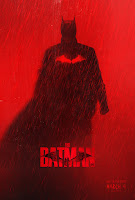
 It all began with a symbol and a date. A simple poster considering what it wrought. For months, all you needed to know was June 23. You could look at a calendar and count down the days until Friday, June 23, 1989. That was the date in which Batman would finally appear on theater screens in the manner akin to his origin.

It may be difficult to imagine now but there was a time when a single superhero film dominated everything. And I mean everything.

The Cast


Batman, the 1989 film directed by Tim Burton and starring Michael Keaton as Bruce Wayne/Batman and Jack Nicholson as The Joker, was a cultural phenomenon in every sense of the word. The long gestating film had started production the previous year and if you thought the backlash the casting of Ben Affleck as Batman created was something [or Richard Pattison], you have no idea when the casting of Keaton, primarily known for his comedies, caused. I can’t remember my own impressions for Keaton, but I remember quite vividly my thoughts on Joker. My choice, if you were going by the comic book look and feel, was Peter O’Toole. Sure, he was older, but he had The Grin. But when Nicholson was cast, I was like “Of course!”


Pictures in Starlog the spring of 1989 gave us the first glimpse of the all-black Batsuit and Keaton in it. I was sold! Then photos of Nicholson’s Joker emerged and I was so excited! I was and am an easy mark in that respect. A lifelong comic book fan, it was so cool to see Batman in real life. More thoughts here.


Batman ‘66

Let me pause here a moment to comment on the 1966 Batman. At the time, I was 20 and had come of age just as comics realized they could be darker and grittier. I was almost the perfect age to read The Dark Knight Returns and Year One and The Killing Joke. So, in 1989, I was distancing myself from TV’s Batman, the way I was first introduced to the character. Gone in my mind was the funny Batman. Here was the grim Batman, the way he was in the 1940s comics and the 1970s comics. Ironically, 35 years later and with the passing of Adam West, I’m ready for grimdark Batman to go away or, at least, make a way for more than one version.

The Preview

Back in those pre-YouTube days, the only way you could see a trailer was to go to a movie and buy a ticket. I’m not sure how but I learned that the Batman trailer (or maybe this teaser trailer because I remember the opening on the Batmobile's rocket) was attached to “Bill and Ted’s Excellent Adventure.” Boom! I couldn’t get to the theater fast enough. There it was, with no music and what seemed like unmixed sound, was Batman, alive, moving, beating up bad guys and driving a kick-ass Batmobile with fire out the back! And Joker. Heavens, how awesome he looked. And I loved the line Robert Wuhl’s reporter asked: “Is there a six-foot bat in Gotham City?” And Batman crashing through the skylight? The only question in the spring of 19898 was how many days until 23 June?

The Movie

I can’t remember for sure if I went to the midnight showing or day one showing. I worked at a movie theater the summer of 1989—a great summer of movies—so I’m pretty confident that I saw it at midnight with the throngs of other folks. Like just about everyone, I lost it. This was the movie we had been waiting our entire lives for! The Danny Elfman score. The opening scene when the mugger asks what are you and Keaton says “I’m Batman” (still my absolutely favorite part). The gadgets. Keaton doing a wonderful job. Nicholson chewing scenery. The fight in the alley with the sword guy. The Batmobile doing…anything. The menace of Joker. The reveal that Joker/Jack Napier killed Bruce’s parents. Prince’s music. The Batplane. The quotes (“Have you ever danced with the devil in the pale moonlight?” “Never rub another man’s hubarb” “I didn’t ask.” “You wanna get nuts? Let’s get nuts.” “My life is…complicated.”) The final confrontation. The final scene with the Bat-signal. It was utterly awesome.

Batman got everyone. The hard-core comics fans flocked to see the movie multiple times. The casual viewer enjoyed it. Your grandpa enjoyed it. Everyone, it seemed, had seen the movie at least once, and chatted about it. Was it the last great common movie everyone saw? I’m not sure, but it was certainly a milestone.

Oh, and the merchandise! Good grief! Batman stuff was everywhere. And, yeah, I bought my fair share. Why the heck not? Up until then, the amount of Batman/superhero stuff available to purchase was meager at best. Nowhere near what it’s like today.

I can’t remember how many times I saw the film. Enough for me to memorize huge chunks of the movie.

Looking Back

The irony now, for many of us who distanced ourselves from the 1966 Batman in 1989, is that the Batman '89--when compared to the Christian Bale films and Batman v Superman and Pattinson's The Batman and the current comics--looks more campy than we ever saw at the time. But that’s only in comparison to what came afterwards. Sure, the immediate next film, 1992’s Batman Returns, went very dark, only to be brightened by 1995’s Batman Forever and, ahem, 1997’s Batman and Robin. When you compare those four films, Batman is the second darkest. But it’s still funny when you look at it now. 

But not in 1989. In that year, we comic book readers thought our time had finally arrived. We had our dark Batman. What was next? Another Superman? What about those Marvel characters? And when’s the Justice League gonna land in our laps?

Well, we still had to wait another decade until 2000’s X-Men to kick off this current Golden Age of Superhero Movies. This current run of films has produced some truly great movies (The Dark Knight; Spider-Man 2; Batman Begins; all three Captain America movies; Avengers; Ant-Man, Wonder Woman, and, of course, Infinity War and Endgame) but it all had to start somewhere. Technically, the run started in 1978 with Superman The Movie (Boy, am I so happy they didn’t put “The Movie” at the end of “Batman”), but the real start of superhero movies was Batman.

I’m so glad I was alive at the time to enjoy it.

Saturday, December 9, 2023

So That's What It's Like to Live With Your Imaginary Characters

by

Scott D. Parker

Have you ever wondered what it’s like to be a writer wrestling with a story? Well, have I got a movie for you.

When I first learned there was a movie based on the non-fiction book The Man Who Invented Christmas by Les Standiford (my review), I wondered if it wasn’t merely a documentary. To some degree, it is, seeing as how the movie is based on the actual events of how Charles Dickens came to write A Christmas Carol in only six weeks and publish it on his own. But the movie is more. It is a visual representation of how writers create their characters, how said characters can take over an author’s imagination, and end up becoming something more.

The movie opens in October 1843. Dickens’s finances are not what they once were, with Martin Chuzzlewit not performing as well as Oliver Twist. Add to that the author’s blank-page syndrome: he doesn’t know what next to write. When he happens upon the idea of a Christmas story, his publisher scoffs at the idea. The production time alone makes the notion a non-starter to say nothing of the fact that Dickens had not written a single word. Nevertheless, the thirty-one-year-old author charges ahead.

Anyone familiar with the novel or any of the screen adaptations will enjoy witnessing Dickens encountering various bits of dialogue in his everyday life. The famous line about the poor houses is uttered by a rich patron who dislikes Dickens populating his stories with “them,” the poor. He sees a jolly couple dancing in the dirty streets and envisions Fezziwig and his wife. And, at a funeral, he sees a man, played by Christopher Plummer, who becomes the physical embodiment of Ebenezer Scrooge.

Seeing Dickens struggle with crafting the name for his main character is fun, particularly when Dickens, as played wonderfully by Dan Stevens, zeroes in on the name itself. “Scrooge.” The look on Stevens’s face is like “Of course that’s the name.” I don’t know about you writers out there, but coming up with a name for main characters can be difficult.

But the movie really takes off when Dickens begins interacting with his creations. Plummer’s Scrooge has multiple dialogues with Dickens, and the two actors play off each other well. Stevens possesses a certain manic quality not present in his role on Downton Abbey. I could easily see him starring in screwball comedies the likes of which that made Cary Grant a star.

As any writer will tell you, when you are deep in a novel, the moments are few when you are not thinking about the story. Sitting in traffic? Check. Shopping at the grocery store? Check. Watching a TV where you’re suppose to care about that story? Check. It happens all the time. So it was utterly charming when the movie portrays Dickens’s characters actually showing up in places he least expected it.

Credit the movie also with some genuine tension. The mere fact there’s a movie devoted to this book’s creation means you know Dickens completed the book. However, the movie effectively showed his struggle with the ending just well enough that you might start to wonder if Boz would get it done.

I’m not enough of a Dickensian to know if the author truly had a different ending to his Carol or not, but the movie plays with that concept. Dickens wondered if someone like Scrooge could really turn around his life in only one night. I’d like to think that almost anyone—be it Scrooge, the Grinch, Jimmy Stewart in “It’s a Wonderful Life,” Bill Murray in “Groundhog Day” (and “Scrooge”), or even Nicholas Cage in “Family Man” to name a few—would change.

The Man Who Invented Christmas is a charming, magnificent movie about a remarkable author and a timeless story. I can’t help but wonder if this movie will, in the course of time, became a classic.

Saturday, July 8, 2023

Growing Up and Older With Indiana Jones: A Dial of Destiny Review

by

Scott D. Parker

The new movie is a chance to reconnect with an old friend for one last adventure before we have to say good-bye. In that framework, the new film works quite well.

The Space Age of 1969


After a wonderful opening sequence that can stand alongside any action sequence from the original trilogy, we meet the old Indy. He’s shockingly in his boxers, asleep on a recliner, with the remnants of booze on the side table. Gone is the hale and hearty man we met in the 1980s or even the middle-aged version we saw in 2008. This man—Indiana Jones and Harrison Ford—is old. As good as it was to see an old friend, the visuals took a few scenes to get used to.

Soon, however, things begin to roll along. Helana Shaw (Phoebe Waller-Bridge) arrives and she’s looking for one half of the Dial of Archimedes, an object her father was obsessed with and ultimately the cause of his death. She’s not the only one. A former Nazi scientist (Mads Mikkelsen) who now works for NASA is also after the Dial. His plan is to find the other half, link them together, and then, armed with the knowledge of how World War II ended, go back in time to not only kill Hitler but become the new leader of Germany.

Chases ensue, clues unraveled, treasures found, and Indy has one last adventure.

The Clash of Styles


I found the inclusion of Helena a breath of fresh air for the franchise. She’s a little bit Elsa from Last Crusade but she’s also a bit how Indy himself was in Temple of Doom. He wanted the Shankira Stones because they’d be worth a fortune. Remember the “Fortune and Glory” mantra he says over and over? Helena has debts to pay and she thinks antiquities can fetch a high price. As such, it is a battle of wits between her and “It belongs in a museum” Indy over what’s more important.

I also enjoyed Helena’s own “Short Round,” Teddy, a teenaged street urchin in Tangiers. Once he enters the story, he never leaves. There are generational differences to exploit and echoes of Short Round himself as Indy slowly comes to make sure the kid is safe, despite all the bad guys doing bad guy things.

Like Marion, Helena goes toe to toe with Indy. She’s not a screamer. She’s an active participant in the story. Heck, it was her entrance that started the story itself. Loved the somewhat gawkiness of Helena despite as she put up multiple fights. If memory serves—I’ve only seen the movie once at this point—she’s never in a situation where Indy needs to save her. It’s Indy that needs saving, and more than once.

The McGuffin


I really dug the truth of the Dial itself. It wasn’t a tool that would enable someone to go back anywhere in time. It only went to a single place in time: 212 BC at the siege of Syracuse. The twist of the Dial was foretold via Helana’s card trick, something that only comes into focus after you learn the truth of the Dial.

I like that there are fissures in time that present themselves. It helps explain how boats and planes just disappear from time to time. I like that Archamedes figured out a way to calculate their location and duration. It’s all just math.

Indy’s Vulnerability


No matter where this movie lands in the list of Indiana Jones films, there is one scene that will be vaulted into one of the best of the franchise. When Helena asks Indy where he would go if he could truly travel back in time, without hesitation he says he’d go and prevent his son from enlisting in the army as an act of defiance against his father. Mutt dies in Vietnam, and that broke Indy and dissolved his marriage. Harrison Ford may not get a lot of credit for his acting, but in that scene, he was fantastic. As a father myself, I felt the gut punch of Indy’s words. I find it fascinating that so many movies this summer—Dial of Destiny; The Flash; Into the Spider-Verse—all have common moments when parents talk about their children. It’s just a sign that we’re all getting older.

Growing Up and Older With Indiana Jones


For so many of us, much of our lives have had Indiana Jones in it even if there were not any new movies. In 1981, I had little experience with the type of film Raiders the Lost Ark wasis and it lit a fire. I didn’t become an archaeologist but I did become a historian, and part of the ingredients that blended together in my being that made me love history was Indiana Jones.

The kid I was in middle school the summer of 1981 became a high school freshman by the time Temple of Doom came out. I loved both films, and, awkward teen boy that I was who had zero luck with girls, I fantasized about being Indy’s partner in Temple of Doom. Naturally, Willie Scott had a younger sister that was just about my age. My derring-do won her heart… because of course it did.

I worked in a movie theater the summer of 1989 and saw Last Crusade many times—and parts of the movie even more than that. The music by John Williams was phenomenal as ever, and seeing Indy’s dad be Sean Connery was icing on the cake. I was twenty, in college, and yet I still wanted to be like Indy. But it was Connery as Henry Jones imploring his son to “Let it go” that helped set a certain mindset. Like both my parents and my grandparents showed me by their words and actions, Connery reminded his son that there were things in life way more precious than some trinket.

I was a father myself in 2008 when Indy returned. My son was in grade school and, just in case Crystal Skulls was another dark film like Temple of Doom, only my wife and I saw it on opening day. While Last Crusade ended in the best way possible—literally riding into the sunset—it was nice to see Indy again. And Marion and their son, Mutt. At the time, I didn’t love the film like the original trilogy but that has softened over the years. But here was Indy as a dad, and I was a dad, and wasn’t that something.

Here in 2023, Indy is much older. He’s alone and he’s lost his son. Thankfully, I am happily married and our son is starting his life on his own, but he moved out last year and his absence is felt everyday. There are times when I imagine my son’s future and I remember what it was like to be in your twenties with a lifetime of choices and experiences waiting to be made. For the younger me, part of the zeal for life was the the zeal for adventure like Indy had, even if I wouldn’t be traipsing across the globe dodging bullets or finding lost treasures.

Now, at middle age, I have the ability not only to look backward but to look forward as well. I get to reflect on the results of my own life’s adventures so far and have the time to adjust for the future. Inexorably, life moves forward. The beauty of a movie like Dial of Destiny (and Crystal Skulls before it to say nothing of The Force Awakens) is to acknowledge that time moves forward for our movie heroes as well. Some characters—like Ferris Bueller or Kevin McAllister—will forever remain fixed looking a certain way at a certain point in time. Others, like Indy, get to age with us. Just like old friends do.

I am so thankful I got to grow up and get older alongside Indiana Jones.


Saturday, September 17, 2022

How Kevin Smith’s Storytelling Turned a Famous Quote on Its Head

By

Scott D. Parker

I watched “Clerks III” on Thursday, and it’s a great example of a storyteller allowing his characters to age, grow, and mature. It’s also an example of a storyteller taking a famous quote he wrote and changing it’s meaning.

“Clerks III” is Kevin Smith’s latest film, coming twenty-eight years after his debut movie, “Clerks.” Being the pop culture geek that I am, folks are surprised to learn that I only started watching Smith’s films 2019. Up until then, he was only a podcaster (and that only since 2012). So, in 2019, leading up to the release of Jay and Silent Bob Reboot, I watched all of Smith’s films, reviewing and ranking them all.

What makes my viewing of these films interesting is that I am in my early fifties rather than the younger person I was had I watched these movies in real time. As a result, they strike me differently (just look at my favorite Smith film). I have a much longer review of “Clerks III” on my own blog, but

I have a much longer review of Clerks III on my own blog, but I want to touch on one aspect here. It’s a storytelling technique I found incredibly brave that yielded an incredibly emotional reward. But to do so, I have to spoil the ending. You’ve been warned.

The Origin of the Famous Quote


A running gag in Clerks was that Dante, one of the two main clerks, came into work on his day off. Played by Brian O'Hallaran, Dante just seemed to sigh and roll his eyes as he had to deal with annoying customers who came looking to buy whatever crap they wanted. To just about everyone, he kept lamenting that “I’m not supposed to be here today.” To all of us who had to work jobs like, boy could we relate.

In Clerks II, it’s one of the closing lines of the movie. As Dante and his best friend, Randal (Jeff Anderson) stand behind the counter of the very same Quick Stop convenience store they now own, Randal says, “You’re not supposed to be here” in an echo from Clerks. Dante replies with “It's the first day of the rest of our lives.”

The Clerks III Version


The main story of the movie is that after Randal has a heart attack, he decides to do something creative with his life and make a move about his life. Basically, he decides to make Clerks. But it’s not all sunshine and rainbows, despite all the in-jokes and winks and nods to the actual movies Clerks and Clerks II.

With the latter two Clerks films, Smith broadened and deepened the love and friendship between Dante and Randal. They are, to use Smith’s term, hetero lifemates. Randal finally realizes how much Dante means to him after Dante himself succumbs to a heart attack. Unlike Randal, however, Dante doesn’t survive.

I’m not sure how many of the folks in my theater were crying when Dante died, but I sure was. Heck, my voice broke a couple of times when I later told my wife the events of the story. Yes, I cry at a lot of things, but these movies and these characters, even over just three years, have come to represent something. I think lots of fiftysomething folks, guys especially, find pieces of themselves in the lives of Dante and Randal.

Now, in Clerks III, at Dante’s funeral, it’s Randal looking down at his friend’s coffin for the last time and he laments that he [Dante] isn’t even supposed to be here [at his own funeral] today.

No one will be able to watch any of the Clerks films—or wear the quote on a t-shirt or see it on a coffee mug—without thinking of how this one simple sentence has had its meaning changed after nearly thirty years.

That’s a fantastic piece of storytelling.

Saturday, July 9, 2022

When Did Characters Become Meta?

by
Scott D. Parker

When did characters in stories become self-aware of all the story tropes they are in and comment on those tropes during the story? In short, when did characters become meta?

I’m not quite sure how to pose this question so let me tell you how I got there.

In my SF book club this month, we discussed John Scalzi’s the Kaiju Preservation Society. It is a wonderful B-movie concept: there is an alternate earth where kaiju (i.e., giant creatures like Godzilla) developed and humans did not. The humans from our earth can travel between worlds and said humans study the kaiju and, well, preserve them.

The story takes place in early 2020 and is populated by a bunch of characters, most of whom are nerds. As such, they say and understand a ton of SF in-jokes, jokes that most of Scalzi’s readers will also get. Not a problem. It’s like writing for the choir.

But one of the book club guys made a point: at no time in the book did any of the characters have a Wow Moment, a sense of wonder moment reminiscent of that scene in Jurassic Park when the characters (and viewers) first see the dinosaurs. He went on to posit that basically up to the 1990s, many characters in movies (and books) seemed to exist outside of the present pop culture moment. That is, many characters didn’t have a handy shorthand list of references to speak about.

For example, in the Scalzi book, when something odd came up, all the characters in the book had to do was reference an existing movie moment and everyone (readers included) would know. (I did the same thing when I name dropped Godzilla a few paragraphs ago.) You could make the argument that Scalzi was not bothering to expound or explain something, but I actually don’t mind the shorthand at all.

We started commenting that many movies in at least the last decade+ are populated by characters like this and we tossed around the idea of when it started. Naturally, we arrived at the first Scream movie (1996) where all the characters knew all the tropes of horror movies and actually riffed on them and tried to overcome the killer by using those tropes. The movies of Kevin Smith are full of references like this, and some of the Marvel films reference Star Wars and other properties.

That got me to thinking about the mystery genre. Were there films, books, or TV shows that fit this type of story? The first thing that came to mind was the TV series “Only Murders in the Building.” I’ve not seen any of season 2, but season 1 had the characters basically do what Scream did for horror: narrate, in a meta way, the story they were in, commenting that in a normal true crime podcast cast, this is where a twist would occur…right before a twist in their own story happened. “Castle” had some of that mainly because the main character was a writer.

So, fellow mystery fans, I challenge y’all to help me out: what are some mystery stories of any medium where the characters basically comment on the story their in using tropes of the mystery genre?

Saturday, June 25, 2022

All the Feels or All the Logic?

by
Scott D. Parker

Why do you consume a story?

I use the word ‘consume’ because you could watch a movie or TV show, read a book, or listen to an audiobook or podcast.

My wife watches quite a bit of the true crime shows on TV and various streaming services. She likes to learn the intricate details of how the investigators discovered the culprit and, in most cases, land the perp in jail. She’s way more logical than I am and these shows give her a sense of order and justice. That drive for order is a large reason why she and I both enjoy BBC TV shows and other crime and mystery programs as well as books and movies.

But when it comes to established stories that have more than a twinge of nostalgia, I really enjoy the feels. How does the story make me feel?

I ran across this twice this week. The smaller version is my re-watch of the 1996 Mission: Impossible movie. My twenty-year-old son hadn’t seen it so we all watched it together. The way the movie is constructed—with its descriptions of how they’re going to break into various places and the spy stuff—is something I really dig. In fact, I found myself grinning like a goofball throughout the entire movie. Well, except for the vault sequence. Watching it again, I was in rapt silence.

By the end, I was buoyed by the story and ready to, I don’t know, hang by a wire from the ceiling. The story works, but the feels are fantastic.

The same is true for the Obi-Wan Kenobi finale this week. And spoilers are coming.

I’ve said it before but I think my favorite time of being a Star Wars fan is that initial era from 1977-1980. In those years, the galaxy was wide open and not some family drama. And I associate that feeling most with the first half of Star Wars, while the action centered on Tatooine. As such, I really enjoyed the Obi-Wan show.

From a logical point of view, the writers delicately threaded  this series through established canon and I think they did a great job. It’s a testament to how much I enjoyed the show that even though I knew who lived, I found myself constantly on the edge of my seat. Will young Leia survive? Will Obi-Wan be killed by Vader?

But the finale proved to be one of my favorite Star Wars things. We got an epic lightsaber battle between Obi-Wan and Vader, complete with Hayden Christensen looking out from a seared-open Vader mask. We go a neat and tidy button on Obi-Wan’s infamous phrase to Luke: Vader betrayed and murdered your father.

And we got some fantastic character moments, a feat especially impressive considering the action. In fact, it was the character beats in the final ten minutes that really struck me and brought the tears. Oh, and the inclusion of Princess Leia’s theme from Star Wars? Icing on the cake. That piece of music ranks as one of my all-time favorite themes in the entire franchise and it was used so well.

That last shot? [won’t spoil this one] Perfection.

So, with Obi-Wan, in my mind, I got the logic of the storytelling but I also got the feels. That’s what often sends a story over the top for me. It’s why I enjoyed Jurassic World: Dominion so much. It’s why I dig La La Land, Toy Story 3, any random episode of New Amsterdam, and John Scalzi’s book, Redshirts.

I want the feels, and any story that delivers is a winner in my book.

How about you? Do you want the feels or is logic more your speed?

P.S. I wrote this piece late afternoon on Friday. Last night, I watched the new Baz Luhrmann "Elvis" movie. Add one more to the feels list. Except this one was tragic. My wife and I just sat there for a few minutes while the main credits rolled. I had teared up at the end. So we just sat and listened and thought about the creative spirit of Elvis Presley. 

I don't know about you, but when I take in a story in which a creative person is tamped down or abused or taken advantage of, I feel my own creative spirit wanting to burst out and soar.

P.P.S. Since I watch every new episode of Star Trek: Strange New Worlds on Saturday morning while enjoying my weekly do-nuts, I only saw the latest episode, The Elysian Kingdom, less than an hour ago. Adding this one to the Feels List. Oh my, did the feels wash over me. 

Saturday, June 18, 2022

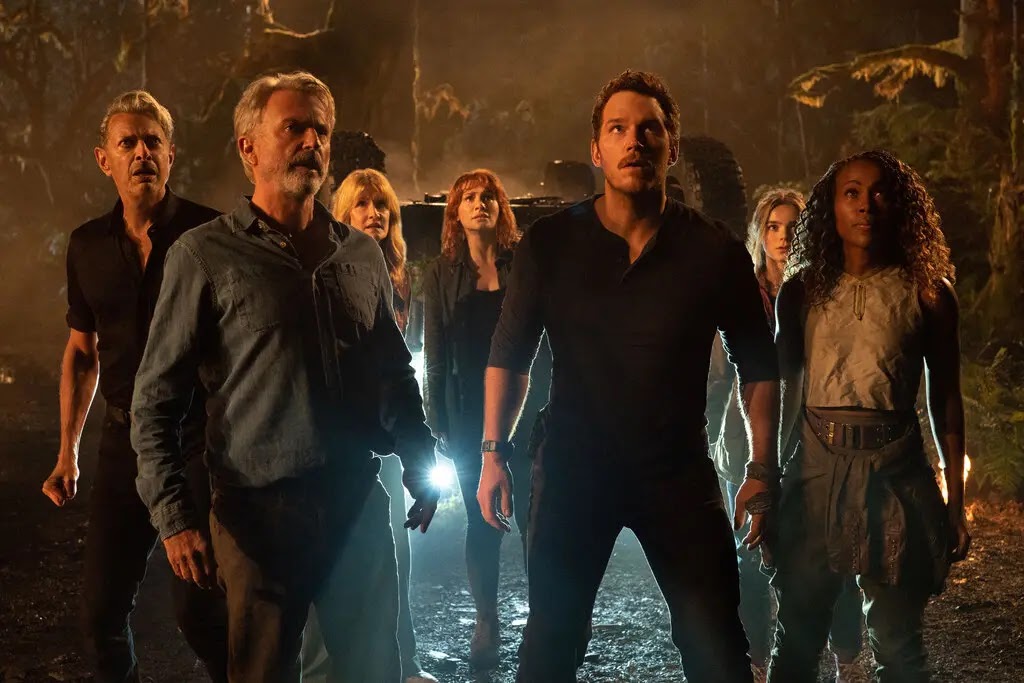
Jurassic World: Dominion: A Wonderful Summer Blockbuster

By

Scott D. Parker

I’m not sure what movie some folks watched but it sure wasn’t the one I saw.

When it comes to movies, I make it point not to read any reviews ahead of seeing a movie I want to see. If the trailer hasn’t grabbed my attention and compelled me to watch—or the pedigree of the actors, writers, and director—then I don’t seek out the Rotten Tomato score to sway me. This is not the same with books in which I will happily read and take into consideration the opinions of dozens of fellow writers when they recommend books.

But once I’ve seen a movie, I am curious to know the general consensus and see if it lines up with my experience. When I saw the 2.5 hours of Jurassic World: Dominion (AKA Jurassic World 3 AKA Jurassic Park 6), I was enthralled, entertained, and emitted more than a few utterances of “Yeah!” and “Cool!” It ended the 6-movie franchise quite well, introducing the original Park actors with the new World actors in a way that felt organic. The music was nicely used throughout, including the elegant main theme from John Williams—both the orchestral as well as the softer piano version. There were dino-on-dino fights, a kick-ass motorcycle/dinosaur chase through a European city, and a dino/airplane chase. There were dinos in the water, dinos in caves, and dinos in snow. All things we’ve not seen before.

Well, I’m pretty sure we haven’t. I’ve pretty much got the first movie memorized. The Lost World and Jurassic Park III, a little. Jurassic World I remember decently and I all but forgot World 2: Fallen Kingdom.

But I remember the closing show of Fallen Kingdom well, accompanied by Jeff Goldblum’s voiceover. Dinosaurs now live among humans and we’re going to have to learn to co-exist as best as possible. And that’s how Dominion starts. It shows us a world like that. Granted, it’s not one I’d prefer to live in—don’t need the possibility of my plane flight being overtaken by a pterodactyl—but it is one original author Michael Crichton envisioned and that Goldblum’s Ian Malcolm keeps talking about in every movie he’s in. So in that respect, Dominion gets it correct.

So imagine my surprise when I hop on over to Rotten Tomatoes on Monday night—after eagerly relating all the fun and cool stuff in the movie to my wife who didn’t go—that the critical consensus was so poor. Again, what movie did these folks watch?

Okay, the plot. There are two threads. The World Plot has Owen and Claire trying to protect Maisie from the rest of the world because she’s a clone. Blue the velociraptor lives nearby and has unexpectedly produced a young raptor called Beta. (It shouldn’t be unexpected because “Life always finds a way.”) Bad guys kidnap both younglings and Owen and Claire follow.

The Park Plot involves our three original cast members and boils down to Laura Dern’s Ellie Sadler researching why formerly extinct massive locusts are eating some crops but not others. If they’re not stopped, there will be a global famine, yet the locusts don’t seem to be eating crops grown from seeds provided by Biosyn, the new bad-guy company a la InGen from the Park movies. She makes the assumption—with an assist from Malcolm—that Biosyn is behind both the seeds and the locusts. She enlists the help of Alan Grant (Sam Neill) and they set off in search of proof at Biosyn’s giant lab/breeding ground/dinosaur habitat in Europe.

Which is exactly where the kidnappers are taking Maisie and Beta. Naturally, the World characters and the Park characters will meet—the selling point of the film—and they’ll battle enemies both dino and human. Along the way, there are wonderful set pieces that are the definition of a summer blockbuster. In fact, as Owen is racing through the streets on his motorcycle, trained raptors on his tail, you see the aforementioned plane start to warm up. I leaned over to my son and said, “I bet he jumps into the open plane in midair.” Viola! That’s exactly what happened.

Yes, that entire sequence felt like an espionage film (Bond, Bourne, Mission Impossible) but who cares? It was thrilling. There were lots of other thrilling moments as our heroes fight to stay alive, but not without some humor along the way.

But there are also some great character moments. Goldblum is having a field day as Malcolm, just chewing scenery left and right and I loved every second of it. The quiet moments are also good, like when it’s just Ellie and Alan seeing each other for the first time in decades, subtly lamenting lost time. Yes, their story line got a little bumbly as they tried to escape from the locust lair but it was minor.

I also liked how certain scenes were set up so that you *think* you know what’s going to happen but then your expectations are subverted. Case in point: Goldblum’s Malcolm is stuck holding a flaming piece of a spear-like metal pole and there’s a dino looking at him. In Park 1, he doesn’t know to throw the light source and freeze. Well, I said to my son, I bet he’s learned now. Nope. Not what happens. But it’s way cooler.

Scott Campbell, as the bad guy, plays Lewis Dodgson oddly. He is all bad at one moment and then weirdly like an absent-minded professor the next. I liked that they used him as a character although in the movie, it isn’t explicitly stated that he was the character in the original Jurassic Park who pays Wayne Knight’s Dennis Nedry to steal embryos in the Barbasol shaving cream can. But said can is a trinket in Dodgson’s office as he tries to escape. And I won’t even tell you what happens to him, but if you’ve seen Park 1, you have an idea.

Speaking of that, I like the little subtle Easter eggs like when Ellie takes off her sunglasses in a manner almost identically to Alan from Park 1. Nice touch.

The nostalgic part of me would have liked one last shot of all the Park characters together. Sadly we don’t get that, but we do get some resolution for everyone. And character growth. And bad guys getting what’s coming to them. And dinosaurs. Lots of dinosaurs.

Again, I’m just not understanding why the dislike for the film. The audience score on Rotten Tomatoes is 79% so clearly it’s resonating with folks. It resonated with me quite well and I thoroughly enjoyed the film.

Saturday, June 4, 2022

A Few Recommendations for Summer 2022

by
Scott D. Parker

Every now and then when it comes time for me to write a Saturday post, a large, overarching one about a single topic, I realize I don’t have one. So I’m going to provide a few recommendations of things I’m listening to, watching, or reading.

Top Gun: Maverick


Now THIS is how to do a legacy sequel. Age up the characters in real time, address the passage of time, and provide a wonderful piece of closure with a legacy co-star. Oh, and incredible action sequences. Holy cow was this a great movie. I took my wife who didn’t necessarily want to see it but she emerged very entertained. Not as entertained as I was: now I want to see this film in IMAX.

And please tell me I’m not the only one who saw the movie and kept having to slow down the car while driving home.

Def Leppard: Diamond Star Halos


Taking a page from the legacy artist idea I wrote about a couple of weeks ago, Def Leppard released their newest album last Friday. Fifteen tracks (17 if you buy from Target) of classic rock goodness. Much like the modern band, The Struts, the Joe Elliott-led five piece band wear their influences on their sleeves, and it starts with the album title.

There’s a whimsical vibe to these songs from the opening chord progression of “Take What You Want” to open the album to the last few notes of “From Here to Eternity.” Allison Krauss lends her vocals to a pair of tunes but make no mistake: this is a rock/pop/metal album just like the band used to make in their heyday.

Lyrically, the guys know their age and acknowledge it throughout the entire record. This was an album I looked forward to ever since it was announced and boy did they deliver.

And yes, we listened to Def Leppard on the way to and from seeing Top Gun: Maverick.

Obi-Wan Kenobi


The third thing released last Friday, this is a Star Wars series I’ve been eagerly anticipating since it was announced as well. In fact, I even held off reading the old Extended Universe novel.

We knew what we were going to get from the trailers: an older, wiser(?) Obi-Wan, living on Tatooine, watching over a ten-year-old Luke Skywalker. What I didn’t expect was his sister, Leia. In fact, it is her plight that propels the series.

I appreciate the slower roll, just like I did for the Mandalorian. I have zero issues with the actors on the show either (so a certain segment of the Star Wars fandom can just go home).

As big a Star Wars fan as I am, I didn’t watch the animated shows so everything in Obi-Wan Kenobi is new to me.

Oh, and so great to see Darth Vader back to being the feared force he is. But I’ll say something that might make a few of y’all look at me askance. I’m fine with James Earl Jones voicing Vader, but how about some more intense inflection, huh? I mean Vader/Anakin finally lays eyes on Kenobi after ten years and it’s like their talking over tea. The last thing Anakin yelled at Kenobi in Episode III was pure hatred. Where’s that emotion in Vader’s inflection?

No Time to Spy by Max Allan Collins and Matthew V. Clemens


If you like James Bond, might I point you in the direction of this trilogy of book by Collins and Clemens. The premise is pure fun: the main character is John Sand, a real spy who worked with Ian Fleming and the latter author based James Bond on John Sand. Sand, now outed as a spy, marries a rich Texas oil heiress. Despite his retirement, action and adventure follow Mr. and Mrs. Sand.

While I’ve not read all three books—Come Spy With Me; Live Fast, Spy Hard; To Live and Spy in Berlin—a compilation ebook is on sale *this weekend* for only $0.99. You read that correctly: for a dollar(!), you get three novels. Seriously, it’s an impulse buy at that point.

Here’s the Amazon link.

Roll With It by Jay Stringer


Yesterday, Jay broke the news that his latest novel is now available as an audiobook on Audible. As a person who primarily consumes books in that manner, this was great news.

But Jay went above and beyond and made available a few promo codes. These are US only—UK codes will be forthcoming—so if you haven’t had a chance to read his post from yesterday, head on over and see if any of those codes are still available.

Even if they’re not, the book is only 1 credit ($13.96 if you just want to buy it) so get on over to Audible and get a copy. Also, for you library folks out there, be sure to request your library to buy the book and help spread the word.

Saturday, March 5, 2022

Impressions of The Batman

by

Scott D. Parker

As I will do for every Batman movie ever made, I saw the new Batman movie on opening day. Lifelong fan of the character than I am, I have thoughts.

There will be spoilers.

Thirty-three years ago, we got a dark and brooding Batman in the form of Michael Keaton. Turns out, it wasn’t so dark, but holy cow was it at the time. Then after a more bright series in the 1990s, we got a darker, broodier Batman in Christian Bale. Then we got Ben Affleck who was dark and broody.

And now we have Robert Pattinson who is uber-broody. Like others have said, he's Emo Batman. And you know what? I'm fine with it. I actually enjoyed the film quite a bit, all three hours of it. And my middle-aged bladder was able to make it through the entire film without compelling me to run to the bathroom. Why? Because I didn't drink a lot of water. But mostly because the movie was rather compelling.

The Voice - Kevin Conroy is all but the definitive Batman for me when it comes to how he does the voice of Bruce Wayne and Batman. Bale's gruff growl became distracting and I particularly appreciated Affleck's voice modulator. Pattinson's low, non-gruff voice worked for me.

The Suit - A fully functional, bulletproof body armor bat suit. I loved the collar. The cowl was also well done, showing all the scrapes he's endured. And I liked that they acknowledged he wears black makeup around the eyes. I loved the gauntlets that could be deployed at a moment's notice. And the use of the taser. The bionic contact lens was a nice touch.

Jeffrey Wright - Can we just get a TV show with him as Gordon? Really, really liked how he stood up for Batman from the jump. We even got a few of the bewildered Gordon moments like when he looks back and Batman's gone.

The Police - Really liked how the cops go from disliking Batman to grudging acceptance. And that scene when Batman and Gordon walk Falcone out and they see all the good cops? Wonderful.

Colin Farrell/The Penguin - Completely could not see Farrell in the makeup. But I really liked his ferocity with the character. Sure, it's a little on the Deniro side of things but Oz is a crime lieutenant. It's was fun.

Zoe Kravitz/Selina Kyle - Her action scenes were fantastic with her multiple kicks per strike. I liked her one-track mind to help find then avenge her friend. And she had some of the few funny parts in the movie.

Paul Dano/The Riddler - Going into the theater, I could not have picked Dano out of a lineup. And I so liked that his visual style was basically a geek. A genius geek, but just a normal guy on whom the world had shat on for years. His monologue in the jail cell was pretty darn fun.

The Riddler's Big Plan - I so love movies when the villain is 25 steps ahead of the hero, and this movie had that in spades.

Batman as Detective - Very, very nice to have a movie like this. Yeah, we've had the big explosion version of the character so why not basically have a PI solving riddles and crimes who just happens to wear a bat-suit rather than a trench coat and fedora. T'was nifty that Alfred helped out with that.

The Fight in the Dark - Maybe 30 seconds, but holy cow, was that sequence awesome. One of the best in all of Bat-movie history. I'd bet money that director/writer Matt Reeves was inspired by the hallway sequence with Darth Vader in Rogue One.

The Finale/Mist Scene - As soon as Batman exploded that fire extinguisher and created a cloud of mist, I knew he was going to jump out of it. Fantastic visual.

And a child shall lead - When Batman, with red flare in hand, goes to help the mayor-elect and others get out of the flooded arena, I so loved that it was the young boy who was the first to take Batman's offer of help. The boy recognized the hero that Batman was and showed the way.

The Ending Speech - I appreciated the mirror version of Gordon's closing speech in 2008's The Dark Knight. This Batman, for all his mopiness, recognizes the need for hope in Gotham. That is an intriguing plot thread to open.

The Mood - I'll admit I was a tad leery of yet another brooding Batman movie, but I was sucked in almost instantly. It was a slow burn movie, punctuated with intense fighting sequences, but I really liked it.

The Music - John Williams's theme to Superman is arguably the greatest super-hero theme every written. Well, not arguably to me. But Danny Elfman's Batman theme is definitely second. When I saw that Michael Giacchino as the composer, I was excited. But a theme like from Williams or Elfman would not have worked in a movie like this. The slow, downbeat score, with the new Batman theme scattered throughout the movie, worked really well. Of particular note was the harp-and-cello piece when Bruce Wayne went into his parents' room.

The Verdict


Up until 2022, there has only been one live-action Batman at a time. That changes this year. Later, when we get The Flash movie, veteran Batman Michael Keaton returns and we'll a second live-action Batman, even if it is a return of an old favorite. That's a good thing, because if you don't like the mopey Batman, just wait. Or watch other versions.

Here's the thing: in the summer of 2008, we got one of the best Batman movies ever in The Dark Knight. Later that fall, we got the equally fun and light-hearted animated series Batman: The Brave and the Bold. Boy did I love that series. And I also liked that year's epic Batman movie. I can appreciate both of them because there is room for Batman to be interpreted in different ways.

This is Matt Reeves's interpretation of 80 years of Bat-stories and the character and situations. As much as I love the brightness of the Marvel movies, Batman works well in this kind of story. Like I mentioned at the top of this post, I was a little leery/weary of broody Batman.

But Reeves's story, direction, and cinematography as well as Pattinson's performance won me over. It did for my wife as well. (Note: she is not a super-hero film fan but loved Bale's Batman, especially The Dark Knight, perhaps the only super-hero movie that she'll start to watch if she runs across it on TV.)

I thoroughly enjoyed this movie and look forward to seeing it again.

Saturday, September 18, 2021

Favorite Movies and TV Shows Featuring Railroads

by

Scott D. Parker

Earlier this week, over at the Western Fictioneers blog, I posted this column. It served as a fun list of my personal favorite movies and TV shows that feature trains, but it also revealed the cover of an upcoming collaboration with David Cranmer, aka Edward A. Grainger.

Enjoy.

When you think of what makes a western a western, railroads and trains naturally make it onto the Top 10 list. They may not be in the Top 5, but they certainly play a significant role. I know they did when it came time for me to write my own western stories, especially with the creation of Calvin Carter, Railroad Detective. You see? It's right there in his title.

David and I emerged on the scene more or less at the same time, now over a decade ago. We each ended up creating a western hero. He created Cash Laramie, the Outlaw Marshal, who, along with his partner, Gideon Miles, deal with outlaws and desperadoes wherever they rear their ugly heads. For me, I spawned Calvin Carter, a former actor who, in the course of tracking down the man who killed Carter's father, learned he had a knack for detecting. He often dons disguises and uses his acting abilities to bring a certain amount of flair to the role of his lifetime.

A while back, David suggested we team up our heroes and, after a decade of stops and starts, the first pairing of Cash and Carter will be published this fall. In Cash Laramie and the Sundown Express, owlhoots have hijacked the inaugural run of the fastest train in the west, and it's up to Cash and Miles to retake the train. Unbeknownst to them, Carter is on board, in disguise, as he, too, attempts to thwart the hijackers while saving the passengers, including the renowned actress Lillie Langtry.

David thought it a fun idea if I made a list of favorite trains in movies and TV. I agreed, but then quickly realized something. Not only did my list almost instantly get filled with non-western ideas, but some of the more well known westerns to feature trains were movies or TV shows with which I am not familiar. Thus, you won't find Hell on Wheels on this list because I simply haven't watched it. And while I have watched both versions of 3:10 to Yuma, I can't speak with any authority because I can't remember a lot of the plot. 

So, with these caveats in mind, here's my list.

The Great Train Robbery (1978)


If I'm being honest, this might be the first heist film I ever saw. From the opening of Sean Connery's voiceover explaining how the gold is transported and secured, you sit on the edge of your seat wondering if he and his team will pull off the robbery from a moving train. 

Many of the scenes I first saw in my youth remained with me, but two always rose to the top. The ending, when Connery's Pierce, escapes on the police carriage as he was destined for jail, smiling all the way, his arms extended in a sort of bow, really stuck with me. Only now that I think of it do I think a part of Carter's DNA must have emerged from Connery's performance.

The other scene that has always stuck with me is Donald Sutherland's Agar as he runs into the train office and makes wax impressions of the keys, all within 75 seconds. I was enthralled by that kind of thinking and ingenuity. I think this film might've set the stage for my continued enjoyment of heist films, and it undoubtedly enamored me with the charming con man.

Once Upon a Time in the West (1968)


I only saw this film for the first time this century as it is my wife's favorite western. And really, what more is there to say about this Sergio Leone epic that hasn't already been said? Ennio Morricone's score is brilliant, giving the film not only its epic feel but saying, through music, how the modern world is encroaching on the frontier in the form of the railroad.

I appreciate how the locomotive and the building of the railroad serve as the central character in this film, a character that is, in effect, the march of time and we people must adjust to it or get out of the way. And, unlike many westerns that feature railroads, it was a dirty, hot, and mind-numbingly brutal job, but a job that needed to be done, no matter the cost. Of all of Leone's films, this one remains a favorite.

From Russia With Love


I love James Bond and nearly all of his films, but as I've gotten older, I've become more interested in the movies with smaller stakes. This film, the second in the franchise, has a pretty spectacular train sequence that the historian in me loves. 

After Bond and Tatiana Romanova have escaped with the Lektor cryptograph machine, they flee on one of the most famous trains: the Orient Express. In these scenes in the middle of the film, you get to see what it was like to travel in style in what is probably the last major decade where train travel was considered a viable economic means of transportation before planes surpassed it.

Key to my enjoyment of the train sequence is the fight between Bond and Red Grant (Robert Shaw). It is the close confines of a train compartment that give the fight its brutal nature. No gadgets, just fists and brawn and brains. A different Bond (Roger Moore) would again fight in a train (Moonraker), but this Sean Connery version--look at that; two Connery films--is my favorite.

The Wild Wild West


No discussion of westerns and railroads would be complete without a mention of The Wanderer, the train and tricked out rail car of James West and Artemus Gordon. Again, TWWW was my first, favorite western TV show. Being a Star Wars kid, I loved the gadgets, the steampunk-before-steampunk-was-a-thing vibe, and West and Gordon's "home." No matter how many time owlhoots or Dr. Miguelito Loveless boarded the train, you knew there was something the Secret Service agents could do to get themselves out of any predicament. 

Not only the gadgets, but I also appreciated how there was science equipment for Gordon to do his investigations and his disguises. 

Like the bridge of Star Trek's Enterprise, so many episodes either began or ended on board The Wanderer that it became a crucial component of a wonderfully entertaining TV show.

Back to the Future: Part III


When David asked me the question about railroads in the old west, this is the first one that came to mind. 

I consider the first film to be one of those perfect films not only as a time capsule of its time, but the storytelling mechanics within the movie itself. The second one gave us three looks: their future (2015, now our past), an alternate 1985, and a trippy return to the events of the 1955-part of the first film. 

But I have a special love for Part III. Set almost entirely in the old west, director Robert Zemeckis basically made a western that held true to all the aspects we have come to love about westerns, but with a twist. Doc Brown not only makes a steam-powered ice machine but he also gets a delightful love story.

Act III's central action sequence is on a train, one they have to get up to 88 MPH as it pushes the futuristic Delorean down the tracks and back to the future. Plus we get a spectacular crash as the locomotive in 1888 falls off the incomplete bridge and crashes into Eastwood Ravine.

As fun as that is, however, it's in the movie's closing moments when we get a truly over-the-top train. Doc Brown, his wife, and two boys (Jules and Verne) return to 1985 to say good-bye to Marty McFly in a *flying train*. 

Mic. Drop

Well, those are my favorite trains in movies and TV. What about yours?

Saturday, June 12, 2021

Embrace the Differences: The Raiders of the Lost Ark Novelization

by Scott D. Parker

Raiders of the Lost Ark turns forty today. Hard to believe, sometimes. I still remember watching Siskel and Ebert gush over the movie. Youthful though I was--twelve--Harrison Ford had already become my favorite actor because he was Han Solo. Who knew Indiana Jones was just around the corner.

To commemorate the movie's anniversary, I decided to do something I had never done before: read the novelization by Campbell Black. Yeah, I had the book back in the day. Yeah, I remember cracking it open. But I also know I never finished it. Heck, I don't even remember getting that far into the book before stopping it. I have no memory why. Unlike Star Wars--where I devoured every morsel of news, read every book, and bought every comic--I don't remember doing the same thing with Raiders. It is possible I didn't continue with the novelization because of the differences. Now, forty years later, those differences are fantastic.

Raiders is one of my Top 5 all-time movies. I have no idea how many times I've seen it, but those clips in the Siskel and Ebert segment are all familiar. It's probably one of your favorite movies, too. I can "see" the movie in my head when I listen to John Williams's brilliant score. But the novel was a nice breath of fresh air. 

Early Days of the Canon

Campbell Black is the pen name of Campbell Armstrong, a Scottish writer, who wrote over twenty-five novels. Few pieces of information exist on the internet about him, but his bibliography notes Raiders was this third, and final, movie novelization. 

In the one interview he did for TheRaider.net, Black comments that he "wrote Jones as I saw him. An adventurer, yes, but I always felt there was a slight melancholy side to him. I don't think Lucasfilm really approved of this, but from my point of view I couldn't write the novel if I had to base it on the character in the script - I found him shallow and shadowy, all action and no thought, and I wanted to add some kind of internal process to him, which I think I did. Up to a point."

As much as I enjoy the extensive universe other writers created with Indiana Jones (and Star Wars, too), there's something special about a single writer, very early on, looking at stills and the script and crafting a story as he sees it. No canon, no interlaced movies, no franchise, no established backstory, just a script and one writer's ideas on how scenes of a movie can be stitched together into a coherent novel.

Like Alan Dean Foster, who ghostwrote the Star Wars novelization, Black must have had access to an earlier script because the differences between the movie we know so well and the events in the novel are sometimes striking, but that's what makes the experience so rewarding. 

The Movie is Not the Novelization

I'm not sure what happened to my original copy of the novel. I had the version with black on the cover. The paperback I read this week was published in 1989, after Last Crusade, so it has a white cover. Soon after I started reading the South America prelude, I took a pencil and began annotating the differences.

In a movie, editors can make cuts and swipes and change scenes. You can do the same in a novel, but Black provides a lot of connective tissue between scenes. Just how did Indy get to Nepal? Well, Black describes in detail all the travel and driving Indy did, even throwing in a new character, Lin-Su. Granted, he doesn't do the same for the journey from Nepal to Cairo, but who cares.

I enjoyed the languid pace of the novelization. As much as I enjoy the movie and all that it delivers, there's something to be said for the same story delivered via text over a number of days. What Black does is what novels do well: get into the heads of the characters. We hear the inner thoughts of Indy, Marion, and Belloq. They all prove quite compelling in Black's hands, adding layers and nuances to each character. 

Belloq, for example, proves himself more competitive and mercenary than Paul Freeman portrays him in the film. With Freeman, you could almost side with Belloq in his quest for the Ark and the secrets it holds. In the novel, he's depicted very much as borderline insane with his single-minded devotion to getting the Ark and using it before Hitler gets his hands on it. 

Speaking of Belloq, something occurred to me that I never considered in forty years. It's regarding the headpiece to the staff of Ra. Belloq gets his version of the headpiece because the words are burned into Toht's hand. With that, Belloq makes his calculations. Indy, however, needs the Imam to read and interpret the words on the headpiece. Did Indy not know that language?

Key Differences

This is what you want to know, right? Well, let me get to it.

South America 

- The pit over which Indy and Sapito swing is actually obscured. Sapito nearly falls into the pit because he steps into the cobwebs covering the pit.

-Indy takes a swig from a flask as he reaches the idol. [Love this]

Berlin

There are a few scenes not at all in the movie. They are from the point of view of Dietrich, the main German officer as played by Wolf Kahler. Dietrich never trusts Belloq and we get many internal thoughts from the German. It also explains how Belloq came to be employed by Hitler. Later, during the Cairo scenes, we get a few more scenes from Dietrich's POV, irritated at Belloq's pomposity.

Connecticut

It is certainly implied that Indy is a womanizer, all but taking an undergrad per semester. This is part of the apparent--but never explained--backstory with Indy and Marion. Based on the book, she might as been as young as sixteen when the mid-twenties Indy had a relationship with her. 

Cairo

-There's a nighttime scene between Indy and Marion and whether or not they they'll hook up. It includes their actual first kiss and we get the skeevy take from Indy about how well the woman kisses versus the child from his past.

-The Imam who reads the markings on the headpiece is the one who puts into Indy's head the idea that no mortal should look at the contents of the Ark. It is the Imam's warning Indy remembers at the end.

Tanis Dig

-There is no scene between Belloq and Marion where she puts on the dress and tries to drink him under the table. In its place is Marion's seemingly being under Belloq's spell. They actually kiss and she all but succumbs to him. 

-Belloq actually sees all the lightening that floods the sky when Indy and his friends open the Well of the Souls. 

Truck Chase

-Toht is in the car that flies off the cliff. He dies here and doesn't get his face melted at the end.

-Black describes how the Germans discovered which pirate ship is carrying the Ark.

The Island

-We learn how Belloq arranged for him to open the Ark before delivery to Berlin.

-The scene where Belloq challenges Indy to blow up the Ark isn't here.

Verdict

The novelization is a nice addition to the wonderful movie. There is a place for both. Campbell Black's novel is a good story and a worthy addition to the canon we now have, even if much of what he comes up with (how Indy got the bullwhip) is overriden with subsequent movies and books. I thoroughly enjoyed reading it and actually might continue with the novelizations of the next three films. 

Side Note

I went and located my copy of the comic adaptation and many of the scenes mentioned here are in there. Perhaps the Marvel comics folks and Black read from the same script.

Sunday, May 30, 2021

Summertime

By Claire Booth

Things I’m looking forward to this summer:

The continuation of Lupin, the French-language heist thriller (June 11 on Netflix; it’s officially Part 2 of Season 1. Whatever. Just watch it. My review of Part 1 is here.)

Finishing Money Heist, the Spanish thriller I just started binging. I’m late to the party and still only on Season 1 (there are four). So far it’s perfect high-stakes, slick-criminals summer viewing.

The Underground Railroad, limited series (out now on Amazon Prime). Colson Whitehead’s book, on which the series is based, was phenomenal. And Barry Jenkins directs.

In the Heights, in theaters June 11. Lin-Manuel Miranda. Enough said.

Black Widow, in theaters and Disney + Premium July 9. This one has an asterisk. Black Widow is one of my least favorite characters in the Marvel Universe and this could be junk. I’ll see what the reviews say before I commit . . .

Jungle Cruise, in theaters July 30. Dwayne Johnson. Emily Blunt. Could be junk. Almost guaranteed to be ridiculous. Will I still see it? Yes. Guaranteed.

Even the poster is deliciously ridiculous!

Michael Lewis’s latest book, The Premonition: A Pandemic Story. (out now)

The Other Black Girl, the debut novel by Zakiya Dalila Harris (June 1)

Finally digging into Death in Mud Lick: A Coal Country Fight Against the Drug Companies that Delivered the Opioid Epidemic, by Eric Eyre. (out now) It won the Edgar for Best True Crime this year and has been in my to-be-read stack for a while.

The Eviction of Hope, a crime anthology. (out now)

Laura Lippman’s latest, Dream Girl. (June 22)

And wrapping up the summer, as always, with Louise Penny. The Madness of Crowds (Aug. 24)

And a few non-media things:

Sending my children to camp

Eating at a restaurant (inside even!)

Bouchercon. I get to list this because, while normally it’s held in the fall, this year takes place August 25-29. In New Orleans. So … hot and sticky and hurricane season. But also … people and friends and panels and jazz and travel and socializing. Heaven.