Showing posts with label police procedurals. Show all posts

Saturday, February 24, 2024

True Detective: Night Country Asks an Interesting Question: What if The Thing Was a Murder Mystery?

By

Scott D. Parker


I’m a True Detective newbie but I was all-in on the fourth season, True Detective: Night Country. Why? Jodie Foster. And the setting.


I know Foster moved behind the camera for a long time and she did some great work. She directed an episode of the science fiction show “Tales from the Loop” a few years ago and I really enjoyed that series. Last year she co-starred with Annette Bening in “Nyad,” a movie I’ve not seen (but will now). Thus, Night Country is the first acting performance I’ve seen in a long time. 


She’s fantastic! She’s hard, stern, dogged, determined, and occasionally unlikeable. In a recent podcast episode, Marc Bernardin mentioned that Foster was enticed by the script written by Issa Lopez but wanted her character, Police Chief Liz Danvers of Ennis, Alaska, to be more irritating. I suspect Lopez was initially surprised at the request, but fulfilled it nonetheless.


The other main actress is Kali Reis. She plays Trooper Evangeline Navarro. Navarro and Danvers have history—because of course they do—but must work together again to solve the case with deep ramifications to the town. Navarro has some indigenous heritage that she draws on and deals with, a theme I’ve noticed with lots of recent shows I’ve watched (like Reservation Dogs, Tin Star, Resident Alien, and Alaska Daily). Like Foster, Reis is excellent with saying a lot but not always with words. 


The Setting


The story takes place in Alaska at the Winter Solstice. In this portion of Alaska, the Winter Solstice means the sun doesn’t rise for weeks. As someone who gets irritated when it’s merely cloudy here in Houston for a few days, I could not live in that environment. At all. There’s a foreboding when it’s always dark. It’s claustrophobic. It’s unnerving. And people live in places like that all the time.


This setting pretty much makes the town and the surrounding environs another character. The show puts nearly every viewer in a situation wholly unfamiliar, and pieces out bits of information in dribs and drabs. It was wonderful to be immersed in something so new yet so foreign.


The Story


If you watched the trailer, you probably got instant vibes from John Carpenter’s The Thing. I really appreciated how Lopez drew me into the show and its main crime—the murder of a group of scientists in a research lab—with the possibility of the supernatural as well as good old-fashioned natural violence. I’ve read that along with The Thing, another inspiration for her story was the original Alien (1979) and its ominous setting. Well, it worked.


The other thing that worked was the ending. I didn’t see it coming, and that is a huge testament to my enjoyment of the six-episode series. Too often, the tried and true tropes come out to play and you just go along for the ride, especially if you like the characters and actors. I’m fine with those types of stories, but when something new and original comes along, it’s so refreshing.

Saturday, August 13, 2022

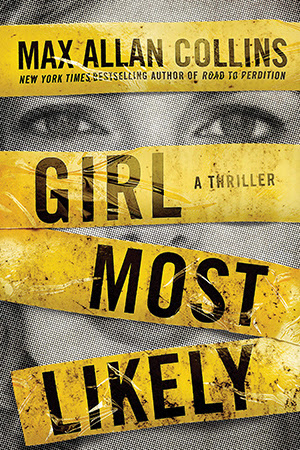
A High School Reunion and a Murder: Girl Most Likely by Max Allan Collins

By
Scott D. Parker

Last week, I mentioned a new way to consume a story, via a Kindle ebook and its corresponding audiobook. The book in question was Girl Most Likely by Max Allan Collins. Well, I’ve finished the novel and here is the promised review.

The lead character is Krista Larson, a twenty-eight-year-old who serves as the police chief for Galena, Illinois, a small, Midwestern tourist town. This makes her simultaneously the youngest police chief in the country and the youngest female chief. As we’re told throughout the novel, her department consists only of a dozen people, herself included.

Her father, Keith, was also a cop, but one from a larger town across the river. They live together now in the wake of her mom’s passing. They have a good relationship, nothing like the oil-and-water relationships you see on TV or in other books.

Speaking of TV, Collins intentionally set out to write “an American variation of the [Kurt] Wallander novels, and such Nordic TV mini-series as The Bridge, the Killing, and (again) Wallander.” Being a fan of those programs myself, that was pretty much all it took for me to download the ebook and audiobook and start reading.

There’s a certain style of mystery—mostly thrillers, I guess—where there’s running on page one or a murder on page one and that sets the entire tale in motion. That’s here in this book, too, but via a fun writerly quirk: all the times the killer in on stage, Collins writes those scenes in second person, that is, from the killer’s point of view. It serves more the one purses. The obvious one is that you get a peek inside the killer’s mind, what drives the killer to kill. The other obvious thing is that Collins hides the identity of the killer. By the time a reader reaches the end of the novel and know who did, it’s fun to return to those chapters and see how the veteran writer spooled out the clues.

Other than the opening chapter, the bulk of the novel sets the stage via its characters and surrounding environment. It’s a day-to-day life of Krista and her friends as they prepare to attend their ten year high school reunion. We get nice portraits of the folks who never left small town life as well as those who return from bigger cities. As the title of the book indicates, there is one character—Astrid Lund—who is the girl most likely to succeed, and boy has she. Astrid (a nice nod to the Nordic) has blossomed into a stunner who works in TV broadcast news up in Chicago. She broke up more than one relationship back in high school and her presence at the reunion threatens those same people. Most everyone reacts to her in one way or another. She’s like the sun: her gravity either pushes or pulls all her classmates.

What I found particularly fun is how Collins weaves the characters in and out of the story in such a way that you almost wonder if you are merely reading a traditional drama rather than a murder mystery. You kind of have an idea of who is going to be killed, but you still wonder when it'll happen, but when it does, it's visceral. Three people end up dead in this story, so this small town police chief ends up having a triple murder investigation. She draws on her father’s experience as a homicide detective while keeping the investigation local and not calling in the state police.

As a writer, describing a character is always a challenge. How much do you give? How to you give it? Do you do it every time a character walks on stage? Collins does it nearly every time, but he usually dispatches the description in a sentence or two. Interestingly, he goes a step further and details their voice, usually in the form of a musical notation: his baritone, her soprano. Being a musician like Collins, I dug that and, frankly, it never even occurred to me to do that.

Like the BBC shows that inspired Collins to write this story, this is a full-on police procedural. Krista and her dad ask lots of questions and follow leads. You definitely have to be in a mood for this kind of story, and it’s where I have an issue with the sub-title: A thriller. I don’t consider this a thriller at all. Sure, there is the ending, but when I think thriller, I think lots of running and shooting and more running and reading so fast that you quickly start to turn the pages or increase the narration speed. Girl Most Likely moves forward in a determined manner where you know you’re being given some red herrings and try and decipher the clues before the characters.

I enjoyed Girl Most Likely quite a bit. It was exactly the type of story I wanted and it easily met my expectations. In fact, I liked it so much that I already downloaded both the ebook and audiobook of Girl Can’t Help It, the second novel featuring Krista Larson. And, since I enjoy reading “seasonally,” I was pleased to note Girl Can’t Help It takes place around Labor Day. I’ll give you zero guesses when I start the book.

Monday, March 11, 2019

The 3 Essential Principles of Storytelling

I’ve been actively pursuing a career in writing for more than a decade and have read countless books on writing. I’ve read Stephen King’s On Writing, Elmore Leonard’s 10 Rules, and was a devotee of Lawrence Block’s column on fiction writing in Writer’s Digest.

plants growing out of a manual typewriter
Photo credit: Shelby Miller on Unsplash
In all that time, I’ve boiled down what I’ve learned into three general principles. The overarching idea is to keep the reader reading.

The reader wants to be entertained. If your story does that (and your reader is hoping it does), then you will reap the rewards.

But all too often, a writer will violate one of these three principles, and the reader gets pulled out of the story. They stop reading.

When that happens, they don’t leave glowing reviews. They don’t recommend it to their friends. And they don’t buy your next book.

So before you submit your book to your publisher, or hit publish on KDP, take time to ask whether your story passes muster on these three points.

Principle #1: Don’t bore the reader.

Life is short. There are too many great books out there for your reader to waste time on a boring story. So you better make damn sure your story isn’t boring.

a bored man sitting in front of a taxi cab
Photo by Julian Howard on Unsplash
Elmore Leonard said he left out the parts that readers skipped over. He didn’t want to bore his readers. Which is why he would sometimes sum up bits of dialogue with a line of narration. Because maybe we already know what the characters would say.

If Raylan Givens tells a cop who just showed up on the scene what just happened, we don’t necessarily need to hear three pages of Raylan recounting what we already witnessed as readers.

So Elmore Leonard might instead just say, Raylan told Officer Jones what just happened, leaving out all the boring parts.

Info dumps also tend to be boring, especially in the middle of a scene. It’s like racing down the street and suddenly killing the engine for no reason. The action abruptly stops. The thrill is gone, baby. The reader tosses the book aside. Next!

Without giving the readers a full accounting of our character’s histories at the beginning of the book, we’re afraid we will pull the readers out of the story. But doing so can put readers in a coma.

The best way to fix this is by identifying the absolutely critical elements in the info dump, intersperse those bits into action and/or dialogue, then toss the rest. Because readers are smarter than you think. They are used to figuring things out from context. And what they don’t figure out right away can introduce a sense of intrigue that will keep them reading.

Also, look at how you describe characters. Does the reader need to know that the receptionist in the office has blond hair? Or is it more revealing that his clothes are rumpled? See what I just did there? You were assuming the receptionist was a woman, huh?

Describe characters in ways that reveal who they are, not just what they look like. Jim Butcher is especially good at this. He can tell you three things about a character, and you know as much about their personality or history as what they look like.

Okay, enough on this principle. You get the point. I don’t want to bore you.

Principle #2: Don’t insult the reader or their intelligence.

a woman with shocked expression staring at a laptop
That whole thing about writing what you know? It's bull hockey! Well, to an extent.

It's okay to write about things you don't have personal experience with, provided you do the proper research. This applies to writing about space exploration, police procedures, and locations you've never visited.

One of my pet peeves are scenes where someone’s house has been broken into and the cop says, “The lock doesn’t appear to be picked. There are no scratches on the lock.”

Granted most people aren’t as familiar with lockpicking as I am (long story for another time). Thing is, unless a burglar is a complete klutz, they won't be scratching up the outside of the lock. The picks go INSIDE the cylinder.

If you don't want to look like a fool, do your research and have an expert in the field beta-read your story to check for glaring errors. Because readers will tell you when you screw up and ding you in reviews. Better to learn about it before it goes out to the world.

woman holding a rainbow pride flag
Photo credit: Sharon McCutcheon on Unsplash
The same goes for writing about marginalized communities of which you are not a member. As an outsider to that community, you are missing a lot of context—lingo, cultural references, and social taboos, just as an example.

So if you are writing about a transgender woman, do your freakin’ research on what it’s like to be transgender in this day and age. There are lots of YouTube channels from trans people who share what they face on a day-to-day basis.

I can’t count the number of poor representations of trans characters I’ve read or seen on the screen. Trans women stumbling around in heels or the trans hooker trope, that kind of crap. It just turns me off.

Once you’ve done your research and have written as authentic a character as you can, have a sensitivity reader take a look at it. Not only will they help you avoid alienating readers, but they will help you create a more nuanced, authentic character.

Principle #3: Don’t confuse your readers (at least not for too long)

Stranger Things logo
It took me three or four episodes before I had any clue what was going on in the Netflix series Stranger Things. A lot of people quit watching after one episode because it was too confusing. Eventually, I caught on and fell madly in love with the show.

I also struggled quite a bit reading the first book in Jim Butcher’s Cinderspire series because the world was so different than what I could relate to. And I’m a big fan of his Dresden Files novels.

If you throw so much at your readers at once that they get completely confused, they will stop reading.

A little confusion is okay and can generate intriguing questions in the reader’s mind, propelling them through the story. But if you push it too far, they will toss the book aside. Readers don’t mind figuring things out from context, but don't make them do advanced calculus along the way.

I struggled with this a little bit with my outlaw biker series. There is a lot of lingo that is foreign and confusing to non-bikers. What’s a bitch seat? What does it mean to ride sweep? What’s a cut? What are twisties? What does it mean to scrape the pegs? I knew what they were because I'm a biker. But most of my readers are not.

So much of this is a balancing act. You don’t want to bore the readers or insult their intelligence by overexplaining things. At the same time, you don’t want them so confused that they throw your book at the wall in frustration. So how do you know where the happy medium is?

Get feedback from critique partners or beta-readers, especially people who may not be as versed as you are on the topic.

Final Thoughts and Parting Shots

Your book is a partnership between you, as the author, and the reader. Your goal is not only to tell a story, but to tell it in a way that keeps the reader reading. Because if they stop reading, they probably won't leave a review. They won't recommend it to their friends. And they won't buy or read your next book. So keep the readers reading. Follow these three principles.


photo of dharma kelleher
As one of the few transgender authors in crime fiction, Dharma Kelleher writes gritty stories for misfits, oddballs, and eccentrics. 

She is the author of the Jinx Ballou bounty hunter series and the Shea Stevens outlaw biker series. You can learn more about Dharma and her work at https://dharmakelleher.com.
Monday, October 31, 2016

Reducing Genre to the Point of Offense or Betraying One's Ignorance

I had a very limited view of what 'horror' meant for a long time. To me, it was the slasher/scare-me-to-death films of the 80s. Jason. Freddy. The stuff we watched at sleepovers that was probably a subconscious ploy to ensure we would stay up all night, because we couldn't sleep, not just because we wanted to.

In truth, I have to credit my husband for expanding my understanding of some genres. I'd make some remark about horror or another genre and he'd round up a stack of anthologies related to the topic and tell me to start reading.

The result was that my understanding of horror as a genre expanded. The Cabin in the Woods isn't Nightmare on Elm Street, although I may or may not* have still jumped when the title sequence started.

Now, I recently noted some submission guidelines from a publisher, and I took offense to them. There's been a long-standing argument between literary and genre fiction that involves the perception that literary writers look down on genre writers as being beneath them, and that genre fiction isn't seen as having the same quality as literary fiction. (I'm sure J.K. Rowling is crying over how she doesn't sell like literary writers.)

One of the perceived differences between literary fiction and genre fiction is that genre fiction is driven by a plot, with a clear beginning, middle and end. Things build up to a climax with resolution. Things happen.

Literary fiction can be more introspective, with less focus on events and actions than on the impact events have on the main characters.

I was reading a set of submission guidelines, and the publisher was pretty detailed about what they wanted. That can be a very good thing for writers, because it can help them figure out if they're a good fit with that publisher. There's nothing worse than skipping to a set of submission guidelines and seeing a generic, "Only send us material that's similar to what we publish." That can be very ambiguous because over time a publication may evolve. What Spinetingler publishes today in terms of fiction is different than what it published initially. I always go back to the story, "Jessie's Toothbrush," which we published very early on. The mystery was why the guy was so enamored with that toothbrush, but it certainly wasn't crime fiction. It was memorable, though. However, if a comparable story was submitted today it would probably get rejected because the focus has narrowed over time, and also it can be determined by the preferences of the editor, and our editorial staff has changed over time.

Specific details can be good. When a publisher has identifiable genres or subgenres they publish, it's great to know this. However, when the publisher states that they are more interested in character growth than plot and then says that's why they aren't interested in any manuscripts about characters who are in law enforcement, they've demonstrated a prejudice.

Now, those aren't the exact words that I read. I've been reading a lot of submission guidelines lately, because when I do manuscript reviews I don't always stay within one genre. I've been working on an assessment of a non-fiction manuscript, and the one before that was some sort of horror/speculative fiction piece that didn't fit easily in one box. I'm rarely hired to review crime fiction manuscripts, which means I'm often researching different genres and publishing categories so that I can provide up-to-date examples to illustrate a point I'm making to the writer I'm working with.

As I read this set of submission guidelines, I felt my blood boil. I was offended and annoyed.

It's remarkably presumptive to assume that a character who happens to work in law enforcement doesn't have the capacity for self growth, or that their journey isn't worth reading about. It also suggests a certain level of ignorance. My mind automatically went to the brilliant works of James Sallis, and the John Turner and Lew Griffin books. Those books are the definition of a personal journey for the central character. The mystery in any Lew Griffin book isn't a case but is the man himself, and what prompts his limitations and relationships.

I clicked off of that site with cheeks burning and some inappropriate words mixed in with a vow to never read a dang thing by that publisher if they were so biased against a genre I love.  

I'm not sure if it's an entirely fair response. Perhaps in another week or two I'll forget about it and even forget who said it. I understand if an editorial team has had a hefty percentage of their books be police procedurals and they want to see something else. Just say you aren't accepting police procedurals at this time. There's no need to piss on the whole genre in the process and suggest that it's so fucking beneath you that it can't say anything significant about the human equation or contribute any depth to our understanding about humanity, a person's motivations, or how it can prompt character growth.

My husband may or may not have been tired of hearing me rant about the subject, so I may or may not have needed to work this out of my system here. I also know that when I approached my latest manuscript, I wanted it to push deeper than a formulaic procedural, while still having a solid story. I don't believe the two are mutually exclusive. I don't want to live in a publishing era that suggests that's the case. I have always felt that what's more compelling about a Rebus book is the man himself than the specific crimes being investigated, and while those crimes may open the door for an examination of politics and personal views, they work best when everything from the crime to the investigation to the characters mirror the central theme of the story and amplify what the protagonist is working through.

It may be that a high number of police procedurals fall short on this account, but to suggest they all do is wrong, and the publisher could have picked a more tactful way to talk about what they wanted to see from writers, rather than making such a sweeping judgment against a whole subgenre... and I have to be honest, while I've only addressed the law enforcement restriction, that was just one of a number of careers that were excluded from submissions.

* I'm a jumper, so nobody questions when I have a strong fear reaction. This is also why I prefer to lie on the couch rather than sit.

Saturday, March 28, 2015

Thoughts on GOTHAM Now That I've Caught Up

By
Scott D. Parker
Well it took seven months--but only about three weeks of binge watching--to catch up with GOTHAM. That's 18 episodes if you're keeping score at home. Eighteen pretty darn entertaining hours, I have to say.

First things first: the MVP of GOTHAM is the person in charge of casting. Not sure who that is, but he/she deserves a medal. Or a raise. I have loved getting to see new spins on classic characters with new actors. Benjamin McKenzie as James Gordon is wonderful. McKenzie’s portrayal of Gordon’s goodness tinged with anguish over things he has to do is wonderful. He, along with most of the other, are actors of whom I was unfamiliar before GOTHAM so I’m coming with a blank slate. Donal Logue’s Harvey Bullock, Gordon’s partner, is also good if not a little over-the-top in a more typical partnery kind of way. I’ve enjoyed the progression of Bullock into a true partner even if he didn’t agree or know where Gordon was heading.

David Mazouz plays young Bruce Wayne and he got my vote in the opening scene when, for the first time on film, he screamed after his parents were murdered. I mean screamed. Since then, he’s turned into a stoic lad who wants to know more but is only hampered by his age. But he can sure boss Alfred around. Sean Pertwee is an actor I knew but only from ELEMENTARY. Here, he’s a badass Alfred and he is great. I love the little subtle touches he gives to prove he’s scared to death at the prospect of raising a young, rich orphan. But this Alfred has some military background and that’s starting to come out.

As for the villains, I like that Edward Nygma (Cory Michael Smith) works for the cops. Smith plays the future Riddler as a weirdo that wants to fit in but that no one likes. John Doman as Carmine Falcone conveys such gravitas that he fills the screen with his personality. I think that the choices Jada Pinkett Smith is making are fun in a comic-booky sort of way, but she still has the presence to make her scary.

Above all other villains is Robin Lord Taylor’s Penguin. Oh my! He is my MVP of the entire show. I love the way he’s portrayed as a thinker, a pipsqueak who is not above getting knocked around because he’s thinking five steps ahead. Ten even. I’ve liked the Penguin in the comics because he’s a lot like Marvel’s Kingpin or even Moriarty: he’s a puppeteer who pulls a lot of strings but not ones that can be tied directly to him. Burgess Meredith was great for what he did but Danny DeVito’s version was a little off for me. Now, typically, Oswald Cobblepot is a rich orphan, one on par with Bruce Wayne, but not in GOTHAM. Here, he’s a low minion who has worked his way up the crime ladder and looks to rule the city. Taylor’s characterization of Penguin is shocking (he’ll out and out stab a guy with little thought) and funny, often in the same scene.

The stories are good and fun, successfully bridging the line between police procedural and comic book hijinks. We get disturbing storylines as early as episode 2 (with the abduction of children for a fate not named but implied) that are followed soon by ones featuring a guy who ties his victims to weather balloons and let’s’em rise...then fall. There are long-running story arcs--Gordon’s odyssey as a good man in a bad town is the prime one--but the Penguin’s is one of the better ones. He loves Gotham and will do anything for her, and it’s interesting to see how that plays out episode after episode.

I like that the writers are presenting characters wearing masks--goat mask, red hood--before Batman or other masked villains that we know show up. It’s neat to see them put forth the idea of the power behind a mask. It’s also fun to see nascent versions of the characters we already know.

It’s not all wine and roses, however. That very thing of showing early versions of the characters can be too much. The young Poison Ivy I’m not fond of much (and it was hard to find a good image to use today and not have her in it). She’s just a street urchin out of Oliver Twist. Young Bruce Wayne comes off a little too much like the current Bat-God--the modern version of Batman where he’s thought out every last thing to the nth degree that you can never beat him--and he still needs to be a kid. That’s why I like what they’ve done with Selena Kyle (Catwoman) and how the two of them get along.

There are a few little things but not too much to make me not like the show. I even watched 3-4 episodes on some days. It sucked me in and I enjoyed them all. Like I wrote last fall, I still would have liked to have seen Thomas and Martha Wayne on screen for awhile and I'd love to have seen GOTHAM become the universe where Batman doesn't have to exist.
The reason I haven’t watched until now is the time it airs: 7pm on Mondays. That’s family/homework time. CASTLE airs at 9pm on Mondays and I don’t have the time on Mondays to tape-and-watch. But I will definitely start now. I’m just happy to have a new Batman show on TV with interesting twists on the known canon.

Next up: catching up on The Flash.

So, GOTHAM watchers: what say ye? Like the show? Dislike the show?

Saturday, September 29, 2012

"Elementary" - A Review

I love Sherlock Holmes. Let's get that out on the table. Ever since I first discovered him back in the early 1980s when I took a paperback of the Adventures and Memoirs on a trip to Alaska, I've fallen under the spell of the famous detective. In these recent years, it's been a great time to be a fan of Mr. Holmes. You have the Robert Downey films (that I enjoy), the excellent novel, The House of Silk, by Foyle's War creator, Anthony Horowitz, the "I Hear of Sherlock Everywhere" podcast, and, most recently, "Sherlock," the excellent revamping of the Holmes and Watson characters in 21st Century London. With Holmsian material being enjoyed by so many, naturally American broadcasters wanted to cash in the action.

Thus, we now have "Elementary," the new series on CBS that debuted this past Thursday. In this one, the detective is played by Jonny Lee Miller, a British actor most famous to us Americans as the man who played the title role in the short-lived, fun show, "Eli Stone." Naturally, with this show's most obvious rival being BBC's "Sherlock," Miller will be compared to Benedict Cumberbatch (and, perhaps to a lesser extent, Robert Downey). He will also find comparisons with Basil Rathbone, Christopher Lee, and my favorite *traditional* Holmes, Jeremy Brett. Rest assured that, in this series, Miller does Holmes well.

I put emphasis on the word "traditional" because that is where fans will diverge. Miller's series is set in New York City. Yes, he's still British, but much of the "usual" things that surround him are different, starting with his partner, Watson. Yes, it's a woman. No, it's not the same. Yes, that's a good thing. To spice things up a bit--and to bring in the female demographic--"Elementary" cast Lucy Liu as Joan Watson, Holmes's "sober companion". The thing that gets these two characters together is Holmes's recent "graduation" from rehab. His parents--alive in this version--hire Watson to basically live with and babysit Holmes for six weeks. Thus, the conceit: she must follow him to his place of business. It just so happens that his place of business is a crime scene.

Now, I know what the traditionalists are going to say: that Watson is a woman changes the fundamental dynamics of the relationship. Of course it does! But that's the point. This is a fresh take on the character in a new surrounding with a new partner. Ah, but the "Sherlock" fans will say the same thing, pointing to their male Watson (the fabulous Martin Freeman), and suggesting that their update is more true to the canon. Of course it is. That's the point of that show: take the canon and bring it up to 2012. The point of "Elementary" is different: put Sherlock Holmes in a typical TV police procedural and see what happens.

I found myself liking many things about the premiere episode. The chemistry is palpable between the two leads, especially as the hour wore on. You've got your standard assessment period where they both try things to test the other. Where Watson, naturally, assumes Holmes is a recovering drug addict, she is slow to realize that his substitute is the case work. Once she does, she sees Holmes in a new light. Where Liu's Watson shares common ground with all her male predecessors is her love of adventure. She quickly sees how the questions posed by the case prove to be a stimulant she didn't know she wanted. You saw that eye nod to Holmes as she notices a clue? She's into it. It's nice to see her choosing to help Holmes in her own, unique medical way.

Of all the little things I liked--the violin music; having the police foil be Gregson rather than the typical Lestrade; Gregson's nod to Columbo with his "one more thing" line; Holmes's near nod to Star Wars with his "wretched hive" line; that the killer doesn't have a monologue like in most every other police show--the one I loved the most is that Miller's Holmes came across as human. In the Doyle books, Holmes is all but a machine, a man who knows he's vastly smarter than anyone else and doesn't really hide the fact. Cumberbatch's Holmes does the same thing, Downey not as much. Miller's Holmes seems almost sad a few points, like when he finds the safe room in which lies the dead body. But as the show goes on and Watson keeps coming back to Holmes's initial deduction about her, she tries to chip away at his truths. It goes on like this until he blurts out the actual truth…but then rapidly tells her that he made up his initial deduction to spare her feelings. I loved this. No, it is not traditional, but it is modern. Now, not every modern thing is good, but I really liked this aspect of Holmes the man. In the books, you get the sense that Holmes does his job because he wants the mental stimulation. In "Elementary," Holmes is actually using his gifts to find the killer and put him away. That's great.

There are things I found odd--beekeeping as an obvious nod to the canon that, in this one episode, seems out of place; the cops discounting the overturned washing machine as an example of cops being dumb; the opera scene as a bit of funny, yet contrived theater--but they pale in comparison to all that they got right or fresh. Think about it: Holmes's parents are alive! Let the fantasy casting begin. Holmes has sex. Holmes had women troubles in London (who's going to bet it's a variation of Irene Adler?). That Holmes gets his clue from watching a bit of professional wrestling on TV in a bar. And that, in the closing moments, the episode ended with the strains of Elvis Costello's "Watching the Detectives," a song I hear each week on PBS's "The History Detectives."

There is way more than I expected that is good about this series after one episode and I'm excited about next week. For me, it's a keeper.

Did anyone else give the show a look? What did y'all think?

Saturday, June 23, 2012

Loving "Longmire"

By
Scott D Parker

Now that Don Draper's gone for another year, I have a new Sunday companion: Walt Longmire.

This new A&E television program follows the cases of Sheriff Walt Longmire in the fictional county of Absaroka, Wyoming. A recent widower, Longmire has a grown daughter, Cady, a staunch deputy in Victoria Moretti (Katie Sackoff), another deputy vying for Longmire's job (Branch Connally), and the "Barney Fife" deputy (The Ferg). To top it off, Lou Diamond Phillips plays Henry Standing Bear, a bartender at a local bar, friend of Longmire, and the diplomat between the sheriff and the folks on the reservation.

Based on the novels by Craig Johnson, I have never read these books, but I'm very much enjoying the new television program. As in nearly every good mystery program, it all boils down to the characters. Longmire, as played by Australian actor Robert Taylor, is exactly who you would think would be the sheriff of the western state. He wears jeans, boots, blue denim shirts, brown jacket, and, of course, the cowboy hat. Mr. Taylor is a striking figure when he is dressed like this, the typical hard, rugged man as any grade-school kid would imagine him. He is the visible embodiment of integrity, according to my wife. His mouth is often set in thin, hard line with his study chin and chiseled jawline. From the looks of him, he's the kind of bad-ass sheriff you want on your side.

But Longmire is different. When he's wearing the hat, you can barely see his eyes. When he removes the hat––always when walking into a building and when talking to the relatives of recent victims––you get to see his eyes. And that is where his soul lives. He may have a hard, gruff exterior, but his eyes are soft, tender, full of empathy because he knows what it's like to lose a loved one. In the first episode, he has to tell a new widow her husband is dead. Instead of the more efficient way of doing this (phone), he insists on driving hours to meet the woman in person. The tears in his eyes as he breaks the bad news, the haunted look is pretty much what sold the entire program for me. Longmire's empathy and sympathy reminds me of CSI: Miami's Horatio Caine, especially as both pilot episodes show a lead protagonist that is as compassionate as he is tough.

The stories themselves are good, especially when you add a brand-new twist at the 45–minute mark as they did last week. As good and compelling as Longmire is as a character, it's the supporting cast that can make a good show more than the sum of its parts. Sackoff's "Vic" Moretti is a former police officer from back east. As the show premieres, Longmire has been in a funk after the death of his wife, with Vic and Branch picking up the slack. In Longmire's absence, the two of them started doing things their own way, something that rubs Branch the wrong way once Longmire returns to the game. Vic has Longmire's back and, lest you think that the older Longmire and the young Victoria are destined to be romantic with each other, nothing can be farther from the truth. They basically have a father–daughter relationship or mentor–student relationship. He trusts her, but often leaves her to do the small-ball work of police work while he goes off and interviews suspects.

Branch Connelly is exactly what you think of with the modern detective in a Western state. He's young, has a military looking persona, and has modern ideas about police work, even if the feelings of the people don't exactly enter into his equations. And, given the fact that he's running for sheriff against Longmire, there's some natural conflict.

As you might expect from a laconic character like Walt Longmire, the show "Longmire" can best be described as unhurried. I'm not saying it's boring, not by any stretch. This show shares the spirit of the good BBC mysteries like "Foyle's War" where there's a lot unsaid and subtle, but, this being the west, gunfights do ensue. That's always fun.

"Longmire" airs Sunday night on A&E. Here's the website. Give it a look and see if there's a better way to spend an hour a week during this summer.

Monday, July 11, 2011

The Fine Line Between Heeding Wisdom & Selling Out Creatively

You have a vision for your story. It's been building to a steady boil in your mind for years. You feel you know where you want this to go, and you work at it. A little here, a little there.

Gradually, the story takes shape on the page, and you feel you've done your job. It's the story you set out to tell.

And then you send it to your beta reader or editor or agent. And the response is not overwhelming praise for your brilliance.

No. Instead, the response is something more along the lines of, "Some potential here, but we need to find the story."

Proposals include massive scene cuts, a shift in focus to a different main character.

Do you: a) stand your ground and refuse to edit your story, or b) make the changes and feel like a sell-out?

The other night, watching America's Got Talent, I watched someone face this dilemma on TV, with music. The singer in question had wowed the judges and audience with her audition.


She made it through to Vegas, where she decided she would perform an original song.

The judges didn't think that was a good idea, and when she blew it, they gave her a second chance. To leave the stage, take a few hours and prepare a cover of a popular song they'd know. In the discussion between the judges, Howie said something about how this wasn't a writing competition.

I found myself wondering about that. Isn't it a TALENT competition? Isn't writing a talent? I mean, if all you can do is cover other people's material, you'll never actually be a star yourself.

That's one side of the coin. The other is that it would be unappealing to spend a season watching singer after singer perform original songs you didn't know. I mean, when I watch The Voice, I have to admit that I don't know all the songs being covered all the time. And thank God for Adam Levine, who actually admitted he didn't know all the songs being covered by contestants, either. He and I can at least agree that you can't solely base judging the contestants on comparing them to the original artists.

Howie was right for that point in the competition. The judges gave Dani a second chance, and Dani had to decide if she would stand her ground on her principles.

Or if she'd take the second chance.

She did. And the end result was that she made it through to Hollywood, while the other female singers in her category were both sent home.

Now, some might say that's unfair, and that she shouldn't have had a second chance, or that she had an unfair advantage over the other contestants. But I think a big part of what counted for her was her professionalism, and her willingness to take direction.

We artists have to know our place. Sometimes, it's appropriate for us to stand our ground.

And sometimes we have to find Option C) The ability to see your own story on another level and make changes to the work that meet your needs artistically as well as an editor or publisher's needs commercially.

I went through this writing HARVEST OF RUINS. From the inception of the story, it centered on a young girl, and how things in her life that happened shaped her, and ultimately tore her apart.

As the story evolved through rewrites and revisions, and massive cuts in content and the introduction of new scenes, the book no longer centered on Vinny Shepherd. Instead, Hunter McKenna emerged as the central character.

And as more layers were stripped away, the book no longer centered on an investigation and the outcome. Instead, it put Hunter's future in the balance, with the detective sergeant facing criminal charges in court as her personal and professional lives are ripped apart one witness at a time.

The end result is a streamlined, 65,000 word story about a detective sergeant who's on trial for negligent homicide, whose partner takes a leap of faith as he tries to uncover the truth about the investigation they were conducting that led to tragedy, and whether the answers he finds will be enough to sway the jury.

Beneath the surface, HARVEST tells several other stories without losing the threads. It's about how parents shape their children, how susceptible teenagers are to the influence of their peers, how we all bear some responsibility for the choices we make and how those choices affect others, and where to draw the line between personal responsibility and criminal responsibility.

And ultimately, it's a story about forgiveness. Of others. And of ourselves.


Readers have a unique opportunity. Anyone who emails proof of purchase of HARVEST OF RUINS to snubnosepress at gmail dot com by September 1, 2011 will be sent a free copy of the prior version of the book, titled BELOW THE LIGHT, including an afterward by the author about how the book was ultimately revised, and why. You can block out your address and phone number from the purchase receipt. :) Your information will not be shared or disclosed with anyone. Copies of BELOW THE LIGHT will be available early August.

Purchase HARVEST OF RUINS from Amazon.com

Saturday, September 26, 2009

In Praise of CSI: Miami

Why do so many people dog CSI: Miami? It wins it's time slot easily every week. It's been in the top thirteen television shows for its entire seven-year run, getting as high as seven in 2004-05 (it's third season). The cinematography is gorgeous, it has beautiful people, and it has interesting stories. It also has David Caruso. I know for some, this is enough not to watch. I'm here to tell you something: you are missing out if you don't watch this show.

Some critics think CSI: Miami (Miami for the remainder of this post) is too unreal. Hello? If you're not watching "The Wire," then just about all police shows are unreal. Sure, some are more real (The Shield) than others (Monk) but that doesn't mean they are bad. They're just different. It is entertainment, after all. Miami's creator, Anthony Zuiker, knew exactly what he wanted when he made Miami: Not Vegas. In Vegas, you have The Land of Perpetual Shadows, pretty people wearing sexy clothes, and interesting main characters. In Miami, you have The Land of Perpetual Sunset, prettier people wearing sexier clothing, and main characters who are equally as interesting.

Miami had the luxury of airing its pilot episode wrapped inside an episode the original CSI. There's a crime in Vegas and Warrick and Willows travel to Miami to follow leads. There, they meet the Miami cast, see how they work, react to the differences, and basically get Miami's mission statement directly from Calleigh Duquesne: "We do things more fanciful down here."

Calleigh is only one of the cast of Pretty People in Miami. She's fun because she's a blonde Southern belle who knows and likes guns and has an alcoholic father. Hunky Eric Delko is Miami's underwater diver who, just last season, learned that his dad was really a Soviet, the very man who put out a hit on him. Yikes! Hello dad. Glad to know you, too. For fans of characters who have a lot of noirish backstory, Delko's your man. Or maybe you like'em smaller, less hunky, prone to wearing pastel ties with jeans, but with a gambling problem. Miami's got you covered. Ryan Wolfe has his demons, gets himself kicked off the force, brought back on the force, and is the only one team leader Horatio Caine trusts for a giant undercover project, much to the chagrin of the straight-and-narrow characters.

Horatio Caine. I think we can all be honest and say that, if you're one who doesn't like Miami, it's because of Caine. Rather, it's because of David Caruso, the actor who portrays Caine in all the episodes. I don't get it. Some accuse him of being a prima donna after his departure from NYPD Blue back in 1994. Yeah, maybe. Whatever. I don't care. Caruso's NY detective, John Kelly, was a great character and did the honorable thing when he turned in his badge and walked away. Granted, I caught this in reruns but I liked what I saw. Cut to the one-season TV show "Michael Hayes" (which I watched and enjoyed, thank you) and I thought there might be a new series for Caruso. Nope. Then, the Miami pilot: There he was again. And his character, Caine, and Caruso's portrayal of him, had me from the beginning.

As writers, we are excoriated to show, don't tell. Show a characters traits, don't tell us about them. Caine, in the first scene, shows what kind of man he is. The cops are looking for a seven-year-old girl. Caine finds her in the Everglades (or wherever they are) and approaches her. They talk and he mentions that people are looking for her. He sits next to her and says "Why don't we sit here and let them find us together." As a new dad in 2002 when this show aired, I was hooked. To paraphrase, he had me at "together."

It's exactly that empathy that I love and appreciate in Horatio Caine. He ends the episode by talking with young Sasha again, together, as they sit on a beach. He tells her that she'll hear many bad things said about her parents, who have both been murdered. He implores her to remember that both her mom and dad "fought like heroes for you." I guess that's why I like Caine so much: he fights for the powerless. Whether it's a little girl, newly orphaned, or Wolfe when he's fired/rehired, or the various other victims of crimes he meets, he's always there to help, to shoulder the burden of others' pain. That's why he does what he does even though his personal life (murdered wife; criminal brother; grown son introduced last season) is often in the tank.

You're saying "Scott, that's all well and good, but the show is just too damn cheesy" and I'll agree with you. Yes, there are entirely too many coincidences in Miami (CSI, too; can't speak to NY as I don't watch it). We're talking a 48-minute show here, people. What might take hours or days in real life takes a commercial break on TV. Deal with it. Yes, Caruso delivers his one-liners like Roger Moore did in his Bond films. William Peterson did, too, and no one gives him grief. What's up with that? And yes, there are the sunglasses. Yes, there are times when, entering a dark room, I yell for him to "take off the shades, H!". Whatever. It's iconic now. Just like Chicago *has* to play "25 or 6 to 4" in concert, Caruso has to have the shades. In last week's premiere, we get an origin story of the team...and the shades. I grinned. I love this show. So sue me.

If you haven't given CSI: Miami a try, you ought to. If you've left, give it another shot.* You might be surprised how much fun it really is.

*But don't forget ABC's "Castle." I've written about Castle on my blog and it was the one show I most looked forward to watching again. CSI: Miami was #1A. It's just aggravating that they both show up on Mondays at 9pm CST. Miami is in no danger of cancellation anytime soon. I watch Castle live and, around 10:01pm, I start up Miami. Maybe you could do the same.

P.S., After I wrote about Castle last week, I decided to write about Miami here in this space. I was going for the "Caine is like Donald Lam" angle (I'll write about this later) but changed to an entire CSI: Miami focus. In fact, I had the post mostly written when I received an e-mail from Damon Caporaso of Bookspotcentral.com. I had linked to his website's recap of Castle on Tuesday. Well, he invited me to participate and write recaps of a show of my choice. Guess what I picked? Well, you don't really have to guess, do you? My recaps start this Tuesday.