Showing posts with label jay stringer. Show all posts

Friday, June 10, 2022

ROLL WITH IT audiobook. FREE UK DOWNLOADS.

 Last week I gave away promotional codes to download ROLL WITH IT for free at audible.com. Now it's time to spread the free stuff on the other side of the big wet water thing. Today I'm giving away TEN free downloads for audible.co.uk

Just head along to the site and use one of these codes at checkout. First come, first served. 


Please enjoy one free audio review copy of Roll With It: A Crime Novel, now available on Audible. Redeem the one-time use code below at https://www.audible.co.uk/acx-promo


3NYRMR6WWFUBF


.........


Please enjoy one free audio review copy of Roll With It: A Crime Novel, now available on Audible. Redeem the one-time use code below at https://www.audible.co.uk/acx-promo


4575GCZPXKNL5


.........


Please enjoy one free audio review copy of Roll With It: A Crime Novel, now available on Audible. Redeem the one-time use code below at https://www.audible.co.uk/acx-promo


4RA3Q7FDUNWZK


..........


Please enjoy one free audio review copy of Roll With It: A Crime Novel, now available on Audible. Redeem the one-time use code below at https://www.audible.co.uk/acx-promo


5HQ2LQRX8ACG7


...........


Please enjoy one free audio review copy of Roll With It: A Crime Novel, now available on Audible. Redeem the one-time use code below at https://www.audible.co.uk/acx-promo


8RG2YJ6TEXR4A


............


Please enjoy one free audio review copy of Roll With It: A Crime Novel, now available on Audible. Redeem the one-time use code below at https://www.audible.co.uk/acx-promo


97KUPNARN4N8A


.............


Please enjoy one free audio review copy of Roll With It: A Crime Novel, now available on Audible. Redeem the one-time use code below at https://www.audible.co.uk/acx-promo


DZXJU4H9WLWK4


.............


Please enjoy one free audio review copy of Roll With It: A Crime Novel, now available on Audible. Redeem the one-time use code below at https://www.audible.co.uk/acx-promo


EYR6YCPLP9JNY


..............


Please enjoy one free audio review copy of Roll With It: A Crime Novel, now available on Audible. Redeem the one-time use code below at https://www.audible.co.uk/acx-promo


F42P28DUK4EUD


..............


Please enjoy one free audio review copy of Roll With It: A Crime Novel, now available on Audible. Redeem the one-time use code below at https://www.audible.co.uk/acx-promo


GHLBGQXA98ZUJ


Friday, March 11, 2022

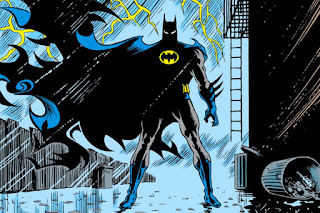
The Batman - Review


This isn’t the review I thought I’d write…

If you’re a Batman fan of a certain age, like me, you hung out on newsgroups and fledging web forums in the late 90’s and spent too much free time in comic shops. You will have heard a familiar question. “Why can’t we have a Batman movie that’s just a crime flick, like SE7EN? Preferably directed by David Fincher? Maybe adapting Year One? Where Batman is a detective?” The good news, to all those questions from twenty-five years ago, is that movie now exists. 


Swap out David Fincher for Matt Reeves, and add in some lore that has been added to the comics in the past twenty years, and The Batman is exactly the movie I spent years saying I wanted. The city feels lived-in (hiya Glasgow), the colours are dark. The characters are flawed. The villains of the piece are mobsters and serial killers. The narrative is built around a mystery, and the trail leads deep down into a world of lies and corruption. And rain. There is a lot of rain. (Hiya Glasgow). 


Reeves has successfully synthesized Taxi Driver, The French Connection, and Blade Runner (pre-Director’s cut) into the DNA of a Batman movie, while paying a strong tribute to Batman: Year One, Zero Year, and The Long Halloween. If that sounds like the film you want to see, then this is the film you want to see. On many levels -and for long stretches of the movie- this feels like the closest we've ever gotten to the source material. 


The challenge for me is that I can’t review this based on someone I used to be. I’m watching it as the person I am now. Do I remove myself from the equation and judge the film purely on its own terms, as the film it’s aiming to be? Or do I review it based on what I bring to the conversation and the film I want it to be?


It’s difficult trying to have opinions about Batman in 2022. Somehow over the last decade he has become a lightning rod for tribalism. Whether it’s Snyderverse fans shouting down any attempt to move on, or Nolan fans who now insist any new film is just a copy of their favourites. Are you pro-Batfleck, pro-Battinson, is Keaton the one-and-only? Was the Joker movie a brilliant exploration of social issues, a shallow Scorsese rip-off, or a dog whistle for the alt-right? 


My own personal tastes for Batman have shifted considerably as I’ve aged. I’m tired of seeing how damaged Bruce is. In the comics, the whole ‘broken tortured Bruce’ theme was a short-lived approach. The Frank Miller era. Before that, he was a hero with a tragic moment in his past. After that, he’s usually presented as a hero with asshole or control-freak tendencies. But in a pop-culture sense the broken Bruce has dominated for three decades now. Each new screen version has to be a meditation on “how damaged does someone have to be to dress as a Bat,” rather than embracing the idea that superhero stories are morality tales. 


I’m firmly in the O’Neil and Adams school. The Grant and Breyfogle school. The Batman is a masked vigilante with one foot in the pulp tradition that birthed him, but he’s also basically a hero trying to make a difference. He experienced the ultimate fear as a child and has set out to try and save other people from going through the same thing. And he has a really cool car. There are many ways to present that without needing to obsess over how ‘broken’ Bruce is. Especially as it’s so often done under the guise of realism and there is simply no realism to Batman. He’s a fantasy figure. The field of psychology has spent a century exploring grief and trauma, and we know these things don’t lead to a Batman or a Joker. So, can we just move past this weird arrested-development take? 


I think superheroes are a way to talk about good and evil, right and wrong. The secret sauce is in finding the balance that entertains both adults and children. I won’t say this film isn’t suitable for children, because I snuck into Tim Burton’s Batman in 1989 as a nine year old. I watched Alien, Aliens, Predator and Robocop all before I was ten. I think it’s an important part of growing up for kids to watch media that is too “old” for them, and to learn ways to get around their parents’ wishes and form their own tastes. However, I do have concerns with the idea of setting out to make a three-hour Batman movie that focuses so squarely on darkness and adult themes. I can’t shake the feeling that a certain set of arrested-development adults have stolen Batman away from kids and families. 


And yet…


This film is aware of that. The Batman feels like the conversation that has been playing out in my own head as my tastes have shifted. We meet a Batman who is two years into his ‘mission’ and is starting to realise that his methods aren’t working. Early in the film we see him viscously beat down a street gang to such a degree that he also frightens the victim he was there to save. We meet a Bruce Wayne who is isolated and broken. He has clearly used the line "I am vengeance" so many times that characters in the narrative use it as his name. There's a low-level self-aware humour to that. A joke that we're all in on. As the film progresses, Bruce is challenged again and again with his own failures, his own privilege, while also being shown that placing trust in others -and receiving it in return- can be a good thing. The final act sees all the pieces of this argument come together, as Batman is physically saved by Selina Kyle and spiritually saved by Jim Gordon, before jumping into troubled waters and emerging, reborn, as a symbol of hope. He offers a helping hand to a scared child and leads people to safety. As the film opens Bruce is talking about fear and vengeance. By the end he’s talking about hope. A running motif through the story has been the Riddler demanding that a rat be brought out into the light, and the final scenes see Batman in daylight, now viewed as a force for good. 

Matt Reeves has been very deliberate about saying this isn’t an origin story. And we don’t get the over-played scene of Bruce’s parents being gunned down. Everybody knows why Bruce becomes Batman. On a deeper level though, I think this is perhaps the first live-action film to truly address why Bruce Wayne is Batman. What is his aim? What does he represent? Why does he keep doing this? If Bruce Wayne is only out for vengeance, that’s a very short mission. But he’s out there night after night, year after year, and there must be more to that. The Batman explores why he continues to be Batman. 

And so this isn’t the review I expected to write. Because I’ve seen all the trailers, watched the early-released scenes, read the reviews. I expected to feel certain things and, for the first hour of the movie, I did. It felt too morose. The voiceover felt like a tribute to Rorschach, which set off alarm bells, considering Rorshach was an attack on the grittiest Batman takes. I was writing this review in my head already, "if you want another gritty psychopathic Batman, then you're in luck..." But then the message started to become clear, and the questions began to get interesting. I feel in some ways like this movie has the same issue The Last Jedi  ran into. We were presented with a Luke Skywalker who was old and bitter, scared of his own influence, refusing to step in and help. And fans rejected that completely. But then many seemed to check out their opinion at that point, and not see that the narrative of TLJ was about Luke realizing he was wrong (about a lot of it, not all of it.) And here, I’m seeing all the talk of how dark and dour and hopeless The Batman is, but not much talk about the heart of the movie being a repudiation of all of that. 

This is a story about how the Batman I wanted to see in my teens needs to become the Batman I want to see in my forties. And I think I might love this movie a hell of a lot. 


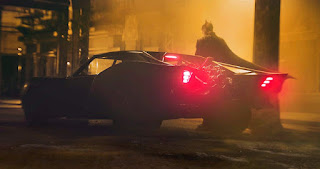
Or I could just have been distracted by the best Batmobile since 1989. 


Thursday, March 3, 2022

Roll With It - Jay Stringer. Released April 5th


CHAPTER ONE


“You really think you can get me all the way there by yourself?” Ben Nichol paused. “I mean, no offence, but…”

      Chloe Medina didn’t smile. Didn’t take her eyes off the road. “You keep talking, I’ll get you all the way there in the trunk.”

      One hand steady on the wheel of the Shelby, the other near the gun strapped to her thigh. The line about the trunk was mostly a bluff, but it sounded good. Medina had two shotguns, three suitcases and two Kevlar vests stowed back there.  A box full of batons, handcuffs and stun-guns. Not room enough for a wanted felon. 

      Right now, she had two problems. 

      The same set of headlights had been in the mirror for five minutes. A black van. Outlines of two people visible through the windscreen. Only two vehicles on this stretch of road at night, both heading towards the border. Most likely it was nothing. But the driver was hanging back, keeping a steady distance. 

       Nichol was twitchy. The tightening of his shoulders and neck. Tattoos moved as he coiled. Even with his hands cuffed to the door handle, Medina could read the signs. He was gearing up for a second go. 

      He’d reacted the same way when she first caught up with him, sitting at the bar of Eddie’s Safari. A roadside joint on 602, just off Bronco Road and before the Zuni reservation. The place served burgers, burritos and frybread, while women danced around a pole on a stage decked out in a faded jungle theme. Nichol seemed to sense Medina was there for him the minute she walked in, and his body had tensed up right before he bolted into the men’s room. Medina followed him, and they fought a bit. Her shoulder smashed into the mirror. It still stung like hell, but he’d never know. Nichol’s face flushed bright red as she led him out of the place in cuffs. An ego like that could be dangerous. He’d want to go again, make himself feel less of a wimp.

      Medina watched the lights. The quickest way back to Phoenix was to stay on the 53, straight through the Zuni reservation to the Arizona border. Problem was, she hadn’t applied for permission to track a fugitive onto tribal land. Even though she’d caught him before crossing the border, technicalities like that didn't go down so well with the Rez cops. 

      They passed a dirt road on the left. A small gateway with a cattle guard, and nothing but the evening darkness beyond. 

      The van took the turn. 

      That left only one problem. 

      “You don’t remember me, do you?” Medina said. “We’ve met before.”

      “If I’d met you, I’d remember. Hey, these cuffs are real tight.”

      “Deal with it. The trial for your brother’s gang. What was left of them.”

      “The bank job?” Nichol grunted. In her peripheral, Medina could see him reappraising her. “That was so dumb. Those masks, firing guns into the air. They’d seen it in a movie the night before, eating edibles like candy. I’d said to Jimmy, don’t do banks like that, you’ll get hurt. Truth be told, I’d said don’t do banks at all. There’s no money in it. Not these days. But he never listened. Comes running out and, right there in the street, there’s this U.S. Marshal. Blonde. Total coincidence. Just having a coffee. Jimmy comes out, and she’s standing there in the road, all on her own, and…” Nichol grunted a second time. “Shit. You look different.”

      “I used to dye it. And it was ice cream, not coffee. Still had it in my hand when I walked across the street, told them to freeze. I warned your brother to stop, right there.”

      “They said at the trial.”

      “Three times.” More like two and a half, Medina thought. “I told all of them. Put your weapons down, drop the bags, in that order. Then put your hands over your heads where I can see them. Your brother started to raise his gun. Semi-auto, I already had reason enough to shoot, but I gave him two more warnings.”

      “See what I mean?” Nichol said. “Told you he never listened.”

      “I wanted it to go another way. But he was going to shoot.”

      “Don’t worry about it. He was an asshole.”

      “When the ambulance arrived, the cops, I walked back across the street, bought another ice cream. That’s the one I’m holding in the news pictures. The TV crew got a kick out of that, tried to make out like it was the same one I’d had to start, shot three guys without dropping it.”

      “Was the other thing true, the bit you said to the reporters?”

      “They asked me why I’d joined the Marshal Service. I said I liked catching the bad guys.”

      “That was a good line.”

       “I mention this, your brother, because there were three of them, and one of me. I put all three down before they fired their weapons. And I figure whatever you’re planning in the next ten seconds doesn’t beat that math.”

      Nichol laughed. Caught out. His muscles started to relax. He eased off slowly, his pride still in control. 

      “I like you,” he said. Trying to make it sound like his choice to stay in custody. “So how long you been tailing me?”

     “Since you ran.”

      “I mention this, because, maybe you don’t know why I ran.”

      Medina looked over at him now. The threat had passed. He was going for the laid-back charm that probably worked more often than not. His smile. The shock of Jack Nicholson crazy hair. 

      “You ran. I caught you. That’s all I need to know.”

      Nichol leaned forward to rub his bruised jaw. Medina was glad the fight had gone out of him. She didn’t think her shoulder was up to much. She was good at playing tough, but it took a lot out of her. 

      “I’m just saying, if you knew the reason, we could maybe cut a deal.”

      “I meant what I said about riding in the trunk. You start telling me how none of this is your fault, I’ll pull over and change the seating situation.”

      They drove in silence for a couple more miles. 

      Nichol said, “If you like catching bad guys so much, why’d you leave the Marshals?” 

      “Better pay.” 

      Medina heard the van before she saw it. The roar of an engine. No lights. Tyres crossing a cattle guard. The large black shape moved at them from the left. The impact spun the Shelby, taking them off the road.


Friday, February 4, 2022

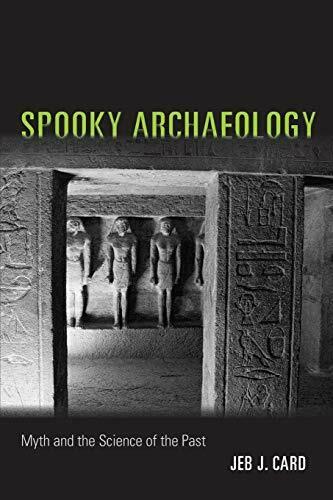
Book Review: Spooky Archaeology by Jeb J. Card.


Spooky Archaeology: Myth and the Science of the Past

Jeb J. Card

ISBN: 9780826359148


   “How did we come to a place where the most recognizable explanation for the human past is space aliens?” That’s a striking question, asked late on in Jeb J. Card’s Spooky Archaeology: Myth and the Science of the Past. I should note, in all fairness, that it’s not the key question of the book. Card is handling a much larger and broader history. But it is the question which led me to seeking the book out. 


   My long-time reader will know I have engaged in a number of sub-culture deep-dives in recent years. Bigfoot. UFO’s. Atlantis. Ancient Aliens. The occult. I usually pass this off as research for my books, fishing for interesting ideas to play around with for 80,000 words of fiction. But there has been a deeper drive behind it. The last decade has seen the whole world seem to splinter into factions of ideas, and most-troubling has been the drive towards anti-expert thinking. It's a push that leads to us doing nothing about climate change. A push that leads to Brexit because we’re ‘sick of experts.’ A push that leads to Trump. And yadda yadda yadda a bunch of people in shaman cosplay storm the US Capitol. But tackling each of these issues can feel too large, too divisive, and so instead I turned my obsessive streak towards subcultures. Why do grown men dress up like commandos to go hunting for Bigfoot? Why do believers try to reinvent all of science to accommodate their idea of a giant ape in North America (who may-or-may-not be able to teleport?) Why do people cling to the belief that an alien spacecraft crashed in New Mexico in 1947, even after the full truth of the incident had been available for decades? Even after an archaeological dig was carried out on the ‘crash’ site that found no signs of a crash? How did Plato’s fictional and allegorical account of a lost city -understood as such for over a thousand years- somehow transform into something people believe is a ‘genuine’ myth? Why do people still search for this allegorical fiction? In each case, I started out thinking these sub-cultures would be an interesting way to try and understand obsession, and to try and understand how identity seems to be coming into conflict with expertise. But more and more, I came to find this was all connected. The bigfoot LARPers. The UFO crew. Those who believe ancient brown people were too stupid to move rocks. It all added up to the same thing, to this anti-science, anti-expert, anti-proof thinking. 


   “Mainstream science” is wrong. The “lamestream media” is lying to you. The government are covering up Bigfoot. And, somehow, also covering up the existence of aliens who have the technology to travel millions of light years but only ever seem to turn up when it’s dark. Archaeology is wrong, or worse- the Smithsonian is hiding the truth. Only a precious few people can be trusted to tell you how it really is. But they seem to need your money along the way. Before you know it, a creationist is sharing a platform with Bill Nye, to millions of viewers online, insisting that science can only observe the present and we can’t know anything of what happened in the mysterious past, except for what is written in one book. And there are people who live below ground that drink the blood of humans. And then, yadda yadda yadda….shaman….capitol.


   I find myself more and more interested in the question of folklore. And to what extent is fake news a feature or a bug? Is it just an extension of that need for folklore? We seek out narratives that feel true, that comfort some part of our identity. We are emotional and anxious apes, yet those of us who most want to argue for progress keep talking about reason and how all people can be reached with the right facts. I now believe that misses the point of who and what we are. Rome has been burning for a while now, with the flames on show in ‘documentaries’ on tv channels that use names like ‘History’ and ‘Discovery’ as cover for pushing dangerous information. And I don’t think we can put out those flames until we reckon with ourselves, and with what drives us. 


   Anyway. 

   Rant over. 

   This is supposed to be a book review. 


   All this by way of saying:  Spooky Archaeology: Myth and the Science of the Past scratched my exact itch. I should point out for balance that the book isn’t a skeptical or debunking book as such. This is more of a history, looking at the development of archaeology and modern myth, to try and decide to what extent archaeology contributes to its own ‘spooky’ reputation. 


Humans have been creating a spooky and mysterious past ever since we began encountering the remains of people who came before us. This inspired different versions of fairy lore across the world, as we imbued 'ancient' stone relics with mystical origins long before we had a real understanding of our own development. From here, Card takes us on a journey through mistakes, misdirections, cons, and romantics, tracing the evolution of archaeology from myth-making to antiquarianism, to modern science. The first full-on lightbulb moment for me in the book was the simple realization that we constantly 'other' the deeper past by placing the cultures and remains of our deeper ancestors in 'Natural History' museums, along with rocks, fossils, and dinosaurs, instead of the art museums that our more recent forebears are housed in.  


This book is full of insight and learning points. From the myths and ideas propagated by early antiquarians before the hieroglyphs were translated, to the creation of theosophy in the Victorian era that sought to push back against modernity by reaching for the ‘spiritual’ past. From the fiction of HP Lovecraft who combined these theosophical ideas with the ‘myths’ of Atlantis and the Egyptology craze, to the invention of flying saucers which were -and remained- steeped in the same theosophy ideas. Aliens who are both creatures from another world and visitors from another dimension, or beenath the sea, or from bases underground, and sometimes bringing Bigfoot with them. And now a man with silly hair is one of the most recognizable memes on the internet for the passing of racism as the real history of our people and of every scientific advancement. (And if you think I’m being overly dramatic about the dangers and damages of that show, know that it’s all based on the work of Erik Von Däneken, whose best-selling book Chariots of the Gods was edited by Wilhelm Utermann, who was a literal Nazi. A paid-up member. The same Nazis who cribbed ideas straight out of theosophy, and of a lost spiritual past, and who are now regularly linked to stories about UFO’s and people who live underground.These are the views, and the people, being platformed in these shows.)


   The question Card is dealing with here is how much of this is encoded within the very nature of archaeology. A lot of these bad ideas have been spread by people doing archaeology. A drive to understand our past usually goes through myth and mysticism on the way to finding fact. Governments have been happy to use excavations, myths, and expeditions as cover for espionage. (The Yeti. The Titanic.) Card argues that “accepting our checkered past should be an exercise in ‘constructively deconstructing’” and I find his case to be solid. The book is more than solid. If you have any interest in any of the subjects I’ve mentioned today, you’ll find something interesting in these pages. 


   Now, if you’ll excuse me, Rome is still burning and there’s a hole in my bucket.   


Friday, January 21, 2022

Film Review: Ghostbusters Afterlife.

 By Jay Stringer


I finally caught up with Ghostbusters: Afterlife on streaming this week. I held off for so long because of my own aversion to the recent trend of storytelling-via-nostalgia. Not only tv shows like Stranger Things -  which is more of a nostalgia for pop culture than for the decade itself - but also the newest spin on 'legacy sequels' or 'requels' that hark back to a feeling a certain generation liked in the past. On a deep level I find the idea unhealthy. I see a reboot as a separate meme. A reboot -if done well- is an update, bringing the themes and ideas of an older story into the modern era, and reframing it to talk about now. These legacy films, by contrast, often feel like conversations with themselves. 

There is an extent to which this is inherent in any ongoing franchise. As part of a genre essay I wrote for Crimereads a few years ago, I noticed that all sequels become a different beast to the original. Raiders of the Lost Ark may have been a mixed bag off references to old serials, H Rider Haggard, Erik Von Däniken, Treasure of the Serra Madre, Secret of the Incas, and heist movies, but Indiana Jones and the Temple of Doom is then in much more direct conversation with Raiders of the Lost Ark. Dr. No may have been the first film of it's kind, but every film they made afterwards was a Bond film, playing within -or challenging- the rules of Bond films. 

But even with all of that accepted and unavoidable, I find my own tastebuds don't lean towards nostalgia. I've been left on the outside of culture wars over the Star Wars and Ghostbusters franchises, and in large part this has felt like a war over nostalgia. A certain generation of Star Wars fan needed The Last Jedi to give them a dopamine fix of seeing Luke Skywalker doing the things he did fire years ago -and more importantly perhaps, doing all the things they've imagined in their own minds over that time- not necessarily doing the things that Luke Skywalker -with all his baggage of internalised hatred, familial guilt, and trauma- would be doing as an old man if he were real. What, to me, was an interesting and true character arc was taken by many as a betrayal of how they felt as children. Likewise, the 2016 Ghostbusters walked headlong into a shitstorm of online hatred. I don't want to dismiss that the largest determining factor of that hate was undoubtedly misogyny aimed at the all-female reboot, but I also think there's room to admit that the film didn't feel the same as the original, and that feeling was a problem for many fans who go to franchises from their youth wanting a drug hit of nostalgia. The 2016 film doesn't play with the same DNA as the 1984 original. It feels more tightly scripted, it relies less on the genuine (and overlooked) ties to Lovecraft, Theosophy, and other fringe thinking. On a nuts-and-bolts level, it uses a different style of humour. Paul Feig brought much more slapstick and farce, and a far higher level of bodily fluid jokes. That's not a criticism. While it does mean the 2016 version isn't really for me, it also doesn't need to be for me. I have a version of Ghostbusters that I already like, and it's a big world full of lots of people who also deserve to have a version of Ghostbusters. In many ways, I would argue that the 2016 film is a better use of reboot money. Making something different, for a different audience in a different time. 

From the first trailer it seemed clear that Afterlife was in more direct conversation with the 1984 original. And against he backdrop of the 2016 arguments, it felt like a deliberate move to pretend the all-female reboot didn't exist. Is that far? No. Rian Johnston, Paul Feig, and now Jason Reitman all set out to make the best films they could, and in an ideal world would be allowed to get on with that free of other people's baggage. But in the case of Jason Reitman he also had to know what he was walking into. He's the son of the 1984 original's director, he would have been a five or six year old child scampering round the set, and the legacy cast returned because of his involvement. Not only is there the inbuilt temptation to see Afterlife as a requel for people of my generation having a conversation with our childhood, it's always felt directly like one specific person of my generation having one specific conversation with his own childhood. 

All of this as buildup to me pressing play.

Were these concerns valid?

Yes and no. 


I found Afterlife more interesting as a curiosity than entertaining as a film. Over the long term, curiosities often end up ageing into being among my favourite movies. They ask questions that stick with me. It's way too soon to know if Afterlife will do that, so I'm left with the feelings it gave me in the here and now. 

The film is in direct conversation with the 1984 original. Each character beat and plot decision in 2021 was clearly in relation to something that happened in 1984. As a viewer you are left to second-guess which archetypal role from the original each new cast member will end up playing. And the 2021 film makes many smart choices in this regard, playing with expectations, and allowing fresh looks on misunderstood characters like Louis Tully. And even for someone as nostalgia-averse as myself, there's a certain rush of glee that comes from hearing Bill Murray doing his Peter Venkman voice, in a moment that instantly makes you realise how long it's been since you've heard him doing it, and how much part of you wanted to hear it. But even in that moment we can see a tension between nostalgia and story. Dan Aykroyd and Ernie Hudson give us readings that sound like older versions of their characters, Murray gives us a reading that feels like he's had the 1984 Venkman stored in a box the whole time, waiting for one more chance to shine. 

I would argue that Afterlife understands the origins of Ghostbusters more than any other spin-off -save for a few stand out episodes of the 80's cartoon- in grounding the story firmly into the Lovecraft and theosophy that so inspired Aykroyd. It's important to know he really believes in this stuff. Even the name Gozer wasn't plucked out of thin air, it came from a paranormal case in the 70's. Aykroyd crafted a story intended to mainstream a lot of ideas he grew up reading about. And he succeeded wildly. It's very much a story of the old ones trying to return, and plays into the secret sauce that Ghostbusters was never really all that much about ghosts, so much as a battle against demons and interlopers from a dark dimension. Ackroyd's deep sincerity was then buried away beneath layers of comedy and irony, from some of the best improvisors in the business. Afterlife isn't anywhere near as effective as a comedy, but it doesn't necessarily need to be. A second key ingredient is friendship. The 1984 film is powered by friendship, both on and off screen. For Afterlife Reitman keeps this element and encodes it into the very 80's-nostalgia-tinged story of a group of small town friends, misfit children who find each other. There's also the smart decision that these kids don't know about what happened in 1984. It's the generation above them who are defined by nostalgia. I'm tempted to find a knowing comment on nostalgia and reboots in that decision, and it makes me wonder if I'll come to reappraise the film over time, and find extra layers to appreciate.

But it's with a third element of the original that Reitman perhaps made the largest misstep for my own tastes. And it's the very heart of the movie. 

Two of the most important characters from the 1984 original, from a character sense, are Egon and Winston. Neither of them get the pop-culture glory of Venkman or the spooky bona fides of Ray, but Winston is just an average working guy who rolls with every change thrown his way, manages to never be out of his depth, and helps save the world. Egon, by contrast, is so clearly out his depth and scared shitless from the ballroom on upwards, and yet keeps going, is the first to recognise each danger, and provides the key information to save the day. 

Afterlife was dealt a tough card, in the sad passing of Harold Ramis. There are only so many ways to handle having a key legacy character missing, especially one who was secretly so important to the success of the original. Reitman takes the decision to frame the whole film as a love letter to Egon. On the surface, this is a good move. The story is driven by his decisions, characters are defined largely by his absence, and we get some very sweet emotional payoffs in the closing moments. 

However, it's also this decision that ultimately leaves a bad taste. Egon is an absentee father. Okay, nobody is perfect and there's always room to explore that fallibility through legacy characters. But in choosing to do that through Egon, the character who is also being feted by the story, we are left being asked to accept that his absenteeism was something noble, something heroic, and in the final scenes we are asked to forget the lifetime of trauma and pain in one embrace between Egon's ghost and his daughter. Ultimately, in my own view, this does a disservice to Egon and weakens the film. 

Will that bad taste last as I get more distance from the movie? Only time will tell. For now I think it's a film that remains trapped holding a conversation with it's own past, and the many smart decisions can't rise it above the bad ones. 

Thursday, December 9, 2021

Now I Have A Staple Gun. Ho, ho, ho.

 By Jay Stringer. 

This was originally published on this here site OVER A DECADE AGO OMG when we ran a Christmas Noir season over the holidays. 

........


Santa Claus was a mean old bastard.

      That’s one of the first things I ever learned.

      It didn’t matter what I asked for, I’d get whatever Santa could pick up from the all night garage on his way home from the pub.

      My fourth Christmas I asked for Castle Grayskull. I got a mars bar. King Size. The next year I asked for Optimus Prime but I got a road atlas. Seven years old, I asked for the Michael Jackson album,  but I was the only kid who had a staple gun sitting under the tree on Christmas morning.

      It wasn’t even wrapped.

      My favorite was when I was thirteen. That year I’d asked for a Sega. I got a three packs of condoms and a little note instructing me on how to use them. Three packs. He had faith in me. 

      Fifteen and sixteen he got me good presents; Liquor. First cheap bourbon and then single malt. That final year we spent Christmas day drinking our way through the presents and talking. We started to understand each other a little more, somewhere between the final drop of amber and the start of the Doctor Who Christmas Special.

      Maybe it would have been different if my mum hadn’t walked out. Mrs Sanderson across the way once told me that Dad fell apart after that. If you go for that kind of excuse.

      Seventeen was the year.

      I’d been home from work a few hours when dad got back. One look at his face as he walked in the door told me he’d forgotten it was Christmas eve. He was empty handed. He mumbled something about being right back and headed out into the cold.

      I set out two empty glasses and waited for him to come back.

      And waited.

      Waited.

      4 AM two police officers knocked the door. A tired looking man in his forties and a very serious looking woman about ten years younger. She flashed her ID but said her name was Laura, and when she used her first name I already knew what they were going to say.

      Hit and run. He’d been on his way back from the garage on foot, holding two bottles of whiskey and a plastic robot. Laura said he wouldn’t have seen the car, it came up behind and the driver didn’t have his lights on. My dad was flipped over, landed on his back but somehow had kept the bottles from smashing. He crawled to the side of the road, to a payphone, and struggled to his feet to reach the receiver.

      Laura didn't come out and say it, but it sounded like it was the exertion that finally finished him off. His broken body couldn’t cope with the movement.

      A passerby found him a short while later, already dead.

      The driver had turned himself in an hour later. He said he'd been drinking and fled the scene, but couldn’t face his family when he got home. It was an open and shut case.

      The male cop handed me a bottle of whiskey, the glass was all scratched and the label was wet. He said it wasn’t really evidence and nobody would mind if I found a use for it.

      One other thing, Laura said, she passed ,e a piece of paper with a phone number written on it. My dad had managed to dial it before he died. Before she got someone running the number on the system, did I know who it was? 

      I said I had no idea and she took the paper back, but I’d had enough time to memorize it. I’m good with numbers.

      The two cops said they’d be back later with photographs for the formal ID. I sat and drank to my old man for a couple of hours. After I’d worked up enough Dutch courage I dialed the number. A woman answered on the other end, and I caught my breath.

      I said, Mum?

      She hung up.

      Santa Claus was a mean old bastard, but he was the only dad I ever had.

Thursday, November 25, 2021

Loose Thoughts on...vampires.

 By Jay Stringer

Midnight Mass sent me on a bit of a Vampire fiction binge. I'm sure the season helped. It gets dark in Glasgow this time of year. I've said it on here before, but once the end of October hits, Scotland has a way of reminding you that we're on the same latitude as Moscow. There's an inky quality to the darkness here. A thickness. It seeps in, if you let it, and my tastes tend to turn towards horror when the skies get dark. Asking questions like, do we create monsters in the shadows because we're scared of the dark, or did we learn to be scared of the dark because that's when the monsters came? 

But from Midnight Mass I started listening to the audiobook of Salem's Lot. And watching a lot of vampire flicks and TV shows. Some worked. Some didn't. I became fascinated trying to spot the patterns. 

The thing that's easy to forget about Dracula is what a modern novel it was. A century of seeing it as a period piece, as Lugosi, Lee, Hammer Horror, wigs and capes. But when the book came out it was a contemporary story, about a very modern town being met by a very old problem. Van Helsing was a doctor, a scientist. The book was epistolary, made up of journal entries and -if memory serves- a transcription from a wax recording. Today it would be a book made up of blog entries and a podcast. If it was a movie it would be found footage, webcam maybe. 

And so that's the first thing that I think is needed. The story needs to be set now, and needs to feel like it's about now. Period piece vampire fare just doesn't do it for me. An old threat in an old world. 

This is related to the second key point. Science. Medicine. The story needs to have some form of scientist or doctor trying to figure out the rules. Whether they succeed or fail, the collision of science and mystery is key to the genre. 

What we know vs what we don't. 


There needs to be some form of fellowship formed. We face our own personal demons alone, but to survive in one of these stories we need to believe in something bigger than ourselves. It doesn't need to be god, but it needs to be something, or somebody. We need to put a team together. Which leads right into a final act twist that is also key. A change in genre. No matter what the story has been up until this point, no matter how dark or light, how scary or funny, to really succeed a vampire story needs to turn into an adventure in its final act. The race of the fellowship against time, against the sun, chasing down the Count on horseback, or by car, or on a daring raid into a spooky house. Some vampire fiction tries to subvert or ignore this aspect. It aims for nihilism, or loneliness, or a conspiracy-style open ending. But we need that spirit of adventure and teamwork. 


But I also keep thinking about an element I would be interested in subverting. 

As I said above, the battle between what we know and what we don't is key to this genre. And folklore by its nature is about us providing some rules to life, about figuring things out. The vampire usually enters the story with a sense of those rules. Once they turn up, certain questions about the universe are answered. And, more importantly, the vampire already knows those answers. They know their place in the pecking order. They know their rules, their mythology, their purpose. They tend to know all about the history of their species, and what their powers are, and how.

But I'm interested in finding the human level of that. Where are the atheist vampires? The ones who have as little real sure knowledge of the universe as we do. Sure, they have ancient books telling them their creation myth, just as we do, but beyond faith what do they really know? Why do they get to be so sure? I'm interesting in thinking about a story of vampires who have no more understanding of the meaning of life (or death) than we do. They wake up, they exist, they feed, they sleep, they occasionally look up at the sky and wonder what's up there. Some of them can be religious, some not. Some have carried out experiments and studied to know how their biology works, most haven't. They're just creatures existing on this planet and getting by day by day...by hunting. 

I might have a story in there, fighting its way out. 

Friday, November 12, 2021

Loose Thoughts on James Bond......Again

 By Jay Stringer

I've continued thinking about James Bond over the last two weeks. Which brings the grand total of time I've spent thinking about James Bond this year to two weeks. 

The question facing the producers right now is about broom heads and handles. Or the ship of Theseus. How many things about a Bond movie can be changed before it's no longer a Bond movie?

There's a certain section of the internet that will give you very firm answers on this. Bond is a straight, white, womanising, hard-drinking, defender of the British Empire. Any deviation from that is a surrender to the evil forces of wokeness. 

Or something. 

These legacy characters are incredibly flexible, but just how far can they flex? How far should they flex?

When it comes to Bond, I'm open to any interesting and fresh casting ideas. But I do wonder why a person of colour -or any minority for that matter- would want to take on a role so embedded in colonial identity. I have my own complicated identity with ethnicity and the British State, and I go back and forth over whether I would want to write a character like Bond. Although I've tiptoed in that direction with the character of Joanna Mason in my Marah Chase books. I can't speak to the lived experience of an actor of colour, and if someone out there has a take on Bond and wants to go for it, I'd be interested to watch. 

I suspect No Time to Die -as much as it was a send-off to Daniel Craig- was testing out a format for the future. Keeping Bond as the straight white fella of lore, but filling the world out around him with more diverse and interesting characters. Toning down on promiscuity, allowing women to exist and be strong characters around Bond without him hitting on them every ten seconds. 

In many ways, this leans more into the Mission Impossible movies that I tend to enjoy more than Bond. But that still brings me back to broom handles and heads. I keep thinking of the form. The structure. The DNA of a Bond story. 

Mission Impossible, at heart, is a heist. A team is assembled, the plans are made, the heist is carried out, things go wrong, changes are made on the fly to get things back on track, and there are six billion double crosses. The team element is crucial to a heist story. And this same team element could be used to give everyone a bit of what they want from a modern Bond movie. But then...Bond's DNA is different, Bond stories, at heart, are much more Philip Marlowe, much more of the lone gumshoe. Bond takes on a job. He follows a trail. Clues from A to B, in a sequence, encountering lower-level threats until he uncovers the big bad. And there will be a big rich man's mansion of some form, whether it's a missile silo or a hollow volcano. He doesn't have much of a team. 

Two different forms, at heart. Different DNA. 


To my mind, understanding the form is as important a question as the casting. Bond can probably survive being portrayed as something other than a damaged, alcoholic, misogynist, relic. I think he could comfortably survive being portrayed as a decent guy in a tough job -a compromise that any adult watching the film could relate to on some level- without all of the outdated baggage. But how far from the underlying structure would a film go while still being a Bond film? Following the Mission Impossible template would lead to fun movies, but not James Bond. Whoever is cast, does the story need to follow the Bond DNA? Or is it more interesting at this point to break all the rules and do something else?

How much of the ship can be changed before it's a different ship? 

Thursday, September 2, 2021

Elmore Leonard's Best Book From Each Decade

 By Jay Stringer


This past week I was the guest over at Grab This Book, adding my choices to the Decades feature. The hook is an author picks the best book from each decade, for five consecutive decades, helping to compile the ultimate library. Go over and take a look, there are a number of great lists and authors. 

In order to avoid going insane I imposed a couple extra rules on myself. One of them was not to simply pick an Elmore Leonard book from each decade. Because...seriously, I could. Elmore Leonard, along with Lawrence Block, is the main reason I write crime fiction. 

Today I'm writing a companion piece. Which Leonard book would I have chosen from some of the decades I featured? Play along at home. Criticise, debate, correct my choices. 


1970's. Swag. 


Vinatge Leonard. The template of so much that would come to follow. Street level, blue collar, funny-as-hell, a little bit of grit. Crime fiction boiled down to something real and relatable. Two normal guys decide on a life of crime as bank robbers, after writing down a list of rules for success one drunken night. And the rules work. And keep on working. Everything is fine until they start bending the rules...

It's worth also throwing in a criticism. Women weren't particularly well served in Leonards early crime novels. It's something he himself became aware of, after a comment from his wife, Joan. He put in the work to improve, and would later give us a cast of great women. But when reading Swag now -and you should- it's worth bearing that element in mind. 


1980's. LaBrava. 


Freaky Deaky tends to get the attention from the 80's books. And deserves it, with it's comic timing, it's mix of burned out radicals, criminals, and high explosives. And City Primeval shows that Leonard was exploring toxic masculinity long before we called it toxic masculinity. But for my money, LaBrava is the purest shot of 80's Leonard. It catches the sweet spot, the right balance of the quirks, the humour, the realism and the politics. Yes, I said politics. For some reason Leonard doesn't get talked about as a political writer. I find this as strange as the people who criticise his plotting. Leonard is operating on another level. I'd be tempted to use the words 'transcend' and 'genre' if I felt like trolling book twitter. You come to read Leonard, you better come to read subtext. 

LaBrava brings certain themes to the fore. It's about people being good at things. About people changing lanes later in life. About people feeling burned out and wondering if it's too late to do something wild. 

1990's. Rum Punch. 


My gateway drug. Probably the gateway drug for a lot of people, after Quentin Tarantino turned it into Jackie Brown in 1997. I've always loved this book, but for over two decades I thought it was just because it was my first taste, and because it was fun. Re-reading it at 40, the book hit me on a whole other level. This is a book about getting old. There's a great scene in the movie, in which Pam Grier and Robert Forster sit at a table talking about hitting middle-age. With the book as a distant memory, I had started to believe this was a scene created for the film, based around the ages of the two actors. But on revisiting the book I found the same scene there, almost word for word. And that's the heart of the matter. The characters in this book are ageing. They're feeling it. They're worried about getting stuck in a rut, held in place by all their decisions, and wondering: is it too late to change? 


2000's. Pagan Babies. 

This book made my list over at Grab This Book. Not because I think it's Leonards best book. In fact, I think all the books I've mentioned so far today are better. But rather, because it's the one that stayed with me the longest. The one I had to think about the most. From it's opening page detailing genocide in Rwanda, through it's seemingly by-the-numbers caper plot set in Detroit, through to the come-to-jesus (or not) personal realisations of the closing chapters, this feels like Leonard's summational book. His final attempt at boiling down his themes and passions to their most basic and pure. After this, in the last decade of his career, he became more self indulgent. He began revisiting characters for one last ride -like Jack Foley, Cundo Rey, and Dawn Navarro in Road Dogs- and wrote a couple books that took him right back to his childhood interest in the John Dillinger era. They're all fun and interesting, but they feel like a victory lap, compared to Pagan Babies, which felt like the author saying the thing he'd kept trying to say. 


BONUS CONTENT. 

I filmed a quick video yesterday showing my editing process, the way I read every single chapter out loud to listen for bad notes. Let's see what random facial expression YouTube chooses to present my work to the world. 


Thursday, August 26, 2021

Half Inch - Short Story

 By Jay Stringer

Taken from my collection Crime Fiction, available exclusively on Kindle right now. Available in book shops in December. 


“How would you do it?” Megan said, letting him see the smile. 

      Jimmy Finch met her eyes, “This place?”

      She bent down and sucked iced latte up through the straw, “Uh huh.” 

      Jimmy took a look around the diner, pretending like he hadn’t already done it. 

      The diner was wide, split into two sections, with the kitchen through a hatch at the back, behind the counter. The cash register was in the center of the room, on a wooden stand, like a lectern. There were eight customers, including Jimmy and Megan. Three couples, and two people on their own. 

      Nobody was reading a newspaper. That was the biggest change from when Jimmy started out. There would always be a couple people reading newspapers. Now it’s all cell phones. Everyone has a camera, and a way to call the cops.  

      “Well, there’s only two servers working. One for that side, one for this side. They keep meeting in the middle, at the register, to talk. They’ve looked over our way a bunch of times, so they think we’re on a date.”

      “Really?” Megan turned now to look at them, seeing them standing together. Her voice rose, just a little. “That’s what they think?”

      “Sure. Young attractive woman like you, flirting with an older guy like me.”

      “I’m not flirting.”

      “The problem here is, their attention is already on us. I mean, they’ve been aware of us since we came in, they’ve talked about us a bunch. If I was to try anything in here, they’d notice me sooner than anyone else, more likely to stop it. Plus, they’d remember me to the cops, describe me, you. We’d get caught too easy.”

      “Okay,” Megan’s tone was colder now, the playfulness gone. “Obviously, I don’t mean how would you do it right now, in this meeting. But if this was one of your jobs, you walk in for the first time, how would you do it?”

      Jimmy leaned back in his seat, looked Megan up and down. This Hollywood producer with an option out on his story. No, not producer. He couldn’t remember what. She’d told him her job title a bunch of times, and it had the word producer in it, but he wasn’t sure she had any actual responsibility. 

      “You’re looking for the ending to the movie.”

      Megan leaned forward, “Of course I am, we got nothing right now.”

      Jimmy put his hand on the manuscript between them, his autobiography, Pinch: The Story of the Joke bandit. Optioned before publication. “I robbed 237 places. At least one in every state. All but one of them unarmed, walking out with money without ever pointing a gun. Only served time for one of them, you can’t find a story?”

      “It’s not the story that’s the problem, it’s the ending. Every writer we get on this tanks, tells us the same thing, there’s no ending. Your book gives us you, but that’s not enough. We know your past, we know the jobs you did, we know the prison stuff, but then you get out and…what? Where do we roll credits?”

      “You want me to pull another job.”

      “It would give us an ending.”

      “But I’ve gone straight, so you’re stuck.”

      “Maybe you don’t need to actually do the job, maybe you’re just thinking about it. That could be the scene. Yeah, I can see it.” She shuffled into the middle of the booth, directly across from him, putting her hands up on either side of her face, making an imaginary camera lens. “You’re in a diner, like this one, or a different one. We make it look just typical of all the places you robbed earlier in the film.”

      “This place is pretty typical.”

      “Right, so you’re sitting here, and we’ve had the build-up of you going straight. How you’ve come out of prison a changed man, but we also show that you’re tempted, that you can’t just switch off who you are. Then someone says to you, how would you do it?”

      “Who?”

      “In the scene? I don’t know. Doesn’t matter yet, we’ll think of somebody.”

      “So it could be in the middle of a date?”

      “We are not on a date.”

      “No, but in the movie.”

      “So this person, okay, let’s say it’s a date. Maybe, what’s the name of that woman on your last job, the one made you carry the gun?”

      “Lisa.”

      “So, maybe it’s Lisa.”

      “She’s dead.”

      “Sure, but she doesn’t need to be. Not for the story. It could be the two of you talking. That’s how we frame it. That’s how we frame the whole thing, we start on this scene, the two of you meeting up after years apart, start talking, then we flash back into your life, and we show that Lisa’s always been the temptation, right? Then at the end, we cut back to this scene, and maybe she doesn’t say how would you do it, maybe it’s more like she says, so, are you ready?Then we close in on your face, like this.” She moves her hands in closer. “Let the audience see you thinking about it, just long enough, then cut to black.” 

      “That’s your idea for the ending?”

      “I think it could be pretty cool, arty like, you know? People love that.”

      “They don’t actually see me doing the job, though?”

      “Don’t need to. They know you’re going to. Or maybe some think you don’t. They can decide for themselves, like that spinning top thing in the dream movie.”

      “I hated that.”

      “Point is, we’ve given them an ending to the story.”

      “Why can’t this be the ending? Just sitting here talking, on a date.”

      “We’re not-”

      “Or the real ending. You’ve got the book. Can’t we just end where the book does?”

      “You walking out of prison? Terrible ending. What’s the structure there? What’s the punch? What are we asking the audience to take away?”

      “I’m not asking them to take anything away, that’s the truth of it, that’s where my story ends.”

      “Unless…” Megan was back into pitch mode again. “Unless we see you walking out, you’ve just had some exchange with the warden where he says, see you soon and you say no, you’re done, you’re going straight. Then we see you walk out, right, and…..we hear a car coming….and then we see Lisa pull up in front of you. She smiles, just smiles, but we know what it means, and then we see you smile, fade to black. Or better, cut to black. Instant.”

      “Feels a bit too much like a crime movie.”

      “We’re making a crime movie.”

      “They’re always fake. You’re just making the same thing over and over. If that’s all you wanted to do, why not just go do that, you didn’t need my book.”

      “No, we wanted your book, we wanted you, your story. That’s what the viewer wants, too. Real life, you know? 

      “But you want to change it.”

      “Movies have certain rules, like a language, a different language. We need to hit certain beats, because that’s what people expect.” 

      “Like this thing you’ve got for Lisa. ’She represents the temptation’.” Jimmy made air quotes. “Like I need temptation. Or the last writer you hooked me up with, said he wanted to get to the heart of my story, and I said, well, here’s the book. And he goes, no, I want to know why you did it, why you decided to rob those places.”

      Megan looked down at her notes on the table, and Jimmy guessed that was the next item on the agenda. 

      “You need to make some big scene in the movie about me being tempted, or something that makes me commit the crime, you want me to rationalise it. You want to know why I robbed places?”

      Megan’s face lit up. “Yeah.”

      “Because I’m a criminal, and good at it. Lisa didn’t tempt me into anything. It was a job. She knew I didn’t use guns, but offered me more money,  and I said yes. That’s not temptation, it’s a job offer.”

      “So money was the temptation.”

      “Is money the temptation for what you do? We need to try and figure out the deep motivation for why you’re in this job.”

      “I love working on movies.”

      “There you go. We both like what we do.”

      “What you did. Now that you’re straight. What are you planning to do? Maybe we can work that into the movie, like a redemption arc?”

      Jimmy wasn’t paying attention. He was busy watching a new customer. Small and wiry, wearing an army castoff jacket. One of those German ones with the flag still on the sleeve. He’d been seated over this side, a few booths over. Jimmy had watched as the guy scoped the place out, the same way he did. 

**

This guy was impossible.

      Megan Quinn wanted to call her boss, just say, “We can’t do this, let’s make a different movie.” But she couldn’t. You didn’t get to run your own movie that way. She figured, get good information from Jimmy Finch, get good story, and she could make this into her ticket. 

      But now he wasn’t even paying attention. 

      “Hello?”

      Jimmy’s eyes shifted back to her. He didn’t apologise. 

      Megan was like, really?

      So rude. So sure of himself. Just sitting there, not interested in explaining himself, not interested in telling his story. Who Does that? Who doesn’t want to talk about themselves? 

      Megan looked down at her notes. The list of issues given to her by the writer and studio. All the things they needed to fix to make the book into a film. A couple of the notes had come from the publisher, too. Over a coffee the day before, his editor has said, “hey, we’re having the same issues, maybe if you can get him to talk, we can change the book.” 

      340 pages, and nowhere did he explain himself, nowhere did he give any kind of justification. And that ending? What was that? The guy just walks out of prison and smells fresh air and that’s it?

      “Okay,” Megan said, swirling the straw around in her now-empty glass. “Lets’ talk about the jokes.”

      “You want to hear them?”

      “No, I’ve read the book.”

      “They’re not all in there, I got a bunch you won’t have heard.”

      “Jimmy, I don’t want to hear the jokes, I want to know why you told them.”

      Jimmy cocks his head, like he’s never heard that question before. He looks like a confused puppy for a second. This guy in his late fifties, gray hair. In good shape for his age, but nowhere near as much as his self-confidence suggested. 

      “Who doesn’t want to hear jokes?”

      This was good, this was her way in. “I would think, people being robbed don’t want to hear jokes. Cashier’s don’t want to hear them. Server’s don’t want to hear them.”

      Again with his confused look. Megan could tell now he was doing it for show. “They’re the exact people who need them. You got to put people at ease if you’re robbing them, make them relax, let them know things are okay, they don’t need to do anything rash.”

      Megan looked down at her notes, why not guns?

      “Okay, but tell me how that started? I mean, most people would just use a gun. You walk into places, up the register, and start telling a joke. Why not just point a gun, or pretend you’re pointing a gun?”

      “I don’t like guns.”

      Megan felt the frustration rise again, her voice rising. “There has to be more to it.”

      “Why? Why you need more than that, I don’t like guns, so I don’t use them. I like jokes, so I tell them. You walk in, you spot the person most amenable, and you start talking to them, engage with them. Nice and friendly. You’re telling them a joke, and while you do it, you hand them the sign that says, ‘this is a robbery, give me all the money in the drawer.’ You’re still telling them the joke, so they’re off balance, their brains going in two different ways. But everybody likes jokes, so they’re still relaxed, deep down.”

      “You said find the person most amenable, how do you know?”

      “It’s just a sense, you have it or you don’t.”

      Jimmy’s eyes drift again. He keeps looking at something over her shoulder. 

      Megan isn’t used to this kind of behaviour. In these meetings, everyone wants to focus on her, to answer her, to work with her and be important. 

      Maybe the jokes are the way? Maybe it’s in his childhood? He skips over that in the book. 

      “Okay, so let’s talk about the jokes then, you like them so much. When did that start? Was it maybe a defence mechanism at school? We could frame it that way, show you using humor to get out of trouble, as a kid, you know?”

      Jimmy rolled his eyes, looked at her again. “You want to make a crime movie, but you don’t want to make a movie about criminals.”

      “But at school…”

      “I tell jokes because I like them. Because I loved watching Johnny Carson, and I figured being him was the best thing in the world.” 

      “Why not try being a comedian?”

      “I wanted to make money.”

      Megan made a couple notes on the page. That was a good line. It wasn’t much, this angle, but maybe they could use it. Show him as a frustrated comic, build up that way. She could see it, now she was thinking it. Early scenes, watching Carson. Maybe a flashback.    

      Yeah, it could work. 

      She looked at the next question. 

      “So, this Marshal who arrested you…”

      Jimmy’s eyes opened up, “Deputy US Marshal Chloe Medina.” 

      Was that a smile? It was. 

      His focus was full on her now. 

      Megan tapped the notes, bingo. “Yeah. Tell me about her.”

      “She didn’t shoot me.” He paused, leaned back in the seat. “I mean, she could’ve shot me. She shot Lisa. But she didn’t shoot me.”

      “Why do you think that was?”

      “You should ask her.”

      We’ve tried, Megan thought. They’d tried to do a deal with Medina already, use her name, put her in the story. She refused both, they were going to have to change the name if they used the scene in the film. Someone else who didn’t want to be in a movie. What was wrong with the world?

      “Tell me what happened.”

      Jimmy shrugged. “Not much too it. We’ve gone in the bank. I hated doing banks, but Lisa had this idea. And she’s got me packing, and I hated packing. But it’s all working, this trick she had, knew the exact time the manager was opening this small safe they had behind the desk, like a drop box they put money before taking it all out the back? Lisa knew the exact time of day they opened it, and we’d got bags full of cash. We come out, and there’s this Marshal standing there on the steps, just watching us.”

      “You knew what she was?”

      “Well, you could tell she was something. Some kind of law.”

      “And she pulls a gun?”

      “She’s got her hand on the gun. On her hip. Which, by the way? Hottest thing I’ve ever seen. I mean, I don’t like guns, but she made it work. And she identifies herself, says Deputy US Marshal Chloe Medina, don’t do anything stupid. But then Lisa does something stupid.”

      “She tries to shoot her.”

      “Well, I guess. Her hand twitched. Lisa’s gun was down at her side, we’d both lowered them as we came out the bank, thinking we didn’t need them. Lisa’s hand twitched. Not even an inch, really, and Chloe shot her. She drew so fast.”

      Chloe.

      Megan was right. Jimmy had a thing for this Marshal.

      “Then she looks at me, just looks at me, cocks an eyebrow, and I drop the gun. So yeah, she could’ve shot me, and she didn’t.” 

      “The one time you got caught.”

      “The one time.”

      “Love story between a criminal and a Marshal,” Megan said, circling Medina’s name in the notes. “There’s a story there.”

      Jimmy didn’t answer. He was gone again, focusing on something behind her. 

      She turned to look. A small guy in an army surplus jacket was standing at the register, pointing a gun at the two servers. He looked twitchy, nervous.

      The gunman called out, “Nobody move.” 

      Jimmy leaned forward. “That’s not how I would do it.”

**

The kid in the jacket looked scared. His gun pointing one way, then another. 

      “All the money,” he was saying. “All of it.”

      The oldest of the two servers, the middle aged woman with red hair, said, “Where you want us to put it?”

      He didn’t have a bag. Hadn’t thought that far ahead.  

      Jimmy figured the kid hadn’t even intended to rob the place. Just came in, maybe for a coffee, maybe to get off the street. But the gun in his pocket had made a stupid decision, and there was no way this ended well. 

      Jimmy slid out of the booth. He saw Mega turn to him, panicked, mouthing for him to stop. The kid spun halfway round, towards him. Jimmy looked at all the other customers, none of them sure what to do next, nobody having any idea what to do when a gun shows up. 

      “Freeze,” the kid’s voice going up a level. “Stop effing moving.”

      Effing? Jimmy put his hands out, palms up, and smiled. “I got you, I’m staying right here.”

      “Get back,” the kid took a few steps towards him. 

      Jimmy watched the thoughts pass across the servers faces, was this their chance to do something? 

      “What I’m thinking,” Jimmy said. “Is that everybody should keep still.”

      “I already said that,” the kid was whiny now. “But somebody didn’t listen.”

      “I just want to help, give you some on the job training.”

      The kid pointed the gun square at Jimmy’s face.

      “I’m Jimmy Finch. You don’t know me? Jimmy the Pinch? Nothing?”

      “Uh…” A shrug. “No.”

      Jimmy took a small step forward. “237 robberies, only caught one time. My date over there,” he twitched his head, indicating Megan behind him. “Is a Hollywood producer, going to make a movie based on me. So I’m basically an expert at what you’re doing.”

      “Okay.”

      “How do you think you’re doing right now?”

      “Uh…” The kid looked at the two servers. They both shrugged. He turned back. “Okay?”

      “I gotta be honest. This is not going well.” 

      A flush of anger welled up in the kids face, but Jimmy read it for what it was, embarrassment. “No, man, I’m doing okay.”

      “You’re scared, that’s okay. You didn’t plan on this, did you? Came in for some pancakes, maybe a coffee, a burger. You’ve had a bad day, right?”

      The kid nodded.

      Jimmy continued. “You know, when I was a kid, I liked two things. Johnny Carson and westerns. I decided, when I grew up, I was going to rob a bank in every state, get famous.” Jimmy gambled on another step forward. “You know how many banks I’ve robbed?”

      “Like, two hundred, something, you said.”

      The kid turned for approval from the servers, not confident in his answer.

      “One,” Jimmy said. “Just one. See, when I looked at it, I figured, there’s no real money in robbing a bank. It’s too difficult. If you carry a gun, you got more chance of being shot. And there’s not as much cash in banks as people think, they got sick of being robbed. What I did, I started hitting places like this. Fast businesses, where people paid in cash, and there was no real security. But you know the problem with that?”

      There was real doubt in the kids eyes now, but his finger was still on the trigger, he could pull at any second. 

      “The problem is, everyone is security now. Walk in a place like this, everyone’s got a cell phone, everyone’s walking around with surveillance devices. You’ve just pulled an armed robbery, with no mask, and I’m guessing no getaway plan.”

      The kid looked round at the other customers now, at the phones they had on the tables in front of them. 

      Jimmy said, “What you have here, is a mistake you made. And you can’t un-make it. The cops are gonna come, and you’re going to do time. But what you can do, is not make an even bigger mistake.” Jimmy looked directly at the gun now. “You can put that down.” 

      The gun hand wavered. The eyes behind it, young, confused, really wanted permission to lower the weapon. Jimmy could see it. The anger. The pride. The kid needed to relax.

      “What’s your name?”

      “Uh…Ed.”

      “What’s your full name? Come on, we’re all friends here.”

      “Foley. Ed Foley.”

      “Ed, you ever hear the one about the three dwarves?”

       Ed turned to the servers as if to ask, is he for real?  

      They both shrugged, don’t ask us.

      “See, there are these three dwarves outside the head office for the Guinness Book of Records. Never met each other before, just turned up at the same time. They’re asking each other why they’re there. I mean, might be the same thing, right? That would be awkward. So the first dwarf says, ‘I’m here to get tested. I think I have the smallest hands in the world’. And the other two are like, well…okay. Good luck. It’s an achievement, I guess? So he goes in. Thirty minutes later, he comes out. All happy. He’s in. Number one. Smallest hands in the world. Brilliant. Then the second one says, ‘I’m getting tested too. I think I have the smallest feet in the world.’ Okay, they say. Well….good luck. He goes in. Thirty minutes later, he comes out. Jumping around, happy. He’s in. Smallest feet in the world. Fantastic. So then they ask the third guy. He pauses, he’s nervous. He says, ‘I’m here to get tested. I think I have the smallest….uh….you know.” Jimmy made a show of looking down at his crotch. “’I think I have the smallest….thing.’ And the others, I mean, they want to be supportive, so they go, great, well good luck. So he goes in. Comes out five minutes later. He’s all angry, like really shaking. And he looks at them, and he says ‘Who the fuck is Ed Foley?’”

      There was a pause. Just long enough for Jimmy to doubt his play. Then Ed started to laugh. One of those that rumbles up, starting like indigestion sounds in the gut, before fighting up the throat. He shook his head and smiled, then laughed again.

      He held the gun out, and Jimmy took it.

      Sirens were approaching, still a little way off. 

      Jimmy turned to look over at Megan. “There’s your ending.”