Showing posts with label Sandra Ruttan. Show all posts

Monday, February 12, 2018

The Spying Moon

Excited to share that last year I signed a contract with Down & Out Books for publication of my novel, THE SPYING MOON. Constable Kendall Moreau had hoped to be assigned to the region where her mother disappeared when Moreau was just a child.

Instead, when an officer is assaulted and hospitalized Moreau finds herself assigned to a task force in a town on the Canada-U.S. border, miles from where she'd hoped to be.

Her co-workers either exclude her or harass her and there is reason to suspect corruption within her own police department. When the death of a teenage suggests a connection to the local drug trade Moreau is forced to decide who she can trust if she's going to find out the truth about the boy's death, who put her colleague in the hospital and the real reason she was transferred to Maple River.

The book is scheduled for release this September.


This is NOT the cover, but we are at that stage where I've been asked for my cover suggestions. This manuscript marked a turning point for me in many ways. I gave myself some specific goals and it feels timely in the wake of the #MeToo movement because it addresses reasons people are judged or excluded and presumptions people make based on race and gender.

It's exciting to think that Moreau's story will be in store shelves later this year.

Monday, February 25, 2013

The Fine Art of Editing... and More Editing... and Rewriting...

On the weekend, the boy started his pottery classes. Brian got a great video of him, at the wheel, with his instructor, working on shaping the clay.


Something happened.

A little too much pressure, and the mold broke.  The instructor said not to worry, everything was fixable.

And they started again, from scratch.

It was interesting to me, because I was recently asked a question about editing your own writing.  How do you know when to fix what's there or when to get rid of it and write it again from scratch?  How do you know when it's enough or when you still have more you need to change?

Joelle might phrase it by asking how you know when it's time to stop tinkering.

Now, the truth is, sometimes there is no right or wrong answer, but that's not a very helpful answer.

For me, when you're working on a scene, there are certain things to ask yourself.

#1.  Does the scene reveal what I want it to reveal about the character?  Does it accomplish the job I've set out to do with this scene?  Do I unintentionally say things about a character that I don't want to suggest?  (This becomes an issue with writers who are trying to force characters into a plot that isn't a natural fit for them, and are using them as placeholders rather than letting them take on their own life.)

#2.  If the scene's focus isn't character, the question is whether it advances the plot in the way you intend (or contributes to the overall story development by setting the scene).

If you're torn between going in a few different directions, and both options serve the purpose of #1 or #2, or both, then it may come down to an artistic choice.

Sometimes, you need to have the ability to see four or five steps down the line.  Ask yourself what the logical result of option A is, and then compare it to option B.  And then get your big girl panties (or boxers) on and make a decision.

And remember, everything is fixable, until the book goes to publication.  For newer writers, this process may not have settled, and it's more likely that you'll do more rewriting, because you're learning so much about the mechanics of writing, as well as plot and character development.  As you go through the editing process on manuscripts, you'll start to know what to look for as you go, and hopefully, it will make the rewriting process a little more bearable.

Wednesday, October 3, 2012

Books For You


By Steve Weddle
-----

Friend of the blog and recent DSD Book Club pick Tom Piccirilli, as you may already know, is having some medical issues. Here's how you can help.


-----

The good folks at SHOTGUN HONEY have come out with a great collection of stories, BOTH BARRELS, available in print and as an ebook. In addition to some really fantastic work, the anthology contains one of my Cyborg Lesbian Vampires stories.

In addition to that book, many others have recently dropped.


The paperback of The Professionals, by Owen Laukkanen

***


Our own Joelle Charbonneau's lovely Skating on the Edge

***


Chris F. Holm's The Wrong Goodbye

***


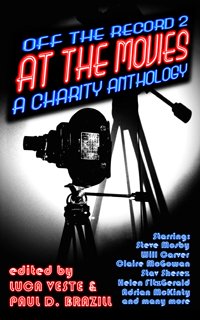
The charity anthology Off The Record -- At the Movies, which features talented authors and me

***


Another charity anthology with great talent and me, Protectors

And many, many other books I've idiotically neglected to mention. (Feel free to add in the comments.)

Also releasing last week was KARMA BACKLASH, a book published by Snubnose Press (Sandra Ruttan and Brian Lindenmuth) and written by my pal Chad Rohrbacher. Check it out. I think you'll dig it.

Here's the description:

It’s amazing what a murdered friend can do to a directionless man, the passion and anger it can stoke, the sadness it fires into a body, the need for good old revenge it nurtures. Searching for his best friend's killer, Derby, a blue-collar gangster in a white-collar world, uncovers the beginning of a complicated mob war that threatens to bring down the whole city.

To find the answers he needs, Derby tries to stay focused: Find the killer. Clear his friend’s name. Stop a war. Don’t fall in love.

He traverses Toledo, a city that grows old with him, unearths secrets his boss doesn’t want exposed, and hopes to find that man he used to be before his mid-life crisis becomes the last crisis he ever experiences. 

Excerpt from KARMA BACKLASH
By Chad Rohrbacher
Published by Snubnose Press


“Look, Derby, I’m telling you they’re like cats who wander into a kennel of Rots and have no damn idea that they’re about to get their heads ripped off even when the dogs are slobbering mad with fangs and muscles and whatnot.”
 I don’t know where Reece picked up that word, whatnot, but he used it so often I was about crazy. I told him if he ever said it in my company again I’d bust his lip. Of course, he quickly figured out to say it only at times I couldn’t respond, like right now while eating my Swedish meatballs at my favorite restaurant. Reece was an ass that way.
“I tell you what,” Reece intoned in his nasally accent acquired from too many broken noses, “there is no way, I mean, I like those fellas just fine. Both of ‘em stand up guys as far as I’m concerned, but I tell you, they don’t have a cup of sense to sip on. Neither one of ‘em. You hearing me?”
I heard him, but I was trying to enjoy my food and didn’t want to spoil it with talk about lawyers I didn’t even know.
Just about that moment I saw his right eye explode out of his head, spattering my meatballs with a tsunami of blood and gray matter. Reece’s mouth hung open, like a man in some soliloquy who suddenly forgot what he was going to say. (I learned that word, soliloquy, from Rosa who used it just to remind me what a messed up idea I had thinking I could ever be with a girl like her.) And I suppose Reece did forget what he was going to say since a bullet ripping through a person's skull-bone would generally have that affect.
Later I’d imagine the coroner opening him up, recreating the timeline:the shooter was ‘yeh’ tall,  the .44 bullet travelled at this angle ricocheting off his cranium just enough to save his friend’s life.
But I couldn’t imagine anything at that moment. I was too busy thinking, ‘what the hell?’
I sat there like a cat in front of a Rot watching everyone dive under tables, pulling their beautiful pasta dishes on top of their heads. I watched the bartender disappear behind the oak bar. I saw people scurrying into the back hall and I saw the boy holding the too big gun in his shaking hand.
He looked oddly familiar but I couldn’t place where. Sweat fell from his forehead. His brown eyes had a look that reminded me of something very serious, but everyone laughed anyway. His red flannel shirt hung loosely off his slight frame. He sported a thick brown beard, jeans, and the way he was shaking, I knew that was the first time he ever took a human life.
Transfixed, I watched the kid, the kid stared at me, and then he turned and took off.
Even though I owed him more than any man could owe another, I was pissed. Reece always left me in these kinds of situations. Now I’d have to talk to the cops and deal with their questions and glances. I’d have to hope it was McClain first on the scene and not that hard ass, Nevin.
I’d have to order some more damn meatballs and whatnot.

***

That night a storm came through which seemed fitting considering my mood. The rain pockmarked my windows, hitting the glass like fingers on a table. I hunkered into my couch sipping on some scotch, the half full bottle on the floor next to me and I thought of Rosa. She was, after all, where my aimless thoughts usually led me.
Rosa taught me things. She taught me how to use big words like soliloquy and cornucopia that impressed other thugs like me, she taught me how to dance and like it, and she taught me how use my hands for something other than beating the crappola out of someone.
Rosa moved on, Reece moved on, and I suppose it's only a matter of time until the cosmic charge of karma busts my chops again. I only needed to look around my scant apartment to know all of that was true: walls painted gray years ago and now just looked putrid, floors scuffed and dirty, a ratty couch and stained Lazy Boy my father gave me before he died and enough memories hanging so heavy in the air I could barely breathe. I had enough in my bank account for more than this, much more, but I was saving up to get my ass out of the city. Though every time I thought I was just about there, I decided I would need a larger pool at the villa, or another car to park in my car garage. I guess I just have to accept the fact that this is what I am and this is where I was going to be. I knew one thing for sure, revelations can be damn depressing.
The knock at my door was soft, almost dainty. I glanced at my clock. 1 a.m. I took another drink and thought they had the wrong place. Then a stronger rapping reverberated through the room. Guess they had the right place.
“Who is it?” I called from the couch. I wasn’t getting up without a reason.
“It’s me. Open up.”
That was reason enough. I opened the door and the small man pushed past me.
“You have another one of those?” he asked knowing I did.
I went and got a glass, and returned to the living room where he stood looking out into the street.
“Jesus,” he said, “it’s cats and dogs out there. Cats and dogs.”
I filled up both glasses and he slugged his down.
“That’s tough about Reece. Not tough as in ‘tough shit’ but you know," Sam said.
Reece and I grew up together in Toledo’s West Side. Train tracks, a liquor store around the corner, and Catholic school a few blocks away (which is now locked up and spray painted by the local kids). I got Reece into this business and I often wondered what he would've done with his life if I hadn't. A businessman, probably. He’d been a good businessman.
“First Rosa and now this. It’s gotta be rough.”
I think if I gave him any inkling of giving a shit what he said, he would’ve wrapped his skinny arms around me and held on tight. Sam was a funny guy. Too sensitive. How he ever made it this long in the business this far is beyond me. Sam’s only skill seemed to be making other people feel that if he could make it then anyone could. This made him more dangerous than any of the thugs out there as far as I was concerned.
“I don’t know which is worse. I mean, losing my girl or my best friend. Probably the guy I grew up with. You grew up with him, right? Yeah, be harder to deal with him getting murdered like that. I mean, you might see Rosa sometime around the city, but Reece, he’s gone and gone. Besides you guys were real close. Not close like that. Just close,” he stammered.
I gave Sam a look that told him he could shut up anytime.
“What do you need, Sam?”
“Bopa. He wants a meeting.”
Of course he did. I nodded and sat back down on my couch and looked out the window.
“Tell him after the funeral.”
Sam’s lip twitched as he looked back at me.
“Come on, Derby.”
I took a drink.
“Don’t make me go back to him with that shit. Things are, well, tense is what they are. I don’t feel comfortable going empty handed.”
Once on a run to a dealer's place with a simple cease and desist order from Bopa, he ended up in the bathtub with the dealer's daughter. The way Sam tells it, she seduced him with German chocolate cake and a cup of coffee. When the dealer walked in and saw them washing their tongues in each other's mouths, he grabbed the closest thing he could find which just so happened to be the toilet plunger. The plunger stung Sam in the back and, Sam assumed, didn't have the punch the dealer wanted because he dropped it and darted into the other room as the wet couple scrambled out of the tub with flower smelling bubbles running down their backs.
It was a twist of skin and water, the tile slick with puddles, and Sam just made it out of the bath when the dealer came back with his 9mm. In a passionate wail, the daughter screamed and dove for Sam knocking him off his feet and stumbling into the dealer like a drunk on roller skates. A shot rang out as the dealer raised his hands to catch Sam but ended up flailing backwards himself. The sink caught the dealer behind the head.
When Sam lifted himself off the dead man, he glanced over to the quiet daughter. The water puddles on the tile already turning pink with blood. Sam called me and I called Jersey our cleanup guy. What a mess.
“Good doggy, Sam.”
“What?”
“Bopa said go fetch. You fetched.”
Sam kind of shuffled from foot to foot, ran a hand through his hair, and then looked outside.

***

KARMA BACKLASH

Monday, July 11, 2011

The Fine Line Between Heeding Wisdom & Selling Out Creatively

You have a vision for your story. It's been building to a steady boil in your mind for years. You feel you know where you want this to go, and you work at it. A little here, a little there.

Gradually, the story takes shape on the page, and you feel you've done your job. It's the story you set out to tell.

And then you send it to your beta reader or editor or agent. And the response is not overwhelming praise for your brilliance.

No. Instead, the response is something more along the lines of, "Some potential here, but we need to find the story."

Proposals include massive scene cuts, a shift in focus to a different main character.

Do you: a) stand your ground and refuse to edit your story, or b) make the changes and feel like a sell-out?

The other night, watching America's Got Talent, I watched someone face this dilemma on TV, with music. The singer in question had wowed the judges and audience with her audition.


She made it through to Vegas, where she decided she would perform an original song.

The judges didn't think that was a good idea, and when she blew it, they gave her a second chance. To leave the stage, take a few hours and prepare a cover of a popular song they'd know. In the discussion between the judges, Howie said something about how this wasn't a writing competition.

I found myself wondering about that. Isn't it a TALENT competition? Isn't writing a talent? I mean, if all you can do is cover other people's material, you'll never actually be a star yourself.

That's one side of the coin. The other is that it would be unappealing to spend a season watching singer after singer perform original songs you didn't know. I mean, when I watch The Voice, I have to admit that I don't know all the songs being covered all the time. And thank God for Adam Levine, who actually admitted he didn't know all the songs being covered by contestants, either. He and I can at least agree that you can't solely base judging the contestants on comparing them to the original artists.

Howie was right for that point in the competition. The judges gave Dani a second chance, and Dani had to decide if she would stand her ground on her principles.

Or if she'd take the second chance.

She did. And the end result was that she made it through to Hollywood, while the other female singers in her category were both sent home.

Now, some might say that's unfair, and that she shouldn't have had a second chance, or that she had an unfair advantage over the other contestants. But I think a big part of what counted for her was her professionalism, and her willingness to take direction.

We artists have to know our place. Sometimes, it's appropriate for us to stand our ground.

And sometimes we have to find Option C) The ability to see your own story on another level and make changes to the work that meet your needs artistically as well as an editor or publisher's needs commercially.

I went through this writing HARVEST OF RUINS. From the inception of the story, it centered on a young girl, and how things in her life that happened shaped her, and ultimately tore her apart.

As the story evolved through rewrites and revisions, and massive cuts in content and the introduction of new scenes, the book no longer centered on Vinny Shepherd. Instead, Hunter McKenna emerged as the central character.

And as more layers were stripped away, the book no longer centered on an investigation and the outcome. Instead, it put Hunter's future in the balance, with the detective sergeant facing criminal charges in court as her personal and professional lives are ripped apart one witness at a time.

The end result is a streamlined, 65,000 word story about a detective sergeant who's on trial for negligent homicide, whose partner takes a leap of faith as he tries to uncover the truth about the investigation they were conducting that led to tragedy, and whether the answers he finds will be enough to sway the jury.

Beneath the surface, HARVEST tells several other stories without losing the threads. It's about how parents shape their children, how susceptible teenagers are to the influence of their peers, how we all bear some responsibility for the choices we make and how those choices affect others, and where to draw the line between personal responsibility and criminal responsibility.

And ultimately, it's a story about forgiveness. Of others. And of ourselves.


Readers have a unique opportunity. Anyone who emails proof of purchase of HARVEST OF RUINS to snubnosepress at gmail dot com by September 1, 2011 will be sent a free copy of the prior version of the book, titled BELOW THE LIGHT, including an afterward by the author about how the book was ultimately revised, and why. You can block out your address and phone number from the purchase receipt. :) Your information will not be shared or disclosed with anyone. Copies of BELOW THE LIGHT will be available early August.

Purchase HARVEST OF RUINS from Amazon.com

Monday, June 27, 2011

Harvest of Ruins

I've been sick the past few days, and haven't been operating at peak efficiency, so this seems like a great time to share with you a little piece of my new manuscript, HARVEST OF RUINS.


No Crime Scene


They say the last thing you see before you die is recorded in your eyes. Hunter McKenna wondered if this was what Adam Fields’ eyes would show if they could see that image. His body surrounded by a white porcelain bathtub surrounded by marble tile, water pelting down at him from above?

“Goddamn CSI shit.”

Hunter McKenna, a detective sergeant with the provincial police, watched her partner swear, turn, stomp across the room and swing his foot at the trash can. When Noah Wilmott’s toe connected with the steel bin it rose into the air before it tipped sideways and the contents spilled all over the floor.

He limped and cursed for a few steps, although he kept the words under his breath. Hunter knew him well enough to know what he was saying, though. It seemed like Noah hadn’t thought kicking the can would hurt as much as it apparently did. His hair was black as coal but he had the temper of a redhead, a temper he tried to rein in and offset with a groomed appearance, but there were times his nature defied the suit-and-tie charmer image he worked so hard to project.

Next to her partner, Hunter felt frumpy. He had a nicer wardrobe, a more recent haircut and most of the time he appeared polished. Her hair wisped around her face, her curves threatened to push her out to the next clothing size, and she never had felt like dress pants fit properly anyway.

Noah staggered out the door, down the hall.

“Where the hell is Heineman? That goddamn spit-for-brains no-good sack of shit.” There was a pause as Heineman was located, and then Noah’s voice returned with a roar. “Prove you aren’t totally useless. Tell me it occurred to you for even just a split second to turn the water off and stop running evidence down the goddamn drain.”

Under other circumstances a smile might have tugged at Hunter’s lips, but on this occasion she could understand her partner’s anger. The discovery of a body had been reported around the time early risers ate breakfast. The late risers had been deprived of their opportunity to sleep in, at least in this cul de sac, unless the growing chorus of sirens that had reached their crescendo outside this otherwise normal home hadn’t piqued their curiosity and their curtains were thick enough to block out the swirling lights of the half dozen plus emergency vehicles that had converged there.

By the time Hunter and Noah had arrived the slipper-and-robe brigade had swelled to such a size that she guessed the bystanders included residents from as far as three blocks away. The joggers and dog-walkers interspersed with the sleep-deprived explained the spread of information throughout the quiet community.

They’d been on the front step when the first camera crew arrived.

Hunter looked down at the body in the tub, felt the heat of the steam on her skin as she snapped a plastic glove over her hand, reached for the tap and turned the water off. Goddamn CSI shit indeed.

The reported body lay in the tub of what was undoubtedly the master bath, adjacent to a massive bedroom that a one-bedroom apartment could fit inside, with room to spare. Considering the size of the room, and the fact that the door to the master bath had reportedly been left open, the house must have had one hell of a hot water tank. The steam had fogged the mirror and she’d felt the heat when she’d twisted the spigot. Hunter stepped aside for Dr. Eaton, although the bathroom itself was as large as a standard bedroom, and she was hardly in his way.

The wizened doctor prepared himself to examine the body and knelt by the tub. “Apparent cause of death would be from a gunshot wound to the temple.” Dr. Eaton’s voice was gruff but hinted at no emotional response. He carefully lifted the decedent’s hands and examined them.

They’d been folded neatly across the boy’s naked body, resting on his stomach, where the spray of water from the shower nozzle had been directed.

Deliberate or coincidence?

“We’ll check for gunshot residue, but the water…” Dr. Eaton stood up and shook his balding head. “Obviously, core body temperature and rate of decomposition has been affected.” He bent over and lifted the victim’s leg a few inches, grunted, and nodded. “He’s pretty fresh. I can’t even swear to cause of death until I get him on the table.”

Hunter nodded. It was what she’d expected to hear. “Hot water was still running. We might be able to establish a window based on the size of their tank, how much hot water remains…” She’d have to have someone shut the system down so that it didn’t start replenishing the supply. “Glad you were in the area.”

He grunted again. “Convenient when I live across town.”

Or not so convenient, Hunter thought as she watched him glance at the body again. “Recognize him?” she asked.

“Adam Fields.”

Adam Fields… Where did she know the name? It clicked. Her former partner Tom’s daughter. Adam was a boy Vinny had played with. Hunter could remember a few times, when she’d been in the neighborhood where Tom’s ex-wife still lived, and seen Adam as a young boy. Blond hair, and truly white skin. He’d stood out almost as much as Jonah.

Jonah, a gorgeous boy with light brown skin, huge chocolate eyes, and clothes that bordered on rags. Somehow, as children they’d overlooked the obvious differences.

But with age came the loss of innocence, that taint of the world and the distorted views so many held.

Hunter remembered what had happened to Jonah.

Wondered if Adam had been there.

“Did you know him?” Dr. Eaton asked.

“Never struck me as the type to play Russian roulette,” she said.

“Won’t know what killed him until I get him on the table,” Dr. Eaton repeated. “Any blood’s long since swirled down the drain.”

Meaning that there may not have been sufficient blood loss to indicate the head wound was the cause of death. They hadn’t found Adam Fields’ clothes, they hadn’t found the gun, and there wasn’t any blood spatter on the walls. That meant that even if Adam had pulled the trigger himself, in that room, someone else had been there to clean up. Someone sophisticated enough to put him in the tub and turn the water on, and they may have been smart enough to use a gun to try to conceal the real cause of death. A gunshot wound was just a gunshot wound, until the doctor said otherwise.

She watched him shuffle out the door, through the adjoining bedroom, and saw Noah return. He ran his fingers through his hair the way he did when he was frustrated. He saw her watching him, took a breath, lowered his hand, straightened his tie.

A quick nod at one of the uniforms was all she needed to get him to approach her. After relaying her instructions, she turned to her partner. “Remind me why we’re here?”

“Because we’re dealing with all youth crimes these days.”

“And this qualifies how?” she asked.

“Suspicious death of a kid.”

She made a face at him. “We’ve got the vandalism from a few days ago, not to mention the drug leads we're chasing up. Musquash High’s been flooded with a new supply.”

“And this is going to take priority.” Noah shook his head. “It’s a teenager. A local boy. Drugs are just like God and the Tooth Fairy; they don’t really exist until your kid’s stealing money from your wallet to feed their habit, or the junkies are dropping like flies on the sidewalk in front of your house. But this is a body.”

He was right. All that mattered was that this was a teenager who was dead and shouldn’t be.

The drug case would have to wait.

“The doctor can’t be certain about cause of death.”

“Big surprise.” Noah scowled.

“What else have we got?”

“The keystone cops bungled every part of the scene they could get their hands on. I sent Heineman outside, on perimeter duty. Too bad there wasn't an Arctic outpost to send his ass to."

"He'd still find a way to screw that up somehow.”

Noah cracked a smile.

She’d already surveyed the master bedroom, and quickly exited, followed the hall to the main bath, checked it, and proceeded to the other bedroom.

All the furniture was pushed to the walls, the black and steel desk and shelves containing nothing more than a computer and a few books and boxes. The white carpet didn’t appear to have so much as a speck of dust on it.

Still, she did a full 360°, pushed the closet door open and confirmed it was also clear.

As she stepped back out into the hallway, Noah shook his head. “No gun. No bits of brain splattered against a wall. No blood stains.” They walked towards the stairs. “And courtesy of a timed sprinkler system the front and back yards are as wet as the bathtub.”

“Sprinklers? In October?” This was a year when drought hadn't been an issue. Enough rain had fallen throughout the spring to keep the grass growing steadily, green as the leaves on the trees, and with the arrival of fall the rain had returned.

The officer Hunter had tasked with checking the hot water heater stopped short, three quarters of the way up the stairs, when he saw them at the landing. Elijah Two-Rivers was tall, fit, with a booming voice that he somehow managed to soften appropriately whenever he was on the job. Hunter rarely visited the bar with her colleagues – not with a daughter waiting for her at home – but when she had stopped in for a few moments, she’d taken note of Elijah. He was the one who kept the party in check, which was why she’d selected him for her assignment. He was a young officer who was going places, and not just because of any affirmative action policy those passed over would blame.

He looked her straight in the eye. “You’re not going to like it,” he said. “They have a tank and an on-demand system. Damnedest thing…” He shook his head. “If that was the only water running and it wasn’t full pressure it could have been on for hours and the water would still come through hot.”

Hunter cursed the homeowners silently but thanked the officer. Elijah turned and looked as though he was about to descend to the main floor, but then stopped. “I also looked at the sprinklers outside,” he said.

Noah frowned. “Why?”

Elijah glanced at Hunter, then faced Noah as he answered him. “To see where it connected and what time it came on. The timer wasn’t activated.” He glanced back at Hunter. “I just thought you’d like to know.”

Hunter nodded and thanked him again. She raised an eyebrow as she glanced at her partner. “Remind me. How did this call come in?” They walked down the stairs.

“Anonymous 911 call from a pay-and-talk cell phone.”

“And who lives here?”

Noah flipped back a few pages in his notebook. “William and Eileen Shannon. Neighbors say William’s in finance, and Eileen works at Soldiers' Memorial Hospital in Orillia.”

“A couple with a lot of money.”

“And no kids, never mind teenagers.”

At the bottom of the stairs there was a door that presumably went to the garage. It took no more than a second to confirm that, and to verify that there was no vehicle parked inside. Hunter closed the door.

Noah smiled as he tapped his fingers against his notebook. “Neighbors say they’re on vacation. Crete.”

So far they had a naked dead boy in a bathtub, in a house he seemed to have no reason to be in, no murder scene, no witnesses, no certainty about what had killed him and not a whole hell of a lot to go on.

They were off to a great start.

Monday, May 2, 2011

It's Not Polite To Let Your Modifiers Dangle In Public: Ruttan on Grammar

The other day, Dave blogged on grammar. I logged on, typed up a great response, and watched it disappear into cyberspace somewhere.

That's when I decided that the supreme overlord of the internet had eaten my comment to force me to blog about this topic myself so that I could set the record straight, and restore the significance of grammar to its proper place in the writing universe.

Or, at least, put a bit of a different spin on it.

Check this out.

Boy it sure is hotter than hell Fred said. "I got me toes burnt near right off in de back of dat truck" Sally Jean told me she's dang near ready to burst. "Its like the devil himself were workin the sun Ralph said. "I cant remember a time when it was hotter dan dis. Ya, and Sally Jean said you won't be wantin to tink of anytin but an ice bath and cold home brew needer.

So, you tell me. Who the hell said what?

Now, I've read drafts of stories where, line after line, paragraphs ran together. If you add in a story where the focus is on dialogue, and a writer that doesn't know the rules for punctuation, so they don't consistently use quotation marks and leave out dialogue tags... Well, it can be a nightmare. I mean... I've really had to review prolonged sections of writing like this, and I've really not had a clue who was saying what or what was going on.

And I don't know how on earth to address clarity and to just make sense of the ideas behind the writing when I don't even know who's saying what.

Which means the first thing I've got to address with a writer struggling with these issues is how to split paragraphs, and how to use punctuation when writing dialogue. If they can at least sort the text into paragraphs, then I can begin to move towards clarity.

But without at least attempting to use punctuation and structure? Please, just shoot me now. I mean, really. I've pulled my hair half out of my head trying to make sense of run-on sentences that are mashed together in run-on paragraphs that extend multiple pages, and after going cross-eyed and nearly overdosing on Tylenol, I reached a significant conclusion.

And before anyone throws names at me like Charlie Huston, just remember, even writers who break "the rules" have their own style they consistently conform to that serves as a guide.

To me, the technical aspects of writing are like one of the four wheels of a cart; without it, it's pretty damn hard to get the cart to move properly.

Creativity is another wheel. Storytelling - not writing - is another wheel. The fourth wheel? Organization and expression. By this, I mean sequencing your thoughts in a way people can follow, to maximize the impact of your story.

And as far as I'm concerned, they're all equally important. I mean, Dave's right in saying that if there's a typo, we can usually figure out what was meant. But in the example I gave above? That's not slapping a bandage on a small error; that's major surgery to repair significant damage. And I think that Dave's opinion stems primarily from the situations he's exposed to through his work and writing experience, which may be scenarios where only a handful of pages are being written for a story, report or essay.

My situation is different, and that's why I'm splitting hairs here. Because while (in my humble opinion) Dave isn't completely wrong, in certain circumstances, he's also not completely right.

The other day we were in a restaurant and the kids were working on activity sheets. One was to create a crazy story by filling in the blanks with specific types of words. My stepson, who's in grade 4, didn't know the difference between a noun and a verb. And he's typically ranging from A to B in Language Arts grades. When he told me they don't really teach that in school, I couldn't argue. I've seen the worksheets that come home, and the kids aren't being instructed in this. 25 spelling words a week, but no lessons on the difference between an adverb and a verb.

Which reminds me of the fact that my stepdaughter got her lowest grade ever in language arts this year, and the teacher cited the fact that she wasn't using a lot of varied words in her creative writing. But how can you expect her to use different nouns and verbs and modifiers if she doesn't even know what those terms refer to?

That isn't even my biggest complaint with their English language instruction. What frustrates me is that they haven't learned the difference between singular and plural. They is not gonna learn to speak proper English if they is never corrected on such things. And when mixing singular and plural is common in their speech, and that translates over to their writing, shouldn't someone be explaining to them why they've lost points for it on a creative writing assignment?

This is why, every summer, I do my own review with the kids, covering math and English, as well as science and social studies.

Now, I remember being in school, and recall taking phonics and learning grammar and punctuation rules in elementary school. I also remember taking spelling tests each week, and I remember a very long list of teachers who would deduct points from projects for incorrect spelling, grammar or use of punctuation. And not just in English class.

Perhaps that's why I learned to focus on writing clean. Perhaps it's because I'm anal. Or perhaps it's because if you maintained a 100% average in spelling, you got a spare. Those who had the spare didn't have to do all the grammar assignments for the spelling words each week.

I try to write clean. I try to write clean in everything from my emails to my blog posts. And using twitter really messes with me mentally, because I need to use text speak sometimes, and it goes against my instincts.

As an author, I am so glad I habitually try to write clean.

Like Dave, I work in education. I spent a lot of time in high school English classes. I tutor adult students taking creative writing diplomas online. I also have two stepkids in elementary school.

And the lack of emphasis placed on good grammar, spelling and punctuation - what I tend to refer to as the technical aspects of writing - is a constant headache for me.

Now, in Dave's situation at school, perhaps he's primarily working on things that are only a handful of pages long. Maybe he teaches creative writing exclusively. If so, I can understand why he'd put more focus on creativity and clarity of expression than on technical execution if he chooses to.

But I work with students who are working on manuscripts. And I feel it's irresponsible for me to strictly focus on the creative side of the process without addressing the technical issues. I also feel that it's in the student's best interests to learn these things sooner, rather than later.

Why?

Do you want someone to wait until after they've started building the frame of your house before they take a carpentry course? Probably not. Just like you probably don't want to go flying in an airplane with a pilot who hasn't taken any lessons or learned how to land.

I know from first-hand experience just how much time is spent revising a manuscript after you think you've finished writing it. I know that typing 'The End' for the first time is really just the beginning. And I know that the next part of the process is often considerably more painful than the first part. Creating is fun. Expressing yourself correctly isn't.

So, sure, toss aside grammar and punctuation and spelling. Have at er. Go to town on your manuscript and sail right through. And then discover that you haven't used proper punctuation for any of your dialogue and you have to go over 350+ pages just to fix the dialogue punctuation alone. Plus, you never did learn that rule about i before e except after c, and there are so many wavy red lines that Word told you it's taking too much memory to track all your spelling and grammatical mistakes. And what is the rule about dialogue tags?

You see, in certain circumstances, Dave's not wrong. If I was strictly teaching creative writing - I mean, real creative writing, not the diploma course I do mentor that's called that - grammar would take a back seat. But coaching people through the process of writing a manuscript? Why on earth would I wait until the last chapter to mention that they now need to fix all their spelling and grammatical mistakes, and correct the punctuation?

As it is, when you get to the end of your manuscript, you're going to have to learn how to self edit. And self editing refers to more than just spelling and grammar. It includes believability. It includes internal consistency within the manuscript. It includes sellability and marketability. I mean, back when Charles and Diana were getting divorced, it might not have been a good thing to name your protagonist Camilla and have her having an affair with a married man. Legal issues and lack of appeal for the UK reading audience might be considerations. Hell, one of the things I had to do in my own early editing was to weed out my use of the word slight in all its various forms. Everyone was slightly tired, their eyes widened slightly, blah slightly blah. I was in love with the word. Now I can't stand using that word. We all have our little quirks, and sometimes we have to have someone point them out to us to help us break the habit.

I'm glad I have a tendency to write clean, because it means that I don't have to spend countless hours fixing mistakes needlessly. It takes far less time to learn to do something right to begin with, and build a solid foundation. I constantly check as I write. Some people will tell you that's not a good thing to do, but I guarantee you that I have the cure for writers block.

You think you have writers block? Start back on page 1 and do a line edit of your manuscript, and I guaranfreakintee you that most of the time, you'll be ready to get back to writing the story before you know it. Authors typically don't find it fun to edit their own work. It's a pain in the ass. And when I'm done, I like to have the idea that I might actually be pretty close to being done with a manuscript, instead of thinking I now need to go back to page 1 and correct thousands of spelling, punctuation and grammatical errors.

Now, as far as I'm concerned, every high school student and adult student should have some foundation of training in spelling, grammar and punctuation. Of course, that's what I'd like to believe. I've learned some teachers don't really cover those things. I mean, some don't even cover how to use a dictionary.

But most people have some basic knowledge. That means that covering the basic rules should be a refresher. There should be a foundation in there somewhere to build on. And it should come easy. It's much easier to explain the rules about commas and periods than it is to get someone to grasp how to breathe life into a character, and if I can get a student refreshed in the first few assignments and they start to fix those mistakes in their own writing, that's a lot less work for them to clean up later. I get get the housekeeping done at the start, and then focus on the other things that are far more nuanced and require individualized feedback.

And if it's just old folks who say it takes less time to do it right the first time rather than needing to go back and fix it later, then I'm old.

Old and right. Now, Dave says that people who nitpick on grammar and typos are taking the easy way out. I say bullshit. Because I have over 70 students taking various diploma programs, most working on novels, who have publication as a goal. And the courses guarantee that the students will re-earn their tuition, or the students get their money back. So, ask an agent if they'd rather get material that's been corrected after I've red-penned it, or something that hasn't had the grammar and spelling addressed? Focusing solely on grammar and spelling should not be the sole focus, but it is an important part of good writing.

Maybe this is a difference. I mean, I get paid to assess the assignments. When I'm working in the high school, I get paid the same, whether I correct the grammar and spelling or not.

And I actually have worked with kids who will sit and stare at a paper and can't write anything. I have actually worked with kids who're in high school and can barely read, never mind put two sentences together. My reality is different than Dave's, so I'm willing to say maybe what he's saying is reasonable for his situation, but it really isn't appropriate for mine, and it does drive me mental when anyone wants to declare an absolute truth on this subject. There are times grammar is MORE important that creativity, and I would think that should be clear to anyone involved in writing.

As a tutor, my biggest fear is that my students will go read Dave's post, totally blow off all the technical aspects of writing, and then get a hard dose of reality. Their draft will be done, they'll no longer have a tutor, and they'll have hundreds of pages of mistakes to correct on their own. And you know what? If that happens, it's not my problem. I mean, technically, they have to do the work to clean it up. But the parental side of me, and the educator side of me, is always trying to help people avoid mistakes, rather than letting them set themselves up for failure. I've known people who loved the creation part of storytelling so much, they could write for hours, but never could figure out how to correct their manuscripts so that they were publishable, and eventually gave up on the entire process, because rejection after rejection wore them down, and learning how to fix their mistakes seemed like a Herculean task after they had stacks of manuscripts written.

I don't want my students to finish their diploma and then fall flat on their face because of something like this, that I could have helped them with along the way.

Ask a parent whether it's better to have their child do a short tidying of their room every day, or a big clean-up every week. Oh, those moments of discouragement when someone who's been putting off their chores comes face to face with the fact that nothing else is happening until their room is cleaned. And everywhere they look, there's a mess. How many times have I said that if things were put away after they were used, we'd be able to find them?

It's logic, on multiple levels. As a society we're pretty good at putting off to tomorrow what should be done today. As an educator, I feel it's irresponsible of me not to address all the critical aspects that should be taught in order to help my students succeed in expressing themselves with the written word. And I feel comfortable agreeing to disagree with Dave based on the situations I work with, because his approach wouldn't be appropriate for the goals of the students I'm working with, who want to be published, not just graded.


Oh, and by way of confession, probably every single "nitpicky" thing I point out to my students is a mistake I've made at one time or another. I'm supposed to bring them years of experience from working with authors, editors, agents and going through the process of being professionally published. If they're paying for that voice of experience, they should get it, whether I'm pointing out resources for using punctuation, tips on how to write a query letter, or anything else that's related to becoming a published writer.

********

And in other news!

Suspicious Circumstances sold over 400 copies in 5 weeks, and became and Amazon Top 100 Bestseller last month! The book is now available on Smashwords as well as Kindle.


Also, my short story Childhood Dreams is now available exclusively on Smashwords for free.