Showing posts with label Brian Lindenmuth. Show all posts

Monday, May 25, 2015

Inspiration from The Boss

I felt a post on Springsteen on Memorial Day was fitting. Don't see the connection? Stay with me.

The other night, I stumbled across an old documentary on Bruce Springsteen. It was near the beginning, and quickly caught my attention. Here was a guy who skipped his own high school graduation, who they talked about being socially awkward.

And we all know how successful Springsteen has been.

I mean, can we even agree on his best song? For me?


Rolling Stone ranks it #28 of Bruce's top 100 hits.  I never seem to be very mainstream.

Brian might say...


#3 on that Rolling Stone list.


It wasn't just the music that caught my attention in this special. It was the substance. With two teenagers, one of whom has already been in the, "I hate school" state for what seems like forever, and the other has been feeling stressed and unhappy at school and socially lately.

They actually said they'd consider switching schools. And believe me, that's a sign that things are bad.

I rewound the program and started recording it, thinking that perhaps the kids would find some encouragement in knowing that someone who's gone on to be as successful as Springsteen wasn't always Mr. Popular.

Instead, the program took my respect for him to a whole new level, got me thinking about Memorial Day, and actually reassured me creatively.

Memorial Day, because in the wake of 9/11, Bruce Springsteen picked up the phone and called widows in New Jersey, and listened to people. He internalized all of that loss and the impact of that horrific day, and produced a remarkable album, that's been my favorite Springsteen for years.

Oddly enough, as a teenager, I'd fallen into the trap of perceiving him as jingoistic, and a little too "ra ra America" for my tastes. Perhaps that's something Americans can't fully understand, but the American psyche and patriotism is something I've explored in my marriage, and my day to day experience, and is something for another post, another day.

It takes really reading the lyrics to appreciate the message.

Born down in a dead man's town
The first kick I took was when I hit the ground
You end up like a dog that's been beat too much
Till you spend half your life just covering up
Born in the U.S.A.
I was born in the U.S.A.
Born in the U.S.A.
Got in a little hometown jam so they put a rifle in my hand
Sent me off to a foreign land to go and kill the yellow man
Born in the U.S.A.
I was born in the U.S.A.
Born in the U.S.A.
Come back home to the refinery
Hiring man says "son if it was up to me"
Went down to see my V.A. man
He said "son don't you understand now"
Had a brother at Khe Sahn fighting off the Viet Cong
They're still there he's all gone
He had a woman he loved in Saigon
I got a picture of him in her arms now
Down in the shadow of penitentiary
Out by the gas fires of the refinery
I'm ten years burning down the road
Nowhere to run ain't got nowhere to go


It isn't the jingoistic anthem some believed it to be. It's a work that runs much deeper, that explores a failing of a society towards its own citizens. It's hard to see it as validation of the American dream; if anything, it seems rather hopeless upon examination of the lyrics. Although Springsteen did not fight in Vietnam because he failed his medical, he's carried some sense of understanding of the price of war on those who have, and it's been reflected in his music.

What's curious is that the same album produced songs like Dancing in the Dark, and one of my other personal favorites, Glory Days - another song that's nostalgic, yes, but hardly idealistic and optimistic.


I think one of the things that really struck me about Springsteen when I was watching the documentary was how diverse his music is. I should know - I do not own Born in the USA (though I should) but I do own Devils and Dust, and The Ghost of Tom Joad.

And my personal favorites?


In light of recent events, how could anyone talk about the problems in Baltimore and Ferguson without thinking of this Springsteen classic?

When I listen to Springsteen, there is a sense of nostalgia. Not because the music has aged. Rather, it's got a timelessness to it that makes it as relevant today as it was when it was recorded and released. The nostalgia is for the delight of walking to town and going to the furniture store, which had a selection of records (yes, records!) at the back, and coming home with that new prize. It was for the incredible sense of discovery of the B sides, the songs you weren't hearing on the radio, that curiously almost always seemed to resonate with me even more than the singles.

It reminded me of how much I appreciate an artist who has depth and range, who doesn't produce different versions of the same album over and over again. Springsteen may not have been hanging out with the cool kids in high school, but by digging deep within himself and baring his soul through his music, and not being afraid to write and sing about issues that were important to him and his convictions, he's been able to connect with a far greater audience worldwide.

I found the show inspiring, and reassuring.

You see, for quite some time now, the only projects I've been dabbling with have fallen well outside of my main genre focus, and I've struggled with that. I'd never want crime fiction fans to feel I have anything other than the deepest respect for them, but I also want the freedom to explore new themes and to do that through other genres where appropriate.

When I watched the special on Springsteen, I remembered that a career is made of much more than top 10 hits, and it all has value. People are more than one interest, more than one style, more than one show or type of music they like. We're a collection of pieces that somehow mesh together. I can love Bloodlines and love Orphan Black and The 100, and there's nothing contradictory in saying that, because people are complex.

Oddly enough, Victor Gischler posted something on Facebook that resonated with me, and ties in to my thoughts for this post:

One of those days where I look at my body of work and wonder what the hell am I doing career wise? Don't get my wrong, not a pity thing or self doubt thing. Nothing like that. But I'm all over the damn place. Crime, satire post apocalypse, pulp sci-fi, relatively straight forward fantasy. It's like I'm daring readers to keep up with me which is probably not the best business model.


Somehow, through all of this, I realized I didn't have to try to 'fit in' or feel restricted by genre. I can push the boundaries. Heaven help me, I don't mean transcend the genre, because I don't feel crime fiction is second to anything. I just mean move outside what's typically expected and incorporate elements from anything appropriate.

After all, if we feel trapped inside expectations, don't we run the risk of being stagnate?

I think the only crime is producing something predictable.

And perhaps this feels like a series of disjointed random thoughts, but in my mind before I sat down at the computer, my tribute to The Boss was grander, and it all connected for me.


Tonight our bed is cold
I'm lost in the darkness of our love
God have mercy on the man
Who doubts what he's sure of


Monday, February 25, 2013

The Fine Art of Editing... and More Editing... and Rewriting...

On the weekend, the boy started his pottery classes. Brian got a great video of him, at the wheel, with his instructor, working on shaping the clay.


Something happened.

A little too much pressure, and the mold broke.  The instructor said not to worry, everything was fixable.

And they started again, from scratch.

It was interesting to me, because I was recently asked a question about editing your own writing.  How do you know when to fix what's there or when to get rid of it and write it again from scratch?  How do you know when it's enough or when you still have more you need to change?

Joelle might phrase it by asking how you know when it's time to stop tinkering.

Now, the truth is, sometimes there is no right or wrong answer, but that's not a very helpful answer.

For me, when you're working on a scene, there are certain things to ask yourself.

#1.  Does the scene reveal what I want it to reveal about the character?  Does it accomplish the job I've set out to do with this scene?  Do I unintentionally say things about a character that I don't want to suggest?  (This becomes an issue with writers who are trying to force characters into a plot that isn't a natural fit for them, and are using them as placeholders rather than letting them take on their own life.)

#2.  If the scene's focus isn't character, the question is whether it advances the plot in the way you intend (or contributes to the overall story development by setting the scene).

If you're torn between going in a few different directions, and both options serve the purpose of #1 or #2, or both, then it may come down to an artistic choice.

Sometimes, you need to have the ability to see four or five steps down the line.  Ask yourself what the logical result of option A is, and then compare it to option B.  And then get your big girl panties (or boxers) on and make a decision.

And remember, everything is fixable, until the book goes to publication.  For newer writers, this process may not have settled, and it's more likely that you'll do more rewriting, because you're learning so much about the mechanics of writing, as well as plot and character development.  As you go through the editing process on manuscripts, you'll start to know what to look for as you go, and hopefully, it will make the rewriting process a little more bearable.

Wednesday, October 3, 2012

Books For You


By Steve Weddle
-----

Friend of the blog and recent DSD Book Club pick Tom Piccirilli, as you may already know, is having some medical issues. Here's how you can help.


-----

The good folks at SHOTGUN HONEY have come out with a great collection of stories, BOTH BARRELS, available in print and as an ebook. In addition to some really fantastic work, the anthology contains one of my Cyborg Lesbian Vampires stories.

In addition to that book, many others have recently dropped.


The paperback of The Professionals, by Owen Laukkanen

***


Our own Joelle Charbonneau's lovely Skating on the Edge

***


Chris F. Holm's The Wrong Goodbye

***


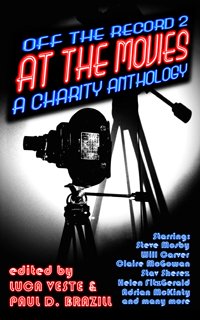
The charity anthology Off The Record -- At the Movies, which features talented authors and me

***


Another charity anthology with great talent and me, Protectors

And many, many other books I've idiotically neglected to mention. (Feel free to add in the comments.)

Also releasing last week was KARMA BACKLASH, a book published by Snubnose Press (Sandra Ruttan and Brian Lindenmuth) and written by my pal Chad Rohrbacher. Check it out. I think you'll dig it.

Here's the description:

It’s amazing what a murdered friend can do to a directionless man, the passion and anger it can stoke, the sadness it fires into a body, the need for good old revenge it nurtures. Searching for his best friend's killer, Derby, a blue-collar gangster in a white-collar world, uncovers the beginning of a complicated mob war that threatens to bring down the whole city.

To find the answers he needs, Derby tries to stay focused: Find the killer. Clear his friend’s name. Stop a war. Don’t fall in love.

He traverses Toledo, a city that grows old with him, unearths secrets his boss doesn’t want exposed, and hopes to find that man he used to be before his mid-life crisis becomes the last crisis he ever experiences. 

Excerpt from KARMA BACKLASH
By Chad Rohrbacher
Published by Snubnose Press


“Look, Derby, I’m telling you they’re like cats who wander into a kennel of Rots and have no damn idea that they’re about to get their heads ripped off even when the dogs are slobbering mad with fangs and muscles and whatnot.”
 I don’t know where Reece picked up that word, whatnot, but he used it so often I was about crazy. I told him if he ever said it in my company again I’d bust his lip. Of course, he quickly figured out to say it only at times I couldn’t respond, like right now while eating my Swedish meatballs at my favorite restaurant. Reece was an ass that way.
“I tell you what,” Reece intoned in his nasally accent acquired from too many broken noses, “there is no way, I mean, I like those fellas just fine. Both of ‘em stand up guys as far as I’m concerned, but I tell you, they don’t have a cup of sense to sip on. Neither one of ‘em. You hearing me?”
I heard him, but I was trying to enjoy my food and didn’t want to spoil it with talk about lawyers I didn’t even know.
Just about that moment I saw his right eye explode out of his head, spattering my meatballs with a tsunami of blood and gray matter. Reece’s mouth hung open, like a man in some soliloquy who suddenly forgot what he was going to say. (I learned that word, soliloquy, from Rosa who used it just to remind me what a messed up idea I had thinking I could ever be with a girl like her.) And I suppose Reece did forget what he was going to say since a bullet ripping through a person's skull-bone would generally have that affect.
Later I’d imagine the coroner opening him up, recreating the timeline:the shooter was ‘yeh’ tall,  the .44 bullet travelled at this angle ricocheting off his cranium just enough to save his friend’s life.
But I couldn’t imagine anything at that moment. I was too busy thinking, ‘what the hell?’
I sat there like a cat in front of a Rot watching everyone dive under tables, pulling their beautiful pasta dishes on top of their heads. I watched the bartender disappear behind the oak bar. I saw people scurrying into the back hall and I saw the boy holding the too big gun in his shaking hand.
He looked oddly familiar but I couldn’t place where. Sweat fell from his forehead. His brown eyes had a look that reminded me of something very serious, but everyone laughed anyway. His red flannel shirt hung loosely off his slight frame. He sported a thick brown beard, jeans, and the way he was shaking, I knew that was the first time he ever took a human life.
Transfixed, I watched the kid, the kid stared at me, and then he turned and took off.
Even though I owed him more than any man could owe another, I was pissed. Reece always left me in these kinds of situations. Now I’d have to talk to the cops and deal with their questions and glances. I’d have to hope it was McClain first on the scene and not that hard ass, Nevin.
I’d have to order some more damn meatballs and whatnot.

***

That night a storm came through which seemed fitting considering my mood. The rain pockmarked my windows, hitting the glass like fingers on a table. I hunkered into my couch sipping on some scotch, the half full bottle on the floor next to me and I thought of Rosa. She was, after all, where my aimless thoughts usually led me.
Rosa taught me things. She taught me how to use big words like soliloquy and cornucopia that impressed other thugs like me, she taught me how to dance and like it, and she taught me how use my hands for something other than beating the crappola out of someone.
Rosa moved on, Reece moved on, and I suppose it's only a matter of time until the cosmic charge of karma busts my chops again. I only needed to look around my scant apartment to know all of that was true: walls painted gray years ago and now just looked putrid, floors scuffed and dirty, a ratty couch and stained Lazy Boy my father gave me before he died and enough memories hanging so heavy in the air I could barely breathe. I had enough in my bank account for more than this, much more, but I was saving up to get my ass out of the city. Though every time I thought I was just about there, I decided I would need a larger pool at the villa, or another car to park in my car garage. I guess I just have to accept the fact that this is what I am and this is where I was going to be. I knew one thing for sure, revelations can be damn depressing.
The knock at my door was soft, almost dainty. I glanced at my clock. 1 a.m. I took another drink and thought they had the wrong place. Then a stronger rapping reverberated through the room. Guess they had the right place.
“Who is it?” I called from the couch. I wasn’t getting up without a reason.
“It’s me. Open up.”
That was reason enough. I opened the door and the small man pushed past me.
“You have another one of those?” he asked knowing I did.
I went and got a glass, and returned to the living room where he stood looking out into the street.
“Jesus,” he said, “it’s cats and dogs out there. Cats and dogs.”
I filled up both glasses and he slugged his down.
“That’s tough about Reece. Not tough as in ‘tough shit’ but you know," Sam said.
Reece and I grew up together in Toledo’s West Side. Train tracks, a liquor store around the corner, and Catholic school a few blocks away (which is now locked up and spray painted by the local kids). I got Reece into this business and I often wondered what he would've done with his life if I hadn't. A businessman, probably. He’d been a good businessman.
“First Rosa and now this. It’s gotta be rough.”
I think if I gave him any inkling of giving a shit what he said, he would’ve wrapped his skinny arms around me and held on tight. Sam was a funny guy. Too sensitive. How he ever made it this long in the business this far is beyond me. Sam’s only skill seemed to be making other people feel that if he could make it then anyone could. This made him more dangerous than any of the thugs out there as far as I was concerned.
“I don’t know which is worse. I mean, losing my girl or my best friend. Probably the guy I grew up with. You grew up with him, right? Yeah, be harder to deal with him getting murdered like that. I mean, you might see Rosa sometime around the city, but Reece, he’s gone and gone. Besides you guys were real close. Not close like that. Just close,” he stammered.
I gave Sam a look that told him he could shut up anytime.
“What do you need, Sam?”
“Bopa. He wants a meeting.”
Of course he did. I nodded and sat back down on my couch and looked out the window.
“Tell him after the funeral.”
Sam’s lip twitched as he looked back at me.
“Come on, Derby.”
I took a drink.
“Don’t make me go back to him with that shit. Things are, well, tense is what they are. I don’t feel comfortable going empty handed.”
Once on a run to a dealer's place with a simple cease and desist order from Bopa, he ended up in the bathtub with the dealer's daughter. The way Sam tells it, she seduced him with German chocolate cake and a cup of coffee. When the dealer walked in and saw them washing their tongues in each other's mouths, he grabbed the closest thing he could find which just so happened to be the toilet plunger. The plunger stung Sam in the back and, Sam assumed, didn't have the punch the dealer wanted because he dropped it and darted into the other room as the wet couple scrambled out of the tub with flower smelling bubbles running down their backs.
It was a twist of skin and water, the tile slick with puddles, and Sam just made it out of the bath when the dealer came back with his 9mm. In a passionate wail, the daughter screamed and dove for Sam knocking him off his feet and stumbling into the dealer like a drunk on roller skates. A shot rang out as the dealer raised his hands to catch Sam but ended up flailing backwards himself. The sink caught the dealer behind the head.
When Sam lifted himself off the dead man, he glanced over to the quiet daughter. The water puddles on the tile already turning pink with blood. Sam called me and I called Jersey our cleanup guy. What a mess.
“Good doggy, Sam.”
“What?”
“Bopa said go fetch. You fetched.”
Sam kind of shuffled from foot to foot, ran a hand through his hair, and then looked outside.

***

KARMA BACKLASH

Monday, January 23, 2012

Bad Books & Bad Blood

Author Adrian McKinty recently started a fire on the web with his post explaining why most crime novels are bad.

Why Are Most Crime Novels Bad? Because they are part of a series. And books in a series eventually run of steam. The author runs out of ideas and begins recycling old plots and old concepts and he or she doesn't really care because they know the books will sell. Publishers and bookshops love series because people buy them without thinking. And then read them without thinking. It's very rare that series titles retain quality after say book 5 or 6. They've almost certainly lost credibility by that stage because no character could possibly go through that much and not have a nervous breakdown (although clever authors include the nervous breakdown as part of the plot.)


The post prompted over a hundred comments - and for someone who generally gets two or three, that's pretty impressive - and running commentary on Twitter and other social media sites, with various authors taking exception to his comments.

Meanwhile, elsewhere in the crime fiction community, things got heated in a discussion over the recent announcement of Edgar nominations.

Someone on SMFS did the math, and it turns out that only 2/5 of the Best Novel nominations went to female authors. Shocking. Absolutely shocking. Please insert my extremely-shocked-face emoticon here. Only 1/5 of the Best First Novel nominations went to female authors, and in the paperback category, it's also 1/5.

Yawn.

Here's the thing. None of this is news. Ironically, Jay had a great post just the other day about sexism, which had nothing to do with the Edgar Awards, but the first thing that sprang to my mind was the controversy a few years ago over different awards, with charges of sexism being cast against the organizations and the judges.

In fact, my husband Brian can't post a 'best of' list without someone telling him he's anti-woman.

The reason these things become the catalyst for arguments that last hundreds of comments, with points being made for days on end, is because some people are just looking for an excuse to take offense.


I mean, really, we're going to be upset because Adrian thinks that one of the problems in the crime fiction genre is the popularity of series books? The thing is, most of what Adrian said sounds rather familiar, going back to interviews several years ago. What does Dennis Lehane think about series characters and books?

*Dave: Now that you're two books out from the Kenzie and Gennaro series, do
you think you'll ever go back?*

Lehane: If they knock on the door, I will welcome them in with open arms because they bought my first house. That's true, and I'm very touched by how they went out into the world and became, in a bizarre sense, something beyond me. They spread in a way I never could have. So I'd love to bring them back, but I also said that I would never write about them unless they told me to. I won't plug them into a plot. And I do like the idea of leaving the stage on a high note. I think any series is going to run down, and you don't know where the tipping point is. But any series is going to wear out its welcome.

They haven't knocked. I see them, and whenever I picture them they're in some hotel room in the Caribbean, for some reason, and the phone rings. One of them says, "Don't pick it up. It's him." Because I beat the hell out of them. I beat the living shit out of those characters—psychologically, physically, emotionally. I think if they want to stay away, they deserve to stay away. If they knock on the door really hard some day, I will go right to the typewriter because I'd love to go back for one more, but I won't
plug them in and have them take a cruise where the chef gets killed and only Patrick and Angie can solve it. That sort of Hart to Hart shit, I don't want to go near it.

*Dave: It's true about the impact a long-running series can have, not just in literature—the most obvious example would be a television series. People get attached to it. They live with the characters over a significant period of time. But whereas your readers will wait for each new book, then devour it in a few days, you're working with these characters for years, every day.
*

Lehane: Also, I think TV series are a great example. I have a five-year rule on dramatic TV series: I will put it to anyone to name one dramatic TV show that didn't drop right off the cliff after the fifth year. Hill Street Blues went to shit. Homicide: Life on the Street, which was just about the greatest TV show ever, went to hell. You run out of storylines. Then what you do is you start putting the characters into personal situations. ER —the doctors are stuck in El Salvador. A very special episode of...

I think of The X-Files. I was an X-Files fanatic. Somebody said, "What did you think of the last episode?" I said, "Well, I stopped watching it for two years, and the last episode showed me exactly why I did." She's gonna get pregnant? You run out of things to say.

I wrote five books, and in the fifth book I noticed one of my characters— probably the most popular character I've ever created, Bubba Rogowski— in the fifth book, he started getting cute. Just a little bit. And I felt myself doing it. I knew that people loved him and they wanted to know a little more about him. I look back at him and I just go, He's exactly what I said I'd never make him. It's just hinted at in the fifth book; it's not all the way, but it's there.

That has a lot to do with it. Step off the stage. Nobody wanted to see Michael Jordan play with the Wizards. Nobody wanted to see Joe Montana go out with Kansas City. I don't really want to see Emmitt Smith play for whoever the hell he's going to play for next year. I felt that way about these characters. If they want to come back for one more hurrah, and it's the right book, I'm all in favor. But if they just want to stay away, I'm all for it.


Were you satisfied with the finale to X-Files, or do you think it was a let down?*

Sucked beyond suckdom. They should have ended the show when it was great, probably two years before they did. I could say that, however, about most great TV shows--Homicide, Hill Street Blues, ER, even Seinfeld--they should have ended *at least* 2 years before they did. And the same goes for book series. And again, that's why I'm so determined not to write a Patrick and Angie book unless it comes 100% from the heart, because the law of diminishing returns is very much at work in cases like these.

*Drood: What does this tendency to take on danger say about Patrick?s longevity?*

DL: I?ve probably used the warrior model a bit too much when it comes to Patrick, so his longevity prospects aren?t real good if he keeps getting ass-whupped at his current pace. And so, again, that speaks to the problems of keeping a series fresh, because sooner or later you run into questions of believability that are even louder than the ones you start out with when you decide to write a book in which your private eye character engages in actions which few real life private investigators have ever had to deal with. I mean, poor Patrick, his worst enemy isn?t himself or some deranged murderer, it's me.

*Drood: Will you continue the Kenzie/Gennaro series?*

DL: I think Spade and Marlowe remain icons because they didn?t wear out their welcome. Would Chandler be Chandler if he?d written 18 Marlowe books? I don?t know, but I wonder. Maybe Chandler could have sustained the level of quality, but the issue is more whether I can. And I have my doubts about that. The only artsy, metaphysical aspect of my approach to writing is that I can only write about characters when they come knocking on the door and tell me to. Patrick and Angie stopped knocking after Prayers for Rain. If they come knocking again, I?ll open the door and welcome them in with open arms because, well, they paid for my house and I?m exceedingly grateful. But if they don?t, then I?ll be content to let them live happily ever after without my dropping another case-from-hell in their laps. They deserve that.

And I know from your interview with Karen that that was a conscious thing, because two years ago you were saying that maybe it was time to do something else.*

Yes. I was beginning to write Mystic River when I had the interview with Karen. But yeah: I think there's a finite number in any series. You never hear people say: Oh, the 15th is the best. You never hear that. There's a point where a series has to end. I don't think I've reached that point, but I reached a point where it needed a break. And I do think that the number is rapidly approaching: whatever that magic number is, where it's going to be time.


*Do you have plans for a sixth Kenzie book?*

Yeah, they're loose plans. I'm not sure what will be my next book. I haven't decided yet.... I'm at a point now where it might be judicious to take a bit of a break. I've done five books, [and my characters] have been beat up a lot; they've had a lot of big cases. You want to ground these books in as much realism as you can. Because what's inherent in the whole genre is that it's unrealistic: Private eyes don't do that sort of stuff.


Those are quotes pulled from various interviews with Lehane, who clearly has reservations about series characters, and maintaining a series beyond its shelf life.

Fine.

The thing is, people read for different reasons. Some read for the writing. Some read for the story. Some read for the author.

And some read for the characters, and those readers want their series books. Sometimes, the most daunting thing about reading a book is that I have to learn a new landscape. I have to learn the setting, the characters, the writing style, and I could spend a fair bit of time trying to get into a novel and not like it. I love returning to a strong series, because I know what I'm getting. I am reading it because it's familiar, and comfortable, and because I'm spending time with a character I do care about. So sue me. I like some series books.

That said, I've stopped reading a lot of series. I recently picked up again with a series I'd read before, and read the latest, and felt it was fundamentally flawed. There was a critical action by one of the protagonists that I did not believe was consistent with their character. That's the risk with a series. As someone who's written three books with the same characters, I feel I know a little about the unique challenges of writing more than one book with the same characters, and in addition to the plotting and storytelling and character development, you have to say anchored in what came before, enough for there to be believability and consistency.

No, it's not easy. It's a different challenge than writing a standalone, but a challenge nonetheless.

I don't wholly agree with Adrian, or wholly disagree with him. Well, I disagree about an ideal world being where only first novels are published. I shudder with horror at the thought of that, actually. But that's okay, because I still like Adrian and I'll still read his books, even if he's wrong about this. ;) (WINK WINK, before someone yells at me because they took that too seriously.)

Personally, I think there are so many bad books because the publishing industry produces a lot of crap, both inside and outside the crime fiction genre. Editors don't have the time and budgets to do thorough edits, writers are pushing ahead of themselves to be published without taking the time for revisions and learning to write is less and less of a priority. I'd like to have a nickel for every person who told me they wanted to be a bestselling author, and then refused to do edits on their work while demonstrating they don't know how to use punctuation, never mind spell.

As for sexism and all that crap, what's quality is subjective. I've been a judge for a major award, and it was a waste of my time, truly. In a panel of three judges, not one of my top 10 titles picked in the category made the short list, while many of the titles that did were on the bottom of my picks from the books I was sent.

I don't want to see men, or women, nominated just because of their gender. I want judges to be able to read with blinders to all of that crap, and not think about the publisher/editor/agent/author/gender/subgenre and just find the best books.

And I have to accept that what they consider to be the best may not match my list for the year.

I'd rather authors and writers spend more time dealing with other issues of sexism in their writing. The Guardian had a recent article, crowning the five most pathetic female characters in film. I'm not a bra-burner, and my problem sometimes with the push for equality is that some people take it too far and want more than what the other side has, but when I stop and think about how women are portrayed so often in film and on TV, I have to admit, we have a long way to go.

If all the women in your novel are a) hot b) fuckable c) in to the protag d) all or some of the above... your book has a woman problem. ~ my husband


When people go off on a tirade about sexism in awards, they always talk about how few female authors are nominated.

They never talk about how badly women have been portrayed in the books that made the list.

And it's all those horrible, truly sexist, stereotypical portrayals that make the great female characters stand out that much more.


I do believe Adrian knows I think he's an amazing writer, hugely underrated, and to be honest if I were to take offense at nomination lists my list of issues would have to include questioning why he hasn't received more critical acclaim. So I don't completely agree with him. So what. I don't completely disagree, either. He has a point, and even as I type this blog post I find myself feeling frustrated with a sense of having had parts of this conversation before, with the awareness that the argument over the awards is almost an annual tradition.

I really thought we should consider going Oscar and having Best Male Novel and Best Female Novel so that people would shut the fuck up about it already.

Except then they'd be offended by the inference that women can't compete with men.

Would you like something to really be offended by?


At the end of the day, if people don't want to read Adrian's work because he's not the biggest fan of series books, it's really their loss, because he's pretty fucking brilliant.

What I have to say to all the people taking offense out there, over people who don't like series books and people who don't like the nomination lists for awards, is this: Get over it.

Coming up with a list of exceptions about series doesn't make some of Adrian's points less valid. Coming up with examples of great books be female writers who didn't get nominated this year doesn't make the judges sexist.

For every series that's stayed strong, there are more that have faltered along the way. And for every great novel written by a woman this past year, there are works by men who also didn't see their name on the short list.

For me, I'm going to go back to the manuscript, and whether it's a series book or a standalone I'm going to push myself to make it be the strongest work it can be, to show growth over prior works, and at the end of the day, I want to produce a book I'm proud of. Believe me, not even my agent is as hard to please as I am when it comes to my manuscripts. Real validation comes from the response of readers, and at the end of the day, given a choice between having readers or having award nominations, it's the readers I'll pick every single time.

Monday, October 24, 2011

Interview with Snubnose Press Art Director Boden Steiner

When Speedloader was first published I conducted this interview with Snubnose Press Art Director Boden Steiner. I wanted some answers on hand to use in some press opportunities that had presented themselves. With the publication of Monkey Justice by Patti Abbott, Boden's third cover for Snubnose, I wanted to take the opportunity to run the interview in full.


Brian Lindenmuth: What is your design background?


Boden Steiner: It's been a varied path, but mostly I come from a film and animation background. After a lot of creative writing at The University of Iowa, I spent some time in film school, and then served as a traditional animator for some WB shows like Animaniacs and Pinky and the Brain in the late '90s. There have been jobs doing storyboards and conceptual art for a handful of unproduced films, some commercials. It's the freelance work that brought me to poster design, allowed me to expand on my skills while exploring styles of imagery for bands, night clubs and now, in line with my personal interests, books and publishing.

What is your design philosophy?

That's an interesting question for me to consider because I rarely think about design philosophy in any specific terms. I mostly believe the main concepts for text, color, and style, are mapped out. It's the artists job to recognize those maps and add their own jazz, see if they can make it their own, bend it into something appropriate and interesting. That's really what influence and style is all about-- observing and submerging everything into your own process.

As content goes, I think a good image should tell a story, or at least sell the sensibility of what is behind it. With regard to books, it's all about finding a visual shorthand, or a simile to the story, getting the writing noticed, picked up, clicked. Sometimes that requires a shout, even some static, sometimes just a whisper. I think everyone agrees that there are visual cues that help inform a potential reader, whether it calls back to a familiar time or feeling, or maybe aims directly to genre. The hope is to use those cues and try your best to bend them into something that feels new and interesting. That's the goal anyway.

Stylized, realistic, photographed, or strict design, if I can, I'm going to be flexible and let the story tell me what to do. The highest (maybe impossible) objective is to transmogrify into a different artist with every project. In an independent capacity, this is easier said than done, but maybe my varied background has provided a good cardboard box, something with some interesting choices on the transmogrifier dial.


What covers have you designed?

I'm still punching my way into this, but I've been fortunate to work on some cool books. I recently did a cover for a crime novella, Old Ghosts (Brown Paper Publishing), written by one of the authors featured in Speedloader, Nik Korpon. Nik is writing some great stuff, punching holes into neo noir, and I guess that one worked out okay because I'll be starting the cover for his upcoming novella, By the Nails of the Warpriest (OWP) in a few weeks. Can't wait. Another author, Axel Taiari, hooked up with me to put a cover on his excellent Parisian novella, A Light to Starve By, which features some dark emotion and a carefully realized world of blood junkies in Paris.

Plus some others in the hopper, including the possibility of something awesome that I've got my fingers crossed about.

Does a show poster for Joe R. Lansdale and Stephen Graham Jones to promote a reading they did count? Authors like that deserve show posters.


How important is a good cover? Is a good cover still important in the e-book age?

If things continue in the current trend, the back covers will be gone and the blurbs are going to be lost to the blogs and promotional articles. That is problematic, and I mention this because now the cover must pull more weight, has transitioned into the wider responsibility of harnessing the attention of potential readers over to the promotional blurbs, interviews, and excerpts, the things that ultimately sell the book. The cover essentially becomes the doorway that needs to be opened, and you need that doorway to be inviting, something that promises good things, monsters, laughs, magic, blood, romance---plus maybe a girl and a shark. Whatever it is, it better look sturdy, like it's holding in something valuable, or maybe it's holding back something that is going to rip your head open. If I'm curious, I'm going to click through to find out what is behind that door, to hell with consequence.


What makes a great cover?

I've already mixed this with other answers, but I'll add that outside of the function of selling the book, ideally, I believe a cover should look good up on a wall. If it can work in that capacity, it's probably working as a cover. Plus, uncluttered text balance, a spine that has no fear.


What are some of your favorite covers?

I was almost hoping there would be some aspect that unifies my taste, but it appears to be all over the map. In a round about way, I just brought up Peter Benchley's Jaws, and that might fit. It seems so simple: an upside down smile, a girl, impending doom. If you can get away with it, that formula might not be a bad way to market any book: shark, girl, impending doom. The first book that features a cover with a girl running away from a bi-ped landshark will be a bestseller. I'm sure of this. Sharkopocalypse? If she is strapped with a speargun, it's top ten.

I'll paint things in a variety of styles, but as an appreciation, I love the retro stuff. Anything Robert McGinnis illustrated, those Mike Shayne and Carter Brown pulps, anything you are going to see on blogs like Killer Covers. I guess this includes the modern updates too, covers that capture that aesthetic and brings it forward will always appeal to me. Hard Case Crime does a great job with this, going the extra mile to make the covers right, and it really shows. The Penguin reissues of the Ian Fleming Bond books do this well. I'm especially fond of the series designed by Michael Gillette. It had me hunting for a set of the books just to own the covers. In the same vein, I have an affinity for the old Italian film posters, Anselmo Ballester, Sandro Simeoni. If every book went after that vibe, it would be impossible for me to scroll through a bookseller list without opening twenty tabs.

It's not all about illustration though, so there are plenty of covers in all styles that turn me on. Here's a list of mixed genre favorites worth checking out:

Dope (Sara Gran)
It Came from Del Rio (Stephen Graham Jones)
The Sisters Brothers (Patrick deWitt)
The Driftless Area (Tom Drury)
The Manual of Detection (Jedediah Berry)
Handling the Undead (John Ajvide Lindqvist)
Dreadnought (Cherie Priest)
The Electric Church (Jeff Somers)
Queenpin (Megan Abbott)
Villain (Shuichi Yoshida) My vote in the 2010 Spinetingler Awards


How can the cover artist in the e-book age gain more recognition?

A sly, meta question, yeah? I should note right here that working with Snubnose Press and Speedloader has been a great opportunity for me, and you are awesome for asking these questions in the hope that I can answer them in any manner of interest. Hat tips and beer, Sir.

A more direct answer, and an easy one: artists need to sell the writers and the stories, help the writing to gain attention, let it bounce back in a circular effect. If the cover is attractive, people will likely take notice, and hopefully find the appropriate information with the book.

A bigger concern, and maybe a hitched issue, regards the display of the cover. Ideally, I'd personally like to see the cover art remain properly attached to the e-book beyond the little thumbnail click, which means, I hope that e-reader presentation considers this and allows for the art to be visible and shine, rather than be compressed or (as is the case) automatically skipped over as an irrelevant part of the book's primary presentation.

I miss album covers--those beautiful store displays--and now CD covers are all but lost to history. The same thing is happening with books and I hope it gets pinched before we forget what is missing. As it stands,the art presentation of an e-book is mostly left to the web, and that is sometimes frustrating because certain browsers have color correction issues. As example, Chrome will destroy anything with bright colors. All this tech, and the visual experience is like listening to music in mono. Maybe I'm just hypersensitive to these things, but it hints to the constant erosion of visual art from our changing world. Everyone deserves better.

What's the story behind the Speedloader cover? What inspired it?

From my end, I think any project such as Speedloader involves a feeling out period, where I try to discern and unveil the goals and visual attitude required. Sometimes this involves a little trial show and tell, a process that hopefully illuminates thoughts from both parties. This was true of Speedloader, almost a process of elimination to discover what we didn't want it to be.

In that early exchange, there was an idea--graphic, iconic--and I think we found a baseline or safety net with that image. Knowing that, it gave me the confidence to riff from the stories themselves, thinking that maybe we might include some illustration with the stories if time allowed. Along that path, I became pretty taken by an image from W.D. County's intense and heartbreaking story, "Plastic Soldiers". The horrific emotion of that moment affected me and I needed to see it, see if I could match County's imagery with the film in my head. A sketch wouldn't accomplish that, so I played it out, thought it could make an unusual cover. Ultimately however, as much as I dig that illustration and that moment, I knew it was a hard sell for a debut edition of a crime collection like Speedloader, so I did another quick paint based on one of the early ideas, something that was also a close-up, loosely based on a character from Jonathan Woods' pastiche story, "Crash and Burn". Of course, if it were depicting a scene from that story, she'd be holding a smoking frying pan, so... some artistic license came into play, and we ended up with something hopefully iconic that delivers the message fairly on point: "This is Speedloader. Recognize!" I hope people like it and are intrigued enough to pick up these six amazing crime stories.

[Thanks to Boden for taking the time to answer these questions and for doing such a great job on the Snubnose Press covers.]