Showing posts with label thomas pluck. Show all posts

Thursday, June 3, 2021

Boogie with Beau


This week, Beau looks at BAD BOY BOOGIE from Thomas Pluck.

“Thomas Pluck has launched himself into the rare category of…must read novels…must re-read…must tell all and sundry about. It is that fine, that compelling. Just tremendous.” —Ken Bruen, author of the Shamus and Macavity Award-winning Jack Taylor mysteries.

“Thomas Pluck’s Bad Boy Boogie is a vivid dose of New Jersey noir with heart, soul and muscle.” —Wallace Stroby, author of the Crissa Stone series.

“My first Thomas Pluck novel won’t be my last. Bad Boy Boogie is a superb, taut, little thriller that hits all the right notes and sustains its central conceits to the very last page.” —Adrian McKinty, author of the Sean Duffy trilogies.

“Tough, tight, and taut, Bad Boy Boogie is a standout. Thomas Pluck is a writer who knows his dark territory inside and out. A damn fine read from start to finish.” —Hilary Davidson, bestselling author of The Damage Done, The Next One to Fall and Evil in All Its Disguises.

“Beautiful bad-assery. Full of lyrical longing for a youth unfulfilled and the brutal truth of an adulthood gone dangerously wrong. Brilliant. Thomas Pluck may well be the bastard love child of James Lee Burke and Richard Stark.” —Josh Stallings, author of Anthony and Lefty Award-nominated Young Americans, and the Mo McGuire series.

“Thomas Pluck is a crime writer to watch. Steeped in the genre’s grand tradition but with heart and bravado all his own, his writing is lean, smart and irresistibly compelling.” —Megan Abbott, author of You Will Know Me and Queenpin.

Wednesday, October 16, 2019

The Problem of Faux-rensics in Crime Fiction

By Thomas Pluck

Do you believe that bite marks are unique and can identify a suspect with scientific accuracy? How about burn patterns in wood identifying use of an accelerant in a fire? And fingerprints are one hundred percent unique to a person, and all DNA processing is equal?

If you believe any of these non-truths, you may suffer from reading best-selling crime fiction, and your brain may be CSI-positive. (That series of shows has done more harm to justice than any other since Cops, and it is not "harmless" entertainment. Stories matter, and juries are affected by bad writing that parrots bad science.

There is no forensic "science." They call it a science, but it isn't one like physics, with reproducible results. And it is abused by the FBI and other law enforcement agencies widely. For example, the FBI now claims there is a "forensic science" of how denim jeans wear on a person, like a fingerprint, and tried to use it to identify a suspect caught on film. They also claim to be able to identify people from tiny pixels in a digital image, as if we had the technology Deckard uses in Blade Runner to zoom in infinitely with no loss detail. As the headline says,  "Scientists disagree." Which is my new favorite phrase for "you are selling a load of bullshit."

How did we get here? We worship "experts" without ever vetting their credentials. They are often highly paid, and their cash flow depends on putting people in prison. There are forensic sciences that are reproducible, such as ballistics, but humans are not firearms. We've been misled about the accuracy of DNA identification, as well. Now, DNA is science, but the collection of it is not.
There is often widespread contamination in DNA collection, and there's a "close enough" attitude, as with fingerprints. Then they pull statistics out of their Play-Doh DNA extruder to say "there's a one in a ten million chance that it's someone else" when that means it could be seven hundred people, or 33 in the United States alone.

We also take books written by FBI cheerleaders as gospel. Not all writers are investigative journalists, and parrot what they hear law enforcement say, without vetting it. You can't argue with your source if you want access! They don't like that. Or hearing that U.S. prosecutors fetishize 100% conviction rates, so if someone has to get railroaded, or five young men must be convicted of rape because they were "up to something," so be it. Eggs, omelets. What heroes.

It's been 18 years since 9/11, and I worked in Manhattan at the time. I have great respect for the first responders who run toward danger, but when we elevate all members to hero status and make them unquestionable, we become a police state and not a democracy interested in criminal justice, but "order." There are many heroes. But if you ask the responders who the heroes are, they are the ones who didn't come home that day. They don't want be above the law.

There are too many forensic lab scandals to count.

Some writers acknowledge this. It doesn't mean there are no criminals! Just that like any human construct, the criminal justice system is fallible at best, and rigged at worst. Which makes for more interesting stories, if you choose to write them. Prince of the City holds up better than TJ Hooker.


Wednesday, October 2, 2019

Why Write?

No, this isn't meant to be a dispatch from Eeyore moping about why bother in a world going to crap or anything.
But if you need an answer for why we must not despair, and must keep fighting:
Despair is a privileged act. The rest of us have to keep working lest we be ground into meat slurry to feed the beast.

I was depressed about writing for the last month or so. I put aside the manuscript I'm editing. I had a half dozen excuses. Who cares if I finish? My last book sold well for a small press publication, better than some big five imprint books, but the numbers are relatively small. Less than the attendance of some Bouchercons. It was dispiriting. I have bigger, better ideas! But they won't change the world, so why bother? I can write a story, but no one pays much. Why bother?

Because writing is supposed to be fun.

This gets lost in the toxic bullshit whiny humblebrag dysfunctional online writing culture, where we must gnash our teeth about how hard writing is. And yes, writing is work, and it can be exhausting, but in the end, it has to be enjoyable. At least in the same way that solving a puzzle, or exercise, or hiking up a hill to see a beautiful view is. Those are all work, but we enjoy them. If writing is torture, maybe you like pain. Not here to kink shame. (I nearly typed "solving a pizzle," and that's it's own puzzle, a sudicku, if you will).

Writing the first draft was fun. Editing it is harder, but should also be fun, when you see the results. The online culture of constantly seeing other writers' accomplishments, whether it's a word count or a major award or milestone, can make us forget why we got into this. And yes, I am coming from a privileged place. I kept my day job. I don't need to write. At all. It pays for the cat's vet bills, and for that I am very grateful.

The problem is being competitive when you don't need to be. I never thought of myself as competitive, I've always been more of a peacemaker, collaborative, a team-builder. Until I started fighting. That brought out a competitive streak that taught me my limits, when I trained with fighters going pro, and boxers from the Marines who turned my face into Rocky's at the end of the first movie. But I held my own, and I finished without a towel getting thrown. Then I went light with a UFC fighter my own size and got schooled. That's Keigo Kunihara. He playfully cracked my sternum. I lived, and I still train with people way above my skill level, and have fun doing it. Sometimes you have to learn to enjoy taking a beating and showing you don't quit.

Applying that to writing takes some pretzel logic, but hear me out. The struggle of writing a damn good story, like "Truth Coming Out of Her Well to Shame Mankind," which Library Journal called "stunning," is a lot like slogging through a tough fight knowing you will lose on points, but get to stand up there with the champ as the ref raises their arm. It was a month of work, and released to little fanfare—most anthologies are—but when I hear veteran short story writers tell me it was a breakthrough for me, I know it wasn't for nothing. (The fat check told me it wasn't for nothing, either).

Writing "We Got the Beat" for Murder-a-Go-Go's was no less a struggle, but in the end it was fun. When I read that story and get to "become" Artie, the girl who nicknamed herself after Artemis the hunter, part of a girl gang who kicks creep butt, the joy of creating her and the smiles in the audience are the fat check.

Would I have written it for myself? If no one would read it?

I've asked this question online, and most people say no.
But I used to write this way, for myself alone. It worked for Emily Dickinson. We've bought into the bullshit that a story's value is like a widget's in the capitalist machine. And it's not. Writing a story should be its own pleasure. This sounds like the talk from people who want stories for free, and I don't mean it that way. If we're in a capitalist economy, we should get paid. But that's not the point. The point is creation should be its own pleasure. Not the idle leisure of the gentry, but the childlike joy of creating for its own sake. We sold our finger paintings for a quarter, but we enjoyed making them. The candy money was gravy.

For most writers, that's how it should be. Please yourself first. Remember, you're a reader! Unless you're one of those bitter cranks who think everything is crap and "you're gonna show 'em how it's done," writing a story that pleases you is a good sign that others will enjoy at least some of it. Saul Bellow said, "A writer is a reader moved to emulation." I began emulating Harlan Ellison, Frank Zappa, and Alan Dean Foster. The internal editor is necessary, but can be the monster who throttles the baby in the bathtub, if it gets in the way of your voice. For example, I spent a lot of time on the voice for Bad Boy Boogie. And then I found an old unpublished story I'd written decades ago.

Guess what it sounded like? The voice I thought I needed to carve with the delicacy of alabaster. Before I saddled myself with worry, that voice came naturally. Other writers have said the same: they struggle with editing a paragraph and find the perfect addition, and then...see that it was already there, one paragraph ahead.
Don't get in your own way.
Trust your voice.
Enjoy writing.

Addendum:
flip off all the people in your life who make writing feel like a chore.

Wednesday, September 4, 2019

Journaling

Last night, I wrote in a journal for the first time in years.

This is where my writing began, when Mrs. Graziano in Freshman English at Nutley High School handed us little blue pads and made us write for ten minutes in the beginning of class every day, and hand them in for her to peruse. She used an egg timer, and I remember writing a silly poem called "The Magic Egg, it Ticks so Sweetly," to the beat of "My Guitar Gently Weeps" for one entry. I kept this habit in homeroom throughout school, using a Mead notebook to write cruel parodies about students and teachers I disliked, a stupid cartoon called "Dog Haters Column," which was a response to a book of evil dog cartoons called When Bad Dogs Happen to Good People, and my Douglas Adams ripoff teleplay, Your Tour Guide to the Universe (really? Yes, really).

My friends loved reading it, so I had the equivalent of instant online validation. I soon wrote a 400 page space fantasy disaster called The Immortalist, sort of Highlander meets Spellsinger meets uh, the Traveller RPG I think? It made no sense, it was wish-fulfillment with a Mary Sue protagonist, and I think I threw it out and I am glad if I did.

Until last night, I never wrote in a private journal.
To be fair, I had scribbled in a "writing notes" pad last week, and forgot to continue. So I stopped in a local stationery store and bought a new blue Clairefontaine pad—such silky paper, even my stolen Hilton hotel pen glided over it like a seabird skimming the waves—and debauched it last night before bedtime, with a class of High West distillery's Jimmy Red bourbon, made from a corn favored by moonshiners.

I highly recommend both.

But if you think I'm selling a load of hooey, ask Joyce Carol Oates. In her classes on fiction writing, she has her students write a journal. (You can take her Princeton course syllabus online at Master Class for ninety bucks, and I plan on it after I'm done editing Riff Raff). I thought it was a silly affectation that would cut into my word count, as if words were an unrenewable resource to be rationed. (Notably, I do not count tweets against this count...) And true, I didn't edit last night. I gave myself Labor Day off, but I worked Sunday, and finished off a pivotal chapter, so I deserved it.

And the journal writing paid off. I finished reading Maggie Nelson's poetic-philosophical memoir Bluets yesterday after the rain, sitting outside. I enjoyed reading it, she is a masterful writer and a fount of knowledge, and the book ties her obsession with the color blue to a devastating break-up with a "ghastly" cad, which I found difficult to relate to. I've been married eight years going on nine, to a soul mate with whom I've gallivanted all over New York and the world, and before that I was in a long relationship drought that I will eventually novelize into an incel story. So I couldn't remember heartbreak, only loneliness. That's a large part of her book as well, so I followed along.

And then when I sat down to write my thoughts on Bluets, I remembered a brief fling with a romantic psychopath who played paramours and friends against one another, and found other people's feelings to be "unfortunate," and their own to be real. It's a memory I buried deeply for a long time, chalking it up to experience: the heartbreak came at the right time, and helped me escape a rather toxic "lost boys" Peter Pan world in a strange section of animation fandom where the people I left still reside. I am very glad that MRA/incel culture did not exist on the level it does today. It was certainly there, I'd seen some of it, but the rabbit holes were tougher to fall into unawares, you had to make the jump yourself. This all helped develop an idea I'd been kicking around, a sort of In a Lonely Place for the incel generation, which will move to the top of my project list.

All from the freedom to write—with pen and paper—a single journal entry, as I listened to Lucinda Williams sing "Blue," while sipping whiskey and writing about Bluets.
Give it a try, even if you're skeptical. So much of our writing is policed, by ourselves and others, that the freedom to write something no one is meant to read may unleash ideas you never knew you had, let you plumb experiences long forgotten, and make writing a joy again, when it can feel like work.

Wednesday, August 21, 2019

Reading Me, Reading You... there is nothing we can do


Oops, used a doodie word... this here's a family website where we talk about wholesome things like murder.

Recently, I expressed the desire to read author Ottessa Moshfegh, who apparently has written a few books that thriller writers wish were called thrillers. I was dissuaded from reading her books by a fellow crime writer, because "she won't read yours."
Now, if I only read books by people who read my books, not only would I be a selfish ass, but I'd have a very narrow set of books to read. I'm sure there are writers out there like this, because writers can be terrible, but that's not what Fellow Crime Writer meant. They meant that Moshfegh (I love saying her name! Mosh Fegg! It sounds like a mosh pit in a dismal bog!) is a literary writer and doesn't read thrillers. In fact, she's quite outspoken about pretty much everything, and said that, “most people who pick up a book labelled ‘thriller’ or ‘mystery’ may not be expecting to confront troubling ideas about women in society … I couldn’t be like, Here’s my freak book … So I’ve disguised the ugly truth in a kind of spiffy noir package.”

Cue the outrage!

Okay, are you done?

Good. Because crime writers say this all the time, in a nicer way. When Dennis Lehane calls crime fiction the home of the social novel, he's saying he's hiding his message in an entertaining story. When someone calls their work a Trojan horse, that's what they are saying. Yes, she neglected to leave sacrifices at the shrines of Chandler and Hammett to appease the fandom, so she must be shamed, but Jo Nesbø has said exactly the same, and mystery bookstores still carry his Hairy Hole books because they sell.
Moshfegh (mosh!!! fegggg!!!) also said, “My writing lets people scrape up against their own depravity, but at the same time it’s very refined … It’s like seeing Kate Moss take a shit.” So all is forgiven. I wish a crime writer had the stones to say that in a big interview instead of how much they love books written eighty years ago, or how they only read their own genre. Charles Willeford might have said that, or Maggie Estep, may she rest in peace.

I am sure that many legends in the crime genre would never, ever read my books. Am I supposed to not read theirs? I love many crime novels, whether they are in the Mystery section or the Literature section. Song of Solomon has a lot of crime elements. Maybe we're so defensive about our genre not because the best of the best don't get no respect a la Rodney Dangerfield, but because like comic book movies, we're a victim of our own success.

Thrillers are the best-selling genre. They are the blockbuster, which means even books that publishers know will never break out must adhere to the conventions, lest the audience be alienated by having to taste green eggs and ham. "I couldn't relate to this." Well, maybe live a little and stop subsisting on comfort food. All fandoms become toxic, and I don't see much difference between fans in a lather because Spider-Man has organic webshooters and "outsiders" writing successful thrillers and rightfully pointing out that non-fans see our genre as formulaic, full of misogynistic tropes, and easy to replicate and parody. Just like non-comics fans see a bunch of Tom of Finland caricatures with no genitalia when they open a superhero comic. Both genres are much more than those simplistic parodies, but when you read terrible examples of Men Writing Women, so many are from our genre! So which is it, is the genre the blockbuster full of terrible writing, or the underdog who needs defending?

That's from Desperate Measures by Stuart Woods, published 2018 from Penguin Random House. Don't feel bad about your writing,  Publishers Weekly called the Vagina Purse Mystery “[An] irresistible, luxury-soaked soap opera,” and BookList said, “Woods creates another action-packed thriller for his readers to devour, with plenty of interesting twists and turns that make for a nonstop, can’t catch-your-breath read.” And it's a bestseller, of course:

So... still want to defend the genre as a whole?

There are as many crap lit books as there are thrillers, if not more. (There's GuyinYourMFA for literary excesses, and lit writers nearly always sweep the Bad Sex Writing awards).

We shouldn't disparage crap. It makes things grow. Like beautiful flowers in the manure, many great books of all genres rise above the earthy-smelling firmament, and couldn't exist without it. So I don't really care what Moshfegh reads. I'm reading Song of Solomon by Toni Morrison right now, it's incredible, like Paris Trout meets A Lesson Before Dying--both books that came after it--and I really don't care if Morrison loved Chandler, or would have sniffed at the synopsis on the back of my books and dropped them like a hot turd.

It's odd, you rape a kid in a hot tub, marry your daughter, beat a few women, put a few innocent kids in prison, and we're supposed to "see the art not the artist," but if you disparage The Genre, then damn, then we strike you from the book of life. And trust me, those people aren't reading your books either.

And really, do you care what other people think?
I like Abba. If Terence Stamp told me to change the channel I'd kneel before Zod and show him monkey-steals-the-peach.
Try that for size, Limey! Right in the Billy Budds!

I think mid-listers are angry that Ottessa Moshfegh took her own twisted style to a genre that sometimes needs an enema, and succeeded. Maybe a publishing model that demands we rush out a book every year doesn't work for everybody. It certainly works for some, and I am envious of them, but no one calls Daniel Woodrell a poseur because he takes five years to write a great book. In an incredibly conservative genre, the old story from a new perspective feels like progress, but is it? Or are we just catching up to thirty years ago? Something to chew on. Once we can't accept criticism of our genre, we become boring cultists and get boring books.

A rolling stone, no, a pooping Kate gathers no Moss....

Wednesday, July 24, 2019

Camp NECon 39 report: oh joy of joys

Last weekend was the 39th year of Camp NEcon, the NorthEast Writers Convention. I had heard of it from fellow horror writers, but didn't go earlier because I don't write that many horror stories, and wasn't sure I'd fit in. Horror is a broad genre, the horror fans at NEcon are a welcoming bunch, and crime writers and fantasy writers and SF writers and well, all writers will feel right at home there. It's like any other convention, a bit nerdy, but not so much that you won't speak the language. The Booth family has run the event for 39 years and their experience shows. It was one of the best run conventions I've ever attended.

It was unfortunate that one of the guests of honor, Megan Abbott, couldn't make it this year. She was missed, and we had conversations about how well she writes about class distinctions, the dangerous obsessions of groups--whether they be competitive cheerleaders, parents of gymnasts, lab chemists, cozy suburbs, or high school cliques--and how her work fills us with unease. I hope Megan can attend another year! Guests of Honor included John Langan, author of The Fisherman and many unsettling short stories, poet Linda Addison, artist Reiko Murakami, and writer Grady Hendrix, author of My Best Friend's Exorcism, We Sold Our Souls, and the mass market horror boom retrospective  Paperbacks from Hell.

I arrived Thursday afternoon after a hellish drive north up I-95 through the remnants of Hurricane Barry, which made for a six hour trip. So, I was extremely grateful to be welcomed at registration with not only my badge, but my hotel room key. After dumping my duffel of goofy shirts and books to be signed in my room--a dorm room, a little threadworn but quite comfortable, and included in the registration price--I bumped into authors Bracken MacLeod and Errick Nunnally, two friends I first met online. They are the Frick and Frack of NeCon, seasoned veterans of the event, and great ambassadors for both NeCon and their genres. Bracken is the author of the creepy Arctic thriller Stranded and the crime thriller Mountain Home; Errick has written horror such as Blood for the Sun and an intriguing superhero novel that comes out in September from ChiZine Publications, Lightning Wears a Red Cape.

We immediately hugged, talked shit, and whiskeyed up. I was introduced to more people in less time that in the famous scene in Goodfellas, and everyone was genuine and friendly. Unlike a lot of genre cons, NeCon has no hierarchy of writer-publisher-fan, everyone is on the same level. Over the course of the weekend I would have long conversations with fans, editors, publishers, and authors at the same tables or huddles, everyone from editor Jaime Levine, authors Dana Cameron, Laird Barron, Paul Tremblay, GoH John Langan, con organizers Dan Booth & family, new writer Chris Nova (who will have a story in Angel Luis Colón's upcoming Puerto Rico anthology, ¡Pa'Que Tu Lo Sepas!), artist Dyer Wilk, and so many more. It's an inclusive con. They have an orientation on day one to help new attendees, and they are helpful to us folks with social anxiety. They also have a final panel on Sunday to hear suggestions on what people want to see, and what they can do better.

NeCon operates differently than most. They take over an entire dorm at Roger Williams University, and your registration includes half a room and three meals a day at the fully staffed cafeteria, with a chef who will make vegan, allergen-friendly, and other meals if you have such needs. There is also dessert. A cold brew coffee fountain. And on two nights, they have weenie roasts of local hot dogs called "Saugies," which I'd never had before. They're a good dog. I'll stick with Usinger's as my personal favorite, but they were good, and they had vegan dogs too. All included in the $475 registration. Now, you have to share a room. But you can sign up with a friend, ask for a quiet or a party room, get a first floor room if you don't like stairs. Sharing a room is what made me anxious until I scanned the guest list and asked people I knew if they were free. The con organizers are very helpful and answer questions via email. If you absolutely don't want to share a room, there are local hotels, but they fill up fast during the summer season, and you will miss some of the camaraderie. They offer day passes without rooms and food. I nearly went for this method but I'm very glad I didn't.

Thursday is mostly for meeting old friends, and they have a Saugy roast and a Scotch tasting, so we rushed to the local liquor store and I grabbed a bottle of Jura, a smooth entry-level Islay scotch. I'd brought a bottle of Laphroaig for those of us who enjoy a shovelful of ashes in our mouth, but felt that was cheating--it would be the least tippled bottle--and I didn't want to be a schnorrer, so I bought a fresh bottle and none of it came home. Dana Cameron brought two, including a Balvenie she bottled herself at the distillery, Bracken brought Japanese whisky, and I don't remember much after that. People who don't like whiskey had wheated bourbon, a Chinese sorghum liquor, and those who don't drink alcohol had sweet tea and lemonade from the cafeteria, and were welcome to sniff the smoky Peat Monster and gym sock aroma of the sorghum booze.

Starting a con with 12 or 14 tastes of whiskey is not advised. But I was there for the 8:00am breakfast. I ate all the bacon and eggs they had. By 7pm and three huge tumblers of iced cold brew coffee, I was feeling human again, and I paced myself better. The panels were nicely varied, with new authors alongside seasoned pros like Christopher Golden, and they had a noir panel on Sunday--noir can't catch a break, but isn't that sort of the point? It was well attended, to my surprise. These con-goers back each other up, and I dig that.

This one has a feel more like the cozier regional crime cons like Left Coast, with no competing panels, so you don't have to choose between friends or talk to an empty room because you're up against the Guests of Honor. They don't give awards, so there's no competition anxiety there, either. They roast one lucky person on Saturday night, but it was good-natured fun. And they don't roast you in a giant Wicker Man, thankfully. There are just enough events that you have plenty of time to talk with people; you can sign up for mini-golf, foosball, ping pong, RPG playing, and much more. Or you can... not. The dealer's room includes the art show, and you can sell your own books at the Meet the Authors event where the writers take over the cafeteria and lure readers to their tables with candy, tchotchkes, and their cosmic hypnotic mind powers.

The con is held in Portsmouth Rhode Island, with some nearby beaches, parks, a classic car museum, and a cannabis dispensary across the border in Massachusetts. It's near Providence, which lends itself to Lovecraft tours and trips to the art museum, and it's an hour or so south of the Edward Gorey House, if you want to visit. My Gashlycrumb Tinies shirt went over well, he's beloved in the horror genre. I was witness to no drama. Strangers were friendly and happy to introduce themselves and talk, or you can read, write, or thumb your phone and be left alone, if you needed it. There's a koffee klatsch room for discussions of the best books, movies, and TV of the year, which is a good way to meet new people.

I bought a lot of books. My goodie bag included The City of Lost Fortunes by Bryan Camp, but I picked up everything from Frozen Hell, the newly expanded version of "Who Goes There?"--the short story that inspired The Thing--by James Campbell, to books by Grady Hendrix, Paul Tremblay, John Langan, Bracken MacLeod, and a chapbook with teaser chapters of Errick Nunnally's new novel and Craig Wolf's The Queen of the Nightbirds, an art print of a cover Jill Baumann painted for Jack Williamson's creepy classic Darker Than You Think, and a forged iron twisty dagger dingus by John Harvey:


I was sad to go before the "how we doin'?" panel and the farewell picnic, but I was eager to return home and be harassed for affection from Louie Loaf, and to jump into the building's pool to assuage the Perfectly Normal Heat Wave that is melting Siberia and the Arctic and That Is Totally Fine.

I did get to say thanks to the con runners and the folks to made me feel welcome at my first NeCon, before embarking on the haunted giant lizard spine of Interstate 95 in Connecticut, who are unarguably The Worst Drivers in the Western Hemisphere.

See you next year at NeCon! It's not a Midsommar ritual sacrifice, I promise!


Wednesday, July 10, 2019

You'll never break THE CHAIN: an Interview with Adrian McKinty


 The Chain

--Thomas Pluck


The writing game is a tough one. The worst day in writing is still better than the best day in construction, but we don't see the struggle of most writers. We assume that writers whose work we love, who garner many awards, are doing well. This isn't always the case. For example, Adrian McKinty, author of the beloved Sean Duffy crime series set in '80s Northern Ireland, wrote recently about losing his family's home and driving for Uber to make ends meet. After 20 years of writing in the midlist, he was set to quit. He's won many awards, and everyone I know who reads his wonderful novels loves them. I bought the whole series when McKinty and fam moved to New York, and I met him at Noir at the Bar Queens. But according to him, those books only sell two or three thousand copies.

Now the writers reading this might scoff and wish for such sales. In the name of transparency, I've sold about the same with my books, and I've only been published for six years and have written two books. I'm not a name like Adrian. I was stunned, because I know what the royalties translate to. It's not a living. But there's good news for The Great McKinty. His new thriller THE CHAIN has great reviews--including my own, here at Criminal Element--and a seven figure movie deal. I spoke with him about the Duffy series, the new novel, and his exquisite musical and literary tastes. Here is our interview. 

Tommy P: The Chain is set to be this summer's blockbuster. First: Congratulations! I loved the book. Let's get the question you've no doubt been peppered with out of the way. What inspired the fiendish premise?

Adrian McKinty: I was in Mexico City working on another book about the murder of Leon Trotsky and I read about this concept of exchange kidnappings whereby a family member exchanges himself or herself with a more vulnerable family member while they raise the ransom… I combined that with the chain letters from my childhood and came up with the concept which initially I wrote as a short story. The morality underpinnings of the story has of course many precursors such as ‘The Button’, ‘The Monkey’s Paw’ etc. So its not terrible original in those terms but it is a spin on these ideas.

TP: When writers pivot to thrillers, they often dumb it down or think it's somehow "easier" than other forms, but The Chain doesn't have that problem. Your style is quick but not simplified, but your allusions and references to poetry and literature remain. Did it feel freeing to leave the first person point of view of Sean Duffy and write several characters, including the villains?

AK: I’ve always preferred standalones to series titles exactly because of that freedom! I love the fact that in a standalone everyone could die in the final chapter. I’ve done books like that which end like Hamlet the stage covered with blood and bodies. I do really prefer the freedom of going anywhere!

TP: I loved the Massachusetts setting, and I'm familiar with the Quabbin area that you reference with the little nods to Lovecraft. You made it as realistic as your novels set in '80s Northern Ireland.  Have you lived there? What made you choose it as the setting?

AK: I know Northern Mass really well. My wife is from there and I’ve spent about 20 summers there and a few winters too. I love that part of the world and yes I love the fact that’s Lovecraft country.

TP: I was flabbergasted when I learned that your Sean Duffy series isn't printed in the U.K. It's one of my favorite series, and I am generally not fond of police procedurals, which read like police state fan fiction. Duffy is more like a hardboiled P.I. Do you have more in store for Sean, and we will see more standalones? Perhaps set in Australia?

AK: I love the character of Duffy and writing books set in that milieu but its been a very hard sell trying to get people to read books sent in 1980s Belfast. Its not the readers fault of course. Its my fault.

TP: How are you handling your new level of success? Because while the Duffy novels aren't as famous as they deserve--here's hoping they soon will be--I won't say they weren't "success." You will always be a writer's writer to me, no matter how well known you become, because you respect the genre while bending it to your literary will. 

AK: If I do get money for The Chain it’s going to make me a better writer. Constantly worrying about money as an anxiety I do not need in my life. Stress kills creativity in my opinion.

TP: What are your favorite books of the past year? I put The Overstory by Richard Powers on my list because you raved. 

AK: Overstory and Milkman were probably my two big favourites. Boy they were great books. And they were both up for the Booker Prize which proved it was a good year for fiction. Every once in a while Will Self will write an article in the Guardian declaring the novel to be dead and I’m like did you read the Booker Shortlist? The National Book Award shortlist? The Pulitzer Shortlist? The Edgar Shortlist? The Hugo Shortlist? I mean holy fuck mate there’s so much amazing stuff out there…

TP: Have you watched Derry Girls? I liked season one, but I have no idea how true to life it is. 

Derry Girls is a bit broad for me. I’m happy that people are looking at Derry through new eyes and I’m happy that people are finally understanding that Ulster people have a sense of humour. But its not really my sense of humour. I’m a wee bit dryer.

TP: As a disclaimer, thank you for blurbing my novel Bad Boy Boogie. What crime fiction novels have excited you lately?

AK: You took my blurb off the cover and replaced it with someone more famous didn’t you? One does not forget such slights. I just read two BIG novels. Winslow’s The Border and Ellroy’s This Storm both of which were fantastic.

It deserves to be on the cover! But my publisher couldn't make it fit. --ed. (Not Ed. Tommy.)
TP: I'm an I.T. professional, The Chain didn't require any willful suspension of disbelief for me. It takes the internet-strangled lifestyle of the past decade and makes it our worst nightmare, without being fanciful. Have you taken extra online precautions, after writing this? Are you surprised at how much information people share that could be weaponized by their enemies?

AK: I’m not on Facebook so I didn’t know if what I was going to say in the book was bullshit or not. But my wife is and I spent a couple of days on her account going through her friends’ accounts. I was absolutely astounded and horrified by the amount of information people put online without thinking. Casually mentioning that their back door is broken and doesn’t close and when they’ll be leaving the house etc. etc. Horrifying…

TP: Without ruining the surprises, I loved that The Chain wasn't a techno-thriller, despite depending on tech for its premise. I've known catfish, and I'm glad someone made a villain that is based on the reality of internet obsessives who know how to use it as a weapon. Have you ever had a frightening online experience from a stalker or troll?

AK: Funnily enough for this book I’ve had a few angry Duffy obsessives giving me 1 star reviews and saying that they hadn’t read the book but would keep giving me 1 star reviews until I bring out the new Sean Duffy novel. To me that is not very nice behavior on the part of a “fan”. It hasn’t gotten weirder than that thank goodness.

That's terrible, and I will tell fellow Duffy fans that The Chain is as great a read as any of the series novels.-Tom (aka ed.)
TP: Last one--the Duffy series wouldn't be the same without his record collection, but that's limited by the constraints of the period setting. What new music do you like, if any? If Sean makes it to the modern day, what would he spin on his turntable?

AK: Sean and I don’t have exactly the same tastes. I’ve often wondered what he would make of the 90s? Would he be on board with grunge, Radiohead etc? I dunno. For me I’ve liked new stuff from Joanna Newsom, James Holden, Nine Inch Nails, Tyler The Creator, Max Richter, VNV Nation etc.
---
Back to all Tommy, all the time---
I'll be adding those to my playlists. For me, Dragon Inn 3, The Haxan Cloak, Jucifer, Santigold, and the new albums by L7 and the Lunachicks have been on my rotation. Love 'em to death.

Wednesday, June 26, 2019

Summer Reading: Blonde

I like big books in the summer. I don't necessarily read more. I read a lot all year round, but there's something about a hefty tome in the summertime.
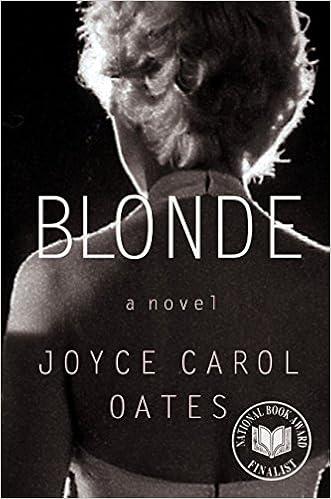
I finished The Godfather and now I'm reading Blonde by Joyce Carol Oates, a great American novel that fictionalizes (somewhat) the life of Norma Jeane Baker, better known as that sacrificial goddess of the American pantheon, Marilyn Monroe.
It is often chosen as the favorite and best of Oates's wide-ranging oeuvre. After years of research she attacked the project obsessively, and brings "Marilyn" to life in great detail. The book is epic in scope; I'm one third in, and she has just been given her new name by her agent, as her small, scene-stealing role in The Asphalt Jungle catapults her to fame.
Who's the blonde?
The book explores the specifics of Norma's life with her paranoid schizophrenic mother, who claims her father is a studio star (his identity was never proven) but also serves as a historic record for what it was like being a girl and a woman in mid-century America, which is not so great. Norma wants more than other women. Like many, she enjoyed the meaningful work in defense factories during the war, only to be thrown away afterward when men came back and needed those jobs. Oates uses repetitive phrases like she's smooth as a silk purse down there as a revolting leitmotif, to show how girls are sexualized from birth. By the time Norma is twelve, the piano teacher has stuck his tongue in her ear, and by fifteen her foster mother doesn't like how her husband is looking at their ward, and plots to get her married so she'll be "safe."
Out of the frying pan, into the fire. Her husband is immature and emotionally illiterate, and chooses to join the war effort rather than accept that she has any agency; he forces her to pose nude, and carries the photos around to show her off like the head of an eight point buck in his den. Her earnest innocence is forever mistaken for empty-headed naivete, and she takes acting more seriously than anyone expects her to. They expect and want her to ride on her looks, and never see her as a person. You're not that dumb a blonde, stop acting like it.

When writers tell me they "can't get into" Joyce Carol Oates's style, I always ask, "Which one?" She's written everything from Gothics to serial killer novels, stream of consciousness, and her own deceptively readable prose, which switches from addressing the reader like a Greek chorus, third-person omniscient, third person limited, first person, interspersed with italic passages of thoughts and dialogue whispered from the peanut gallery, the American version of a Greek chorus. When I first encountered this style in Foxfire: Confessions of a Girl Gang, I found it confusing and tilted, but once I took it as multiple viewpoints and the criticisms of the little-minded around us, rather like Orson Welles did with the camera stopping during narrated sequences to hear what the locals had to say in The Magnificent Ambersons, it made more sense and became easier to read. It can be hard to keep up--Oates often writes in a whirlwind of ideas with asides in parentheses, but it makes for a rich tapestry of thoughts and pictures, for she works out the secret fears and sneers we never share in public.

I'm only a third through Blonde and I need to put it down to review another of her books, the Hard Case Crime reissue of The Triumph of the Spider Monkey, which at first glance seems to be like her masterpiece Zombie, a hellride in the head of a psychopath. She's one of the most consistently daring writers, criticized for fictionalizing everything from Marilyn Monroe to JonBenet Ramsey and Jeffrey Dahmer, but what else do writers do? I think it's more honest the way she does it, rather than trying to conceal the true-life inspirations. In one scene in Blonde, a young "Bob Mitchum" tears up the nudie photos that Norma's husband is showing his coworkers, saying "what kind of man does that to his wife?" Is it true? Rumor? Fantasy?
Does it matter? It was thrilling to read and wish were true. As Oates's late second husband Charlie Gross said of another insertion of a real-life person into a story, "who cares? it's fiction."


Wednesday, June 12, 2019

The Godfather, Part 2 (see what I did there?)

I admit when I'm wrong.
And boy, was I wrong!
The first third of The Godfather novel is nearly a shooting script for the novel, but after Michael escapes to Italy after killing Sollozzo and the police captain, the novel becomes a rushed mess that doesn't know what it wants to be.

At first, I enjoyed the expanded Johnny Fontane story arc. It quickly becomes a criticism of Frank Sinatra's Hollywood lifestyle, and his childhood buddy Nino Valenti is a poor stand-in for Dean Martin. Connie Corleone nee Rizzo has been moved out to Vegas with her abusive husband and shacks up with a hot shot surgeon who became an abortion specialist because "surgery was too depressing," because people wouldn't listen to his infallible wisdom. This section reads like a crap pulp scare novel and I couldn't help but imagine the Doc wearing glasses and talking around an unlit pipe that was always in his mouth. It's beyond parody. This is where Connie's vaginal "problem" becomes an entire story arc, after the Doc wags his finger over her "primitive  beliefs" and explains in excruciating detail how pelvic floor surgery can give her a world class sex organ.

This reads like bad mid-century soft erotica. Notice I said bad; I've read plenty of good, entertaining novels of that stripe by Lawrence Block under pseudonyms. Mario would have done well to read them, and not be so clinical. The only reason for Connie's sexual awakening, which culminates in the line, "like a carpenter hammering together pieces of two-by-four, the doctor was building her a new snatch from the ground up", is so she can introduce the good doctor to Johnny Fontaine, where he immediately diagnoses his weak voice as cancerous polyps on his larynx. He shaves off the polyps and saves Johnny's voice, but can't save Nino Valenti from drinking himself to death. I wonder if Puzo was disappointed that Dean Martin lived to be nearly 80 years old.

The novel descends into exposition rather than action, with Michael taking on the mantle of Don with natural ability, becoming a more ruthless version of his father. There is little tension for the back half of the novel, and the only interest for me was nostalgia, as he praises the "primitive" ways of country Italians and how much better it is to marry a virgin like they did in the old country, than have to send your wife in for vaginal reconstructive surgery, like they do in liberated '60s America! All Michael does for two years in Italy is walk around with two bodyguards until he sees Apollonia, the virginal yet sensuous nymph of few words (I think she says five?) that he pursues to marry. They have sex and then she gets blown up in the car, in a scene that is just as stupid as the one in the film. She's never fleshed out into anything but a simple sex object and is killed so he can pursue Kate, who he must bend to his will now that he's a Don and not a "college boy."

My pet theory is that Puzo sold the novel before it was completed, and had polished up the first third. Once the advance and PR hype took hold, he rushed the rest, which has the expository feel of a first draft. Coppola was smart to cut the Fontane and Connie subplots, but he somehow managed to make a 175 minute movie out of what's left. In the book, the fight over Vegas with Moe Greene (a Bugsy Siegel stand-in, he's killed the exact same way as the real mobster) is rushed and not explained; we only see the aftermath. In the movie, they change his murder to the infamous eye shot because Siegel was shot five times with an M1 carbine, twice in the head, which popped one eye out of its socket. The book is so rushed by this point that the Corleone's rival is dispatched in a single line, in a master stroke by Michael, whereas in the beginning, they obsess over every detail of how to get the gun in the toilet for the hit on Sollozzo.

Is the book worth reading? It was certainly entertaining, even the bad parts. And it serves as a good lesson of what not to so with the second half of your novel.

Wednesday, May 29, 2019

The Godfather by Mario Puzo: a Coppola crime writers read the classic novel (pun for Dave White)

Dave White, best known for the Jackson Donne series and his relentless barrage of terrible puns, said he was going to read The Godfather, because he had not. Neither had I, so I said I would join him. I'm about 120 pages in. I'm not sure if Dave has opened the book. He's too busy grilling ribs, watching Rutgers basketball, and trying to come up with a pun about it.

The Godfather novel gets a lot of crap. Even Francis Ford Coppola compares it to Harold Robbins in his introduction, in an edition published after Mario Puzo's death, which is about as classy as suing a child star who was raped by director Victor Salva to make the victim complete a film, which is something Coppola also did, so let's not expect any sort of integrity from the guy. I've read several takedowns of the novel. The most memorable states that the opening of the book "obsesses on a woman with an oversized vagina". 

I've read past that part. The opening chapters are set at the wedding of Don Corleone's daughter, and practically mirror the film adaptation. Coppola begins with Amerigo beseeching the Don, because "I believe in America" is a great opening line. In the book, there are a few others who take advantage of the Don on the occasion of his daughter's wedding, including Johnny Fontaine. And Sonny, who is described as a swinging dick not only in attitude but in endowment, has a tryst with the aforementioned woman, who happens to be the maid of honor. She seeks out Sonny because after her single previous sexual encounter, her uncouth partner complained that is was like parking his Karmann Ghia in a two-car garage. Sonny packs a stretch Cadillac Fleetwood Brougham, and they are made for one another. This takes a page, perhaps two.

Is it necessary? Probably not, but starting off a book with a bang, whether from a pistol or a pistola*, is a time-honored tradition to grip the reader, and since it's another hundred pages before someone is beaten to a bloody pulp with brass knuckles or a horse is decapitated, Puzo decided to go with establishing Sonny's character, or lack thereof, by having the married son of the Don have passionate sex with the maid of honor at his sister's wedding reception. Tom Hagen has to interrupt him to being him to the Don's side. It sets things up for Sonny's downfall later on. His passions will get the better of him.

So I don't think it was that gratuitous. If anything, Puzo was playing up the passionata of his people. This was 1969, when Italians were only a decade from being Hollywood's go-to juvenile delinquents in films like 12 Angry Men. We were known for big noses, garlic, La Cosa Nostra, and being passionate lovers. He describes the mountains of food, too. The novel will focus on our people's least admirable stereotype as violent underworld goons--one still mined deeply in crime fiction today, even by the wokest of the woke; like Russians, we're okay to use as your criminal cannon fodder--so he may as well dwell on one of the "good" stereotypes, that we're all good lovers. 

As I said, I'm only up to the infamous horse head scene, but so far the book is like the working script for the movie, so I think Mr. Coppola doth protest too much. He's got a chip on his shoulder. He also mentions an encounter with some cafone in the street who grabbed him by the lapels and said, "you didn't make him [Puzo]! He made YOU!" (Come on, we know this isn't true. Coppola had made the immortal Finian's Rainbow and Dementia 13 before The Godfather fell in his lap.)

He's kind enough to praise Puzo's "terseness," in his introduction, recalling the scene where Clemenza is cooking Sunday sauce: Coppola wrote "Clemenza browns some sausage..." and Puzo scratched it out, writing, "Gangsters don't BROWN! Gangsters FRY!" This edit obviously stings Francis over forty years later. He also praises Puzo's skills as a collaborator, when they worked together on The Godfather, Part Two which is cobbled from unused storylines from The Godfather and Coppola's own desire to show a back and forth story of father and son at different ages. I won't argue that the sequel is a great film. They also worked together on The Godfather III, which Coppola wanted to call The Death of Michael Corleone, and he is at least respectful enough to not blame the film on his dead co-author. He also seems to think the problem with that movie is the name, so I'll leave the value of his critical faculties for you to judge.

Next week I'll let you know how the middle of the novel holds up, and whether Dave White has begun reading it, or if he's The Clodfather.

* the cavo donna. the cazzo dura. Google Translate is your friend.

Wednesday, May 15, 2019

Climb the Black Mountain

Every year we hear the P.I. story is dead. 20 years ago, George Pelecanos told then-young writer Dave White, "The last thing the world needs is another P.I. story." And Mr P wasn't disparaging the genre, he was telling Dave to put his heart into it and make it his own.

I have a love/hate relationship with the subgenre of crime fiction, because I disagree with the conceit that it is about "returning the world to order." Whose world, and whose order? I have little patience with middle-class centered fiction where anyone indigent is suspect; look for the foster kid, the drug user, to be the villain, the poor friend who cuddles up to the John Hughes heroine because she lusts for her "normal" family and wealth... really, just go fuck yourselves with that shit, you sheltered baby.

Rene Denfield recharged the P.I. story with her masterpiece The Child Finder, and her sequel The Butterfly Girl comes out on October first. Her heroine Naomi Cottle was fostered by a woman who taught her to survive, and her own history makes her the perfect bloodhound for missing children. Denfield does not flinch from the ugly reality of abduction, but is never salacious. She knows her material, and writes with the dreaminess of fairy tales. I haven't read the new one yet, but the first blew me away.

Another great series in which the sophomore effort was recently released is Laird Barron's Isaiah Coleridge novel, Black Mountain. If you haven't read the first, Blood Standard, get thee to a bookery and do so. He takes the trope of the worn-out mob hitman turned manhunter and refreshes it with the Irish-Māori Alaskan Coleridge, transplanted to upstate New York by way of the Chicago mob, trying to recover from physical and existential wounds on a farm run by eccentrics familiar to anyone who's been upstate or in New England, good people of diverse backgrounds who come together as a family and just want to be left alone.

This one I have read. I burned through it in a couple of days, savoring the scenes between Isaiah and his hitman mentor Gene K. pondering the ruthless beauty of nature in the Alaskan wilderness, and the clods who come to kill for sport and think they are hunters when they are really prey. Barron cut his teeth writing cosmic horror (his work inspired the best parts of season one of True Detective) but also contributed to Licence Expired, a ChiZine Canada anthology that took advantage of James Bond's copyright expiring north of the border, and his excellent Pynchonesque novel The Croning played with government conspiracies that reminded me of Denis Johnson's Tree of Smoke.

When we met Coleridge, he was trying to find the missing daughter of the friends who took him in, and sparring with multiple drug gangs, of Native and white supremacist variety, while appeasing the local mafia who are none too happy to have a contract killer chilling in their bailiwick. Our man is a well-read warrior, a self-effacing gentleman thug who can clean & jerk more than I can deadlift, but can't shrug off bullets or fisticuffs like a Hollywood action hero, and eschews killing because of its psychic toll, not out of any moral code. Now we find him courting Meg, sharper than he is upstairs, and playing father to her son Devlin, as he tries to become human again.

Which makes the request from the friendly local capo to follow up on a gruesome murder of two knockaround goons a favor he'd like to refuse. It leads him to a legendary contract killer and sadist known as The Croatoan, who seems to have walked out of a Vietnam-era government program with shamanic death powers that make cold stone mafia killers shiver in their ankle boots. The hunt is puzzling and we're never quite sure what is real, as if the shadowy corporations and nameless government entities have redacted not only documents but reality itself, by wiping out the institutional memory of anyone who might know the true history of Coleridge's target.

While fans of Barron's cosmos will find comfort in his familiar tones and themes, this is not cross-genre like George C. Chesbro's "Mongo the Magnificent" novels, though he does tease us a little. You can't have amoral mobsters whisper about a killer with strange powers and not make us wonder if he's a walking death god, but Barron loves the crime genre and respects it, never dipping into pastiche as he pays blood tribute to what first-person P.I. novels do best. Coleridge is as witty as Elvis Cole and as brutal as Joe Pike, all wrapped in a hulking and handsome Jason Momoa package. His weaknesses are a reliance on his strengths, and his fierce sense of purpose as a wolf who hunts men: Even wolves can be trapped.

The cast is well rounded this time with a deliciously acerbic femme fatale who dances burlesque and cavorts with dangerous men, and Leonard returns as the chummy ex-merc barfly who reminds cool Col that he's not immortal. Barron spins a gripping tale without resorting to tricks and formula, hooking us with a baffling, gruesome mystery as bleak as the dying factory towns pocking upstate New York, but the pleasure here is the company. Like all the best before him--Keller, Nicolai Hel, Easy Rawlins, Cass Neary--he has the gift of gab, and is good company, at the arm's distance of the page.

Wednesday, April 17, 2019

The Cereal Killers Lucky Charm

I'm kind of a serial killer hipster. I was a fan before they were popular.
Well, not a fan, but I was intrigued by the macabre, and now they have absorbed enough American kitsch that they are corn on the macabre. (That pun is for Dave White).

Before I read The Silence of the Lambs I was a gore punk who read about Ed Gein and watched Faces of Death and thought I was so cool because I knew about killers like Albert Fish and had read the journals of Carl Panzram, one of the earliest documented psychopaths. It's a sheltered suburban kid thing. And while I did grow up on the literal wrong side of the tracks (see photo), those tracks were in the town where Martha Stewart graduated high school, so they were relatively cushy, even if we had a superfund site, played soccer on a former quarry capped with landfill, and found gay porn novels and used contraceptive sponges behind our grammar school.

After Hannibal Lecter nibbled his way to America's heart, serial killers were everywhere in movies, books, and TV shows as the go-to bugaboo, and they have stayed at the top ever since. The FBI profiler and self-salesman John E. Douglas wrote a bunch of books with Mark Olshaker expounding his genius, and ignoring all the times his "profiles" failed, like with the Baton Rouge serial killer Derrick Todd Lee, who was able to avoid capture while the police looked for a white man, because the victims were all white women, and we were told that serial killers--ahem, SK's, sorry, gotta use the lingo--preferred victims of their own race. This would later stymie attempts to capture the D.C. sniper, as well. I'm not saying that it isn't a good rule of thumb, but when you use it to automatically exclude suspects, you need to take into consideration that profiling is not a hard science.

I was an acolyte of Mr Douglas for a while, and even began a successful petition to keep a child murderer that he helped capture from getting early parole. So I'm going to talk about two lesser-known serial killer movies, one good, one bad, because at first glance the good one looks bad and vice versa.

The first one stars Charles Bronson in his post-Death Wish days and the second stars Kevin Kline as a brainy police sleuth. See where I'm going? I'm less inclined to think Kevin would star in a stinker, but The January Man is probably one of the most entertaining, yet badly written movies about serial killers out there. Now, the movie has a lot going for it, and if you ignore the serial killer's modus operandi, you can enjoy it. Kline co-stars with Susan Sarandon, Alan Rickman, and Mary Elizabeth Mastrantonio, and the script was written by John Patrick Shanley, who also penned Moonstruck, Joe Vs. the Volcano, and adapted Doubt for the screen.  He's no slouch!

The January Man was released in 1989, so I can't imagine the screenplay being written to latch onto the success of Silence of the Lambs, which was published in 1988. Where did he get his ideas about how a serial killer behaved?

SPOILERS!

I'm about to ruin the twists of the movie, which really isn't about the twists anyway. It's about spending time with Kline, Sarandon, Rickman, and Mastrantonio, as they hunt a killer who strangles women who live in high-rises, exclusively. How does he choose them? I forgot that, honestly. But I do remember that he chooses the floor that his victims live on by pretending all the high rises in the city are a musical scale, and their windows occupy the spaces that the notes to "Calendar Girl" by Neil Sedaka.

Yes, really. Mastermind Kline manages to predict the building and the floor of the next victim because the previous ones are done to the tune, and Mastrantonio poses as bait, wearing a neck protector so they can catch the killer. And when they pull of his mask, someone asks, Who is he?
"Nobody," Kline replies. Because at this point we weren't overwhelmed with serial killers, and expected the killer to be someone we could deduce from the cast. Aha!
The movie is far from satisfying, but you get to see Alan Rickman play a painter who works in nudes, and Mastrantonio and Kline are always fun to watch. My friend JD at Radiator Heaven wrote a detailed review, if you want to dig deeper. The movie will frustrate anyone who isn't a big fan of The Cell, which was another movie with great visuals and a terrible script, where the killer gets off on drowning women in a box kept in secret locations, on a timer, while Vince Vaughn races against the clock. The part where Jennifer Lopez enters the mind of Vincent Donofrio (the killer) to unravel his psychosis and find the victim is idiotic but beautiful, like a unicorn trying to play the piano.
Oh, Vincent.

So, what's the surprisingly good serial killer movie? 10 to Midnight, starring Charles Bronson. This one was written by William Roberts, who wrote the screenplay for The Magnificent Seven, and it's lurid and sleazy, but portrays a much more realistic serial killer. Gene Davis plays the part and gives it all. He's a often a small part character actor, but this role has him glaring at photos of his mom while sucking raw eggs out of the shell, chasing victims through the park while completely naked, and otherwise gnawing the scenery with his mental torment.
Now, this doesn't mean the movie is a masterpiece. It's an exploitation slasher in the vein of Vice Squad and makes the misogyny of its killer very obvious if oblique, with Bronson scowling as he recites lines like, "this killer mistook his knife for his penis."
Bronson with the killer's jackin'-off-hammer.

To be honest, the most memorable part of the movie is the ending, which I'm going to spoil for you. Bronson catches the killer, after he leaves a bunch of naked young women dead. And being who he is, the killer has to brag that he's sick in the head and will be released soon, and come after his daughter, and "you'll see me again!"
Let me see if you can guess what Bronson says before he shoots the unarmed killer in front of everybody.
.
..
...
....
"NO, WE WON'T!"
Hurray for extrajudicial executions! Who needs laws?

So I spent all this time slamming serial killer stories. I really like Red Dragon by Thomas Harris, and feel that is the paragon of the form. I'm told By Reason of Insanity predates it, but after slogging through The Anvil Chorus by Shane Stevens, I won't be reading him again. The Wicked Girls by Alex Marwood is quite good, but even modern serial killer novels often rely on lazy tropes like The Evil Foster Child and The Serial Killer Gene, when it doesn't work that way. I'd be interested in a fictional take on the BTK Killer (other than Red Dragon) now that he has been captured. His family claims to have been completely unaware of his sideline as a family slaughterer, and he was a deacon in his local church. He was able to stop, something we're told serial killers don't do.

You know what they say, sometimes you have to write it yourself.
The next book I'm working on will continue this old story of mine, The Uncleared.


Wednesday, April 3, 2019

Tired: Psychopaths. Wired: Narcissists!

by Thomas Pluck
Anyone else have psychopath fatigue? What scares me more than someone without conscience is someone with a conscience who can subdue it to get what they want. It bothered them a lot to strangle their spouse and children and dump them in an oil field, but they couldn't run off with that sexy millionaire otherwise. Eggs in the omelet, you know? And the worst are narcissists.

At Left Coast Crime, we had a great discussion at Josh Stallings's panel "Writing Dark Fiction with Heart." Narcissists make great villains in psychological suspense stories because we've all seen them in school, or at work, and social circles. They weaponize people against each other for their own benefit. They can be the worst kind of bully, the emotional kind. The one who gaslights you, turns your friends against you, and gets away with everything because they take advantage of sympathy.

I said that we need to move past the stereotype of the "big bully." Most bullies are of the emotional kind. Physical violence is rightfully unacceptable in society, but many bullies know how to use this to their advantage, especially the narcissist bully. They tease and humiliate their victims, who may be physically larger and easily taunted. Then when they get a reaction, they can tell on the teacher and get their victim suspended from school, or hated in the group for being "crazy." Did you see how she went nuts on me?

I got this a lot from a kid in fifth grade who whispered fat jokes until I yelled at him to stop, and then was punished for disrupting class. Mrs Macaw never believed that Pranav could say such things. I had to be exaggerating.... stay after class and learn to behave, Thomas. It's a classic narcissist move, turning everyone against their chosen victim. Congrats, you've been gaslighted. The target can the subject of the narcissist's envy, or they can see them as a convenient stepping stone for rising in the pecking order, or they can be grooming them as a toady. Or they can be practice.

I grew up with a drunken narcissist, I know the game. I don't hold it against the suckers who fall for it. I still fall for their bullshit now and then, they are good at what they do, and writers are suckers for a compliment. They start by "negging" their victims, belittling their accomplishments, or taking credit for them:
"Hey, you only got that nomination because I was disqualified, and I told them to give you my votes."
"Congrats on that award! When I wasn't nominated, I created a secret voting campaign to make you win."
"You should let me have that position you were given, you're just going to be nervous and mess it up. I'll pave the way for you."

Stuff like that. It's as pathetic as it sounds, but it works on us when we are vulnerable. Look at what scumbag Ryan Adams did to young women after he told them he "made their careers." The victim can't talk to the people who've bought into the lies, because they are the "crazy" enemy who is "attacking" their friend with accusations. This is the same weapon all abusers use to silence their victims.

Another way narcissists gaslight people is to offer to "shake hands" when they owe you an apology (which you will never get, because they are never wrong; their ego is paramount, and you wounded that ego by not buying into their false self-image). This way you look like the bad guy by refusing to make peace. Abusers do this all the time. "I just want us to be a family." This way they can claim victimhood, which to them is "winning."

Here's an example:
A drama llama wanted to "have it out" with me at a bar once. Saturday night may have been declared all right for fighting by Elton, but one thing I have learned in fifteen years of fight training is how to not get into a fight. This may not make for exciting stories, but it's a good skill to have.

Because there's no way to win a fight.

Fights are generally performative masculinity, like bower birds dancing for mates. They accomplish little. Especially when you are the big guy, and you have nothing to prove, and therefore nothing to win. For example, if Goliath broke David's neck, no one would be talking about him today except as a monster. But little David with his sling, even if he stood up to the big galoot only to be squashed like an insect, would be the hero. This plays right into a narcissist's martyr complex.

Even if it's a "debate" or a heated discussion, it can only be used against the narcissist's target. That's how abusers operate, they create scenes of drama to gaslight their enemies and show themselves as the aggrieved victim to people they haven't hurt yet. The narcissist needs an audience, the ones who tell their victims how nice they are, so if they hurt you, it's your fault, you must have misunderstood.

That's why trolls like Ben Shapiro want to "debate" real journalists and politicians, to legitimize their bullshit careers. They might as well be asking someone to "step outside". If you take the fight, you roll in the mud with the pig. If you laugh at them for the joke they are, you are "cowardly". They love games like this because they have everything to gain, and their target has everything to lose.

And unlike in fiction, there is rarely a moment of exposure where the bully and narcissist is exposed for what they are. People have too much invested in them, they go down with the ship. It's why the flood of articles exposing pathological liars in power accomplish nothing. They usually self-destruct and drag down others with them, and often have a track record of abject failure (or bankruptcy) and backstabbing people who supported them once they can no longer be used.

Try not to be one of them.