Showing posts with label 1970s. Show all posts

Saturday, July 6, 2024

Jaws the Book vs. Jaws the Movie: Which is Better?

by

Scott D. Parker


I finally did something I’ve been wanting to do for many summers: read Peter Benchley’s Jaws. 


The original hardcover came out in February 1974 and the movie the following summer. I’ll admit that it took me quite a long time to see the movie. I can’t remember the first time I saw it, but it might’ve been on one of the network broadcasts. It wasn’t until the 1990s that I finally saw the whole thing. 


But what about the book? I remember my mom reading the paperback in the late 70s. This is one with the movie poster as its cover so you can imagine how much my pre-teen self enjoyed that cover. Wink. My library had both the ebook and the audiobook available last month so I decided this was the summer.


Oh, and book spoilers from here on out.


The Similar Things 


The story is the same one you know from the movie: a great white shark terrorizes the little summer town of Amity, New York. The deaths that follow threaten the town’s annual livelihood so something has to be done about the shark. 


Police Chief Martin Brody is from out of town, a former cop from New York, and his initial instinct is to close the beaches. He’s married and has three kids (the movie only has two). Harry Meadows is the editor of the newspaper and he and Brody are friends. Meadows calls in shark expert, Matt Hooper, to investigate.


Meanwhile, Mayor Larry Vaughn does not want the beaches closed because it’ll mean tourists and their money won’t come. And Quint is a fisherman who takes the job of hunting and killing the great white.


The overall plot of the book matches the movie but the film jettisons certain subplots.


The Differences


Ellen Brody grew up as one of the richer “summer” people. These are the folks who live elsewhere and come to live in Amity for the summer. Now she finds herself living full time in Amity and she’s having doubts about her life. She’s a mom of three kids. She’s married to a man that she’s not sure if she truly loves anymore because, partially because he “took her away” from that other lifestyle. 


Matt Hooper is decidedly not how Richard Dreyfuss is in the film. Where Dreyfuss is short and nerdy, in the book, Hooper is tall, handsome, and way younger. He’s also the younger brother of a guy Ellen dated. And he’s from that other life. All of that plays out against Ellen’s midlife crisis and, well, she cheats on Martin with Matt.


I kept thinking she’d turn away or that Matt would stop himself but no, they have their fling. But as the story plays out, Ellen does lots of soul searching and ultimately comes to realize that she likes the choices she made and is happy with her life. And she’s ready to turn the page and renew her relationship with her husband…if he survives the shark hunt.


Mayor Vaughn in both the movie and book wants to keep the beaches open, but in the book, there’s more than just civic pride. Turns out he’s in deep water with the mob and he needs the beaches open so that his day job as a realtor can be successful and he won’t get into more trouble.


Quint is still just as dedicated to killing the shark as Robert Shaw is in the movie, but it’s just for the money. Nonexistent is Movie Quint’s time aboard the USS Indianapolis and the Arab-like hatred of sharks. 


The ending is different as well. Hooper dies in the shark cage and Quint, rather than being eaten, is dragged underwater by a rope that snagged his leg and drowns. And the finale? Well, the shark is swimming to Brody as he hangs on the sinking boat and then just dies. And Brody swims to shore.


The Verdict


I won’t bury the lede: stick with the movie. And the vastly better movie poster.


The class-related sub-plot with Ellen is interesting as is the midlife questioning of her life’s choices. Having the mayor be in debt to the was a nice wrinkle, one that gave the character more motivation than the movie version. 


Quint is way better in the movie than the book as is the whole shark hunt final act. The camaraderie the three characters experience is wonderful and I like how each man comes to see the other two a little bit differently, especially when Quint and Hooper compare scars.


Robert Shaw’s monologue about the Indianapolis is spellbinding and remains one of the best parts of the movie.


And the ending, when Brody shoots the oxygen tank in the shark’s mouth the beast explodes is exactly the kind of ending you want in a summer blockbuster. And Hooper lives and they both swim to shore together.


I’m glad I read Jaws by Peter Benchley and I encourage others to give it a chance if you are curious. But I think I’ll be sticking with the 1975 film from here on out. The wife and I watched it again last week and it holds up remarkably well.


Sidenote: The wife read that Roy Scheider used his movie The French Connection to help Steven Spielberg to cast him as Brody. So I’ll give you one guess as to the next movie we watched.  


Saturday, May 11, 2024

The 1970s Come Alive in the Highly Entertaining--Now Award-Nominated--Lowdown Road

by
Scott D. Parker

(In honor of its Anthony Award nomination for Best Paperback Novel, I'd like to remind everyone just how much fun Scott Von Doviak's book is. Here is the full list of all the nominations.)

Look at that cover. Hard Case Crime might be the single publisher in this century who remembers how great painted covers used to be. This cover looks like a long-lost book you’d have found on the paperback spinner rack at the 7-Eleven in 1975 as you clutched a Slurpee in your hand, your favorite hero painted on the white, plastic cup. Or its the novelization to a 1970s movie you’d see at the drive-in.

The cover was pretty much all I needed to see to know this was a book I wanted to read. The plot was just icing on the cake. Let me see if I can boil it down for you.

Chuck and Dean are cousins. It’s August 1974. Dean operates a taco truck in San Marcos, Texas, for Antoine, the local boss who has a flourishing business selling weed. Chuck is less than six months out of prison when he “borrows” his cousin’s car and picks up a lady in a bar. She’s married to a local deputy who pulls them over for speeding. She shoots her husband, Chuck shoots her, and ditches the car. Now they have to get out of town.

But not before they hatch a plan: why not steal Antoine’s stash, valued at $1 million, drive it all the way to Idaho where Evel Knievel is set to jump the Snake River Canyon in his rocket cycle? I mean, that’s exactly what I’d do in their situation, right? What could possibly be the the problem?

Well, the sheriff is out to get the cousins. The more he has to travel, the angrier he gets and the more likely he won’t be satisfied just to arrest them. Then there’s Antoine. He’s majorly pissed at the theft and vows to hunt down Chuck and Dean, gets back what’s his, and make the boys pay for their misdeeds.

The chase is on.

I remember the Knievel jump but can’t remember if I saw it on Wide World of Sports during the actual weekend—49 years ago this month—but that was a nice moment at which to set this tale. In fact, in a bit of serendipitous timing, I listened to this audiobook during the actual anniversary weekend.

This book promised a fun time and man did it deliver. Narrator L. J. Ganser gives author Von Doviak’s words an little extra vibrancy, almost as if the story was being told a few years after the fact by a guy who saw it all happen. All the little things that bring the 1970s to life are here: the new book called Jaws, 8-track tapes, music cues, CB radios, Lone Star Beer, as well a peek into the culture of the era.

Von Doviak makes an interesting choice in how he ends this book. At first, it took me a little by surprise, but then I realized what he did and I thoroughly got it. And loved it. It’s a little inspired by a very famous movie released twenty years after the events of this book. (How’s that for cryptic?)

When Hard Case Crime started, they promised the return of old, out-of-print books that haven’t seen the light of day in decades. The newly written titles are the modern equivalent to those wonderful old books you could carry to the DMV in your back pocket and read when the line was too long.

Lowdown Road is exactly in that latter category. It is one of the most fun books I’ve read this year. If you lived through this time or just want a peek into life on the road during the late summer of 1974, this is book to get.

Saturday, September 16, 2023

The 1970s Come Alive in the Highly Entertaining Lowdown Road

by
Scott D. Parker

Look at that cover. Hard Case Crime might be the single publisher in this century who remembers how great painted covers used to be. This cover looks like a long-lost book you’d have found on the paperback spinner rack at the 7-Eleven in 1975 as you clutched a Slurpee in your hand, your favorite hero painted on the white, plastic cup. Or its the novelization to a 1970s movie you’d see at the drive-in.

The cover was pretty much all I needed to see to know this was a book I wanted to read. The plot was just icing on the cake. Let me see if I can boil it down for you.

Chuck and Dean are cousins. It’s August 1974. Dean operates a taco truck in San Marcos, Texas, for Antoine, the local boss who has a flourishing business selling weed. Chuck is less than six months out of prison when he “borrows” his cousin’s car and picks up a lady in a bar. She’s married to a local deputy who pulls them over for speeding. She shoots her husband, Chuck shoots her, and ditches the car. Now they have to get out of town.

But not before they hatch a plan: why not steal Antoine’s stash, valued at $1 million, drive it all the way to Idaho where Evel Knievel is set to jump the Snake River Canyon in his rocket cycle? I mean, that’s exactly what I’d do in their situation, right? What could possibly be the the problem?

Well, the sheriff is out to get the cousins. The more he has to travel, the angrier he gets and the more likely he won’t be satisfied just to arrest them. Then there’s Antoine. He’s majorly pissed at the theft and vows to hunt down Chuck and Dean, gets back what’s his, and make the boys pay for their misdeeds.

The chase is on.

I remember the Knievel jump but can’t remember if I saw it on Wide World of Sports during the actual weekend—49 years ago this month—but that was a nice moment at which to set this tale. In fact, in a bit of serendipitous timing, I listened to this audiobook during the actual anniversary weekend.

This book promised a fun time and man did it deliver. Narrator L. J. Ganser gives author Von Doviak’s words an little extra vibrancy, almost as if the story was being told a few years after the fact by a guy who saw it all happen. All the little things that bring the 1970s to life are here: the new book called Jaws, 8-track tapes, music cues, CB radios, Lone Star Beer, as well a peek into the culture of the era.

Von Doviak makes an interesting choice in how he ends this book. At first, it took me a little by surprise, but then I realized what he did and I thoroughly got it. And loved it. It’s a little inspired by a very famous movie released twenty years after the events of this book. (How’s that for cryptic?)

When Hard Case Crime started, they promised the return of old, out-of-print books that haven’t seen the light of day in decades. The newly written titles are the modern equivalent to those wonderful old books you could carry to the DMV in your back pocket and read when the line was too long.

Lowdown Road is exactly in that latter category. It is one of the most fun books I’ve read this year. If you lived through this time or just want a peek into life on the road during the late summer of 1974, this is book to get.

Saturday, March 5, 2022

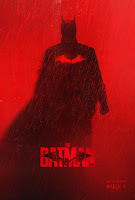
Impressions of The Batman

by

Scott D. Parker

As I will do for every Batman movie ever made, I saw the new Batman movie on opening day. Lifelong fan of the character than I am, I have thoughts.

There will be spoilers.

Thirty-three years ago, we got a dark and brooding Batman in the form of Michael Keaton. Turns out, it wasn’t so dark, but holy cow was it at the time. Then after a more bright series in the 1990s, we got a darker, broodier Batman in Christian Bale. Then we got Ben Affleck who was dark and broody.

And now we have Robert Pattinson who is uber-broody. Like others have said, he's Emo Batman. And you know what? I'm fine with it. I actually enjoyed the film quite a bit, all three hours of it. And my middle-aged bladder was able to make it through the entire film without compelling me to run to the bathroom. Why? Because I didn't drink a lot of water. But mostly because the movie was rather compelling.

The Voice - Kevin Conroy is all but the definitive Batman for me when it comes to how he does the voice of Bruce Wayne and Batman. Bale's gruff growl became distracting and I particularly appreciated Affleck's voice modulator. Pattinson's low, non-gruff voice worked for me.

The Suit - A fully functional, bulletproof body armor bat suit. I loved the collar. The cowl was also well done, showing all the scrapes he's endured. And I liked that they acknowledged he wears black makeup around the eyes. I loved the gauntlets that could be deployed at a moment's notice. And the use of the taser. The bionic contact lens was a nice touch.

Jeffrey Wright - Can we just get a TV show with him as Gordon? Really, really liked how he stood up for Batman from the jump. We even got a few of the bewildered Gordon moments like when he looks back and Batman's gone.

The Police - Really liked how the cops go from disliking Batman to grudging acceptance. And that scene when Batman and Gordon walk Falcone out and they see all the good cops? Wonderful.

Colin Farrell/The Penguin - Completely could not see Farrell in the makeup. But I really liked his ferocity with the character. Sure, it's a little on the Deniro side of things but Oz is a crime lieutenant. It's was fun.

Zoe Kravitz/Selina Kyle - Her action scenes were fantastic with her multiple kicks per strike. I liked her one-track mind to help find then avenge her friend. And she had some of the few funny parts in the movie.

Paul Dano/The Riddler - Going into the theater, I could not have picked Dano out of a lineup. And I so liked that his visual style was basically a geek. A genius geek, but just a normal guy on whom the world had shat on for years. His monologue in the jail cell was pretty darn fun.

The Riddler's Big Plan - I so love movies when the villain is 25 steps ahead of the hero, and this movie had that in spades.

Batman as Detective - Very, very nice to have a movie like this. Yeah, we've had the big explosion version of the character so why not basically have a PI solving riddles and crimes who just happens to wear a bat-suit rather than a trench coat and fedora. T'was nifty that Alfred helped out with that.

The Fight in the Dark - Maybe 30 seconds, but holy cow, was that sequence awesome. One of the best in all of Bat-movie history. I'd bet money that director/writer Matt Reeves was inspired by the hallway sequence with Darth Vader in Rogue One.

The Finale/Mist Scene - As soon as Batman exploded that fire extinguisher and created a cloud of mist, I knew he was going to jump out of it. Fantastic visual.

And a child shall lead - When Batman, with red flare in hand, goes to help the mayor-elect and others get out of the flooded arena, I so loved that it was the young boy who was the first to take Batman's offer of help. The boy recognized the hero that Batman was and showed the way.

The Ending Speech - I appreciated the mirror version of Gordon's closing speech in 2008's The Dark Knight. This Batman, for all his mopiness, recognizes the need for hope in Gotham. That is an intriguing plot thread to open.

The Mood - I'll admit I was a tad leery of yet another brooding Batman movie, but I was sucked in almost instantly. It was a slow burn movie, punctuated with intense fighting sequences, but I really liked it.

The Music - John Williams's theme to Superman is arguably the greatest super-hero theme every written. Well, not arguably to me. But Danny Elfman's Batman theme is definitely second. When I saw that Michael Giacchino as the composer, I was excited. But a theme like from Williams or Elfman would not have worked in a movie like this. The slow, downbeat score, with the new Batman theme scattered throughout the movie, worked really well. Of particular note was the harp-and-cello piece when Bruce Wayne went into his parents' room.

The Verdict


Up until 2022, there has only been one live-action Batman at a time. That changes this year. Later, when we get The Flash movie, veteran Batman Michael Keaton returns and we'll a second live-action Batman, even if it is a return of an old favorite. That's a good thing, because if you don't like the mopey Batman, just wait. Or watch other versions.

Here's the thing: in the summer of 2008, we got one of the best Batman movies ever in The Dark Knight. Later that fall, we got the equally fun and light-hearted animated series Batman: The Brave and the Bold. Boy did I love that series. And I also liked that year's epic Batman movie. I can appreciate both of them because there is room for Batman to be interpreted in different ways.

This is Matt Reeves's interpretation of 80 years of Bat-stories and the character and situations. As much as I love the brightness of the Marvel movies, Batman works well in this kind of story. Like I mentioned at the top of this post, I was a little leery/weary of broody Batman.

But Reeves's story, direction, and cinematography as well as Pattinson's performance won me over. It did for my wife as well. (Note: she is not a super-hero film fan but loved Bale's Batman, especially The Dark Knight, perhaps the only super-hero movie that she'll start to watch if she runs across it on TV.)

I thoroughly enjoyed this movie and look forward to seeing it again.

Saturday, April 3, 2021

Len Wein’s Batman: Batman 307

By

Scott D. Parker

As a kid in the late 1970s, comics were one of my go-to things (Star Wars, KISS, and early Star Trek fandom were the other main loves of my life) and Batman was my favorite. Still being a young kid in late elementary, I didn’t pay attention to the names of the writers or artists. I just bought the books and read them, ingesting the stories over and over again.

When I review the covers of my issues of Batman, it turns out some of my favorites were all scripted by the same guy: Len Wein. Unknown to me at the time, Wein had already co-created Swamp Thing for DC and rebooted the X-Men over at Marvel, including the co-creation of Wolverine, Storm, Nightcrawler, and Colossus. Nope, all I cared about was good Batman stories, and for a stretch there in late 1978 and all through 1979, Len Wein was the monthly writer (mostly) for Batman.

With the cover date for Wein’s first issue being January 1979 (although it hit the spinner racks a month or so earlier), I thought it would be fun to re-read Wein’s Batman run forty years later and see how it holds up. Spoiler: his run is among my favorites of all-time. In fact, Wein wrote one of my favorite all-time comic stories, Batman vs. The Incredible Hulk. But that’s a different post.

Speaking of holding up, Batman and Bruce Wayne in the 1970s is my favorite version of the character. Dick Grayson is off to college, leaving Bruce to move out of Wayne Manor and into Gotham City proper. He takes up residence at the Wayne Foundation building, and operates there for most of the decade. It is one of the neatest buildings in comicdom, what with the giant tree in the middle of the building, which secretly houses an elevator to the basement where the Batmobile is kept. For a young boy like me, this was the coolest thing ever.

The building shows up in Batman issue 307, but not before in intriguing two-page prologue. A beggar woman is asking for spare change. A man in a trench coat, fedora, and scarf approaches and gives her two gold pieces. The next page, she falls dead, right under the title, “Dark Messenger of Mercy!” The artist in this issue is John Calnan and Dick Giordano.

The first time we see Bruce Wayne, he is in his office, staring out the window. Next to him is Lucius Fox in his debut. I’m not sure the thought process Wein went through to create Fox, but the character has been around for these last forty years. Morgan Freeman played him in the Christopher Nolan Batman movies. From the chit-chat between Fox and Wayne, however, it’s clear Wayne has not shared his secret identity. The two men talk about business and name drop a man named Gregorian Falstaff (love the name) who, according to Wayne, “He’s rumored to have have a fortune which makes mine look like so much lunch money.”

Darkness literally falls over Gotham in one short panel, and Wayne excuses himself. He tags up with Alfred who has the Batman costume at the ready. As he swings off the top of the Foundation building, Batman makes a comment to Alfred: “When I start making value judgements—deciding who’s important enough to avenge—it’ll be time to hang up my mask forever.” Here in 2019, with the recent passing of Stan Lee, many folks mentioned Lee’s strong streak of social justice running through his words. Here, in 1979, Len Wein does the same thing for Batman.

Meanwhile...at police headquarters, a man named Quentin Conroy is livid. He wants Gotham’s finest to help him find stolen property, gold coins to be exact. Unbeknownst to both men, Batman is sitting in the same room, legs casually crossed, fingers steepled. The Caped Crusader in convinced he can find Conroy’s missing money, especially since two of the coins turned up on that dead woman’s corpse.

Street level, Batman approaches a sleep bum and there is a funny couple of panels. In the boxed panels, Wein writes “Without question, the Batman is an impressive figure. His unexpected visage, looming large out of the darkness, is often viewed with admiration...or hostility...or outright fear…” “But rarely indifference.” This as the bum goes back to sleep. See? You can have humor in a Batman story. Anyway, an Irishman named Shamrock (natch) approaches and asks the hero if he needs helps. When Batman says he’s investigating the murder of the woman, Shamrock knew her. He volunteers to escort Batman down into the sewers to meet some folks who might have seen something.

What Batman sees is a group of people living in an underground tunnel, the area kept warm by the steam pipes. Here, Batman meets Slugger (from the ‘48 Gotham Giants baseball team), Poet (Shakespeare of the sewers), and Good Queen Bess. Through dialogue alone, Wein gives these characters their accents and particular ways of speaking. Shamrock always says, “Laddie,” while Slugger talks like a New Yorker: “Pleased to meet ‘cha!” Batman learns there have been other deaths...and Queen Bess actually has two of the coins with her. The Dark Knight Detective ascertains the gold coins are laced with a contact poison, absorbed through the skin.

No sooner does Batman make this discovery than a piercing scream fills the bowels of Gotham. Another woman is being attacked! It’s the man with the fedora and red scarf. Batman leaps to action. A fight ensues, and Batman gets himself whacked by Scarfman’s cane. In the melee, two things happen. One, Scarfman’s hat and scarf fall away, revealing a face the citizens of the underworld know. Two, Scarfman’s cane cracked a steam pipe. It’s about to blow. So Batman gets between the pipe and the people. It explodes, hurling Batman across the room.

Later, Batman’s “new tattered friends” say Scarfman looks just like one of their own: “Limehouse” John Francis Conroy, a man who used to sleep with them before just disappearing. Being the detective, Batman soon finds his way to Quentin Conroy’s house (because Batman can get into any room in Gotham, right?). Heated words are exchanged and Quentin confesses John Francis was his father. He kept the gold coins as a remembrance of his father, a man who ran out on his family while Quentin was a kid. The modern pressures of the world drove John Francis to the streets, supposedly dying in a gutter.

But Batman isn’t so sure.

The next night, we see Scarfman prowling about. He gives coins to a man who extends his hand...the gloved hand of The Batman! Oddly, Batman is wearing a sling, proof not only did the steam explosion hurt him worse than we saw three pages ago, but reminding readers the Caped Crusader is really just a man, a man who can get injured. A second battle commences, but Batman’s shoulder hampers him. Scarfman swings the cane too wide, allowing Batman to come in underneath him. A powerful punch to the mid-section topples Scarfman. The odd cast of characters are also there, cheering on Batman. Scarfman questions their motives. All he wants is to give these street people some mercy and peace. But “the peace of the grave” is something they shun. Just as they shun him.
Scarfman’s mind snaps. He accuses Batman of turning these “friends of his” away from him. His face is misshapen, resembling John Francis Conroy, but a few panels later, it is revealed to be Quentin all along. Quentin, looking almost like a young boy.

Wein wraps up the entire story in three thin panels. We see Quentin being led away and Commissioner Gordon asking Batman about the clue. It was the heels of Quentin’s shoes, something we saw a few pages before. Many of the 1970s stories had clues the reader could follow, and it’ fun to go back and notice certain things you might have missed the first go-round.

Wein wrote a pretty decent script. I enjoy the non-super-villain aspect of these kinds of stories. Kind of like a breather before we get to the next issue featuring Mr. Freeze. Wein brings Batman’s humanity to the fore, both in how he protects the homeless but also, at the end, when he hopes young Quentin will receive the help he needs. He’s a true hero to all, discriminating toward none.

What did y’all think about this story?

Saturday, January 30, 2021

The Fun of Regulated Reading

by
Scott D. Parker

Do you ever regulate your reading?

I was struggling over what term to use so let me just explain. Last year, I did a little experiment. The book of Proverbs has 31 chapters. I decided that for every month that included 31 days, I would read a chapter of Proverbs per day. To keep things interesting, I changed translations every month. Then, at the end, I was able to go back and compare notes and compare verses that I underlined. It was a pretty fun experiment and, except for the transition from July into August, I never had a back to back month.

To January 2021. As I often do, I start to cycle through all of the things that have major anniversaries. Anything with a year ending in one or six are the key ones this year. In the first week, it was the 50th anniversary of Chicago III. That got me to thinking about music and what albums we’re gonna be celebrating major milestone anniversaries. It was my son – – an avid musicologist – – who reminded me I had a book on the shelf about the year 1971 in music. Why not just read it.

The book in question is titled Never a Dull Moment: 1971 The Year Rock Exploded by David Hepworth. It came out in 2016 and I think I might’ve had it since then. Born in 1950, Hepworth came of age about the same time that rock ‘n’ roll did. Those, he was 21 years old during 1971. He has written extensively about music since the 1980s. 

What got me excited about reading this book in 2021 was a table of contents. It is broken out by month. 12 chapters, 12 months, plus an introduction.

As soon as I saw that, I had a brilliant idea: read each chapter at the beginning of each month here in 2021 and go through the year 1971 with Hepworth. I had to read chapter 1 this week, but I'll get to chapter 2  on Monday. and then continue from there. That means Led Zepplin IV is in my future. So is Sticky Finger, Nursery Crime, Hunky Dory, What's Going On, Bryter Later, and Madman Across the Water. That's just the albums I know about. I can't wait to discover new-to-me albums.

And, if chapter one is any indication, this is going to be a blast. Hepworth writes in an engaging style, but primarily he writes only from the limited perspective of that month. He tells you what Bruce Springsteen was doing, the status of the band Slade, and how Yes was reimagining how music was recorded. He even drops a cliffhanger of an ending as the chapter closed about a woman who invented the album business.

But what makes these chapters special is that Hepworth includes a short playlist of songs that were popular in that month. I already made a January 1971 playlist and dang if I haven't discovered a new-to-me band: Badfinger.

Anyway, I don't know if you read books in this regulated manner or not, but I do, and I look forward to learning about 1971 fifty years later.

Are there other books that could be read in a regulated way?

Saturday, August 22, 2020

Learning About Life from Reruns

by

Scott D. Parker

 Late Sunday evening, after the wife and I watched a new-to-us show, Glitch, on Netflix, we turned off the steaming service and landed back on regular cable TV. This being a weekend, the channel was still tuned to MeTV, the channel that shows classic TV. I love Saturdays because it’s westerns all day. During our Covid-19 era, Sundays have become The Brady Bunch day right after I stream my church’s service.

That Sunday evening, the show being broadcast was The Dick Van Dyke Show. It was "Show of Hands," a season 4 (1965) episode in which Rob and Laura and their son, Ritchie, accidentally get their hands stained with black ink. This being episode 28 of the season, it was probably late spring 1965. What gave the show its comedic element was that they were to attend an awards show specifically, although not explicitly, on the in-show’s treatment of the equality of African-Americans in society.

The acceptance speech Rob gives—after he admits the truth about why he's wearing gloves and takes them off to show his black hands—basically said that to treat each other equally is the right thing to do. The characters on the show all laughed at Rob's predicament. This episode led directly into the next.


Tired though I was, I sat and watched these two episodes. The wife did, too. We started chatting about us being latch key kids in the 1970s. That is, we school-aged kids would go home after school to an empty house because both parents would be working. Sure there was homework, but there was also the freedom to do what you wanted with no parent telling you 'no.'

Not having the plethora of entertainment options available in 2020, we'd zero in on TV and the reruns being broadcast. Here in Houston, that was mostly Channel 39 and Channel 26, the two independent UHF channels. Here's where we'd get a steady diet of shows from the 1950s (I Love Lucy) and the 1960s (Dick Van Dyke, Gilligan's Island, The Brady Bunch, Bewitched, I Dream of Jeanie, etc.). Day after day, we'd consume these shows, memorizing them, laughing at them.

And learning from them.

It was my wife who made the observation: Because these shows we watched in reruns were intended for adult audiences (or at least the entire family), they were not specifically geared to children and their tastes. That was for Saturday morning cartoons and PBS. Watching and seeing how adults interacted with each other, we learned about adult life. Sure, it was often over the top and overly funny, but the common thread was there. Adults got into situations, worried about what to do and the consequences, and made decisions. If it was the wrong decision, they learned. If it was the right one, someone on the show also learned. 

We kids absorbed what we saw and internalized it without even knowing it.

Now, don't get me wrong: entertainment geared for kids is perfectly fine. And yes, lots of it is imbued with lessons to learn. But when you have a diet consisting only of kids entertainment, how do you learn about the adult world? Yes, I know, learning about life from TV is not really how you do it. You get out there and live life, learning along the way. But entertainment plays a role, too. Movies, TV, books, music: it's all in the mix. 

Seeing Old Shows With Fresh Eyes


What's fun about catching an episode of an old show like the Dick Van Dyke Show we saw as an adult is the ability to see the content with fresh eyes. Sometimes, your adult self sees old episodes you remember as a kid and you go "Boy, was that silly" or "How did I even like that?" Often, as we're eating lunch on Sundays and The Brady Bunch (actually, the Brady Brunch where MeTV sequences four episodes with a common theme) is on, the wife will remember and (sometimes) chuckle, while the boy rolls his eyes. I simply grin and keep watching. it's the historian in me.

Then again, you catch an episode like "Show of Hands" and you realize a subtle, powerful message was being delivered not only to adults in 1965 or the kids who might also be watching in 1965, but to folks in the 1970s and beyond. Especially kids. 

We were learning and laughing at the same time and didn't even realize it.