Eryk Pruitt and Katie Munger talking at The Regulator in Durham, NC.
Eryk Pruitt, author of "Townies" (Polis Books, 2018) stops by Do Some Damage to talk about a series he ran on crime fiction this summer. - David Nemeth
If you’re an independent crime writer, then it comes as no surprise to you anymore that it’s difficult AF to get your books into the bookstores. I can remember my early days as a novelist when I thought all I had to do was publish a book and the independent bookstores would clamor to stock my words on their shelves. HAHAHAHAHAHAHA yeah, I remember that.
One time, I called a bookstore and asked them if they would stock my first novel DIRTBAGS. Her answer to my query was “I’m sorry, but we don’t stock self-published books.”
To which I replied, “Oh, it’s not self-published. I have a publisher and I can put you in touch with them.”
“If that were true,” she told me, “then you wouldn’t be the one calling me.”
She hung up.
HAHAHAHAHA.
Yes, many bookstore owners can be complete dicks.
Many, but not all.
One of the incredible exceptions is Durham’s Regulator Bookshop. I have been fortunate enough to enjoy two book launches (WHAT WE RECKON and TOWNIES) at Regulator and they keep all four of my titles on their shelves. So imagine my happy surprise when they called me up and asked me to plan some events with them over the summer.
I spoke with Elliot, Land, and Amy, who told me they wanted some crime-related events to help spice up the summer. Keeping in mind my past experiences and the very talented pool in which I’ve been fortunate enough to swim, I proposed the following:
The Summer Independent Crime Fiction Series.
We had three Thursdays over June, July, and August. In each sitting, I was joined by some very good friends and writers that I’ve made along the way. Each month, the bookstore stocked three titles that were recommended by me, and the audience was invited to either read them beforehand or pick them up from the store and read them after.
In June, we were joined by DSD contributor David Nemeth, as well as Jeremy Stabile, publisher of ABC Documentation Group, and Shawn Cosby ("My Darkest Prayer"). July saw a visit from Nemeth, Steve Weddle ("Country Hardball)", and Dana King ("Ten-Seven"). In August we featured the novels of Benjamin Whitmer ("Pike"), but also celebrated the book launch of Katy Munger’s latest Casey Jones novel, "Fire and Rain".
We’ve heard lots of talk about how a bookstore should foster a community, especially when those stores are facing down the reality of Amazon. It’s especially awesome to see one step up and actually do it, the way Regulator Bookshop did.
Those books that were featured this summer are still on the shelf in their mystery room. You should run down and buy them now.
From the woods of Colorado to the dive bars of Denver,
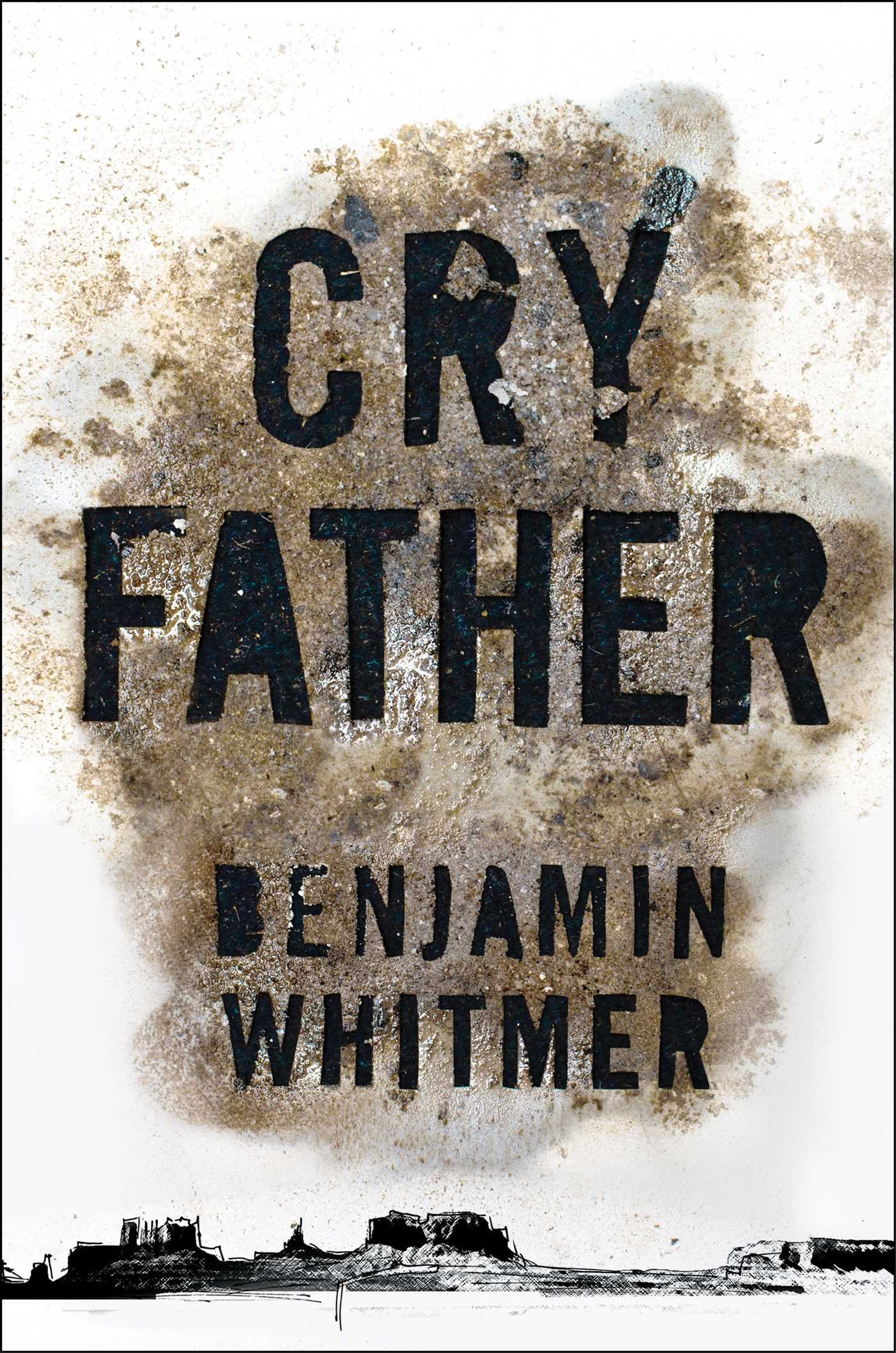
Benjamin Whitmer’s CRY FATHER creates a setting, a mood that digs into you like
a splinter.
Hiding in a small cabin with his dog, Patterson Wells works
professionally at disaster clean-up, travelling across the country following
storms to clear debris and get the power back on. In his personal life, though,
he can’t seem to do the same. For Patterson, the disaster was the death of his
son due to a doctor’s mistake. Not only did this take the life of Patterson’s
son, but it also destroyed his relationship with the boy’s mother. Now, she
comes calling on Patterson to join her in a suit against the doctor, to put
some sort of closure on the tragedy. But
Patterson isn’t interested in clearing the debris of his son. Instead, he lives
with his son’s memory, writing the boy letters much like you or I would write a
diary.
In the meantime, Patterson’s neighbor is having trouble with
his own drug-running son, Junior, a man with his own broken relationships. This novel is about fathers and sons, sure. But it's also about relationships of all kinds, including those we have with ourselves.
Soon enough, Patterson and Junior are pushed together, in a
world fueled with drugs and violence.
As Patterson tells it,
The main problem with cocaine is
that you never really have enough of it. Even on a binge, you’ve usually got
just enough to keep yourself in nosebleeds and self-hatred.
And that’s this book – the external and internal battles,
everyone fighting against everyone, including themselves. This story is rich in
darkness, not just in the sense of the violence and drugs and despair, but in
the delving down into the souls of the characters, the digging deeper than most
novels even consider. You can argue pigments and colors all you like, but I’ll
tell you this much: CRY FATHER is not dark because of an absence of light, but
dark because it contains so much.
The ending of this novel, as befits a book by Benjamin
Whitmer, is as unavoidable as it is surprising.
I had a dream the other night that Laura Lippman tried to kill me. That's about as noir as it gets, when someone as nice and warm as Laura could be a villain. I mean, if you can't trust Laura, you better live with your back to a wall.
At the time, it just seemed like one of those bizarre things, born out of a combination of odd thoughts that included driving through Federal Hill, talking to someone about The Wire, and the sobering reality we've had to deal with at school, with one of our students recently being shot and killed. Under normal circumstances, I'd prefer not to have my two lives collide on the blog here. But this will be relevant later, and that's why I am including the link.
Now, I wonder if the dream might have been a bit of a premonition, because days later, I find myself writing a blog post on a topic I hadn't even considered a week ago, and referencing a comment Laura made at Bouchercon Baltimore almost three years ago.
This is off of memory, from three years ago, but this is what I remember. Laura was on a panel, and someone in the audience asked why there aren't any black crime fiction authors. Laura was quick to point out that she was surprised the person hadn't seen Gary Phillips that weekend.
In no way do I intend to single Laura out or pick on her for a comment that, in the context it was made, was reasonable. The reality is, her panel wasn't on that subject in particular, nor was there time to dissect the issue in any way that would do credit to it... and unless I'm completely off my rocker, I believe Laura went on to say that. It was just one of those things that came up that someone needed to graciously sidestep, under the circumstances.
So, it is not that the issue wasn't discussed then and there that has me referencing the incident.
It's really, the fact that we never seem to go on to actually have that discussion as a community. In the context of the situation, Laura did what I do so often. She pulled out one random example to disprove an absolute.
But the reality is, attend Bouchercon, attend Harrogate, attend Bloody Words or any other mystery convention, and the overwhelming majority of those attending form a monochromatic crowd.
That being said, like Laura's panel at Bouchercon, the purpose of my post is also not to talk about where our black or Asian crime fiction authors are.
What's really on my mind is the issue of criticism and its validity within any given community, and the question of what responsibility we, as writers, have for the stories we tell.
I love it when Brian tells me he's done something on Spinetingler that's generated a huge controversy, and spawned blog posts and comments by the dozens. Specifically, I love that if there's any fall-out from the controversy, he gets to wear the egg and take the blame, and I can step in as editor-in-chief and appear reasonable and mature while I clean up his mess.
Or not. ;)
The other day when Brian told me that a post on Spinetingler had yielded dozens of comments, with no end in site, I suddenly became aware of the fact that a review of a short story was causing a huge controversy.
The review in question is Benjamin Whitmer's review of a James Reasoner story in DANGEROUS GROUND, a collection of Western Noir stories published by Cemetery Dance.
Whitmer explains, in a lengthy commentary, why he feels the story in question follows the format of an Indian-hater story, and why he takes issue with the story Reasoner wrote.
Now, many of us know James (if not in person, then online and through his writings and our interactions with him, and I'm a huge fan and have great admiration for James). And many of us also know of Ben Whitmer. He knocked my husband's socks off with Pike and won a Spinetingler Award. In fact, I do believe when Brian mentions Ben, there's a touch of reverence in his tone. At least, as much as is possible for a lapsed Catholic evolutionist to muster, but in the same way that I have a dedicated Rankin section in our library, I can imagine a future where Whitmer's works become top shelf works.
We love both authors, and I'm not interested in taking sides. Part of the reason is that I don't believe there are sides to take. Whitmer has acknowledged in the comments what Brian and I already knew - that James and Ben have been in touch. Nobody's asking for the post to be removed. The main people involved here have conducted themselves with class and everyone's fine.
While I have read Whitmer's lengthy analysis, I have not read the short story he's writing about, and that was deliberate. I did not want this blog post to be misconstrued as being about James, or his story. If it's about any part of the controversy, then it's about the comments that have appeared and the way some have reacted to Whitmer's review.
I do believe that we have a responsibility, as writers, to consider what we write. We can't dismiss everything as simply art. If I were to write a story today about an African-American president being caught in some sort of political scandal, it would almost certainly be interpreted as a political commentary on President Obama, even if that wasn't my intention. (I mean, I define courage in the county where I live.)
Whatever we write, however, it can be framed by its time and every single piece of art created is interpreted through pre-existing filters that people bring with them.
I feel fairly confident that people who are gay are more likely to pick up on homophobic slurs than I am. I actually tutor students taking writing diplomas, and one of the assignments in the business writing course involves re-writing various statements, to remove bias. One of these sentences refers to a 'Jewish fire'. I had to look up what that was, and I've had other students admit they had no idea what the term meant.
Jewish students know, though.
We all bring our own filters to what we read, and that affects how we interpret things. Sometimes, it greatly discolors and distorts everything, far beyond reasonable criticism.
Other times, we're dead on the money.
That's why I included the link to the story about the student at my school that was shot and killed. It makes me sick to read the comments people have posted. The blatant racism and discrimination that's reflected by those comments is disgusting.
But this is the world we live in. We afford people anonymity on the web, so they speak without censor or concern for respect, or evidence of their assertions. And it's too easy in a city like Baltimore to dismiss this type of crime because of the reputation the city has.
What kills me is that people don't see the wonderful city that I see. Sure, Baltimore has its faults. Every single place on earth does. But I have spent the majority of the last two years working with students in Cherry Hill. And although I work with special needs students who have unique challenges, the student body at large embraces and accepts them as their own. When I walk into Southside, students hold the door for me, talk to me, and I enter a community. When a boy put his hands on me elsewhere in the city and hurt me, it was the students from Cherry Hill who stepped up to send a message, that nobody was going to hurt me again. Protected. Cared for. One of the community.
A community where I've never been met with racism or discrimination. A community where people reach into their pockets and help others out. A community where people sat silent in the halls, after we learned of the shooting, and young men had tears in their eyes and young women wept.
Marcus always said hi to us when we walked by him in the halls. 'Hi' in Cherry Hill might sound more like, "S'up," but it's a greeting all the same.
There is never any joy to be found in the tragic, violent death of a young person, ever. Unless you're a racist. And I don't even need to qualify my statement with referencing the fact that he was an athlete. Someone who was working on making a better future for himself and his family.
Marcus was a human being. And anyone who thinks a 19-year-old is beyond redemption because of where they live or the color of their skin or who they're related to is a racist, and no better than an Indian-hater.
But I must admit, perhaps today, if I read a story about some young person being killed, with any kind of inference that they deserved it because they were born of a certain ethnicity, in a certain place, and maybe even were related to people who'd made some bad choices… Maybe if I read a story like that today, I'd be pretty offended.
I have a filter. And there are raw emotions at work. And the comments left on a news story about a student prove the existence of racism in our society.
As an author, I have to acknowledge that there should be a separation between myself and the characters that I write, and that the story needs to create that separation. That's part of my job, and that's why I'm not too fond the idea of authors creating protagonists that are thinly disguised incarnations of themselves. If you admit your protagonist is based off of yourself, and then your protagonist makes racist statements, readers have a right to connect those dots.
Authors also have a responsibility to justify the content of the story and make sure it's relevant to the story being told. If offhanded, racial remarks are made throughout and have nothing to do with the story being told whatsoever, then people are going to wonder about the author and the author's views.
Same if the author has women being mutilated for no reason that's even connected to the main story.
Can I write a story about a Native American who spurns acts of kindness and slaughters countless whites in his quest for revenge without being racist, or an Indian-hater? Absolutely. The key is in justifying within the story why it is that the character refused forgiveness and was unable to make a different choice, and it needs to center on the character rather than his ethnicity.
And that's the subtlety of it all. Sometimes, as authors, we intend to convey things that we don't actually put on the page. And sometimes, as authors, we have to own some responsibility for that.
Like I said, I'm not taking sides about who's right in the Whitmer-Reasoner debate. I wanted this post to be about something bigger than that, and that is our fundamental obligation to consider the impact of our story, how it may be interpreted, and whether we've done our job to ensure the story is interpreted in the way we intended it to be.
I want people to realize that racism and bias and sexism… discrimination in all forms... exists. To deny that reality is ridiculous. As writers, if our works are grounded in the "real" world in any respect, we have some degree of responsibility to acknowledge that and be sure our stories don't perpetuate stereotypes or biases we don't intend for them to convey.
As Brian once said on Twitter, "If all the women in your novel are a) hot b) fuckable c) in to the protag d) all or some of the above. Then your book has a woman problem."
And if every male character I write thinks with his dick and spends all his time trying to get into some woman's pants, I have a problem writing men.
You can't write and only ask for people to love you. You have to acknowledge that some may love you, and others may loathe you. If I'm driving in my car and Wintersleep comes on, I have the right to turn it up. And someone else has the right to turn the radio off.
I think racist attitudes are pretty dangerous, but when we circle the wagons defensively and refuse to even have the discussion about discrimination, racism, sexism, the biases of our society and how that may shape our fiction and our community… That's even worse.
At Dachau concentration camp, there's a twisted metal memorial outside. It isn't until you get closer that you realize the metal is in the shape of bones and bodies, piled on top of each other. And in multiple languages read the words, "Never Again."
I watched the Berlin Wall come down, and nobody I knew felt it more than my German friend, Susie, because she had lived with the repercussions of WWII in a way that none of us North Americans had.
As a Canadian, I never fully comprehended the depth of the scars of slavery on the United States and how they still affect generations of people until I married an American and spent time living south of the Mason Dixon line.
It's unfair of me to completely dismiss an intelligently and respectfully offered opinion with no consideration of the potential validity of the perspective offered. I may still come away believing the person wrong, but knee-jerk defensiveness is part of what prevents us as a society from moving past our prejudices.
As writers of crime fiction, I would expect us to be more aware of how the ills of society hurt us all.
Or are those that say people read crime as safe wish-fulfillment/fantasy because we're all just one blow-out away from going postal closer to the truth than I'd like to believe?
And, in other news...
Spinetingler expands in June with the launch of a press. More information to come at spinetinglermag.com
Someone here at DSD had the idea to set up a site where we could have ongoing discussion about books and authors, rather than move to a new topic each day (if you think it’s a great idea it was me, if you think it’s a stupid idea it was Weddle).
And a few clicks later, the Do Some Damage GoodReads Group was born. Please have a look and consider joining. And we'll draw a name from the list of members next Wednesday to receive a FREE copy of the DSD airport terror collection, TERMINAL DAMAGE, available as a multi-format ebook at Amazon and Smashwords. So sign up for the club and you're automatically entered into the drawing for the FREE ebook.
I’ve never been in a book club, but I like the idea.
When my first novel came out I was spending a lot of time in the schoolyard dropping off and picking up my kids and talking to the other parents. I wasn’t the only dad, but it was mostly moms, and when the book came out some of them were in a book club and decided to read and discuss Dirty Sweet and asked me if I’d attend. Now, if you’ve read the book you know that one of the main characters is a guy who runs an internet porn company so as you’ve probably already guessed, a half a dozen nice women and I sat around all evening talking internet porn. Also, as you’ve probably guessed, I was the one who knew the least about it.
So, let’s see what happens with this book club. Right now we’re talking about starting with Pike by Benjamin Whitmer.