Showing posts with label ebooks. Show all posts

Saturday, March 23, 2024

How Do You Read the Books You Read?

By

Scott D. Parker

I’m a book nerd. You too? Yeah, it’s great, huh.

I don’t know about you, but I’ve got a ton of To Be Read lists on my various devices and literal piles here at my house. I’m always reading blogs to see what’s new. I read articles about new books and keep adding them to my lists. On Facebook, the algorithms are primed to send me sponsored ads by authors or publishing companies promoting books they think I’d like. Sometimes, I strike gold. Others times, not so much.

When it comes to consuming and actually reading these stories, I rely on both reading (on my Kindle or hard copy) as well as audio. I regularly have multiple books going on at any given time, leaving my decision as to which book to read to what I’m feeling at the moment. Well, except for audio: I’m pretty much a one-book-at-a-time listener.

Oh, and my TBR piles and lists are never complete. They only grow. I’ll admit it can be frustrating, but that’s how I’m wired. Long ago, I accepted who I am. 

Book nerd. That’s me. But what if you’re not?

A couple of weeks ago, my wife and I met two other couples at a brewery here in Houston. We ate dinner and caught up with each other. One of the guys—let’s call him Kyle, a guy slightly older than I am—started chatting about his reading habits and the authors he reads and chooses. I say authors because we didn’t really discuss styles of books but, based on his author choices, you can figure it out. 

Because she recently watched the Joe Pickett TV show, my wife brought up C.J. Box. When Kyle heard the name, his response was succinct. “Read them all, except for the new one.” I mentioned the Reacher TV show and I got the same response about all the Lee Child books. Kyle also name-dropped Vince Flynn and Brad Thor.

This reminded me of a blog I wrote back in 2011. I had visited four estate sales and two of which had a proto man cave/library with shelves full of Louis L’amour westerns. I questioned which authors we might find on the shelves of folks in the 21st Century. We certainly have some contenders here.

Speaking of westerns, Kyle commented he ran across a list of great westerns all men should read. [It’s actually this list from the Art of Manliness site.] He got the list and started reading the books, in published order, to see how the western evolved. Not everything was available as an ebook so he’s not read them all, but he just took this list and started reading. [That was a wonderful breath of fresh air for an ADHD reader like me.]

But it was how Kyle read that made me envy him (and his non-ADHD self). 

He reads on his Kindle Oasis, the top of the line product from Amazon. This is the one with external buttons. He likes this because he can switch hands, flipping the device over, and the upper button will always be the one to advance the page. He reads for an hour at lunch during the weekdays. In the evenings, there is a Reading Chair in his main TV room. The speakers are set up in such a way that, from where he’s sitting, the sound goes over his head and straight to the couch where his wife sits. As a result, he’ll be in the same room as her but be reading if she’s watching a show he doesn’t want to watch. The sound becomes white noise to him and he’s all in on his book. 

So he’s reading for an hour at lunch and at least an hour (?) at night. Two-ish hours per day. And, presumably, he’s been doing this for a long time. No wonder he can get through the entire Lee Child or C.J. Box oeuvre. Granted, he probably read them in real time as each book came out. 

That’s the kind of reader I’d like to be. 

Not coincidentally, in the two weeks since our dinner, I’ve consciously built in more reading time (apart from my writing time). This is actual reading, not audio. What does it take to read more? 

Choosing to read. It’s pretty darn simple.

So, how do you choose what you read? And how often do you read daily and weekly?

Saturday, August 6, 2022

A New Standard to Consume a Story?

by
Scott D. Parker

Have y’all tried this?

Last month, veteran author Max Allan Collins offered a pair of books for $0.99 each, Girl Most Likely and Girl Can’t Help It. They feature Krista Larson, a twenty-eight-year-old woman who serves as police chief for a small Midwestern tourist town. Yes, this makes her the youngest such chief in the nation, but she’s able to draw on her father’s multi-decade career when a murder of a former classmate during a high school reunion lands in her jurisdiction.

In a blog entry, Collins discussed the two books, the inspiration behind the tales, and a peek into the business of writing. But what got me was that these two stories are his take on Nordic noir, “an American variation on the Wallander novels, and such Nordic TV mini-series as The Bridge, The Killing, and (again) Wallander.” Well, that’s pretty much all it took for me to head over to Amazon and drop a buck and buy the ebook.

But then I got a prompt: for an additional $1.98, I could purchase the audio version of Girl Most Likely. I’m already an Audible subscriber and I’m an avid user of my local public library and the audiobooks it has. I have read/listened to the same audiobook before, back in 2007 when I read all the Harry Potter books in a row. Back then, I found the paperbacks from used bookstores and checked out the audiobooks from the library. I’d listen during my daily commutes, flip pages in the book at night and read, and the next morning, fast-forward the audiobook to match where I stopped reading the night before.

But I was curious: I had never purchased an ebook and audiobook with the promise that everything would be synced. I gave it a go.

I started with the ebook and read a few pages on my Kindle Paperwhite. Then I clicked over to my Audible app. Hmmm, the book wasn’t there. That’s weird. Where was it?

So I checked the Kindle app on my iPhone and viola! There’s the audio. It’s toggled when you tap to bring up the table of contents. 

If you tap on the title at the bottom, the screen flips and you get a basic audiobook look and feel.


Probably the coolest thing is if you start the audio while still having the ebook on the screen, the app highlights text as the audio goes along.

Oh, and when I picked up my Paperwhite later that first day, I get a message: “Want to sync to where the audio stopped?” Yes. Boom!

This is a great way to consume a story. I could easily see this dual format become a preferred way some people to “read” books, although from a business perspective, I would image you’d get the ebook for a buck after you purchased the audiobook at full price.

A note about the audiobook: this is not some AI voice stumbling through onscreen text. This is the actual audio narration by Dan John Miller. It’s a win-win.

And the story itself? Well, I’ll review it when I’m done but I’m really digging it.

Sunday, April 3, 2022

Start a Mystery Series at a Sale Price


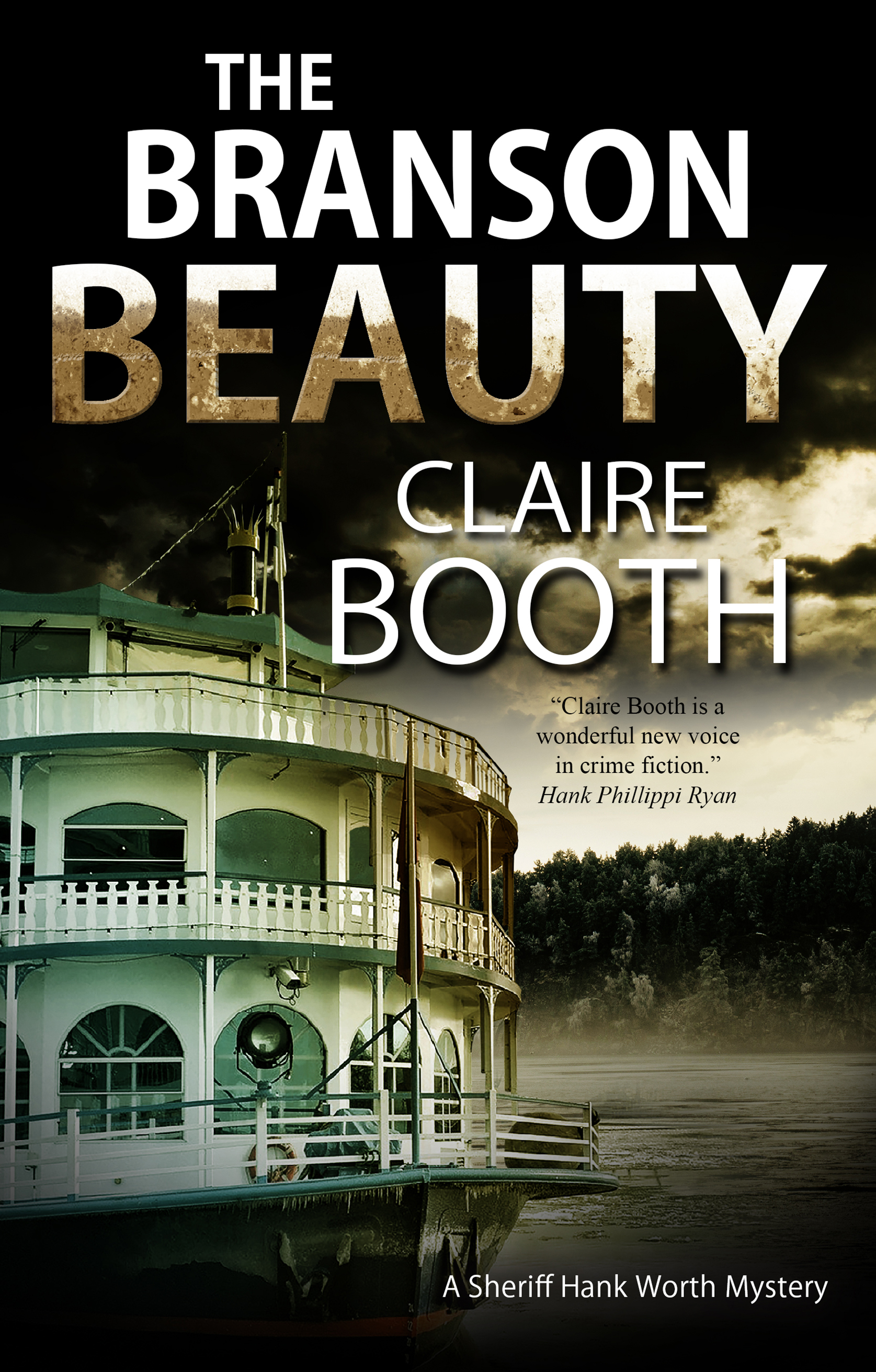
In celebration of Friday’s release of my latest Hank Worth novel, Dangerous Consequences, in ebook format, I’m putting the first two books in the series on sale. They’re also ebooks and a great way to get ready for this newest entry in the series. 


The Branson Beauty

(Book 1)


Another Man's Ground

(Book 2)

And here's a bit about Dangerous Consequences:

Elderly tourists visiting Branson, Missouri for a fun time are instead becoming so sick and disoriented they end up in the ER with Dr Maggie McCleary. She asks the sheriff to investigate and, because he happens to be her husband, Hank Worth readily agrees.

When the tour operator denies responsibility, Hank digs deeper leaving Chief Deputy Sheila Turley to handle a simmering revolt within the ranks. Their policy to eliminate overtime pay has infuriated many long-time deputies. Those fired for insubordination have filed a lawsuit, while those still there sabotage Sheila at every turn.

With pressure mounting, they're called to a hit-and-run accident. But the victim's injuries haven't been caused by a car . . . she's been beaten to death and dumped by the side of the road. And she was someone they knew.


Saturday, February 1, 2020

Year 5 of an Indie Writer: Week 5 AKA Virtual Bookshelves Never Go Out of Stock

by
Scott D. Parker

I couldn't believe what I saw.

Or didn't see.

Gregg Hurwitz: A New-to-Me Author


For a few years now, the Orphan X series by Gregg Hurwitz, has been circling my radar. I'd download a sample onto my Kindle, but never get around to it. I'd see the second, third, and fourth books in the series be published, but still I didn't move off high center.

Until late last month.

At  one of the paperback racks at a Barnes and Noble in far west Houston, I saw OUT OF THE DARK, the fourth volume in the series. Unlike in the past, when I see a book that captures my attention, I read it, no matter what number it is in a series. But when I realized it was an Orphan X novel, I was reminded that this series is one I should try.


So I walked over to the regular bookshelves and pulled a paperback copy of ORPHAN X, the debut novel in the series. This was late December 2019, in that timeless week between Christmas and New Year's Day. As an avid audiobook listener--who easily could have downloaded the audio version, I know--I resolved to read the paperback. Frankly, it had been awhile since I picked up a new paperback and actually read it. (I always pick up books, but don't always get to them.)

I read the entire book, finishing a week ago. Loved the book, the character of Evan Smoak, and Hurwitz's writing style. I'll have my full review this coming Wednesday (as part of Barrie Summy's Book Review Club) but I can tell you now it's a winner.

I was so jazzed to read the next book, THE NOWHERE MAN, that on Tuesday evening after rehearsal, I drove over to a Barnes and Noble (not the same one). I strode past the hardback section--where INTO THE FIRE sat, having been published that same day--and made my way to the paperback section.  I found the Hs and looked.

And looked. And looked. I checked the Mystery section just in case Hurwitz's books were considered mysteries by B&N. You know what I saw?

Zero Gregg Hurwitz books. A New York Times best-selling author.

Are Virtual Bookshelves Better?


If you read my column from last week, you'll remember one of my goals in 2020 is to create an online bookstore. Sure, there is nothing like going to a bookstore, browsing the books, and picking one up to read and buy. It really can be a magical experience.

But what happens when something like the absence of Hurwitz books occurs?

You go elsewhere.

And that elsewhere is either another bookstore or it is online

This is where an online bookstore has the edge. As long as an author is willing, the shelves of the online bookstore are always stocked. You can always find something you're looking for, especially if an author is willing and set up to sell direct to you, the reader.

It's not just ebooks either. I plan on having paperbacks available for direct purchase--complete with personalization. Audio will come later.

Just imagine the virtual bookshelves of an author's bookstore: ebook, paperback, maybe hardback, audio, video links, and more.

Exciting to imagine, huh?

Gregg Hurwitz in Houston


I love the serendipity of me finally buying that first book in the Orphan X series, reading it, and loving it. This coming Monday, at Houston's Murder by the Book, Hurwitz will conduct an author event and book signing. Love the timing. I'll let y'all know how it goes.

Thursday, May 30, 2019

Fahrenheit Press FTW


By David Nemeth

Some great news this week from Fahrenheit Press, if you purchase paperbacks directly from them, they will throw in the e-book version of the book as well.


Wow! This is big. If you're interested in a Fahrenheit Press book, now's the time. Sure you might have to pay a few bucks in shipping, but you could do without one latte.

In a world where Amazon is viewed as a necessary evil, this is a small step to rip away their dominance.

Chris McVeigh, the publisher of Fahrenheit Press, wrote:
This has been an issue publishers have been trying to ignore for years but one that readers have been getting increasingly annoyed about. We live in a world where TV series stream in their entirety on Netflix and the rebirthing of Vinyl records has been fuelled by the inclusion of download codes in every album sleeve - publishing is looking more and more out of step with our reader's expectations. We've been thinking about doing it for a while and in the end we knew bundling the download with the paperback was the right thing to do. We gave ourselves a hard look in the mirror and we just couldn't reconcile NOT doing this.
McVeigh went on to say that he hopes other publishers will join in.
We hope now that we've broken the dam other publishers will follow our lead - though I won't hold my breath. It'll take readers moving their allegiance en masse to publishers who adopt bundling to force the industry to stop the charging people twice for the same book. 

I, too, am also hoping that other publishers will follow suit.

Below are some of the reactions:


Note: I was a judge for Fahrenheit Press's "Noirville" (2018)

Wednesday, March 30, 2016

Why I Went the (Sort of) Traditional Route

Guest Post by Dharma Kelleher

Holly's note: I was happy when Dharma agreed to write about her path to (sort of) traditional publishing since her route (and reasons for pursuing it) are similar to my own. Before we begin, some takeaways: Dharma sent queries to ninety agents and four were interested in pursuing her project. Four out of ninety. These numbers are depressing, but par for the traditional publishing course. The important thing to note is that querying widely is a vital part of the process. It doesn't matter that eighty-six agents didn't feel they could sell her book, it only matters that one did. And a good one, at that. 

There's a perception that self-publishing is somehow easier and perhaps in some ways, it is. But it's by no means the easy way out and some of the rejection that occurs in the front end of the traditional publishing biz often happens on the middle and back end of indie-publishing in the form of cost, marketing and closed industry doors for self-published books (reviews, bookstore shelf space, awards and such). 

Regardless, the work involved in writing and publishing books is staggering and sometimes demoralizing, no matter what path you take. Persistence and educating oneself about the business are some of the keys to success, but in the end, the most important key is writing the best book you can. Then, write the next book and the next.

But I'll shut up now and let Dharma tell her story.

There’s not a lot traditional about me. I’m a rebel at every turn. I’m a Zen punk, transgender, lesbian biker chick who’s done just about everything from broadcast news to web development.

So as untraditional as a I am, why would I publish my debut novel with one of the “Big 5” publishers? Especially with the popularity of self-publishing?

To make a long story short: goals, professional standards, and money.

Goals
As a kid growing up in the 1970s and 1980s, I was writing short stories on a manual Smith Corona typewriter, religiously reading Lawrence Block’s Fiction column in Writers’ Digest, with dreams of one day publishing a book with one of the major houses.

Cut to 30+ years later and when I rediscovered my love of writing, that dream was still on my bucket list.

Part of it was the challenge. Writing a quality novel was daunting (because it’s freakin’ hard). Getting an agent (most agents accept less than 1% of submissions) was even more challenging. And the coup-de-grace, breaking out of the pack to sign a deal with a big name publisher. Yeah! I wanted to prove to myself that I could do it.

You can call it an ego thing or whatever, but that was one of my goals. Not simply to see my name in print, but to know that my book had risen out of the slush pile and caught a publisher’s eye.
 
You may have different goals where self-publishing or a small press might be appropriate. Maybe you’re a consultant looking for an additional income stream and you have the money to invest in a freelance editor, a book formatter, and a cover artist (don’t skimp on these), so self-publishing seems a better choice for you.

Or maybe you write something really niche with a small audience like Pakistani steampunk or hardcore senior citizen erotic thrillers (to each their own, right?). A small alternative press with lower sales expectations might be a better fit.

But for me, my childhood/bucket list goal put a +1 in the traditional publishing column.

Professional Standards
My time is precious, as is yours, I imagine. I don’t want to waste it reading something that was poorly written and barely edited. Likewise, I wouldn’t want to waste my readers’ time by publishing something that isn’t as engaging as the stories I like to read.

I wanted my book to have a high level of professionalism. This meant that a professional editor (and maybe more than one) would go through my book on multiple passes, helping me work out any structural issues and plot holes, along with eliminating crutch words and typos.

An experienced professional book cover designer would create the cover that would immediately enthrall my target readers. A professional formatter would turn the books interior into a work of art.
And a publicity team would help me market that book and connect me with people, organizations, and events that I otherwise had no access to.

A small press would get me part of the way, but wouldn’t necessarily have the connections a big publisher would. At the same time, small presses often give more personal attention to debut authors than a traditional press. So a small press was still in consideration.

The self-publishing route was less favorable on this issue. The stigma associated with self-published books (caused by the majority of indie authors not hiring professional editors, formatters and cover artists) has blocked access to many networking and distribution channels.

So in this case, I gave points to both traditional and small press.

Money
Here is where the rubber meets the road. Writing is both a craft and a business. While I am no business guru, two mantras are burned forever in my tiny, twisted brain.

It takes money to make money.
Whenever possible, use someone else’s money.

Why should I pay thousands of dollars to a professional editor, formatter, cover designer, or publicity manager, when a traditional publisher could do it for me and the two of us can split the profits 50-50? And maybe even an advance to boot.

Some fear that signing with a traditional publisher or even a small press means giving up creative control, but it doesn’t have to. Not if you have a good agent.

Based on all of these factors, traditional publishing was the best route for my literary goals, professional standards, and financial situation. Small press (like Midnight Ink or Poisoned Pen Press) was a backup plan if I couldn’t sign with a big house. And self-publishing was a last resort. So I decided to swing for the fences.

The Deal I Struck
I sent queries to ninety agents, four of whom were interested. I signed with Sharon Pelletier of Dystel & Goderich, a New York–based agency with a solid reputation. After a few rounds of edits, she shopped my book to publishers for a few months.

I saw rejection after rejection from publishers who loved the book, the writing, and me, but consistently said they “didn’t know how to market it.” Turns out that’s code for “we ask for stories with more diversity but only buy manuscripts about straight, white men.”

Then my agent notified me that Alibi, a digital-only imprint of Penguin Random House, was offering me a two-book deal. Yay! Wait, what? Digital only?

Yeah, no print books. And yet they insisted as a matter of company policy that they purchase the print rights (perhaps to avoid diluting e-book sales).

I was torn. I wanted to see my book in print. On my bookshelf. Next to the Pulitzer I would one day win.

Teri Bischoff at Midnight Ink was interested in reading my manuscript after I pitched it to her at the WriteNow! conference.

I knew from talking with other Midnight Ink authors that Teri does a lot for her authors. Not uncommon for small presses with a limited stable of authors.

Compare that to the horror stories of authors who sign with a big publisher who are all but ignored because they’re not a famous celebrity with a huge following.

Then again, I had no guarantee of an offer from Midnight Ink. And because Alibi was part of Penguin Random House, they had access to resources that Midnight Ink might not due simply to PRH’s behemoth size.

It was a gamble either way. There are no guarantees in publishing, especially with constantly changing technology and thousands of new books published daily.

I read that article John Scalzi had written a few years ago all but calling Penguin Random House the anti-Christ over their four digital-only imprints. I also talked with several Alibi authors who loved what Alibi had done for them. And I had some deep discussions with my agent and my wife.

Ultimately, I decided a bird in the hand was worth more than the two in the bush. I signed with Alibi and I am glad I did.

First of all, I get 50% of net sales (minus my agent’s well-earned cut). And I retained creative control over editing, title, and cover design, as well as foreign rights, audio rights and TV & film rights. Because you never know.

My editors at Alibi have blown me away with their ideas about how to improve the story. The design team created a badass cover. And the publicity team is doing all kinds of things to spread the word about my book including designing marketing materials, an appearance at Phoenix Comic-Con, a blog tour, blurbs, BookBub (and related services) and much more.

My debut novel, IRON GODDESS, launches June 28, 2016. The support I’ve already received and the pre-sales at Amazon, Barnes & Noble, Kobo, etc. have shown me that going the (sort of) traditional route of publishing with Alibi was the right choice for me.

You have your own goals, your own professional standards (I hope they’re high), and your own financial situation. Make your own decisions. Live with the consequences. Don’t whine about them.

And in the words of Neil Gaiman, “Make good art.”


***
Dharma Kelleher writes gritty tales about outlaws, renegades, and misfits. Her hobbies include riding her motorcycle, picking locks and getting inked. Her debut novel IRON GODDESS will be published by Random House’s Alibi imprint on June 28, 2016. Learn more about her and her writing at dharmakelleher.com.
Wednesday, July 18, 2012

Google Alerts Make Authors Jerkfaces


By Steve Weddle

Kids, gather ‘round. I’m going to tell you how it was when your grandma and I were your age.

See, we didn’t have all of this Twitter and Facebook. We grew up in East Bumfart. We had a weekly paper called The East Bumfart Beacon-Eagle. On Sundays, I’d drive up to Fartopolis and pick up the Sunday paper. They had a couple reviews of books. You know, a cookbook, maybe. Or something they got from one of those New York papers from a week before. Anyway, that was how we found out about books. And we talked to Gladys down at the county library. You probably don’t remember her. She was Berta Mae’s great-aunt. Anyway, she’d tell us about a book we should read and then she’d order for us from that Inter-Library Loan thing they got going down there. Then she’d give us a call on the telephone the next month and tell us the book was there.

Anyhoo, we didn’t always find out about books and such. Now that brings me to what I wanted to talk about: you and these author friends of yours.

See, now you have this terrible, awful weapon called GOOGLE ALERTS. And I know damn well what you use it for. See, you and your author friends put your names in there.

Holy shit, I’m tired of this grandpa voice. Hang on.

Barumph. Barumph.

OK. That’s better.

So last week I blathered about the Terry Goodkind loyalty thing and at the end there I mentioned the Terry Goodkind piracy thing.

He had been blogging about releasing his book as an ebook and had engaged his audience about pirates. He’d said, as best I can tell, that he knows piracy exists and what should be done about it and why do pirates pirate and all. One of the big reasons was convenience. So he set about making the book available in all platforms. Seems that, in this Age of the Internet and all, engaging with readers is easier and, you know, kind of expected. So, that's what Mr. Goodkind did and good on him.

Then a dude pirated the book.

So, as the story goes, Goodkind contacts the dude and doesn’t like the response, so Goodkind then publishes the guy’s personal information.

I mentioned this on Twitter, and Mr. Goodkind tweeted back at me to say that he had most certainly not released personal information.


Really? Personal information was never posted. Geez. Sorry. Don't I feel like an asshole for suggesting that you posted the guy's personal info. I didn't know that you just said, "Hey. Someone pirated my book." I thought you had used information to personally identify him. I'm really sorr---- wait. hang on. What, ho! To the Internet, ye searchers for Truthinesses. This is from Mr. Goodkind's post on Facebook


By the way, I've blurred the particulars.

Goodkind posted the guy's name. He posted country of residence. OK. He posted the guy's date of birth. Why would you post the guy's date of birth? What could people on the Internet do with a guy's name and date of birth? Oh, and his Sony PSN usertag. And his website. And his Twitter handle.

Piracy is bad. Ebook pirates take money from authors, take food from the mouths of the author's children. Yes. We can have that discussion anytime you'd like. I'm not interested in discussion the particulars of Mr. Goodkind's response. Others have done that. He has done that. Fine. I've read as much of Mr. Goodkind's books as he's read of mine, which is to say diddly-squat. Let his fans and his h8ters hash it out.


But let's use what Mr. Goodkind did as a jumping-off point here to talk about the larger issue.

The Google Alerts system is turning authors into assholes.

You make a Google Alert with your name. Why wouldn't you? Of course you should. I do. When someone posts something on the Internet with my name (or the name of defensive back Eric Weddle), then I get an email and a link to that post.

This is quite important for authors. As you'll recall from what Grandpa said earlier, back in the olden days, you never really got news about books. Maybe in the Sunday paper, back when daily newspapers covered books.

So if you were an author in 1975 and someone in The East Bumfart Beacon-Eagle said your book was "an inane collection of seven stories, without much point or purpose" then you probably didn't hear about it. Unless your agent or editor or a cousin near East Bumfart happened to see it. Then maybe you read that. But they probably just kept that from you. Because authors tend to be big wussies when it comes to criticism. 

(Yes. I know this, because if someone says something critical about something I've written, then I cry for a while. Not right away, of course. I'll glare. Then when that singer who used to be famous comes on TV to say "help the puppies" I will cry for three hours because I'd been saving it up without knowing it. Look, I am a complicated and delicate flower. I realize this.)

But now, if someone at darkandtemperateclimates.bloggerspots.net posts a review of your book, you know within 24 hours.
I will never understand how a book like this gets published. I have written five novels vastly better than this, and I can't find an agent. Yet here is this book, about a crime family of dragon breeders taking over San Francisco in the 1850s, and this book is now part of a trilogy? The writing is childish, the characters shallow, and the cover seems to have been scraped together by a diuretic rhinoceros. 

So, that pops up in your inbox that afternoon. Years ago, you'd have never known. Maybe that would have been in a local newspaper. Maybe it would have been on a Geocities site. 

Now you've seen it. You can't unsee the thing. So what do you do?

Many authors just laugh. Some tell their spouses. Their editors or agents.

More and more, it seems, authors post to Facebook and Twitter. They blog about it -- sometimes go great and glorious result. They spread the word around about a negative review on Amazon.

Of course, sometimes the hoped-for response seems to be, "Oh, that sucks." Sometimes, it's something else.

Look, I'm not about to say how someone should or shouldn't respond to negative comments on their work. Whatever you do is your own business.

But I will say that things seem to be getting nastier now that authors can find all the bad reviews and send their fans after the reviewer.

What was Mr. Goodkind trying to accomplish by posting the pirate's website address and Twitter handle and birthdate and PSN user ID?

What are authors hoping to accomplish when they link to a nasty review of their books? Are they trying to send their fans out on the attack? Is this wrong?

Is it OK to vote down a bad review on Amazon?

Is it different to comment on that review by posting, "Yeah. You're an idiot reader and don't deserve to read this piece of beauty"?

When does this become Inciting To Riot?

What about 200 commenters showing up at a reader's darkandtemperateclimates.bloggerspots.net to personally attack the reviewer?

In the age of Google Alerts and constant Internet access, is it just easier to find the bad reviews and respond to them? 

Is it just easier to be an asshole?

Tuesday, February 28, 2012

Act Like You've Been There Before

Stop justifying and be proud.

A lot of authors are taking up blog posts, twitter updates, yadda yadda (yeah, my usual pet peeves) to justify why their book is an e-book only. Whether they are with an upstart e-book publisher (who, by the way, are all AWESOME) or they're self-publishing, they need to go out and write and write and write about why they aren't on pieces of paper.

You know what?

At this point, it's unnecessary. E-books are here to stay. They're books. They have words, sentences, paragraphs, chapters, and eventually tell a story. If an editor was a wonderful person and picked you up, that means he or she loved the story. If you and your agent sent the book around, got a few close calls, but didn't get an official bite... and you published it yourself... if you're getting good reviews. Then stop worrying.

Too often e-book authors like to jump on the the interwebs and act like the little brother. They NEED to matter. They NEED to be noticed.

To use an overused sports cliche, act like you've been there before.

People respect e-books. They buy them. They read them. You've made it. Be happy, be proud.

But all these blog posts, Facebook statuses (stati?), and Twitter updates explaining WHY YOU HAD TO PUBLISH AN EBOOK... are written for once small, teeny, tiny group of people.

Other e-book writers.

And maybe a few people considering going e-book.

Remember your audience should be everyone. Not just this corner of the blogosphere that the crime fiction or sci-fi or paranormal adverb-filled romance community. More people read than the 200 people who visit your blog.

Be proud.

You're an author.

You're awesome.

Friday, February 17, 2012

Plus Ca Change

By Russel D McLean

Back when I started in this crazy business of writing, I was desperate for a publisher. I was looking around for someone who would love me, who would put my words into print. This was the mid nineties, when the internet was beginning to take off big time. As I surfed the internet (in a cafe – remember when people didn't have connections in their homes?) - I came across a lot of publishers who proclaimed loudly that they wanted me. Often for a price. But sometimes not. These were not “Big Six” publishers, but neither were they independent publishers I'd seen in bookstores. They were real low level stuff and while some of them were doing exciting stuff, a great deal were fly by night shysters to be avoided. I almost went with one once until I got some advice from someone who'd previously been stung. I wouldn't have known what to avioid if I hadn't been warned.

This last week or so there have been horror stories about similarly hungry writers being stung by a similar fly by night operation. The more things change the more they stay the same. It seems as though the lessons we used to learn about fly by night print publishers have been forgotten in the age of “e”.

Think carefully about your publisher. Research them and their writers before submitting. Look at their covers. The principle of cover design is still the same. Does it match in quality what you see from the big boys? Because small doesn't mean cheap. It means budget, yes, but it doesn't mean that innovation in design and originality go out of the window. Clunky fonts, clashing colurs, poor picture quality (especially on the internet) are all danger signs. But may not on their own be enough. After all some reputable publishers can be poor at cover design. But its a pretty good signal.

The other one is this: have you heard of their authors? I mean, not just guys you've seen who are at the same stage as you, but do their authors have some kind of track record, however modest? Do they get good reviews from reputable resources? Or are all their pull quotes unnatributed and/or only from “Amazon” (Amazon reviews are good for sales, but are notoriously fickle, too. A pull quote from another author or indeed a well known review site/blog/newspaper adds some gravitas).

Check their subs guide. Do they give good solid guides or do they beg for your subs? If they beg – and worse, if they start to say that they can make you the next (insert bestselling author X here) then run. Run as fast as you can. No good publisher will promise this and no publisher can guarantee that your work will make it. They want to have as good a chance as possible though, which is why a good publisher will be very exact about what they want and generally how they want it sent.

And speaking of their guides, look at the website. Is it clunky, like it was designed in the mid nineties? Is it little more than a free blogger template? If they can't design a website, how can they create an ebook that's better than what you could do yourself? That's why you want a publisher – they can be more professional, better connected, in a position to help you sell your books. Yes, they can't guarantee anything, but at least they can give you a fighting chance. A good publisher is a good partner. They do not make vague promises about “promotion”. They actually do it. Look at what they do to get the books out there. Is it merely a message board only available on their site? Do they interact with zines and other blogs and so forth?

There are good epublishers out there. Two that come direct to mind are Blasted Heath (look at how professional their site and their covers are) and Snubnose (look at the sheer quality of their books). But what has become evidently clear is that things have come full circle. E is only a new delivery method. It is not a fix all cure for the old ways. And a poor e-publisher is every bit as bad as a poor legacy publisher. Where a good epublisher will give your book every chance and do the best work they possibly can. So do your research, do the work and attract an e-publisher who will do your and your book proud.

Wednesday, February 15, 2012

Of Commodes and Commodification

By Steve Weddle

You know all those RED CARPET shows they have for the Grammys and Academy Awards and all? How they devote all that time to the packaging of the thing being sold? I kinda get the feeling that's what we're doing with our recent discussions about books.

Look at those shoes.

Did you see what she said about 99c ebooks?

Print or digital? Paper or plastic?

We're talking about books, not writing. Not stories. I mean "we," here and not "you people."

But for a second, maybe we can worry a little less about price-point and a little more about plot.

Here's why we talk about ebooks and pricing and self-pubbing -- it's quantifiable. It's easy.

We can have arguments about ebooks. I can say a thing about PDFs being more available than pieces of paper. I can say something I know I'm right about. It's provable. I think that's probably why we've got so many blogs and tweets and updates about a thing we can get our hands around -- because we can get our hands around it.

We're talking about moving widgets, after all.

I didn't start writing so that I could read blog posts on marketing. I didn't get up early in the morning, crack open some Raymond Carver, and dream of the day I could post my thoughts about price point. But this is where we are. And it's goofy.

Is it important to know that lowering your ebook from $4.99 to $2.99 will increase your revenue by increasing total sales? Damn right it is, especially if you give a damn about the revenue. And you should.

Is it important to know whether a blog tour helped more people find out about your debut romance? Damn skippy. You're devoting your time, your effort, your writing to this thing.

I'm just hoping those of you with talent spend as much time writing your fiction as you do tweeting links to your blogs about ebook market strategies. Heck, I hope we all at DSD do, too.

So the next time you're getting worked up about some publishing crisis, as Dave mentioned yesterday, you might want to think about taking that time and energy and devoting it to that story you never have time to write. I'll try to do the same.

Not for me to spend 5,000 words blogging about how you need to write your opening sentence, but using the same energy to get our own stories written.

That said, I think some of the best work we can do out here on the Internet is to point folks to books they should read. That in mind, check out the newest (Feb 14, 2012) from Hilary Davidson, THE NEXT ONE TO FALL.


"Lily Moore is one of the most appealing 'amateur' sleuths I've encountered in years. The vivid sense of place - Peru, in this case - is everything one would expect from a seasoned travel journalist like Hilary Davidson, the story is deliciously twisty, the characters engaging. I know I can't be the only reader looking forward to more Moore." - Laura Lippman, New York Times bestselling author of I'd Know You Anywhere


"An atmospheric mystery with an ending that packs a punch. Lily Moore is a passionate and tenacious heroine." - Meg Gardiner, author of The Nightmare Thief


"Hilary Davidson knocks it out of the park. If this book doesn't get your motor running, have someone check you for a pulse." - Reed Farrel Coleman, three-time Shamus Award-winning author of Hurt Machine

Wednesday, November 30, 2011

Ebooks bought, never read

By Steve Weddle

I tend to disagree with Dave White out of sheer reflex. I find it saves times if I’m not certain of my position on a given topic. So when Dave started arguing last week that 99-cent ebooks are great because they provide many new readers, my immediate response was to argue with him. Which turned out to be the right decision.

A few months ago, on Twitter, a few of us were trying to figure out what the ratio is for ebooks bought to  ebooks read and how that ratio varies depending on price. (I dislike the term “price point” because I think the word “point” in that usage is unnecessary.)

I have, as of this writing, 482 file in my Kindle archive. That does not count the books that people have sent me – ARCs, drafts, etc.

From discussing this with folks, the answer seems to be that the ratio of ebooks bought to ebooks bought and then read is much higher as the price of the book increases.

If you want to make your own graphs and charts, I’ll wait.

Let’s take the example of the couch on the curb.

My friends Alice and Jake were trying to get rid of a couch. They put it on the curb for the trash folks to pick up, but it was too big. After a week or so, Jake put a sign on the couch that said “For Sale: $50.” The couch was gone by morning. Here endeth the anecdote.

You put a price on something, you create perceived value.

I’ve been in sales and I can tell you, buyers want value more than they want cheap. Do you ever wonder why the TV commercials for mail-order junk finish by telling you to order now and you’ll get an extra set of Super Sonic Ear Pokers for just a dollar more? Because they’ve already shown you the value of the Ear Pokers. They’re $19.99. Heck, maybe the second set is free. (Just pay separate shipping and handling.)

They’ve created the perceived value.

If you saw Super Sonic Ear Pokers in a box outside the grocery story with a sign that said “Free,” how inclined would you be to try out a pair?

Let’s take a look at the argument Dave was making yesterday: “If a book is priced inexpensively, more people are going to buy it.”

Say we’re able to sell books in two parallel universes. Everything is equal, except on Earth One the debut novel Building Romance by Ima Noob is $14 on Kindle, while on Earth Two the same novel is 99 cents.

Will more people purchase the book on Earth One or Earth Two? My guess is that more people would purchase the book for 99 cents than for $14. Where I disagree with Dave’s argument is here: I think the percentage of people who bought the book and read the book will be greater on Earth One.

In the past month or two, I’ve purchased a couple dozen ebooks for 99 cents or free. I’ve purchased two ebooks for $14. I’ve read both of the $14 ebooks. I have read seven of the others.

For me, a 99-cent ebook is usually a purchase of impulse or support. Hey, my pal Ima Noob has  a new book out. It’s 99 cents. One-click that sucker. I’ll read it when I get around to it.

Of course, this isn’t how I purchase all the 99-centers. For example, Chris F. Holm’s 8 Pounds was a 99-cent purchase. As a new author on the Kindle, his idea was to grab new readers. And that’s exactly what happened. Soon enough, he inked a deal with Angry Robot for his next two novels.

And there are bytes and bytes of 99-centers I’ve bought and read right away—just not most of them.
The argument for the 99-cent price of an ebook is that an author is likely to attract more “casual readers” than if the book were priced at, say, $5.99.

If you want a casual reader, then maybe this is the way to go.

But go to WalMart tonight. Look at the big cardboard box of $4.99 DVDs in the middle of the aisle. People dig through there looking for a bargain, not a good movie.

Read the Amazon reviews of 99-cent books. “This one was only 99 cents, so I thought I’d try it. Totally worth it.”

As Dave said yesterday: “I know this because people who don't worry about following writers and just bought a Kindle come to me asking for suggestions for 99 cent authors.”

They’re looking for a bargain. They care about the purchase, not the read.

For many – not all, but many -- as soon as that click is done, so is their interest. What they wanted was a cheap book. They’ve gotten it.

Many of them won’t read it.

But let’s consider those who do read it – who picked up the book because it was cheap.

The addition question to ask is “What does that reader do next?”

Does that reader hunt down your $12.99 ebook and purchase it, sending you $10 in the process? Or does the reader who found your bargain book scroll through the “Customers who bought this item also bought this item” section for another “good deal”?

Let’s be clear here: I’ve read many, many fantastic authors through free or 99-cent ebooks. Edward Grainger. Chris Holm. Neil Smith. Al Guthrie. Dani Amore. Malachi Stone. Victor Gischler. Nigel Bird. Josh Stallings. Ray Banks. On and on and on. Even our own Dave White and Sandra Ruttan. John McFetridge. Far too many to name.

You want to sell your book for 99 cents or $14.99, what the hell do I care?

If you have six books in a series and want to price the first one at 99 cents to get folks interested, more power to you.

When you offer folks a bargain price for your ebook, you’ll get folks who are looking for bargains. Not all of these folks care about a good book.

But maybe some of them will find a 99-cent bargain, read it, fall in love, and buy up everything that author has.

And I understand the thought that giving away your work or charging an “impulse-buy” price for it means more people will download your book. I’m just not convinced that most of those people will then read it.

You want people to download your book, charge 99 cents.

If you want people to value your book, then write something amazing.