Showing posts with label diversity in crime fiction. Show all posts

Monday, May 20, 2019

Writing While Trans Part 2: Figuring Out My Brand


As many of you know, I am a transgender woman. But that's not all I am.

I am also a living kidney donor. I'm a wife. I'm a professional caregiver. I ride a motorcycle. I'm a desert dweller. I'm a recovering alcoholic. I'm a rape survivor. I've also been a goldsmith, a librarian assistant, and a web developer.

One of the things that drew me into writing was the fact that the vast majority of queer fiction were coming out stories, romance, and erotica. But there is so much more to life as a queer person than coming out, falling in love and having sex. Where were all the adventure stories, the sci-fi operas, the urban fantasies, and crime dramas with queer protagonists?

Cover art from Iron GoddessMy first series, which was eventually picked up by Random House's digital-only imprint, Alibi, was about a lesbian outlaw biker. Think Sons of Anarchy meets The L Word. Pretty fucking awesome, right? I certainly thought so. My agent thought so.

But before Alibi said yes, publisher after publisher passed. Not because they didn't like it. The vast majority said they loved it, but didn't know how to market gritty biker crime fiction with a lesbian protagonist.

Turns out they didn't understand how to market a thriller with a lesbian protagonist unless it was a coming-out story or had a romantic subplot. God forbid anyone writes about lesbians who actually have a career and a life outside of a relationship.

When Alibi decided not to extend the series beyond the first two books, I realized I had to now start focusing on a new series. With a lot of input from my wife, I decided to write about a modern day bounty hunter who happened to be a transgender woman.

This time I didn't bother going the traditional route. I was going indie. If publishers didn't get crime fiction with a lesbian protagonist, they certainly wouldn't be interested in a thriller with a trans protagonist. Even when the story wasn't about her being transgender. The story was about her tracking down someone who jumped bail. You know, crime fiction.

Now I was faced with the question about how to market my stories. Do I disclose in the book blurb that the Jinx Ballou the badass bounty hunter is transgender? Will that potentially turn away readers who might otherwise enjoy the story and not really care if Jinx is trans? If I don't mention it and readers learn about her past during the middle of the story, will they be turned off then?

Time Magazine cover featuring Laverne Cox
One the one hand, since Laverne Cox and Caitlyn Jenner appeared on the covers of glossy magazines, the media has finally started to treat trans people as human beings worthy of respect. There's been a sort of trans chic thing going, much like there was a lesbian chic going on in the 1990s. And I'm not ashamed to take advantage of it.

And the crime fiction community tends to be very inclusive and welcoming, anyway. When I reach out to media, such as podcasts who want to interview me, part of my pitch is that I'm one of the few (just me and Renee James, as far as I know) crime fiction authors who are trans.

At the same time, when it comes to the decision to buy, white heteronormative readers tend to stick with what they're familiar with: white, heteronormative protagonists. Not that they're overtly bigoted toward other kinds of protagonists. There is simply a subtle bias, a subconscious resistance, perhaps a fear of the unfamiliar.

Since the launch of Chaser and Extreme Prejudice, the first two books in the Jinx Ballou series, I have tried a wide range of approaches. Disclosing up front that Jinx is trans. And not disclosing she's trans, except in the book. I find the latter the more productive of the two.

Cover art for Chaser
I don't feel the need to disclose everything about who my character is in the Amazon book description. The book description is supposed to hook the reader into the story. And that's what I focus on. A bounty hunter who runs into trouble while pursuing a fugitive and chaos ensues.

Occasionally I will get a review or even an irate email complaining that while they loved the story, they don't care to read about queer characters. I once got a three-star review from a Trumpster who didn't appreciate the liberal agenda that crept into the book. Honestly, I was tickled the little shit gave me three stars.

Bottom line, I don't write queer fiction. The stories aren't about transitioning or falling in love with someone of the same sex. Few if any of my stories have a HEA as far as a romantic subplot is concerned.

Instead, I write crime fiction from a queer perspective. Or better yet, I write gritty crime fiction with a feminist kick. Like Sara Paretsky. Like Stieg Larsson. Like a lot of successful crime fiction authors who aren't afraid to challenge the patriarchy in fiction.


As one of the only transgender authors in crime fiction, Dharma Kelleher brings a unique voice to the genre, specializing in gritty thrillers with a feminist kick. She rides a motorcycle, picks locks, and has a dark past she’d rather forget.

She is the author of the Jinx Ballou bounty hunter series and the Shea Stevens outlaw biker series. You can learn more about Dharma and her work at https://dharmakelleher.com.

Thursday, May 16, 2019

Stop begging for diversity


By A.C. Sorrell*

Now that the brilliant Walter Mosley has graciously accepted the 2019 Mystery Writers of America’s Edgar Award for his magnificent novel Down the River Unto the Sea, it appears all of the sturm und drang over last year’s MWA nomination of notorious “Central Park 5” prosecutor and megabucks mystery writer Linda Fairstein as “Grand Master” has, at least in the short term, been mollified. As a direct result of this mollification, quite a bit of the heated discourse aimed at Fairstein and her madcap defender—Mysterious Bookshop owner and seemingly perpetually pissed off gadfly-about-town Otto Penzler—appears to have gone from volcanic diatribes to tepid whispers. Yes, there remains the volatile subject of diversity in mystery/thriller publishing and welcoming of Writers-of-Color into the genre.  But for the moment, we rightfully shine the spotlights of Decorum and Statesmanship on Mr. Mosley who, as a wise teacher to a recalcitrant student, calmly told the MWA membership in his Edgar acceptance speech, “You’re learning.”

And all the haters on both sides of the Fairstein/diversity issue politely took their seats.

I have no doubt, however, we’ll soon get back to our acidic vilification of Otto Penzler, as I have no doubt we’ll resume our raucous j’accuse mock-trial of the publishing industry as a good-‘ol-boys-‘n-girls bastion of white privilege.

And when we do return to clinched fist condemnations of both, at least a quiet few of us WoC will once again shake our heads in disbelief and discouragement while thinking, “You’re focusing on the wrong things. You’re demonizing the wrong people.” In fact, for a few of us, I would dare say this:  Otto Penzler is not the enemy. He’s simply the loudest clown in a really fucked-up, generations-old circus.

And Linda Fairstein?

She’ll continue to be a wealthy bestselling mystery writer who remains unapologetic about her prosecutorial past. Her bright, smiling countenance will continue to adorn millions of book jackets from here to Scandinavia and beyond; a diffused light, L’Oreal look that says, “Controversy? Darling, what controversy?”

And Mystery Writers of America?

Well, ain’t no party like a Mysterious Books party!

So where does all of this leave the overarching discussion on WoC in the world of mystery/thriller publishing?

To begin with, it’s my observation that the publishing world has made a subtle yet no less disturbing shift in its age-old sub rosa question “Do black people read?” An idiotic yet long-standing question used to justify apocryphal “information” and mythical “data.” A question that finally comes down to the accounting and marketing departments asking “How much do we want to spend this year on colored folk?”  (You can apply this same question to most any American minority including LGBTQ+, but if we are to be honest here, the question was born, breast-fed and raised to answer the perceived anomaly of black people in publishing/being published.)

The 21st Century world of publishing appears to have swung to an almost begrudging acknowledgment of black readership and market viability. However, this acknowledgment comes tagged with the new question, “Will anyone who is not black read black writers?”

And it is this question that should be of central concern to WoC.

This is the question that potentially leads to lower advances offered to WoC. It is the question that may affect how aggressive your agent is in getting you that deal, that advance. It is the question that may ultimately keep your work from being equally and vigorously represented in foreign markets. And it is the central and damning question that continues to segregate, ghettoize, and render as unequal a disproportionate number of WoC.

Smaller publishing houses have emerged with the stated mission of addressing the inequities of a less than diverse—never mind inclusive--book industry. While many of these start-ups are honorable, I would surmise they have yet to achieve the economic clout needed to publish a wide and deep catalog, achieve effective distribution, enact consistent multi-platform marketing and piquing international publication interest. (And, to be honest, a few of these new “champions” of diversity in publishing seem nothing more than dodgy pay-to-play houses, draining the author’s wallet without a thought or a care to an honest residual return on the writer’s invested dollar.)

The bottom line is you already know what and where the real battlefront is—and it most certainly isn’t petty skirmishes with irate bookstore owners or pearl-clutching multi-millionaire mystery writers. The battle is advancing your own career and getting the right team behind you to build and sustain that career, beginning with an agent that shares your vision, smartly engages publishers and fights like a junkyard dog for more than just another 15% paycheck. Your goal is to monetize your talent, initiative and sweat-equity worldwide!

Listen: Ms. Fairstein and Mr. Penzler are not the ones who recently gave alleged con-man, liar and Handsome-White-Privileged-Poster-Boy Dan Mallory, aka A.J. Finn, a lucrative million-dollar advance for a mystery novel whose authenticity of originality is still up for debate (The New Yorker, February 4, 2019, “A Suspense Novelist’s Trail of Deceptions” by Ian Parker). And they are not the ones who, from time-to-time, issue “definitive” lists of “America’s Top 100 Novels”, “America’s Top 100 Authors” or “Top 100 Books Everyone Should Read” which almost always exclude black, Native, Mexican-American, Asia-Pacific American authors—even Mr. Mosley.

They are simply gargoyles on the publishing castles’ ramparts.

Stop wanting, hoping and begging for “diversity.”

Your fight is now and always has been for inclusion.

Because regardless of a publishing industry that continually whines about an ever-dwindling bottom line—it’s still a big, juicy, multi-billion dollar, worldwide pie.

And you like pie, don’t you?

* A.C. Sorell is a pseudonym. This was written before the recent all-white 2019 Strand Critics Awards nominees were announced.

Monday, September 24, 2018

Breaking Wind at the Crime Fiction Community Clubhouse Meeting

Years ago, Allan Guthrie was reviewing something I'd written and called me out for being melodramatic. Now, that isn't my normal style, but it did make me realize something.

I'm a sucker for melodrama. I cry at Canadian Tire Christmas commercials. Pop some video on Facebook about a person adopting a dog or rescuing a cat and I'm bawling like a baby. Why I don't have stock in Kleenex is beyond me. The emotional stuff gets me every time. When the kids were younger and we'd go to a movie they'd start watching me. "Are you crying?" I was asked.

"NO, I'M NOT CRYING AT TOY STORY III, DAMMIT, SHUT UP!" Of course, I couldn't say that. But it was noted that I was the first one to shed a tear at anything the slightest bit mushy or emotional.

I think a lot of people in crime fiction circles might be surprised at that, because of my reading tastes and my tendency to write characters that are tougher. It's probably stemmed from a degree of self-deprecation; I want to make logical decisions instead of emotionally reacting to things. Want to.

And yet, there are times when emotions get the better of me.

This happens to the best of us. Even people who aren't overly emotional or typically swayed by emotional outbursts or displays. Anyone who has ever felt the need to defend themselves has been feeling something.

And there's been a lot of defensiveness going around lately in the crime fiction community.

This is delicate territory, and my intent isn't to offend anyone. (Except for the people who are racist and/or sexist. I couldn't possible care less about what they think of what I'm about to say.) But... it's an emotional topic. So hopefully, everything comes out as intended. And is taken the same way.

Now, before I really get into the dirt here, this isn't all about Pelecanos. It's about much, much more than women in publishing. Bear with me.

First, something happened at Bouchercon. Now, I wasn't at Bouchercon. However, people who were there, and specifically some who were in the room when this "something" happened have referenced it on social media, including this group blog here.

This means that far more than just the people who went to Bouchercon are aware that there was an incident. 

Prior to Bouchercon there was a push for an anti-harassment policy and some authors made public pledges to be available to anyone who felt harassed or threatened or uncomfortable in any way.

Why mention this? Just to underscore that no community is 100% perfect. Anyone telling you it's all love and happiness inside X community is delusional.

So, to get on with it, Jim Thomsen wrote a piece this weekend about George Pelecanos' latest book. Part of me loathes referencing it, only because Pelecanos needs no extra attention. He's getting profile in the New York Times and elsewhere, and I would rather send a shout out to someone who might actually benefit from gaining readers.

However, Jim's piece is about far more than Pelecanos' book and is well worth the read. It should be a must-read for crime fiction authors and publishers. It cuts to the heart of a lot of issues in the United States, and globally, right now. It touches on problems in the crime fiction community that aren't easy to talk about, either. There are things here that need to be said, and need to be examined. Much of it he says so well already, there's nothing for me to add. However, there are a few points I want to expand on.


[Jim referenced] recent controversy involving Pelecanos, who did a “By The Book” Q&A with The New York Times in which he cited only male authors and their novels as inspirations and recommendations, and took a needless swipe at a female author, Harper Lee. That drew a swift rebuke from author Lauren Groff, and a few female crime-fiction authors. Said M.J. Rose, on Groff’s thread: “(So) damn typical. So many men have similar lists and I’m sick of it.” But, by and large, crickets from the some of the loudest voices in the crime-fiction community, which is often paralyzed by the notion that speaking ill of others is tantamount to exile from publishing (I’ve already accepted that). It’s as if most of the members of the crime-fiction tribe stood silently in the same room, looking fleetingly and self-consciously at one another, faces wrinkled in “who farted?” expressions.
I’m taking aim at the male-driven machine that seems bent on making him into an avatar of the Male Resistance to the Female Takeover of Crime Fiction, in somewhat the same way bad male actors are trying to push their way past #MeToo and back into the spotlight they feel they deserve after all-too-short periods of cultural exile.
As The New Yorker’s Jia Tolentino put it, sardonically: “Women have had their ‘moment,’ their unprecedented time in the spotlight of cultural favor. The gravitational pull of male power is exerting itself, turning our attention back to the place where it has been trained to linger: the hero’s journey of men.”
Well, I certainly had something to say in the wake of all of this. And I'll be blunt. There are people who are often seen as the spokespeople for the genre. They're the ones writing regular articles, maintaining websites that touch on the regular happenings in the genre. They talk author news. They're the ones who are positioned as reporters covering crime fiction.

There are also the loud voices who have usually spoken out about issues relevant to gender and stereotypes in crime fiction that seemed to stay silent. I was watching Twitter for a couple of days, looking to see who would respond. If anyone of any position of real influence within the genre did, other than M.J. Rose, I missed it. (Now, there was more commentary on Facebook. But Facebook has different privacy settings than Twitter. When you say things on Twitter you speak to the masses. Facebook depends person to person... so I can't necessarily cite those as public statements.) On Twitter, the overwhelming majority of the commentary was driven by writers from outside the genre, and it was as though almost everyone within the genre stood shoulder to shoulder to not let anyone know we were all plugging our noses because someone farted in our clubhouse.

This is bigger than just how women in crime fiction are treated. Look, I've read Pelecanos. I've watched episodes of The Wire that he wrote. He's a male-oriented writer. That is neither good nor bad. It just is. I guess I'd say he's a man of his time, and for me, for my personal entertainment, that doesn't really fit my interests currently. I love me some male protagonists (Rebus) but I'm far less interested in men of a certain era who view women a certain way. I'm really interested in the men of the next generation, who have a far more inclusive view of the world and are secure in their masculinity so they aren't threatened by strong women, gay men or anyone else. So bring on those authors and those protagonists. PLEASE.

The thing is, we aren't saying enough about diversity in the genre. Jim said about the crime fiction community that it's


Kellye is quoted as saying, "We need to stop treating diverse writers as a trend and start treating them as the status quo.”

All of this brings me around to the most important question. What can I do to promote inclusion?

This year I have run reviews of books by diverse writers, such as Melissa Tantaquidgeon Zobel, and I've profiled writers such as Chanel Hardy and Willie Davis.

In my own reading, I've been emphasizing works by women and diverse writers. This has included reading works by Willie Davis, Melissa Tantaquidgeon Zobel and Rebecca Roanhorse.

There is still a very long way to go.

The thing is, each and every one of us who is serious about inclusion must make a conscious effort to read diverse writers and to talk about diverse writers. Unfortunately, that puts a certain burden on diverse writers. I have emailed several about doing author features for Toe Six. I only get responses from a fraction of the people I reach out to, across the board, regardless of race or gender. (Women are the hardest group, actually.) Within crime fiction I have a bit less than a 1 in 5 return rate. I expanded to horror and the horror community has a 3 out of 5 return rate. I haven't looked at things in terms of race or gender; however, I am aware that this presents me with a specific challenge. I have to work harder to try to ensure that I am being inclusive... and the trouble is, I only have so much time to devote to this. 

And all y'all who don't have email addresses or ways to contact you? Pffft. I can't even try. So, sometimes I'm hunting down a website or the person on Twitter and they don't allow messages and don't have a public email. And it's not right to call people out on blog comments or Twitter feeds. I don't want to do that, so guess what? I can't even invite you for an interview.

Someone I wanted to email today... isn't getting that email. I wish I could feature them, but I can't. I have an even worse return rate for reaching out through publicists for interviews. It sucks. But I also hate it when people give out my email address without permission. Sometimes it works out fine, but I have an email address on my website that people can use. It isn't my main account but stuff will get to me. Nobody needs to give out my main email address if they have it. I keep things in different places for specific reasons, and my sanity is one of those reasons.

I'm not asking anyone for an author's email address. Even if it's a person who blogs here at DSD. 

Authors, if you don't have a contact form or email system in place, you don't know what you're missing out on. Even if you do have a publicist. I guarantee you. 

I would call on reviewers to focus more on novels that:
  • are written by diverse writers
  • are written by women
  • feature non-white protagonists
  • include LGBTQ characters 
Now, this does put a certain burden on diverse writers, because we can only interview them if they are available. (And like I established, some aren't. Not via email. Not unless you know somebody.) 

However, all of us can make a choice to read more diverse authors and talk about their books.

This isn't about who's at the top of the publishing heap. This isn't about maintaining the status quo. This isn't about accepting the way things are and playing the politics.

This is about the world we want to leave our kids. Do we want to leave them with gender bias and racial stereotypes and exclusion? Or do we want to help usher in a new era of inclusion?

If you are an author or a book-related reporter or editor/publisher and you aren't pushing yourself to read more diverse authors and female authors and books about non-white characters and stories about LGBTQ characters, you are facilitating the current problem in publishing. 

Do we all have the right to read what we like and want to read? Sure. But when this is your business, when you earn bucks from writing or editing or publishing, you are an influencer. You are a person who can shape the industry and the future. Maybe all you do is make someone feel like they belong, or that they have a chance to be published. Maybe all you do is inspire a writer who is black or Indigenous or Hispanic to pick up a pen. It's still something. 

And I'm sorry to break that news to you, but it's a reality. Man, when I started Spinetingler 13+ years ago I just thought about promoting what I loved and sharing what I was passionate about. Eventually, it became clear that there was much more to it. I think one of the first things that really made me aware was an uproar back then about focusing on female writers. And I don't think I took it seriously at all. We did have us some blog spats, back in the day. I recall counting our short story publication numbers by gender and writing about that to someone, or somewhere... I see now I should have treated the issue more seriously than I did.

We will not fix our problems if we don't admit they exist. 

A few months ago, there was an article about how shocked the publishing world was that there were people who didn't live in New York City. There was talk of the scramble to get something published that would interest these peculiar people who'd previously been invisible.

The thing is, as of 2017, 50.8% of the people living in the United States are women. Almost 40% of those people are mixed race or Indigenous, black or Hispanic. 

That means that more than half the country is female and almost half the country identifies as a minority. There is absolutely no way that the overwhelming majority of books in any genre should be primarily written by white men or should be mainly about white men. 

What else can I do?

Obviously, I'm white. I cannot express to you how much I love Middle Eastern and Native American music. There's something in it that calls to my soul, although I have no reason to think that I have any ancestry that is anything but the typical Irish, Scottish, English, French, German mixed bag. I can't change that.

I started searching. Back in April I started an email journey, to find out if there was a directory for Indigenous authors in Canada. Cleo Big Eagle sent me some information and I've continued the journey from there. Now I'm in touch with the HQ Reference Library. I hope to be able to profile more Indigenous authors regularly with the resources they've directed me to.

My writing. My latest book has a protagonist named Moreau who is part white, part Aboriginal. Dana King recently asked me if I was concerned about accusations of cultural appropriation, but as I said to him, "We don't live in androgynous, monochromatic worlds. In order to truly represent society we need to be able to incorporate people with different backgrounds."

What's key is doing this with sensitivity and respect. Moreau's boss is black. Moreau herself faces discrimination and harassment throughout the story, which is intended to show what people actually experience. Some of the stuff I wrote that was directed at her was awful and it bugged me to write it. But I was also really, really pleased when The Masked Reviewer said Moreau was "admirable." 


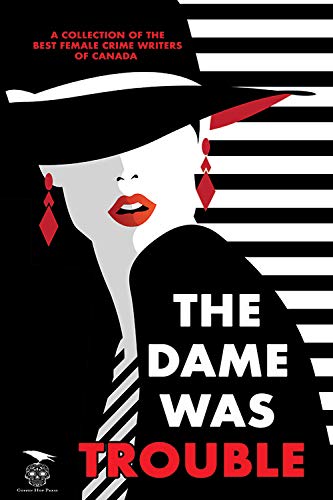
I also wrote a story about a post-op trans woman that was published in The Dame Was Trouble. I wrote it because of a family member who is trans. ("Crossing Jordan by Sandra Ruttan doesn’t feature murder or a shoot-out but does get us inside the head of a trans sex worker as she tries to unsuccessfully kill herself. But it’s not just A Man Called Ove done up in high heels.  It is a story of persistence and strength in the face of misunderstanding, rejection, and violence. A story that will stick with me.")


These are, to me, the greatest compliments I have received as a writer. To have people embrace Moreau as an admirable character, to say, "I look forward to reading future novels about the adventures of Kendall Moreau in the RCMP....  I have confidence in Moreau's ability to handle all the situations that might arise in the course of her career, and Ruttan's ability to portray them." 

That means a lot to me. It's such a small thing, but one can only hope that if people want to spend time with characters who are mixed race that they will welcome diverse writers too. That they will look to the heart of the story. That they will help usher in an era where we aren't just seeing books about white people in white communities. 

I would love to be able to hang a shingle up at Toe Six and say it exclusively focuses on small press, indie and diverse authors. I won't... not any time soon. The only reason is because I'm limited by what returns to me, and if I say that's what I'm about then I am not going to touch anything from big presses. Current limitations aside, there are some up-and-coming authors who are with bigger presses who still can benefit from promotion, too, because they're the small guys swimming in big ponds. But I am going to be putting my emphasis on the small press, indie and diverse authors wherever I can. This year I have read far more books by women and am increasing my numbers of diverse authors.

And I'll be paying a lot more attention to reviews that focus a lot less on the conventional bestseller list and seek out those undiscovered gems that deserve our attention. We have to give our print to what we want to see more of. I'm not always going to succeed, but that's what I'm going to try to do.

Now, about that incident at Bouchercon...

I don't know what happened. I don't need to know. However, I am going to put this out there for the people who do know. Clearly, there's been enough of a ripple effect for some people to feel they needed to address it on social media. And everything I have seen has avoided specifics.

Please. If you were involved or witnessed it, personally go and document the events and keep a record of it.

Why?

The fact that people are aware something happened will lead to gossip and speculation. Like I said, i wasn't even there and I know something big went down. I know what panel it was at. I know some of the people involved.

And my husband and I have had a whole conversation about it.

It begins and ends there and here for us. However, for each person who may know this little tidbit or that supposed fact, there will be stories swirling. This may be a community, but it's a community of associates, some of whom are friendly and some of whom are friends. Make sure you have you account of the facts in case you need it some day. You never know when it may matter to an agent or a publisher or when you may need to address slander that follows in the wake of some drama. I have the kind of mind that connects dots and it's a curse. I have picked up on crazy stuff from small changes to a person's social media account. Stuff my husband was completely oblivious to, and I was proven right. So you do not even want to know what I started thinking as info started coming my way about what happened at Bouchercon. I can only hope I'm wrong.

It makes me very uncomfortable with the idea of attending a convention again. Without understanding what happened it just leaves you to worry that you'll save your vacation money to go to a convention and be attacked when you're on a panel and have a really bad experience. And there are so many other ways I could spend any vacation money I ever have...

The people who need to be paying attention to this are the convention planning committees. Not hte ones who handled this past B'con. The ones who are planning the next one and the one after that. Measures should be put into place that ensure that whatever happened doesn't happen to anyone else in the future.

That involves dialogue. But not publicly. Not on social media. Not with me. With convention organizers.

Here's hoping they're paying attention.

So no, things aren't perfect over in the crime fiction community. It's a real community, filled with real people, which means there are some real problems. But you know what? There are a lot of really great people who are trying to move things in the right direction and things are starting to change for the better. It may be slow, but it's happening. We can celebrate that. We can also see that we still have some work to do, and each of us can ask ourselves what we can do. 

Hopefully all voices - big and small - will start to pull together instead of putting career interests or kissing ass first. Until then it will be baby steps. 

But at least there are steps. Pledge with me. Read more diverse authors. Read more female authors. Read more LGBTQ authors. And talk about their books. The NY Times has the likes of Pelecanos covered. Spread some love to those who have potential and that you want to see still publishing five years from now. 


Thursday, May 3, 2018

A Whiter Shade of Pale


By David Nemeth

Last week The Guardian asked 25 crime fiction writers "crime novels should everyone read?" Nothing really wrong with the question. I get it, the newspaper needs to get hits on their website, maybe even fill in column inches if they actually printed the article. The problem lies in the responses – the predominately white male authors whose books were published last century. But before we get into it all, let's introduce the writers The Guardian decided to ask.

The newspaper split the respondents up quite evenly with 10 female and 10 male writers (there was one duo author represented). I didn't look at the sexuality of each writer as Wikipedia only has so much information. Of the 25 writers polled only three were people of color: Jacob Ross, Abir Mukherjee, and Dreda Say Mitchell. The rest, all 22, were white as Casper the Friendly Ghost. I know the crime fiction community has some issues, but since The Guardian was picking and choosing the crime writers, they should have done a better job at this simple task.

Now let's look at the results of the poll. Of the 24 authors chosen all were white. The only person of color was Martin Cruz Smith and he was chosen twice for Gorky Park. The average published year of all the books selected was 1957 making the average age of the books selected 61 years-old. There were four books chosen that were over 100 years old: Bleak House by Charles Dickens, The Moonstone by Wilkie Collins, The Hound of the Baskervilles by Arthur Conan Doyle, and Crime and Punishment by Fyodor Dostoevsky. And Art Taylor already told us about the problems with Bleak House.

If we removed the 100 plus year-old books from the numbers, the average publishing year would move to 1972 making the books 46 years old.

The youngish books were On Beulah Height by Reginald Hill, Mystic River by Dennis Lehane, A Quiet Flame by Philip Kerr, A Place of Execution by Val McDermid, Silence of the Grave byArnaldur Indriðason. Only one woman, but all definitely white. Again. If you removed these books from the list, the average publishing year would be 1945 making the books 70 plus years old.

We all know there are problems in the crime fiction community with diversity and I'm disappointed that the "top writers" in the field as they were called by The Guardian could not have done a more inclusive job in selecting books. Obviously, it is up to us to lead from behind.

If you have a moment, give me some important crime books to read that aren't by white men.

Thursday, December 7, 2017

85% Problem

By David Nemeth


I’ve got a confession, in the 18 months I’ve been writing crime fiction, my author list is not as diverse as I imagined. It kind of sucks. And the worst part, I thought I was doing well. The rough numbers: 85% men; 85% white; 85% from the United States. I have no numbers on LGBTQI, but I’ll take a wild guess and say those numbers suck too. Did I miss reading crime fiction books by marginalized writers in the last year? Absolutely. I missed reading lots of fucking books in 2017.

I look at my review queue over the next few months of new crime fiction books and it’s like a fucking blizzard – white and whiter as far as the eyes can see. It probably doesn’t help that I do not like the more commercially-viable genres such as serial killer books, police procedurals, and psychological thrillers. Boring! By not reading these genres, the diversity baby is in the corner and I don’t see a way out.

I realize that to read crime fiction by people of color and other marginalized writers, I’m going to have to go back in time because when I look at my favorite crime fiction publishers, all I see is a lot of white and not much more. Publishers of books and short stories will say they only print the best of what they receive. I get that, but just as readers like myself need to search out new and different writers to read, publishers need to be searching too.

For now, the best I can do is to keep on looking for books by people that are not like me.

Wednesday, June 15, 2016

Dharma Kellher: The Iron Goddess Interview

by Holly West

Dharma Kelleher writes about "renegades, outlaws and misfits," but what's immediately clear upon cracking open her debut novel, IRON GODDESS (out from Alibi on June 28), is that she also writes characters with heart. Shea Stevens is an ex-con who's worked hard to make a happy life for herself, only to be sucked backed in when her bike shop is burglarized and she has to confront her troubled past.

I'm delighted that Dharma graciously agreed to an interview about IRON GODDESS, how her life experiences inform her writing and diversity in crime fiction.

HW: Tell us, briefly, what IRON GODDESS is about.

DK: IRON GODDESS follows Shea Stevens, an ex-con and custom motorcycle builder, whose finds that her shop has been broken into, an employee shot and three custom bikes stolen. She immediately suspects the Confederate Thunder, an outlaw biker club once run by her father.

When Shea reaches out to her sister, who is married to the club’s current president, she learns that the same drug dealers who robbed her shop have kidnapped her niece. Shea reluctantly agrees to join forces with the Confederate Thunder to save her niece and recover the stolen bikes.

HW: There are a few LGBT characters in the book, and Shea herself is a lesbian. While such characters exist in mainstream crime fiction, they are few and far between. Was it important to you to write a character that could serve as a role model of sorts or were you simply interested in writing a good story?

DK: I wanted both. I’ve read a LOT of lesbian fiction where the story focuses on the protagonist’s sexuality. But most thrillers and other crime fiction with a straight protagonist doesn’t focus on their sexuality. I wanted a lesbian protagonist where her attraction to women is not the most interesting thing about her and isn’t a leading part of the story.

Yes, Shea is a lesbian, but she is also an ex-con who grew up in an outlaw biker family. She runs a shop for second-chancers that builds custom bikes for women. Her relationship with Jessica is the least interesting thing about her.

HW: How does your own life experience inform your writing and the themes you want to explore? 

DK: I came out as transgender about 25 years ago in the Deep South, so roughly half my lifetime. My family rejected me and even after all this time, our relationship is troubled. So I wanted to explore the idea of family estrangement, dysfunction, and reconciliation.

Also, I’ve been a biker for several years now and love the biker subculture, though there are some very dark and sinister parts of it that are fun to explore in fiction. There is a lot of camaraderie and solidarity, but also rampant racism, sexism, and homophobia, not to mention a lot of substance abuse and violence.

HW: IRON GODDESS is set in the biker world, so the crime fiction genre seems an obvious choice. But you’ve been writing for years and you’re an avid reader, so I’m curious if you considered other genres for Shea? 

DK: I did write an early attempt at a contemporary, almost chick-lit style novel which featured both Shea and Rios, but the characters were much different than they are now.

I have found, since writing IRON GODDESS, that writing crime fiction is more fun. It’s very cathartic. High-speed chases, gun fights, dramatic rescues? How can I resist?

HW: Who are your influences, both in and out of the genre? 

DK: So many influences. Lawrence Block, for starters. Both his Matt Scudder and Bernie Rhodenbarr series are wonderfully written. I love Elmore Leonard and the complex characters he creates. Jim Butcher (of Dresden Files fame) has an unrivaled talent for vivid description with an economy of words. And more recently, I have fallen in love with the writing of Christa Faust for her unconventional characters.

HW: Job-wise, your background is diverse: you have a degree in journalism and have worked as a news director, a construction worker, a goldsmith, a caregiver and a web developer. Given the breadth of your experience and interests, is working as a full-time writer something you’d like to do?

DK: YES!!!!! I have enjoyed most of the fields I have worked in for varying reasons, but my first love has always been creative writing.

I first started as a teenager typing out short stories on a manual Smith Corona typewriter and reading Lawrence Block’s fiction column in Writer’s Digest magazine.

Then I fell away from it for the better part of 25 years to get my sh*t together. For the last ten years, I’ve buckled down to master the skills that creative writing requires, so as I turn 50 this year, I finally have a book to show for it.

HW: What’s next for Shea and/or your own writing?

DK: In the next novel, Shea finds herself forced to infiltrate an all-women’s motorcycle club as a confidential informant to find out who’s been selling lethal drugs laced with strychnine. My editor and I are still working on a title, but it promises to be filled with lots of plot twists and action.
I have some ideas for future novels in the series as well. So we’ll see how these first two do and go from there.

***
Dharma Kelleher writes gritty tales about outlaws, renegades, and misfits. Her hobbies include riding motorcycles, picking locks and getting inked. Her debut novel IRON GODDESS will be published by Penguin Random House’s Alibi imprint on June 28, 2016. Learn more about her and her writing at dharmakelleher.com.