I'll be in Tucson later this week for Left Coast Crime 2023, a convention for mystery fans and authors. It's always a wonderful time, and this year I get to start early. On Wednesday night, the local Sisters in Crime chapter is helping coordinate Noir. Noir is an event that happens in fine drinking establishments nationwide, where authors read brief excerpts from their books. It's a home-grown thing, with people organizing them in conjunction with other events or for no reason at all, other than to have a good time.
Word about Wednesday's event has hit in all the right places. Organizer Patrick Whitehurst has provided multiple graphics for people to use on their social media, and gotten the event into the local alt weekly newspaper.
Note how the graphics give good placement to the brewing company that's hosting the event. It's truly an example where everybody wins. So if you're going to Left Coast Crime this week, stop by and subject yourself to some great crime.
Are you going to Left Coast Crime in Tucson next month (March 16-19)? Start it off the night before with Noir at the Bar. I'll be part of a great line up. We'll all be reading from our works and enjoying an in-person (!) evening. If you'll be in town, join us!
The coronavirus caught up with me in San Diego. I—and
several hundred others—hoped to outrun it, at least for the weekend. But it
wasn’t to be.
Left Coast Crime is a four-day convention for crime fiction
fans that’s held every spring at different locations throughout the West. This
year, it was in San Diego. And it lasted eight hours.
The county health department shut us down Thursday evening,
like we were a restaurant with food violations. No grace period. No opportunity
to squeeze in another day of panels. We were just done.
And everyone was okay with it. Disappointed, sure. But the
prevailing feeling seemed to be a sort of calm resignation mixed with a dose of last
hurrah.
* * *
Let me go back to the beginning. My flight from Sacramento
to San Diego on Wednesday was more than 80 percent full, much more than I’d
expected. No one was wearing face masks, but the smell of hand sanitizer was
definitely in the air. And the Southwest flight attendants had started a new
sweep, collecting used disinfectant wipes before takeoff—after passengers had
scrubbed their seat arms and tray tables.
Once in San Diego, I honed my social distancing skills. It
was tough, because this is a community that hugs. A lot. Whether reader or
writer, we only see each other a few times a year and dammit, we hug. So this
week there was a lot of awkward freezing with arms extended as people stopped
themselves from the banned gesture and switched to an approved greeting. The
elbow bump was the most popular. Also used were the hip bump, the disco dance
move, and jazz hands. Feel free to incorporate any of these into your own
social distance repertoire. It might liven things up when we all need it most.
I lucked into a wonderful dinner Wednesday night with
several Sacramento friends and Jane Ubell-Meyer, who found us a fabulous little
Italian restaurant. I went to my room early because my Thursday was full of activities.
I didn’t know then how fortunate that would turn out to be.
Author Speed Dating with partner Jennifer Kincheloe, who writes the historical Anna Blanc mysteries. I highly recommend them. (Thanks to Cynthia Kuhn for the photo.)
Thursday started at the civilized hour of 9 a.m.
with Author Speed Dating. This is the best thing going if you’re a writer. You
partner with another author and each get two minutes to talk about your books
to a table of 10 readers. Then you hop up and move to the next table. We did it
18 times. The room was mostly full, and let me tell you, these are serious
readers. They carefully collect author giveaway bookmarks, they take notes, and
they’re wonderfully encouraging. I always
leave this event with a hoarse voice and a buoyed spirit.
Merrilee Robson, Naomi Hirahara, Elena Taylor, John McMahon, yours truly.
A good portion of the people who planned to attend had to
cancel, for health or family reasons, which was completely understandable. It
did take the panel scheduling to a whole new level of difficulty; some people
were suddenly the lone panelist and switched to other topics with little prep
time. But no one minded at all. People chatted while they looked for the new
locations and enthusiastically participated in the Q&A sessions.
My panel assignment—Murder in a Small Town: Adding Small Community
Flavor to Crime Fiction—was Thursday afternoon. And thanks to moderator Elena
Taylor, it was fantastic. A moderator can make or break a panel discussion, and
Elena took ours to new heights. She was funny and charming and asked questions
that sparked a great conversation.
Afterward, we all headed to the room where books are sold
and tables are set up for authors to sign. And we found this:
Mysterious Galaxy, the San Diego independent bookstore that
was the sole vendor for most authors’ books, had left their stock and fled. Nobody
could buy anything, and the mechanism the bookstore set up to sell to attendees
left out the most important part. A book shipped later through media mail isn’t signed. That’s one of the major
points of a convention like this. Readers get to interact with authors and get
their books signed. Both groups in that last sentence braved the virus
situation to be there. Having one person from the store do the same would have
been nice.
It was especially heartbreaking to peek under the blankets
and see stacks of books from the conference’s guests of honor—Rachel Howzell
Hall, T. Jefferson Parker and Matt Coyle. In a normal year, the GOHs each get a
special interview session in front of an audience and make a speech during the
awards dinner. It’s a big deal, especially this year for Left Coast Crime’s 30th
anniversary. Only Matt’s interview made it before the shutdown; no one else got
anything. To not even be able to sell some books before the whole thing ended
was horrible.*
As Thursday progressed, I noticed that the feeling of the
convention became more and more tense. No one was edgy with one another; it was
more like everyone was just waiting for the hammer to come down. And when it
did, everything relaxed. It’s canceled,
there’s nothing anyone can do about it, we might as well end it with the
maximum amount of enjoyment.
From front: Holly West, James L'Etoile, Risa Rispoli, Laurie R. King, me, Eileen Rendahl, Bruce Robert Coffin, Colin Conway, Frank Zafiro. (Another Cynthia Kuhn photo.)
So naturally, we headed for the bar.
* * *
I was able to change my flight to Friday and was home by
that evening. And I’m still glad I went. I got to see friends, meet readers,
and watch humanity confront a pandemic with grace and kindness. It wasn’t a bad
way to spend two days.
Be well, everyone.
*A side note: two other bookstores, Cross Genre Books and LaPlaya Books both stuck around. These mostly used bookstores had huge costs to
be there but didn’t end up with much business in the eight hours the convention
was open. Please consider buying online
from these bookstores. They supported crime fiction; let’s support them.
**A huge thank you to the organizers of this year's LCC, who
worked even harder than most years to put on this convention. Here are just a few of them: Lisa
Brackmann and Kim Keeline, Tammy Kaehler, Kathy Krevat, Christine Van Such,
Janet Rudolph, and as always, Lucinda Surber and Stan Ulrich.
One of my goals for the year was to attend one of the big crime fiction conferences. Since I had attended Left Coast Crime a few years back when it was in my home town of Phoenix, I decided to go with that.
As it turns out, this year's Left Coast Crime was being held in the beautiful city of Vancouver, British Columbia. Woohoo!
I'll admit, I'm not much of a world traveler. In fact, the last time I'd been outside of the United States was twenty years ago. But despite having turned into a bit of a homebody over the past couple of decades, I was excited about visiting our neighbor to the north.
And I was rather organized about it. I got my passport renewed in plenty of time. Hotel booked. Flights booked. Supershuttle booked. I'd called my bank and my cellphone carrier to let them know of my travel plans. I made a comprehensive list of things I needed to bring (including underwear and socks), and other things to do before I left. I was very organized.
All in all, I was looking forward to this little adventure.
Sure, I was a wee bit nervous about getting through security. Kind of a crime fiction writer's dilemma. Secondary research can make one look suspicious, especially when you Google such topics as "the kill radius of one pound of C-4", "how to turn raw opium into heroin", and "how to defeat magnetic door locks."
Honestly, it's for research. Look! I have a concealed carry permit and a fingerprint card. I've already been checked out. To quote Eliza Doolittle, "I'm a good girl, I am."
But my concerns over being pulled into a room and questions by the TSA were unfounded, as it turns out. I wasn't on any "Do Not Fly" list. My passport wasn't flagged. In fact, I breezed right through security.
In fact, everything went great until I was in the air on my way to Calgary (where I would pick up a connecting flight to Vancouver.)
The flight attendant came down the aisle with the refreshment cart and asked if I'd like anything. I asked for a bag of granola bites and reached into my wallet to pull out my bank card. Which wasn't there.
You know those scenes in movies where the walls start closing in? That's what it felt like. I was headed to Canada without my bank card. Let the panicking begin!
I dug through my bag and finally came up with a PayPal Mastercard. I paid for my snacks with it and the charge went through. Whew! So while in flight, I used the onboard WiFi to move some money from my regular bank account to the one that my PayPal account drew on since I had a zero PayPal balance.
I tried to breathe, but I was still a bit shaken up. Was that enough? Would I be okay?
When I reached Calgary, I got through customs okay and figured I better pull some cash out of the ATM before heading to my flight to Vancouver. I slipped in my card, tried to pull out a hundred dollars and...Transaction Declined. Resume panic attack!
I called PayPal. The customer service rep let me know I needed to authorize the card for use in Canada. I gave them all of the security responses and they authorized it. Great. I tried the ATM again. Transaction Declined. Crap!
The rep then explained I had a zero PayPal balance. I replied there was plenty of money in the bank account it drew on. He said he could transfer some money, but it would take three business days before it would be available. Ugh! Not helping!
Finally, I just said, "Screw it. In for a penny, in for a dollar. Or in this case, a loonie."
With the help of a friendly WestJet agent, I breezed through security and ran like an Olympic sprinter through the airport as they were announcing my name over the loudspeaker along with the words "Final Boarding Call."
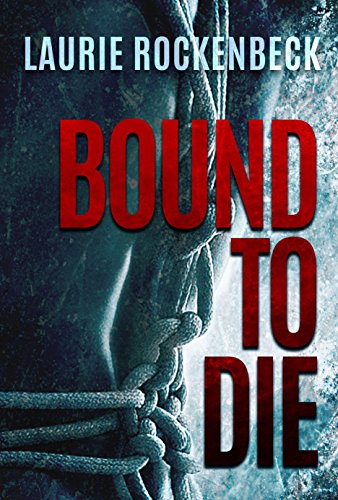
I just barely made it onboard my flight. Once in the air, I texted to my dear friend Laurie Rockenbeck, author of Bound to Die and Cleansed By Fire. She and I were going to be hosting a table at the Left Coast Crime banquet. Even as I sent her my panicky plea for help, a voice in my head was telling me I sounded like those FB scams where con artists pose as friends caught in a similar situation.
To let her know that my situation was legit, I included details about our books, previous interactions, and a very worried photo of myself on the plane. My biggest worry at the moment was how I was going to get from the Vancouver airport to the hotel. Did taxis in Vancouver take credit cards? And even if they did, would mine work?
Fortunately, Laurie responded, letting me know she was ready to help out in any way possible. It's so good to have friends.
When I arrived in Vancouver, I managed to grab a taxi. Yes, they did take credit cards. Whew!
While en route to the hotel, I called my wife and told her to send money from her PayPal account to mine. I also sent a panicked money request to a client that owed me a bit. She helped me out right away.
Bottom line, in the end, everything worked out. I was able to pay for what I needed to pay for. The conference was fabulous. I got to meet some friends who until then I'd only known via social media. I ate a lot of fabulous food. And everyone loved the panels I was on.
The moral of the story is twofold. First, when traveling, DON'T FORGET YOUR BANK CARD! Second, the Beatles were right. We do get by with a little help from our friends.
Thanks to my wife and all of my dear friends who made Left Coast Crime 2019 a wonderful experience. I can't wait to see you in San Diego next year.
As one of the only transgender authors in crime fiction, Dharma Kelleher brings a unique voice to the genre, specializing in gritty crime fiction with a feminist kick. She rides a motorcycle, picks locks, and has a dark past she’d rather forget.
She is the author of the Jinx Ballou bounty hunter series and the Shea Stevens outlaw biker series. You can learn more about Dharma and her work at https://dharmakelleher.com.
By Claire Booth
I’ve spent the past four days at Left Coast Crime, a convention focused on crime fiction about and by authors from the West Coast. It’s one of my favorite conventions because of its atmosphere. It’s homey and welcoming to everyone, even if the subject is serial killers (which was an actual panel).
This year, we had the added bonus of a rare sunny week in March in Vancouver.
When not out enjoying the staggeringly beautiful scenery and artwork, there were dozens of panel discussions to chose from. The most fascinating one I attended was about dyslexia. Three writers and an editor with dyslexia spoke about how they think and how they weren’t diagnosed until much later than they should have been.
Me, Stephen Buehler, Renee, Amy S. Peele, and Sam Wiebe
I moderated a panel called “Our Past as Inspiration.” I talked very briefly about my background as a reporter and moved quickly to the others, including fellow DSDer Renee Asher Pickup. It was alternately moving and humorous to hear stories of how authors backgrounds play into their writing and choices regarding characters and plots.
I ran into AJ Devlin, who dedicated readers will remember guest posted on DSD about this time last year. His debut novel, Cobra Clutch, was up for the Lefty Award for best first novel. (It’s about a semi-pro wrestler and a kidnapped snake. Go read it. Trust me.) I met AJ at the Bouchercon crime fiction convention in Toronto in 2017. His novel hadn’t come out yet, but we stayed in touch. It was great to see him again and fantastic to see his success.
That’s a lot of what these conventions are about. First and foremost, they’re about connecting with readers. But they also allow us writers to reconnect with one another. It’s a job with an awful lot of solitude built into it, and so an opportunity to socialize with people who understand what you do is something to be treasured.
Hello again, folks.
I'm back to let you know that I can really shake 'em down.
Last week I'd gotten to the point where I was taunting the CEO of Twitter in the hope that he would ban me, so I could achieve a sort of digital hermitage and go cold turkey from the drug of social media. Seeing new and old friends at Bouchercon was a welcome respite from the news, though I did take a peek at the cover of USA Today for my daily dose of dread. (You can't quit dread cold turkey, the withdrawal symptoms can be fatal).
I have a love-hate relationship with conventions or any social gathering, as meeting people makes me nervous. My writing came from being a quiet observer in social situations, the kid hiding under the dining room table at family events, drawing bizarre tapestries akin to the caverns at Lascaux with my crayons on the underside of the furniture, emerging only to sneak abandoned pony bottles of Rolling Rock and to stuff a meatball in the heel of a loaf of bread and dunk it in the pot of tomato sauce. I have always felt like an anthropologist from another planet, the reverse of Oliver Sacks's "An Anthropologist on Mars." I'm the Martian, observing the strange species of soft, hairless, and physically and emotionally violent apes we call humans.
And they still puzzle me. Conventions are an interesting place to people-watch because like a Carnivale of sorts, people feel free to be themselves, or put forth the personae they want so desperately to be. Either allows for brief glimpses of the person behind the mask, as they take a breath when they think no one is looking. To quote Gerald Kersh, one of the most criminally under-read writers of the 20th century, whose collection Clock Without Hands I was honored to write an introduction to:
"...there are men whom one hates until a certain moment when one sees, through a chink in their armour, the writhing of something nailed down and in torment."
That is from his story of a crabby old landlord who breaks down when his beloved dog is struck by a lorry, "Busto is a Ghost, Too Mean to Give us a Fright," and can be found in the collection Nightshades and Damnations, edited by Harlan Ellison and reprinted by Valancourt Books. I have carried it with me since reading it, first quoted by Ellison in an essay, then later when I tracked down the story (after contacting Ellison, which I've written all too much about). And I try to recite it whenever I find myself loathing somebody, whether for their narcissistic behavior, their virulent clinginess and stalking, snarky insults, or just plain cruelty. I first used it as a mantra for my father, who before we elected a President who "tells it like it is," used that excuse to insult whomever he liked, and yet somehow be affronted when the mildest criticism was aimed his way. "I'm just telling it like it is." But like Doctor Lecter, as Clarice Starling said, he never aimed that intellect at himself.
At first I sympathized with those "somethings nailed down and in torment," because that is what empathy does, it puts you in another's shoes. I was younger then, and unfamiliar with accountability and responsibility, two of the cornerstones of maturity and adulthood. You can make mistakes, but if you choose not to atone, if you expect to be forgiven with no redemptive actions on your part, you are the one driving the nails into your inner self, and the torment you endure is punishment inflicted upon yourself. It is not up to your victims to forgive you. Threatening legal action, telling people it's okay to be friends with you "because your lawyer cleared you" don't make you sound like you have redeemed yourself, they make you sound like someone I don't need in my life.
I have let my empathy be used against me. As a country, we have as well. We want to give seats at the table to people who want to kill the other people at the table. We tell ourselves that we're being civil, when we are being cowards. No more. People who stalk, abuse, and threaten violence to other people do not get to sit at our tables and abuse our kindness. If we can't agree on that, I'm not sure what else there is to agree upon.
Then there are people like Louis CK, who want to set the terms for their own redemption. That's not how it works. I don't recall him apologizing to anyone. And how is his life "destroyed?" I don't see him eating out of a dumpster, he'll be fine. He can touch himself in the privacy of his own home. Here's another strike against empathy. I bet Louis CK feels sorry. Not only for the consequences, even. But that's not enough. His ickiness was predictable to me when I first saw his act eight years ago in Red Bank, at the Count Basie theater. He had that self-deprecating "men are all horrible people" shtick which is so often used as misdirection to distract people from looking too closely at the speaker's own behavior. And no, I'm not saying "not all men." We live in polluted water; we are all affected by it. We can try our damnedest to "be better" (or best?) but until we stop crapping in the pool or rolling our eyes when another man does--instead of kicking him out of the pool, as was done with Louis CK--we are going to be wallowing in a feces-clogged patriarchal swamp.
Which brings me to Jay Stringer's blog post about his recent resignation from the board of Bouchercon. Give it a read. It's vague at points, but what it's about is how difficult it is to change things when you feel sorry for people who are adults and should know how to behave. I believe in second chances, but you don't get those while you are still on your first chance, like Louis CK. Or the sex offender than Shane Black keeps casting in his movies, a friend of his who was caught trying to set up a meet for sex with a 14 year old girl. I actually have more sympathy for that guy, because he served jail time so his first chance thus ended. I respect Olivia Munn for speaking up--at minimum, there should have been protocols in place to keep him away from any minors on the set of The Predator. (You can't make this up.) Hollywood sucks at this: Victor Salva raped a boy on set, whose family was then sued by Francis Ford Coppola's production company. Salva then was allowed to make creepy teen-obsessed movies like the Jeepers Creepers flicks.
And this isn't "virtuous reading" or whatever the status quo ding-dongs want to call it. You want to read a book by a stalker creep, go right ahead! But don't ignore the victims who say they were harassed by men who are then allowed to attend your convention because you have a "policy." I'm not sure how this policy is enforced. I saw one drunken writer dragged out of Noir at the Bar by hotel security after he nearly got the event shut down. At Thrillerfest, they have convention staff who wear shirts labeled SECURITY and that made me think twice about trying to enter the signing line for George R.R. Martin a second time. It probably keeps the thigh massaging stalker creepos from behaving badly. Women attendees of Thrillerfest haven't spoken out. I'll ask friends who attended and see what they thought. Anyway, Bouchercon was a good time this year. There were some problematic issues with a panel, but I will leave the telling to those who were there.
Kellye Garrett made a great speech when accepting her Anthony Award for best debut novel, for Hollywood Homicide. She read Frankie Bailey's statistics for how many nonwhite, non-straight writers have been published in the mystery/crime field in the U.S. That number is 177, and it is mindnumbing. 177, all time. She won the debut Anthony, Attica Locke won for best novel (Bluebird, Bluebird is great and deserved it), Gary Phillips won best anthology for The Obama Inheritance. And what she said afterward stands--"we need to stop looking at diversity as a trend, and make it the status quo." And she's right. Color, creed, gender and orientation, and as I'm known to pipe about, class, as most crime fiction comes from a very bourgeois middle-class perspective where we sneer at the lower class or revel in their squalor. The Anthonys last week were a good start.
I'm looking forward to Left Coast Crime this year. I am told they mixed panels last year, with seasoned pros, rookies, midlisters, noir, thriller, cozy, traditional writers all together like we're a community. It viewed askance, but the feedback from writers and readers has been positive. So I am going to LCC next year, to give them a shot. I have been going to Bouchercon for 8 years, and while I am grateful for the work of all the people involved, I keep seeing the same panels with the same people. I was miffed that I wasn't on the criminals in fiction panel with my buddy Josh Stallings, but that's the only panel I've seen him on. I've moderated cozy vs noir, sex & violence... but I see the same people, except at the bar. Bouchercon is much bigger and there are many panels, but sometimes it feels like the titles are what change most. Here's a great interview with Octavia Butler where she complains about being on "the race panel" for 20 years at SF conventions (most of which have since learned to mix up panels so readers are introduced to new writers).
A real
one-armed bandit, where you have to pull a handle.
Not like those horrible new
ones where you just push a button.
I have this in my living room.
Why, you might ask? Because it reminds me of my childhood.
I grew up in Reno, Nevada. And I’ll be heading back this week for Left Coast Crime. It’s a convention for fans of crime fiction. It’s a great time – full of
panel discussions, laughter and murder plots.
It will be good to go back to my
hometown. I do it fairly often, but I rarely go into the “Reno” parts. Reno is
two cities: the normal one with schools and houses and doctors’ offices and
road construction. And the Nevada one, with casinos and $2.99 steak & egg
breakfasts 24-hours a day and a walk-up window in the county clerk’s office for
instant wedding licenses.
The Great
Reno Balloon Race in 1984. Balloons
come down everywhere –
the sides of
roads, parks, anyplace the wind blows. One landed
on my high school football field one year.
There are ways that the gambling
industry infiltrates the normal Reno, however. Many, many people are in the
business – working everything from blackjack tables to restaurants to
accounting departments.
There are slot machines in the
grocery stores.
Teenagers cruise the strip on
Saturday night. An actual strip.
The business that adopted my high
school was a major casino. It provided rewards for student achievements, and sponsored
things like assemblies. Once, it brought comedian Rich Little to perform for
the students. I later realized this kind of thing was not a normal occurrence at
most people’s high schools.
So my childhood was a mix of the
ordinary and the ordinary-to-me. Now I get to see my mystery community experience
my hometown. And I can’t wait to see what they think – and what they write
about it.
Me in my
driveway sometime in the ’80s. Note the lack of trees in the background. This
is the terrain you’ll see when you fly into Reno. High desert.