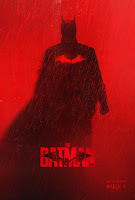
Showing posts with label batman. Show all posts

Saturday, November 9, 2024

Batman Resurrection by John Jackson Miller


by

Scott D. Parker


Who knew that one of the best sequels of the year would be a novel to a thirty-five-year-old movie?


Batman is my favorite hero. I consider the day the first Tim Burton film with Michael Keaton as Batman/Bruce Wayne debuted—23 June 1989–to be the real Batman Day. No matter what kind of Batman movie has been made in the years since, the ‘89 Batman was special.


So when I heard John Jackson Miller was writing a direct sequel to that film, I was thrilled. And Miller delivered.


A Direct Sequel


Batman: Resurrection starts in Gotham City right as the Joker is flooding downtown with Smilex gas. That would be the climactic sequence from the movie. But it’s not downtown. It’s in another part of Gotham, a theater district that feels like off-off Broadway. It is there we find (a particular character that I’m going to name and as soon as I do, those who know who he is knows a villain in this novel) Karlo Babic, an actor who has never had the break he thinks he deserves. He’s been tapped by the older, arrogant lead actor to be in the play with a caveat: Karlo must test the makeup he has purchased on the black market. 


If you remember the movie, the Joker infected cosmetics and, after a given combination is applied, the victim starts laughing and their face constricts into a Joker-like grin. Well, Karlo puts the makeup on, and he has a reaction, but not one you’d expect.


Cut to six months later and the story proper begins. 


More Scenes Between Characters in the Movie


One of the best things about this book is that we get scenes we would have liked to have seen in the movie. A key one is with Alexander Knox, the reporter played by Robert Wuhl. We get a number of scenes with him, doing some investigating about a gang of Joker acolytes, the Last Laughs, and, most importantly, interacting with Batman himself. You see, in the film, Knox and Bruce Wayne met, but never the reporter and the Dark Knight. Miller, a former college reporter, gave Knox some great content and retained Wuhl’s trademark sarcasm.  


As the story progresses, you get a sense of how Commissioner Gordon began to accept the help of the vigilante dressed up as a bat. There are some wonderful moments between Batman, Gordon, and Knox. They actually form a sort of team.


There’s even a co-starring role for one of Joker’s henchmen. 


In the Minds of the Characters


In a movie, everything is action. In a novel, the author can put the reader in the heads of the characters, and this is one of the places where Miller shines. Specifically, he puts you in Bruce Wayne’s head, the Michael Keaton version. He’s still new at this costumed hero thing and he struggles with what he has to be, why, and what’s next for him. Miller shows us how Batman uses the tools on his utility belt, and how, during longer conflicts, he can run out and must rely on his fighting skills.


I particularly enjoy the relationship between Alfred and Bruce. There’s that paternal instinct in Alfred, and yet he still questions why Bruce does what he does. In a Batman world without a Robin, Alfred is very much a partner. 


Karlo gets a lot of time in this novel and it’s well worth it. Sometimes, villains (or adversaries) are just bad guys. The best bad guys are ones with whom you can relate (think how Mr. Freeze was reimagined in the animated series). Karlo and what happens to him falls squarely in this vein. A nice touch by Miller.


A Grounded Universe?


In 1989, we thought the movie was dark, just like in the comics. In the decades since and in light of the movies that have come out this century, the ‘89 Batman feels more light-hearted. Miller takes considerable time to give Burton’s world a reality that we can understand. He states things explicitly even if you’ve never thought about it from a certain point of view. The Smilex attack at the end of the movie? That’s a chemical attack against a major metropolitan city. DNA testing? Now quite there yet. What really was Smilex? Miller gives you a reasonable answer. It’s verisimilitude in prose.


The Easter Eggs


They are everywhere, and they are a blast! Since this takes place before 1992’s Batman Returns, we actually see Max Shreck (and his assistant). The Red Hill gang has taken residence in the sewers of Gotham, and they answer to ‘the boss.’ Knox is still asking Bruce Wayne for a grant.


But you also have fun little tidbits just tossed into the mix. Bruce decides that he’s not going to be the foppish playboy, but an active member of the Gotham community. In fact, he sees Batman as the means to an end when Bruce’s money and influence has no sway. You learn that there was an anonymous donation to the museum to fix the skylight that Batman destroyed when he saved Vicki Vale. A reference to infecting the water supply with chemicals (see: Batman Begins). 


The Narrator


Like most of the books this year, I listened to the audiobook, and narrator Will Damron knocks it out of the park. When he’s doing Bruce, he’s normal. When he’s doing Batman, he has the deeper voice (but not nearly as deep as Christian Bale). When he’s doing Knox, the wry sarcasm of Robert Wuhl is right there in your ears. 


But the biggest surprise is his reading of Jack Nicholson’s Joker. In Bruce Wayne’s nightmares, he still relives the events of the movie. As such, Joker talks with him. Damron doesn’t do an impression of Nicholson so much as he modulates his voice in such a way that sounds really good.


The Verdict


I thoroughly enjoyed this novel, and it was one of the books I was most looking forward to. As of this weekend, I’ve read 27 books. This is easily in the Top 10, likely in the Top 5, and is one of the leading candidates for favorite book of the year. If you love Batman and the 1989 movie, I think you will really enjoy this novel.

Saturday, June 22, 2024

June 23 Will Always Be Batman Day: Batman '89 at 35

[As of tomorrow, the 1989 Batman movie is thirty-five years old. This is a piece I wrote seven years ago. Ever since 1989, the date of June 23 has been fixed in my mind. It will always be the true Batman Day for me and likely millions more.] 

Where were you 35 years ago today? Probably standing in line to see Batman.

The Date

 It all began with a symbol and a date. A simple poster considering what it wrought. For months, all you needed to know was June 23. You could look at a calendar and count down the days until Friday, June 23, 1989. That was the date in which Batman would finally appear on theater screens in the manner akin to his origin.

It may be difficult to imagine now but there was a time when a single superhero film dominated everything. And I mean everything.

The Cast


Batman, the 1989 film directed by Tim Burton and starring Michael Keaton as Bruce Wayne/Batman and Jack Nicholson as The Joker, was a cultural phenomenon in every sense of the word. The long gestating film had started production the previous year and if you thought the backlash the casting of Ben Affleck as Batman created was something [or Richard Pattison], you have no idea when the casting of Keaton, primarily known for his comedies, caused. I can’t remember my own impressions for Keaton, but I remember quite vividly my thoughts on Joker. My choice, if you were going by the comic book look and feel, was Peter O’Toole. Sure, he was older, but he had The Grin. But when Nicholson was cast, I was like “Of course!”


Pictures in Starlog the spring of 1989 gave us the first glimpse of the all-black Batsuit and Keaton in it. I was sold! Then photos of Nicholson’s Joker emerged and I was so excited! I was and am an easy mark in that respect. A lifelong comic book fan, it was so cool to see Batman in real life. More thoughts here.


Batman ‘66

Let me pause here a moment to comment on the 1966 Batman. At the time, I was 20 and had come of age just as comics realized they could be darker and grittier. I was almost the perfect age to read The Dark Knight Returns and Year One and The Killing Joke. So, in 1989, I was distancing myself from TV’s Batman, the way I was first introduced to the character. Gone in my mind was the funny Batman. Here was the grim Batman, the way he was in the 1940s comics and the 1970s comics. Ironically, 35 years later and with the passing of Adam West, I’m ready for grimdark Batman to go away or, at least, make a way for more than one version.

The Preview

Back in those pre-YouTube days, the only way you could see a trailer was to go to a movie and buy a ticket. I’m not sure how but I learned that the Batman trailer (or maybe this teaser trailer because I remember the opening on the Batmobile's rocket) was attached to “Bill and Ted’s Excellent Adventure.” Boom! I couldn’t get to the theater fast enough. There it was, with no music and what seemed like unmixed sound, was Batman, alive, moving, beating up bad guys and driving a kick-ass Batmobile with fire out the back! And Joker. Heavens, how awesome he looked. And I loved the line Robert Wuhl’s reporter asked: “Is there a six-foot bat in Gotham City?” And Batman crashing through the skylight? The only question in the spring of 19898 was how many days until 23 June?

The Movie

I can’t remember for sure if I went to the midnight showing or day one showing. I worked at a movie theater the summer of 1989—a great summer of movies—so I’m pretty confident that I saw it at midnight with the throngs of other folks. Like just about everyone, I lost it. This was the movie we had been waiting our entire lives for! The Danny Elfman score. The opening scene when the mugger asks what are you and Keaton says “I’m Batman” (still my absolutely favorite part). The gadgets. Keaton doing a wonderful job. Nicholson chewing scenery. The fight in the alley with the sword guy. The Batmobile doing…anything. The menace of Joker. The reveal that Joker/Jack Napier killed Bruce’s parents. Prince’s music. The Batplane. The quotes (“Have you ever danced with the devil in the pale moonlight?” “Never rub another man’s hubarb” “I didn’t ask.” “You wanna get nuts? Let’s get nuts.” “My life is…complicated.”) The final confrontation. The final scene with the Bat-signal. It was utterly awesome.

Batman got everyone. The hard-core comics fans flocked to see the movie multiple times. The casual viewer enjoyed it. Your grandpa enjoyed it. Everyone, it seemed, had seen the movie at least once, and chatted about it. Was it the last great common movie everyone saw? I’m not sure, but it was certainly a milestone.

Oh, and the merchandise! Good grief! Batman stuff was everywhere. And, yeah, I bought my fair share. Why the heck not? Up until then, the amount of Batman/superhero stuff available to purchase was meager at best. Nowhere near what it’s like today.

I can’t remember how many times I saw the film. Enough for me to memorize huge chunks of the movie.

Looking Back

The irony now, for many of us who distanced ourselves from the 1966 Batman in 1989, is that the Batman '89--when compared to the Christian Bale films and Batman v Superman and Pattinson's The Batman and the current comics--looks more campy than we ever saw at the time. But that’s only in comparison to what came afterwards. Sure, the immediate next film, 1992’s Batman Returns, went very dark, only to be brightened by 1995’s Batman Forever and, ahem, 1997’s Batman and Robin. When you compare those four films, Batman is the second darkest. But it’s still funny when you look at it now. 

But not in 1989. In that year, we comic book readers thought our time had finally arrived. We had our dark Batman. What was next? Another Superman? What about those Marvel characters? And when’s the Justice League gonna land in our laps?

Well, we still had to wait another decade until 2000’s X-Men to kick off this current Golden Age of Superhero Movies. This current run of films has produced some truly great movies (The Dark Knight; Spider-Man 2; Batman Begins; all three Captain America movies; Avengers; Ant-Man, Wonder Woman, and, of course, Infinity War and Endgame) but it all had to start somewhere. Technically, the run started in 1978 with Superman The Movie (Boy, am I so happy they didn’t put “The Movie” at the end of “Batman”), but the real start of superhero movies was Batman.

I’m so glad I was alive at the time to enjoy it.

Saturday, September 30, 2023

New Nightwing Creators Remember Comics Can Be Fun Yet Deep

by
Scott D. Parker

That image. A single splash page is all it took for me to put the current Nightwing run over at DC Comics on my radar. And oh boy am I glad I did

A fellow writer posted it on Facebook about a month ago and I was captivated by the art, the simultaneous classic and modern style. The artist is Bruno Redondo and he has teamed up with writer Tom Taylor to have a run at Nightwing. And what a run (so far).

Comics Are Not Supposed To Make You Cry


Luckily, my local library has the first three volumes of the Taylor/Redondo Nightwing books and I eagerly checked them all out. Then I ended up reading only Taylor-scripted titles for something like three weeks (I read a comic a day, usually right before bed).

How much did I enjoy that first issue? So much that I actually read two in one night (and drank extra coffee the next morning).

Don’t worry about not knowing what’s going on in the Nightwing universe. I didn’t when I started and it didn’t dampen my enjoyment of the books. There’s enough stuff in the stories themselves to fill in the gaps. Or, as in my case, I didn’t really care. I was reading this current story.

The major event in Dick Grayson’s life is the inheritance left to him by Alfred Pennyworth (who is somehow now dead?). It’s a sizable amount, a life-changing amount, but what actually made tears spring in my eyes is the letter Alfred wrote to Dick. It’s everything you, as a parent, would want to say to a child, and it’s everything, as a child, you’d want to hear from a parent. I’m a dad so it hit me pretty deep.

There Are Other Choices a Hero Can Make


Over the decades, one of the recurring lines of thought about Bruce Wayne is that if he really cared about Gotham, he’d stop dressing up as a bat and invest in the city itself. There’s probably some truth to that.

Another theme is that Dick Grayson is different than Batman. He’s able to make different choices, one of which is to have a life and a girlfriend. In fact, there’s some of that in Alfred’s letter. So when Dick actually decides what to do with Alfred’s money, he does something different. Something positive.

This Comic is Fun


But what about the rest of the story? Well, it’s still a comic book so you’ve got fights and derring-do and villains, but it is the banter between Dick and Barbara Gordon/Batgirl that really takes this comic to the next level. Evidentially, prior to these issues, there was some underlying romance budding between the two heroes and it’s on full display here.

What’s also on full display is a brightness, a joy, an excitement in reading a comic. Look, I’m fine with dark and grim stuff and Batman himself pretty much fits that bill, but it doesn’t always have to be gritty. You can still deal with serious subjects and still have a good time. Taylor’s writing digs deep into Nightwing’s character and the greater Bat-Family. Redondo’s art is fresh and vibrant with a heaping helping of whimsy.

You've also got interesting moments where characters just talk about things and they are, if I'm being honest, just as good as the action stuff. Nightwing seeks out none other than Superman to discuss the events of the book. When you learn Superman places a lot of faith and trust in Dick Grayson, the depth of what Dick means to the DC Universe just opened up.

Oh, and Barbara said quite possibly the best line when Dick announces his decision: "Go get them, boy wonder." There is so much history as well as joy in that line.

I thoroughly enjoyed this run as published in three trade volumes (officially, issues 78-96) and I eagerly await the next volume. In the meantime, I’ve already begun reading Taylor’s Superman: Son of Kal-el series…and then checked out nearly every other Taylor-written trade volume at the library.

Saturday, September 2, 2023

How’d You Spend the 99 Days of Summer 2023 (Part 1)?

by
Scott D. Parker

I read at lot and watched a lot of movies.

There. End of post. See ya.

What did I see and read? I'll recap the reading next week. Here's what I watched...and hopefully you did, too.

Summer 2023 Movies Were Great


When was the last time we had a summer movie season like this? I think many of us earmarked certain dates on the calendar to get ourselves to the movie theater. I did that nearly every weekend this year. The end result was that, with the exception of the Pixar film, Elemental, I saw every movie I wanted to see this summer. And I enjoyed just about every one of them.

The nostalgia of seeing Michael Keaton as Batman was one of the highlights. The film was quite good and I seriously loved the cameos. Speaking of nostalgia, it was great to see Indiana Jones one last time in a movie that I thoroughly enjoyed. Heck, it even prompted me to rematch Kingdom of the Crystal Skulls (and it’s not as bad and you or I remember).

And how visually stunning was Spider-Man: Into the Spider-Verse? Is that the best example of what you can do with animation to tell a rich, engrossing story like that? Asteroid City was another example of a visually interesting movie by local Houstonian, Wes Anderson.

Then there was Barbenheimer. Two great films, polar opposites, but the same weekend. The wife and I saw Oppenheimer on opening night. How stunning was it that a 3-hour movie largely consisting of people in rooms talking went by so fast? And that last line? Barbie was phenomenal. I found myself laughing one moment and tearing up the next. Such a bold, fresh, exuberant film. It’s probably the best of the summer.

But not my favorite. I only saw one movie twice in the theaters and that was Mission Impossible: Dead Reckoning, Part 1. It’s all there, in this film, everything you’ve come to love about M:I films, and this time, we get Henry Czerny back, chewing up scenery and dialogue. Hailey Atwell is a great addition to the franchise, and her chemistry with Tom Cruise is right there on the screen. And that final sequence…with the train? Fantastic. Just as breathless the second time as the first…and I knew what was coming. Love, love, love.

I saw an enjoyed other new films including Meg 2 (it’s exactly what you think it’ll be), Haunted Mansion, and, after watching the first one, Book Club 2. How frigging charming are those movies? More please.

I had the hankering to watch Mad Max: Fury Road (the fourth one) but after about 30 minutes, my wife suggested we go all the way back and start with the original. After the first two (which were interesting), she told me that I was going to feel compelled to watch Thunderdome but that I shouldn’t. She nailed it. What the heck was that? Fury Road was quite good.

There was some great TV as well. The finale of Ted Lasso! Season two of The Bear, especially that episode entitled “Forks.” A stunning hour of television. The old TV series “Brothers and Sisters” and our new favorite thing we’re catching up on: Parenthood. Oh, and on Netflix, there’s a spellbinding documentary called “Cave of Bones.”

Those are the highlights of what I watched this summer. Come back next week when I talk about what I read.

Saturday, March 5, 2022

Impressions of The Batman

by

Scott D. Parker

As I will do for every Batman movie ever made, I saw the new Batman movie on opening day. Lifelong fan of the character than I am, I have thoughts.

There will be spoilers.

Thirty-three years ago, we got a dark and brooding Batman in the form of Michael Keaton. Turns out, it wasn’t so dark, but holy cow was it at the time. Then after a more bright series in the 1990s, we got a darker, broodier Batman in Christian Bale. Then we got Ben Affleck who was dark and broody.

And now we have Robert Pattinson who is uber-broody. Like others have said, he's Emo Batman. And you know what? I'm fine with it. I actually enjoyed the film quite a bit, all three hours of it. And my middle-aged bladder was able to make it through the entire film without compelling me to run to the bathroom. Why? Because I didn't drink a lot of water. But mostly because the movie was rather compelling.

The Voice - Kevin Conroy is all but the definitive Batman for me when it comes to how he does the voice of Bruce Wayne and Batman. Bale's gruff growl became distracting and I particularly appreciated Affleck's voice modulator. Pattinson's low, non-gruff voice worked for me.

The Suit - A fully functional, bulletproof body armor bat suit. I loved the collar. The cowl was also well done, showing all the scrapes he's endured. And I liked that they acknowledged he wears black makeup around the eyes. I loved the gauntlets that could be deployed at a moment's notice. And the use of the taser. The bionic contact lens was a nice touch.

Jeffrey Wright - Can we just get a TV show with him as Gordon? Really, really liked how he stood up for Batman from the jump. We even got a few of the bewildered Gordon moments like when he looks back and Batman's gone.

The Police - Really liked how the cops go from disliking Batman to grudging acceptance. And that scene when Batman and Gordon walk Falcone out and they see all the good cops? Wonderful.

Colin Farrell/The Penguin - Completely could not see Farrell in the makeup. But I really liked his ferocity with the character. Sure, it's a little on the Deniro side of things but Oz is a crime lieutenant. It's was fun.

Zoe Kravitz/Selina Kyle - Her action scenes were fantastic with her multiple kicks per strike. I liked her one-track mind to help find then avenge her friend. And she had some of the few funny parts in the movie.

Paul Dano/The Riddler - Going into the theater, I could not have picked Dano out of a lineup. And I so liked that his visual style was basically a geek. A genius geek, but just a normal guy on whom the world had shat on for years. His monologue in the jail cell was pretty darn fun.

The Riddler's Big Plan - I so love movies when the villain is 25 steps ahead of the hero, and this movie had that in spades.

Batman as Detective - Very, very nice to have a movie like this. Yeah, we've had the big explosion version of the character so why not basically have a PI solving riddles and crimes who just happens to wear a bat-suit rather than a trench coat and fedora. T'was nifty that Alfred helped out with that.

The Fight in the Dark - Maybe 30 seconds, but holy cow, was that sequence awesome. One of the best in all of Bat-movie history. I'd bet money that director/writer Matt Reeves was inspired by the hallway sequence with Darth Vader in Rogue One.

The Finale/Mist Scene - As soon as Batman exploded that fire extinguisher and created a cloud of mist, I knew he was going to jump out of it. Fantastic visual.

And a child shall lead - When Batman, with red flare in hand, goes to help the mayor-elect and others get out of the flooded arena, I so loved that it was the young boy who was the first to take Batman's offer of help. The boy recognized the hero that Batman was and showed the way.

The Ending Speech - I appreciated the mirror version of Gordon's closing speech in 2008's The Dark Knight. This Batman, for all his mopiness, recognizes the need for hope in Gotham. That is an intriguing plot thread to open.

The Mood - I'll admit I was a tad leery of yet another brooding Batman movie, but I was sucked in almost instantly. It was a slow burn movie, punctuated with intense fighting sequences, but I really liked it.

The Music - John Williams's theme to Superman is arguably the greatest super-hero theme every written. Well, not arguably to me. But Danny Elfman's Batman theme is definitely second. When I saw that Michael Giacchino as the composer, I was excited. But a theme like from Williams or Elfman would not have worked in a movie like this. The slow, downbeat score, with the new Batman theme scattered throughout the movie, worked really well. Of particular note was the harp-and-cello piece when Bruce Wayne went into his parents' room.

The Verdict


Up until 2022, there has only been one live-action Batman at a time. That changes this year. Later, when we get The Flash movie, veteran Batman Michael Keaton returns and we'll a second live-action Batman, even if it is a return of an old favorite. That's a good thing, because if you don't like the mopey Batman, just wait. Or watch other versions.

Here's the thing: in the summer of 2008, we got one of the best Batman movies ever in The Dark Knight. Later that fall, we got the equally fun and light-hearted animated series Batman: The Brave and the Bold. Boy did I love that series. And I also liked that year's epic Batman movie. I can appreciate both of them because there is room for Batman to be interpreted in different ways.

This is Matt Reeves's interpretation of 80 years of Bat-stories and the character and situations. As much as I love the brightness of the Marvel movies, Batman works well in this kind of story. Like I mentioned at the top of this post, I was a little leery/weary of broody Batman.

But Reeves's story, direction, and cinematography as well as Pattinson's performance won me over. It did for my wife as well. (Note: she is not a super-hero film fan but loved Bale's Batman, especially The Dark Knight, perhaps the only super-hero movie that she'll start to watch if she runs across it on TV.)

I thoroughly enjoyed this movie and look forward to seeing it again.

Friday, October 22, 2021

Loose Thoughts on James Bond

 by Jay Stringer. 


Now, with a couple of weeks to digest the latest movie - I didn't need it, my thoughts formed in real time during the film and haven't changed- I've been mulling over the state of play with James Bond. 

Here be the thing. 

There's a big mistake, in my opinion, at the heart of much modern Bond. 

Now, first of all, let's get the obvious baggage out of the way. Bond is a fantasy figure. And not, on balance, a particularly healthy one. He represents the schoolboy fantasies of Ian Fleming, and his defence of the realm -leading to every speech by every Bond movie villain about Bond defending a fading empire- was already a wistful notion in the 1950's. Bond was formed in the same post-war myth-making period that has led to so much of Britain's modern identity problems, the self-defeating nature of repeatedly voting for people who promise to return us to a country that never existed. 

But with that revisionist take on revisionist history in mind...I'm going to argue that Bond is stuck in a very specific brand of revisionism. 

The 1980's looms large in pop culture. It seems every other Netflix horror movie or series evokes the decade. That in itself isn't unusual. When I was teenager in the 90's, there was a pop culture bubble of embracing much of the 60's. We're always consuming media that lifts the look and feel of thirty years previous, without really understanding what the time period was about. We live in pastiche. 

But more than that, I think much of our current action and adventure pop culture is stuck in 80's revisionism. That decade was the time of Frank Miller's Batman. The caped crusader had been a largely different character in each of the preceding decades, always reflecting the times. In the 80's, this became about being "gritty" and "adult" and "analysing the character." You'd have to be a pretty fucked up individual to dress like a bat and beat people up, and so Bruce Wayne has to be dark and tortured and broken. Never mind that people become orphans all the time, and that dressing like a Bat has never emerged as a human response to grief, we have to keep pretending that this formational event someone turned Bruce Wayne into the darkest, grittiest, and most fearsome motherfucker in Gotham. Each new film adaptation lays it's hat on the peg of being the one to "make Batman real" and "take him back to his roots" and "do something new" when doing slightly rearranged versions of the same 1980's thing. 

The same has happened with Bond. After the cool sexism (hey, remember him raping Passing Galore?) of Connery, the complete racism of OHMSS (That banana scene? good grief. Where are all those think pieces?) and the buffoonery of Moore, the 80's was a time to make Bond real. We had to go back to Fleming's original, and make the character reckon with his sexism, his imperialism, his alcoholism. Dalton's Bond was fairly straight-up, Brosnan's Bond was an ironic remix, and Craig's Bond has been a fantasy figure of a broken, alcoholic, tortured man. 

But there be the thing (part two). 

We're not analysing Bond, in these versions, we're analysing Ian Fleming. 

Fleming was all of the things we take Bond to be. All of those flaws. All of those weaknesses. But he wasn't writing Bond to be those things. The Bond of Fleming's imagination was an honourable schoolboy. A flawed-but-decent human being who was self aware about being in a job that required him to do indecent things. 

We can see two different takes on this in the Bond of modern literature. Jeffrey Deaver's Carte Blanche was a modern reboot, and seemed aware that the trick was to update Bond as a flawed-but-decent schoolboy fantasy. Here the super spy did super spy things, but was good to women, had unrequited feelings for someone, and thought through the darker deeds he was forced to do. Ultimately, it was a fun and modern story about a reasonably modern fun fantasy figure. And Bond purists complained. On the other hand, we have a series of books from Anthony Horowitz that place Bond back in Fleming's world, taking place during the 50's and 60's, and Bond purists love these books. 

Because we're stuck. 

Do I argue we need to ignore the problematic elements of Bond? Not at all. I'm not entirely sure why a person of colour would want the role of one of pop cultures creates imperialists. And we need to be open to accepting -as I didn't earlier- the deeply problematic misogyny encoded into the previous films and books. But there are so many ways to tell a story that admits to the past, and too problems, while still having fun with fantasy figures. 

Let's take a look at Steve Rodgers. Steve is an honourable schoolboy fantasy figure. Perhaps because of his 'canonical' story - ever since Stan Lee thawed him out of the ice he's been a Boy Scout out of time- Steve gets to be portrayed as a very different, very earnest, fantasy figure. As the figure who can hold up a mirror to whatever decade he is in, and show how much b better things can be if we show empathy, decency, and stand up for the right people. Steve's great comic books counterpart, Clark Kent, has become bogged down in the same 80s revisionism as Bond and Batman. Clark can't just be a decent guy who tries to do right by people, he has to be moody and tortured. 

There were moments in No Time To Die where we got to see a more fun modern Bond. Mostly the sequence in Cuba, when he worked with Paloma without the need to force it into either a flirtation or a hey-isn't-Bond-a-dinosaur act of revisionism, and Craig's Bond was simply a fantasy figure professional who trusted another professional and then congratulated her on doing a good job. I don't think it's a coincidence that Paloma came out of that film as one of many people's favourite parts. She was elevated by being in a scene that got it right. It was in the quiet matter-of-fact way Q was allowed to reference a boyfriend without the story needing to stop or draw any attention to it.

Letting Steve Rogers be Steve Rogers has never meant shirking any responsibility about showing real-life problems. But we did get to have some fun, some laughs, and some excitement along the way, and his last scenes meant so much more because of it. Watching Craig's closing scenes as Bond, I couldn't shake the feeling of heaviness, of leaden self-hatred that Bond seems to have to carry now. 

And let's dispense with the idea that Craig's Bond is realistic. He's equally a fantasy figure. Just a very weird, fragile, broken fantasy figure. Someone who can do all of the things that the other fantasy figures can do, while taking pain and angst and trauma to superhuman levels. I don't see much that's relatable or human in his take, past the one-two of Casino Royale and Quantum off Solace. So if he's a fantasy figure, let's be honest about it, and then ask ourselves what exactly this fantasy says about us?

On the other hand, I'm sure we could relate to someone who is trying to do right, and tries to treat people right, but has to try and figure out how to do that in a job that forces him to constantly compromise and make bad decisions. Just...dialled up a bit and including explosions and car chases. 

If Bond is to have anything fun, fresh, or interesting to say about real modern life, then maybe it's time too do it while entertaining us with a modern take on Fleming's honourable schoolboy, not yet another re-examination of Ian Fleming's own flaws. And maybe, just maybe, it's time to have a Bruce Wayne who felt the ultimate moment of loneliness and fear at 8 years of age, and committed himself to saving other children from feeling the same way. Maybe it's time to let Clark Kent be Clark Kent. 


Hey, remember, this book is out. 


Saturday, April 3, 2021

Len Wein’s Batman: Batman 307

By

Scott D. Parker

As a kid in the late 1970s, comics were one of my go-to things (Star Wars, KISS, and early Star Trek fandom were the other main loves of my life) and Batman was my favorite. Still being a young kid in late elementary, I didn’t pay attention to the names of the writers or artists. I just bought the books and read them, ingesting the stories over and over again.

When I review the covers of my issues of Batman, it turns out some of my favorites were all scripted by the same guy: Len Wein. Unknown to me at the time, Wein had already co-created Swamp Thing for DC and rebooted the X-Men over at Marvel, including the co-creation of Wolverine, Storm, Nightcrawler, and Colossus. Nope, all I cared about was good Batman stories, and for a stretch there in late 1978 and all through 1979, Len Wein was the monthly writer (mostly) for Batman.

With the cover date for Wein’s first issue being January 1979 (although it hit the spinner racks a month or so earlier), I thought it would be fun to re-read Wein’s Batman run forty years later and see how it holds up. Spoiler: his run is among my favorites of all-time. In fact, Wein wrote one of my favorite all-time comic stories, Batman vs. The Incredible Hulk. But that’s a different post.

Speaking of holding up, Batman and Bruce Wayne in the 1970s is my favorite version of the character. Dick Grayson is off to college, leaving Bruce to move out of Wayne Manor and into Gotham City proper. He takes up residence at the Wayne Foundation building, and operates there for most of the decade. It is one of the neatest buildings in comicdom, what with the giant tree in the middle of the building, which secretly houses an elevator to the basement where the Batmobile is kept. For a young boy like me, this was the coolest thing ever.

The building shows up in Batman issue 307, but not before in intriguing two-page prologue. A beggar woman is asking for spare change. A man in a trench coat, fedora, and scarf approaches and gives her two gold pieces. The next page, she falls dead, right under the title, “Dark Messenger of Mercy!” The artist in this issue is John Calnan and Dick Giordano.

The first time we see Bruce Wayne, he is in his office, staring out the window. Next to him is Lucius Fox in his debut. I’m not sure the thought process Wein went through to create Fox, but the character has been around for these last forty years. Morgan Freeman played him in the Christopher Nolan Batman movies. From the chit-chat between Fox and Wayne, however, it’s clear Wayne has not shared his secret identity. The two men talk about business and name drop a man named Gregorian Falstaff (love the name) who, according to Wayne, “He’s rumored to have have a fortune which makes mine look like so much lunch money.”

Darkness literally falls over Gotham in one short panel, and Wayne excuses himself. He tags up with Alfred who has the Batman costume at the ready. As he swings off the top of the Foundation building, Batman makes a comment to Alfred: “When I start making value judgements—deciding who’s important enough to avenge—it’ll be time to hang up my mask forever.” Here in 2019, with the recent passing of Stan Lee, many folks mentioned Lee’s strong streak of social justice running through his words. Here, in 1979, Len Wein does the same thing for Batman.

Meanwhile...at police headquarters, a man named Quentin Conroy is livid. He wants Gotham’s finest to help him find stolen property, gold coins to be exact. Unbeknownst to both men, Batman is sitting in the same room, legs casually crossed, fingers steepled. The Caped Crusader in convinced he can find Conroy’s missing money, especially since two of the coins turned up on that dead woman’s corpse.

Street level, Batman approaches a sleep bum and there is a funny couple of panels. In the boxed panels, Wein writes “Without question, the Batman is an impressive figure. His unexpected visage, looming large out of the darkness, is often viewed with admiration...or hostility...or outright fear…” “But rarely indifference.” This as the bum goes back to sleep. See? You can have humor in a Batman story. Anyway, an Irishman named Shamrock (natch) approaches and asks the hero if he needs helps. When Batman says he’s investigating the murder of the woman, Shamrock knew her. He volunteers to escort Batman down into the sewers to meet some folks who might have seen something.

What Batman sees is a group of people living in an underground tunnel, the area kept warm by the steam pipes. Here, Batman meets Slugger (from the ‘48 Gotham Giants baseball team), Poet (Shakespeare of the sewers), and Good Queen Bess. Through dialogue alone, Wein gives these characters their accents and particular ways of speaking. Shamrock always says, “Laddie,” while Slugger talks like a New Yorker: “Pleased to meet ‘cha!” Batman learns there have been other deaths...and Queen Bess actually has two of the coins with her. The Dark Knight Detective ascertains the gold coins are laced with a contact poison, absorbed through the skin.

No sooner does Batman make this discovery than a piercing scream fills the bowels of Gotham. Another woman is being attacked! It’s the man with the fedora and red scarf. Batman leaps to action. A fight ensues, and Batman gets himself whacked by Scarfman’s cane. In the melee, two things happen. One, Scarfman’s hat and scarf fall away, revealing a face the citizens of the underworld know. Two, Scarfman’s cane cracked a steam pipe. It’s about to blow. So Batman gets between the pipe and the people. It explodes, hurling Batman across the room.

Later, Batman’s “new tattered friends” say Scarfman looks just like one of their own: “Limehouse” John Francis Conroy, a man who used to sleep with them before just disappearing. Being the detective, Batman soon finds his way to Quentin Conroy’s house (because Batman can get into any room in Gotham, right?). Heated words are exchanged and Quentin confesses John Francis was his father. He kept the gold coins as a remembrance of his father, a man who ran out on his family while Quentin was a kid. The modern pressures of the world drove John Francis to the streets, supposedly dying in a gutter.

But Batman isn’t so sure.

The next night, we see Scarfman prowling about. He gives coins to a man who extends his hand...the gloved hand of The Batman! Oddly, Batman is wearing a sling, proof not only did the steam explosion hurt him worse than we saw three pages ago, but reminding readers the Caped Crusader is really just a man, a man who can get injured. A second battle commences, but Batman’s shoulder hampers him. Scarfman swings the cane too wide, allowing Batman to come in underneath him. A powerful punch to the mid-section topples Scarfman. The odd cast of characters are also there, cheering on Batman. Scarfman questions their motives. All he wants is to give these street people some mercy and peace. But “the peace of the grave” is something they shun. Just as they shun him.
Scarfman’s mind snaps. He accuses Batman of turning these “friends of his” away from him. His face is misshapen, resembling John Francis Conroy, but a few panels later, it is revealed to be Quentin all along. Quentin, looking almost like a young boy.

Wein wraps up the entire story in three thin panels. We see Quentin being led away and Commissioner Gordon asking Batman about the clue. It was the heels of Quentin’s shoes, something we saw a few pages before. Many of the 1970s stories had clues the reader could follow, and it’ fun to go back and notice certain things you might have missed the first go-round.

Wein wrote a pretty decent script. I enjoy the non-super-villain aspect of these kinds of stories. Kind of like a breather before we get to the next issue featuring Mr. Freeze. Wein brings Batman’s humanity to the fore, both in how he protects the homeless but also, at the end, when he hopes young Quentin will receive the help he needs. He’s a true hero to all, discriminating toward none.

What did y’all think about this story?

Saturday, February 15, 2020

Year 5 of an Indie Writer: Week 7 AKA Bond and Batman

by
Scott D. Parker

Well, if it wasn’t for Matt Reeves and Billie Eilish, I’d have darn near nothing to discuss today.

You see, this has been a bit of a nothing week. After Gregg Hurwitz week last week, not much happened. I’m reading The Nowhere Man, Hurwitz’s second Orphan X novel. Really digging it and the character.

I’m also reading some Star Wars comics from the late 70s, specifically the months leading up to the release of The Empire Strikes Back in May 1980.

TV wise, I’m catching up on Magnum PI via my CBS All Access subscription. The move from Monday nights to Fridays pretty much screwed my airtime viewing of the show. When I went and reviewed the list, I realized I had only seen two episode. Now, I’ve watched six episodes in three days. Love being able to watch on my Chromebook at lunch at work.

Thus I didn’t have much to write about. Until Thursday.

No Time To Die by Billie Eilish


I’ll be the first to admit that I disliked the news Eilish had been given the opportunity to write and sing the new James Bond theme song. I’ve seen her on SNL and random other live events and I’ve been less than impressed. Even her rendition of “Yesterday” last week at the Oscars left me wanting.

Still, she’s on a terrific run. She’s following up her four Grammy wins—the four biggest of the night—with a Bond song. Bueno to her for having a moment. And, clearly, she’s popular.

But what kind of Bond song would she create? The Daniel Craig films, if I’m being honest, have batter .500. I really enjoy Skyfall and You Know My Name. I ended up only tolerating Writing’s on the Wall while watching Spectre. And I don’t like Another Way to Die, the theme from Quantum of Solace.

Fear not: the record for the worst Bond song is firmly set: Madonna’s Did Another Day. Too bad. Pierce Brosnan had some great theme songs and a bonus: kd lang’s Surrender, the best non-main-theme song of the entire Bond oeuvre.

So it was with great trepidation I dialed up Eilish’s song on Thursday night. I sighed at my son as I started the video. He left. I sat and listened.


By the time it ended, I had a verdict:

I didn’t hate it.

It was quiet, somber. Her voice actually seemed to fit. It had an elegiac vibe, pretty nifty considering this is Craig’s last bow as Bond. I actually liked the “Food me once, fool me twice” part, segueing directly into a short orchestral part.

There were some good Bond-music elements in the piece, especially the last chord.

So it looks like my opinion of Billie Eilish singing a Bond song was wrong. I do find it fascinating, however, that three of the five Craig theme songs were slow. Wonder what that means, if anything.

The New Batman Revealed


Also on Thursday night came the first images of Robert Patinson in his own Batman suit. Yeah, I only know him from Harry Potter and the Goblet of Fire and the Twilight movies. His casting didn’t bother me. He was new. He was different. I’m looking forward to the new Batman movie. I’ll wait to see the movie before I pass judgement.

But how did the suit look? I’ll freely admit I liked Ben Affleck’s suit in his two appearances on screen. It was very comic book accurate, the best we’ve had to date.

Here it is.

But in a real-world environment—the vibe Matt Reeves seems to be going for—the body armor suit seems appropriate.

We didn’t get to see a lot of Pattinson’s suit. We saw the symbol, which looked like it that bat-symbol could be popped out and used as a weapon. Interesting. Makes me also think of the Kevin Smith-penned story from Detective Comics issue 1,000 in which Bruce took the gun used to kill his parents, melted it down, and inserted it into his suit as a breast plate. Wonder if that’s part of it.

Pattinson’s cowl looks really fascinating. There are what appear to be stitching along the front, leading me to wonder if this Bruce Wayne doesn’t have the tech gadgetry of the Nolan films. I would actually like that. I like also how the eyes are either hidden in the shadow of the red-hued film or actually behind some sort of lenses.

Oh, and that Michael Giacchino music? CanNOT wait for that. Giacchino is great at everything he does. You heard his music for 2012’s John Carter? Great.

Assumptions Busted


All in all, it’s a week of assumptions being busted. Well, only one with Eilish. I’m an open book when it comes to Pattinson.

Either way, I’m looking forward to the last Craig-as-Bond film in a few weeks and am eager for Pattinson’s Batman.

What are y’all’s thoughts on both things?

Saturday, July 27, 2019

Year of an Indie Writer: Week 30

by
Scott D. Parker

Prolific writer Dean Wesley Smith calls summer the Time of the Great Forgetting. It’s that part of the year in which all those New Year’s Resolutions authors made to write more content slowly fades away. Come Labor Day, they’ll wake up, realize they blew a 97-day time to progress on their work, and likely feel depressed. Smith has a cure for that here.

For me, it’s not so much a great forgetting as a dividing of focus. There’s a project I’m working on—the same one I mentioned last week, the one about a filmmaker’s work—that’ll go live the first full week of August. It’s grown more than a bit, but it’s a blast to do. Looking forward, the bulk of the work on this project will be done by mid August, and from then on, it’ll just be rolling out on a weekly basis.

And there might be a video component. Stay tuned.

But said filmmaker’s body of work has also inspired to write a novel that is completely different than anything I’ve ever written. I’m making slow but steady progress on it, with an aim for publication this fall. I’m not forgetting.  Are you?

One Name to Rule Them All


Back in 2015 when I started publishing my mystery novels, I used my full name. When I came around and started publishing Westerns, I kept full name. Over time, as I listened and learned how other writers conducted their businesses, I decided to segment my books with a separate pen name for the Westerns, S. D. Parker. The idea was Also-Boughts and the algorithms churning underneath the facades of all the various online bookstores. Made sense at the time.

But over time, my thinking has evolved. When I ask veteran writers the question about pen names, almost all of them suggest using a single name, no matter then genre. As long as the covers are genre-specific with genre-specific SEO and blurbs, it’ll ultimately be better to have a single name and put everything under it.

I was leaning that direction, but over the summer, I have decided to bring the Westerns under the Scott Dennis Parker name. It’s not a big deal, really. All it means is that I’ll have to de-list the S. D. Parker books, slightly change the covers and internal front matter, and then republish.

If someone finds my work via Westerns and they like mysteries, they’ll have an easy transition. The reverse is also true.

More importantly, however, is the idea that a business can change as trends and new ideas emerge. Nothing wrong with that.

Having everything under one name will make all grunt work of file management much more streamlined.  I’m even contemplating bringing all my stories under the Draft2Digital universe. I’ve got most of them there now and they truly make it a no-brainer. just this week, I’ve been sending them questions about the procedures for changing my author name. They get back to me with personalized answers within a day. Customer service goes a long way.

Anyone else use Draft2Digital? If not, I certainly recommend them.

Interview of the Week: Paul Levitz


Dan Greenfield, over at the wonderful 13th Dimension website, re-posted his 2015 interviews with Levitz in honor of the longtime editor/writer’s induction into the Eisner Hall of Fame at Comicon this year.

They talk about his tenure as the sole Batman editor starting in 1978. Great behind-the-scenes stuff.

Part 1
Part 2
Part 3

Saturday, March 23, 2019

Year of an Indie Writer: Week 12

by
Scott D. Parker

One event dominated this week. Another was just fun.

BATMAN's UNDERWORLD OLYMPICS


Being the Bronze Age kid I was growing up, the comics of the 1970s are the ones that shaped what I like about comics. The Jim Aparo Batman is my favorite Batman. He's the one I think of almost always first when I hear the Caped Crusader's name.

I own a ton of comics and I started re-reading some of the Batman titles I have, and a small run of four issues caught my attention. Published in 1976 to coincide with the Olympics that year, the Underworld Olympics find criminals from all over the world converging on Gotham City to try and best Batman.

Yeah, really.

I read these four issues (272-275) and, naturally, I wrote about them. Here are the links.

Batman 272
Batman 273
Batman 274
Batman 275

A BOWIE CELEBRATION


Wednesday night here in Houston, my wife and I were treated to something very special. A group of folks from David Bowie's touring bands now put on shows that showcase and marvel at the music of the Thin White Duke. Spearheaded by pianist Mike Garson, A Bowie Celebration is just that: a celebration. No, it isn't a tribute band, so don't think that. Heck, even writing those words does this group an injustice. These are professional muscians interpreting Bowie's music but adding their own individual spins on the songs.

It truly was something special. How special? Well, the length of my review pretty much says it all.

A Bowie Celebration Exceeds Expectations

Oh, and what do you think? Does Charlie Sexton resemble Bowie's American cousin?


PUBLISHING UPDATE


I am readying the next story that'll be published on 1 April. By this time next week, I'll have the description ready. Boy, sometimes these are tough. One book among many I use to help is Dean Wesley Smith's HOW TO WRITE FICTION SALES COPY.

I'm also looking ahead to May when the third Calvin Carter novel, AZTEC SWORD, will be released to the world.

READING 


Here in Houston, if you look past the giant plume of black, chemically laced smoke, the week was one the chamber of commerce wishes would happen more often. The sun was bright, the sky mostly clear of clouds, and the temperatures ranged from the uppers 70s to the low 80s.

It was picture perfect. (Truth be told, I'm sitting outside my office on a picnic bench, table umbrella shading my screen, and loving that winter is finally in our rear-view window.)

With the change of seasons comes a change in what I prefer consuming. When the sun's out, I like action/adventure stories. Tales bigger than life. Beach reads, if you will.

I'm still reading Brian Daley's HAN SOLO AT STARS' END for my science fiction book club. And APOLLO 8 is still on my Audible.

But the book I will be finishing this week is the latest by "Richard Castle." CRASHING HEAT is the latest (last?) inspired by the TV show, "Castle." We all know who the real-life author behind the Richard Castle moniker is, and his prose is effortless. I learn a lot from how he structures a story, breaking down the book. I'll do it for CRASHING HEAT as well as soon as I complete my initial read.

MAGAZINE ARTICLE OF THE WEEK


The cover story of the March edition of TEXAS MONTHLY features the genesis of Buc-ee's, the chain of stores dotting the Texas landscape that have become destination spots for all travelers. I really enjoyed learning of its origins as well as the man behind the empire.

Saturday, September 22, 2018

The Shadow: Partners in Peril

by
Scott D. Parker

(Note: I encountered household plumbing issues last night. By the time y'all read this, I'll have the roto-rooter guy at my house and unclogging my drains. But that also means I have to post a re-run. Upon review of my past posts, however, I don't think I posted this one here at Do Some Damage. So, here you go, from January 2018. Besides, last Saturday of Batman Day, so what better way to celebrate that 'holiday' (a week late) than to present a story that inspired the first Batman story. Enjoy.)

Well, it took a while, but I finally read my first Shadow novel.

I think like most of us, I’ve known about The Shadow for a long time. I first discovered him back in the late 70s when my parents purchased some old-time radio episodes on cassette to listen to on vacations. Ten years later, some of those episodes were broadcast on local Houston AM radio on Sunday nights and I’d listen to them as I returned back to college in Austin. And I’d even began collecting the wonderful reprints by Vintage Library to say nothing of some of the comic adaptations. Actually, up until now, the only time I’d encountered The Shadow in print was the two times he guest-starred in Batman comics (my reviews here and here).

Interestingly, it was because of Batman that I first wanted to read PARTNERS IN PERIL. The good folks a Vintage packaged PARTNERS along with LINGO and commissioned a couple of article about how PARTNERS and The Shadow influenced Bill Finger and Bob Kane to create Batman. The historian in me always gravitated to the historical commentary before I read the stories, and this collection is fantastic with not only historical commentary by Will Murray and Anthony Tollin but an introduction by Jerry Robinson, co-creator of Robin and the Joker. But today, the focus is on this November 1936 story.

Reed Harrington calls the police with a desperate situation: he’s been marked for death at midnight. For over a week, Harrington has tried to evade the mysterious caller, but every time, the mystery man finds him. With no one else to turn to, Harrington asks the police for help. Detective Joe Cardona is assigned the case and he’s there in the room when Harrington receives a call just before midnight…and falls dead! In short order, Arnold King arrives at the dead man’s apartment with the same incredible story. What links these two men? Well, they both were former partners of the Milcote Chemical Corporation. Armed with police protection, King holes up and waits…until he, too, falls dead. King dies of electrocution; Harrington of poison.

Enter: The Shadow. He directs his agents to discover the identity of other partners of the company and land on three: Simon Todd, Thomas Porter and his son, Ray. But what complicates the mystery is that Harrington, King, and the two Porters all are former partners of the chemical company. Who would want them dead? Perhaps it is sinister agents of a foreign power out to discover the secret formula for the new chemical weapon created for the United States to use in the next war.  Perhaps it’s something else, but you know before you even read the first word that The Shadow will emerge triumphant.

THOUGHTS

First of all, I really enjoyed this story. I liked how the action played fairly quick and straight. I have since learned that the author of PARTNERS wasn’t Walter Gibson but Theodore Tinsley. In fact, PARTNERS is Tinsley’s first Shadow novel. I read he studied Gibson’s writing style and aimed to achieve a certain verisimilitude with the prose. Today, I can’t say if he did, but the prose flowed well. An aspect of the writing that was likely a product of the times was the omniscient narrator where you rarely got into the characters heads, much less The Shadow. That was likely intentional because Tinsley has us readers (and certain characters) witnessing a thing only to reveal later that The Shadow had already performed a different task. It was very much like the movie serials of the time.

Speaking of The Shadow himself, I enjoyed his disguises and his ability to blend into his surroundings. He appeared both as a young and old workman and Tinsley treated us readers to a classic sly wink as the disguised hero vacated a scene just as another character paused and frowned in odd recognition. A surprising aspect of The Shadow’s character was when he constantly seemed to be five steps ahead of events. Like Sherlock Holmes who knew, for example, the villain in the The Hound of the Baskervilles before he even left London yet sent Watson on errands anyway. The Shadow did the same thing with his team which consisted of Burbank, a man who communicated the plans to other agents, reporter Clyde Burke, and Harry Vincent, who acts as The Shadow’s second-hand man. Ironically, just like Doc Savage’s compadres, Vincent gets himself in trouble and The Shadow has to rescue him, but Vincent proves an able partner.

I listened to PARTNERS from a new all-cast recording up on Audible. It was fantastic and I got a definite old-time radio vibe. There were no sound effects,  but there was soft jazz music at the end of each chapter. A funny aspect of the narrator was his slight pause every time “The Shadow” was mentioned in prose. Another note on the recording: they edited out much of the attribution. Since I had the hard copy and there was a particularly great action sequence, I marked it to re-read and study. It was then, while the audio was playing in my ears, that I noticed they were leaving out some words. As an avid audiobook listener, I wish other productions would do the same thing.

I thoroughly enjoyed PARTNERS IN PERIL and I’ll be quickly moving on to more Shadow novels. THE SHADOW UNMASKS is the only other full-cast recording while THE VOODOO MASTER and THE BLACK FALCON are narrated traditionally.

Saturday, September 8, 2018

Batman Summer Spectacular 1978

by
Scott D. Parker

To commemorate the end of summer 2018, let’s take a trip back forty years.

The summer of 1978 was smack dab in the middle of one of my favorite pockets of my life. You see, Star Wars had debuted the year before and it consume much of my imagination. It had awakened in me a love for all things science fiction and I sought out as much as I could, eventually discovering Edgar Rice Burroughs’s A PRINCESS OF MARS. I had discovered the rock and roll superheroes known as KISS through their albums, comics, and trading cards. And every issue of Circus or Hit Parader magazine I could find.

And, of course, there was the constant: comic books. I have memories of certain issues—where I bought them; what kind of day it was—but not all. Interestingly, as summer 2018 wound down, I was drawn to a forty-year-old comic of which I have no memory buying at the time. But I also have no memory of buying it in the years since, so it’s a logical conclusion that my ten-year-old self forked over a dollar bill for this unique issue.

Officially issue fifteen of the DC SPECIAL SERIES, the 1978 Batman Spectacular boasted of 68 pages of content and no ads. In reality, you get to 68 pages by using both interior covers. This issue is a true gem of my favorite era of Batman’s history: the Bronze Age. More or less, the Bronze Age of comics ran from 1970 to 1985. For Batman, the Bronze Age started with the pairing of writer Dennis O’Neil and artist Neal Adams in the early 70s to the publication of Frank Miller’s seminal THE DARK KNIGHT RETURNS. In the 1970s, Bruce Wayne moved out of Wayne Manor and the Batcave and took up residence in the Wayne Foundation building. He was a detective, a creature of the night, and, most importantly, still a man. He could be hurt, both emotionally and physically, and he was, including this book.

The Batman Spectacular features three tales. The first, “Hang the Batman,” was written by David V. Reed and pencilled by Mike Nasser. The story centers on the death, by suicide, of a famous author, Archer Beaumont. But Beaumont believed it was possible to communicate from beyond the grave, a belief given new relevance when various signs start popping up around Gotham City. A cryptic note admonishes the Dark Knight Detective to solve Beaumont’s murder or Batman himself will meet death. He investigates, gets into fisticuffs, and, no spoiler here, solves the case.

Reed’s writing is crisp, fast-paced, and typical of the type of story from the 1970s. He provides all the clues the reader needs to solve the crime along with Batman. But it is the visual way Nasser (now Netzer) drew the panels that really set this story apart. His Batman is lithe yet muscular. He rarely treats a single page with traditional panels and borders. He visualizes the entire page as a canvas, seeking out new ways to tell the story. And he gives you interesting angles. I read this tale twice in a row I was so enthralled by his art.

The second story is by Dennis O’Neil and drawn by Michael Golden. It features Batman’s (likely) best nemesis, Ra’s Al Ghul, and Batman’s unwitting and unwanted marriage to Talia, Ra’s’s daughter. O’Neil co-created Ra’s with Neal Adams and this is a perfectly serviceable story, but it seems rather small. Ra’s is best when he’s trying to take over the world or do something for which he sees as right. Here, he’s just trying to steal some diamonds—in a manner fitting a James Bond villain. Golden’s art is as realistic as you could get from art in the 1970s, and helps elevate this story.

O’Neil redeemed himself with the third tale of this issue. Advertised as “Something New..Something Bold!”, “Death Strikes at Midnight and Three” is a Batman story told in prose by O’Neil and illustrated by the great Marshall Rogers. All three artists are fantastic at creating interesting visual storytelling. Rogers drew a series with writer Steve Engelhart many consider to be among the best Batman stories every told. The scenes he draws for O’Neil’s story are, like Nasser’s very visually interesting and almost minimal despite the exquisite detail.

But that’s okay, because the real stars here are O’Neil’s words. Free from a traditional comic book story, O’Neil’s prose is lavish in detail and is spun like a magician. And the details provided give a glimpse of a Batman rarely seen on comic pages. In one scene, Batman confronts a brute who thinks he can best the Caped Crusader. “The Batman shrugged. ‘Take your best shot.’” I loved the noncommittal nature of Batman here, the hero who knows he’ll win, the hero who has confronted countless thugs who think they’ll be the one to take down Batman.

As a writer, I especially appreciated how O’Neil didn’t always conform to proper grammar to paint his pictures with words. “The footfalls stopped. Snick of lighter. Odor of tobacco.” That’s it. Sure, you could write a paragraph, but why when a short few words will do the trick. The way he describes Gotham City is also splendid.
It is a monster sprawled along 25 miles of eastern seaboard, stirring and seething and ever-restless. Eight million human beings live on streets that, if laid end-to-end, would stretch all the way to Tokyo, crammed into thousands of neighborhood from the fire-gutted tenements of Chancreville, where rats nestle in babies’ bedclothes and grandmothers forage in garbage cans,to the penthouses of Manor row, where the cost of a single meal served by liveried servants would support an immigrant family for a year. It is countless chambers and crannies and corners in bars, boats, houses, hotels, elevators, offices, theaters, shacks, tunnels, depots, junkyards, cemeteries, buses, cars, trains, terms, bridges, docks, sewers, parks, jails, mortuaries—the shelters of living and dead, millionaires and bums, fiends and saints.
Napoleon’s armies could search for a lifetime and leave places unseen.
An exceptionally energetic investigator could visit the likely ones in a month.
The Batman had less than sixty minutes.
Come on! You can see that as clear as any artist. O’Neil’s love of old pulp fiction, especially The Shadow, bleeds off the page. And how’s this description of Batman emerging to take on a couple of crooks in front of a movie screen: “The Batman, stark and implacable against the expanse of white, a grim figure congealing from the shadows.” So, so good.

I highly encourage you to seek out this issue. The entire thing has not been republished elsewhere. The Ra’s tale you can find in Tales of the Demon. The prose story is reprinted in The Greatest Batman Stories Ever Told, Legends of the Dark Knight: Marshall Rogers and in Batmam: The Greatest Stories Ever Told.

Saturday, March 3, 2018

Batman and Bill (Finger): The Search for Justice

by
Scott D. Parker

Justice. That’s the one word that comes to mind when I watched the recently documentary by Mark Tyler Nobleman about the life of Bill Finger.

Do you know that name? Well, if you don’t, perhaps you know the the character he co-created: Batman. If you are like me and you’ve read Batman comics for any length of time, you know the name of the man solely credited as the sole creator of the Dark Knight from 1939 onward. That man’s name is Bob Kane. In the heady days after Superman debuted in 1938, the company that eventually became DC Comics asked Kane to come up with a new hero. He came up with “The Bat-Man,” a red-garbed hero with a domino mask and a black, scalloped cape. Kane ran the drawing by his friend, Bill Finger, and Finger re-engineered the character into the hero we know today. He also created many of the ancillary characters: Robin, Joker, Catwoman, Scarecrow, Commissioner Gordon, and Gotham City itself.

And yet you probably don’t even know Finger’s name. Based on Nobelman’s documentary, the person single-handedly responsible for for marginalizing Finger was Kane himself. In 1965, Kane responded to what is likely the first public history of Finger’s contribution…and Kane flatly refuted Finger’s version of history. Finger died less than a decade later, alone, unknown, and all but penniless.

Nobleman is a writer who learned of Finger’s contribution to Bat-history and set out to do one simple thing: get Bill Finger credit as co-creator on comic books, movies, and TV shows. The documentary is a step-by-step story filled with photos, interviews with relatives and business associates, and audio clips of Finger himself. Most charmingly, however, are moving comic-book like illustrations to depict certain events like Finger’s life at the end, the meeting of Kane and Finger, and even Nobleman’s own research.

That research caused a groundswell among the fans that ultimately compelled Finger’s only living descendant—his granddaughter—to pursue the great cause. If you’ve seen the 2016 movie, Batman v Superman: Dawn of Justice, you know the answer.

Mark Tyler Nobleman sought justice for Bill Finger. He passed the baton off to the Finger family and earned the justice Bill Finger deserved. It makes you want to have documentaries like this for all the Golden and Silver Age creators so that they’ll all have screen and print credit.

If you are interested to know all the details, carve out 90 minutes and watch this compelling documentary from Hulu.

Saturday, October 8, 2016

When Batman Met The Shadow: Batman 253


As much as I love and enjoy continuity and canonization of material in comics, I also appreciate the more free and open days of the past. Nowadays, DC Comics controls Batman so much that EVERYthing he does is canon and must align with every other book being published. The same is true for just about every other property published in comics nowadays. It’s great because we typically get great titles and stories, but the chances that characters from two universes meet can be pretty low.

Now so in the early 1970s. Batman was enjoying a dark renaissance after the comedic turn he took in the 1960s in both comic and on television. Denny O’Neal and Neal Adams had taken the Dark Knight back to the night and returned him to the atmospheric stories from the 1940s. By 1973, DC had earned the right to publish a new series featuring the pulp hero The Shadow. Denny O’Neal was the writer of that series as well. So I bet it was a no-brainer to have the two dark detectives meet.

Batman 253 was the result. These were the years where Batman’s typical rogues gallery was off-limits to writers, so Batman would face bad guys that were a whole lot less colorful but no less deadly. In this story, titled, “Who Knows What Evil?”, Batman tracks some goons to the docks. I got a huge chuckle and thrill with the opening text of the story: “It is a dark time at Gotham Freight Yards, when dawn is no more than a distant promise…a time when furtive men do furtive things…and when the Batman moves like an avenging wraith.” Pure pulp goodness.

No sooner does Batman take out the goons than one nearly gets the drop on him. But a bullet from the shadows knocks the gun out of the goon’s hand and Batman survives. He hears laughter, “coming from everywhere…and nowhere.” That’s his first clue. Alfred helps Batman figure out that the counterfeiters are based out of Arizona, Tumbleweed Crossing to be exact. Bruce Wayne arrives by bus—yeah, you read that correctly—and gets a room at the local hotel run by an old geezer named Bammy. No sooner does Bruce arrive than a gang of young hoodlums in dune buggies zoom through the town. The slang O’Neal writes for both the youngsters and Batman is so charmingly late 60s/early 70s. Again, after Batman learns that the hoodlums got bribed with “Fool’s money,” he hears the laughter again. Now, he starts to think it may be “Him.”

Later, at the hotel dining room, Bruce meets Lamont Cranston, complete with gray hair on the temples. Bruce doesn’t know of Cranston’s alter ego, but a remark from Cranston is the last clue Bruce needs. Here, in another charming note that’s now gone from comics, there’s a little yellow box: “Bruce [Batman] Wayne seems to have cracked the case! Have you?” It allowed young readers to be detectives. Love this. Later, toward the end of the book, another clue is revealed. The editor wrote a note with the page and panel number. Sure enough, the clue was there. Wonderful stuff!

As you’d expect, Batman travels to the counterfeiter’s hideout and fights them. And, in a very Robin-like move, Batman gets ink thrown in his face. His mysterious benefactor rescues him again, then leaves a note to meet back in Gotham the next night. They do, and The Shadow reveals himself. Basically, Batman is a huge fan and just wants to shake the hand of the old pulp hero. The Knight of Darkness, on the other hand, wanted to know if the Dark Knight deserved his reputation. He did.

As the Shadow melts into the night, Batman asks if the Shadow will come out of retirement. You know what the Shadow’s reply is before you even read it: “That…only the Shadow knows!”

This was such a fun issue. It lead directly into the Shadow comic series. The two heroes would meet again in Batman 259…but that’s a review for a different day.

Saturday, June 4, 2016

When Comics Told an Entire Story in Every Issue

With DC Comics's new Rebirth initiative this summer, there is some excitement. Perhaps the company is going to return to some of what made them great: telling good stories with awesome characters.


Other than the flagship title--Rebirth #1--other titles are getting the 'rebirth' treatment. Unfortunately, they are coming across as 0 Issues, books that are meant to introduce storylines but not fulfill them. That's why I tend to wait for the trade paperback collections.

Now, contrast that with an issue published the summer of the American Bicentennial. I recently picked up Batman 278 at a comic convention. Here are my thoughts on it and how it told an entire story.

Anyone else wish they'd do that again?


The cover date is August 1976, but the ads inside the book indicate the street date as May 1976. The author is David V. Reed with art by Ernie Chua and Tech Blaisdell. The title is “Stop Me Before I Kill.” The villain in question is someone that they call The Wringer. There is a partner for Batman, but it’s not Robin. The man’s name is Inspector Kittredge from New Scotland Yard. He’s there riding shotgun with Batman on his nightly excursions and he wants to have one of Batman’s more bizarre cases. Enter the Wringer.

I’ll be honest, The Wringer was a bit of a cheesy villain. He wears green leotards with a purple hood/robe with eyes cut out so that the hood can act as a mask. Batman and Kittredge are presented with a few bizarre clues all dealing with little dolls that walk and talk add up to a rather interesting conclusion. Surprisingly one point, Batman crushes the Batmobile into a truck to stop it with no apparent damage to the Batmobile. Must be made of something really hard.

Inspector Kittredge is staying with Bruce Wayne at the mid-70s Bruce Wayne foundation penthouse. Always love the way this building was built with huge giant tree in the middle. Of course, if you find the one issue where the breakdown with the tree really is, it’s a series of elevators and walkways.

Naturally, Bruce Wayne is pretty far ahead of Kittredge, but he is not Bat-God that he is nowadays. One of the neatest things is that Bruce Wayne and Inspector Kittredge go to the Bicentennial Expo the Gotham Coliseum. Sitting as we are 40 years after the bicentennial summer, I am fascinated with the comics that were released in the summer of 1976. I just so happened to find a few of them at the SpaceCity Con in Houston over Memorial Day weekend.

I have to say, the art work is pretty decent. Very kinetic especially with the use of the “grayscale” version of characters to indicate starting position versus the ending position. And of course I love it when the book characters manage a repartee as they’re punching out the bad guys. My favorite line is got to be when The Wringer— who has strong hands — throws what appears to be a lamp base at Batman. The Dark Knight Detective picks up a fireplace poker and swings and hits the lamppost. Batman’s quip “You can pitch them – can you catch?” And Batman says it with a smile. Yes, Batman used to smile!

The closing panels, with Batman’s reasoning, is, frankly, cheesy. But, in 1975, where young readers were given clues to the capers, it may have been just the type of thing they were looking for.

Also noted at the end of the comic book is the Daily Planet/Direct Currents column. This is when you got to read about a few of the titles coming up, the closest thing you had to the internet back then. There is something charming when the titles include Justice League, Hercules, DC Superstars of Space, Kung Fu Fighter, House of Mystery, Metal Men, and Ragman. The trivia quiz for this issue is the following.

Villains are all the rage these days so let’s test your knowledge on some of ours. Do you know the real names of

    The Riddler
    Mirror master
    Tara man
    The Mad Hatter
    The Joker

Note: you gotta love the fact that Joker’s first name, back in 1975, would not be known. In fact, I think it’s this summer 2016 when DC is supposed to announce the real name of the Joker. I could tell you my thoughts on that — don’t like it — but that’s another blog post altogether. But now are focused on Batman of 1976. Cheesy, but a really fun time.