by
Scott D. Parker
“They can catch a killer—if they don’t kill each other first.”
That’s the tagline for LION & LAMB, the new novel by James Patterson and Duane Swierczynski, released just a couple of weeks ago and I downloaded the audiobook that very day. Yet I had to finish another book before I pushed play on Lion & Lamb, but as soon as it started, I wondered why it took me so long.
Okay, fine, it was only a week.
Quarterback Archie Hughes of the Philadelphia Eagles is a week away from starting in the NFC Championship Game, the last step before the Super Bowl. And he’s found dead in his car.
But things don’t add up. That’s when Philly’s two most high-profile private investigators take opposing sides of the case. Witty, charming, and roguishly handsome Cooper Lamb is hired to find out the truth for the widow, Francine Hughes. The district attorney’s office reaches out to Veena Lion, a wicked-smart PI who can be as cold as her martinis but coy with what she knows.
The pair have a past and it’s referenced from time to time, but that just makes this pairing and their wonderful tete-a-tete that much more fun. We get to avoid the meet-cute and just get plopped down in the middle of what is the highest-profile case they’ve handled.
I am a shoe-in for “Nick and Nora”-type stories: The Thin Man movies, Hart to Hart, Moonlighting, and The Spare Man by Mary Robinette Kowal. So I was already in the bag for a tale like, but here’s the real secret:
This book is So Much Fun!
Patterson is known for many things, but high-speed pacing is certainly among the top things you think about when you consider reading one of his novels. From the jump, you are plunged into the action and sent barreling from one scene to the next. Swierczynski, a native of Philly, added lots of local color and I suspect local Philadelphians got a kick out of all the places mentioned.
The mystery at the center of the book is twisty—NOTE: I have not finished the book yet, but I couldn’t wait to write about it—but it is the characters that jump off the page (or out of my earbuds) and land fully formed.
I’m an avid audiobook listener and the two main narrators are so good at their readings that you basically don’t need the attributions. Lisa Flanagan embodies Veena just as if she stepped out of a 1940s PI film but with an utterly modern sensibility. Her tone alone lets the listener in on just how much (or little) Veena thinks about certain characters. Corey Carthew is the voice of Lamb and you can hear the sing-song snark just eek out of every piece of dialogue. He’s a single father with a young daughter and son and the relationship between that trio is fantastic. It’s like Lamb is having the time of his life trying to solve this case.
A third narrator, Joshua Kane, uses his deep baritone to let us know the chapter names and the scenes. His voice is one that when I looked him up, I realized I recognized from, of all things, commercials.
When you find a book or characters that you instantly form a connection with, you just want more and more stories. As a writer, I know how long the process can take.
Which is why I’m requesting, on behalf of all the reading audience, that Patterson and Swierczynski write a new Lion and Lamb novel every year.
Oh, and TV execs? Read this one. And then make the series. Call me. I’ve got some ideas on casting.
Saturday, August 26, 2023
Lion and Lamb: The Book With the Wittiest Banter This Side of Nick and Nora
Saturday, March 5, 2022
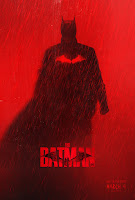
Impressions of The Batman
Scott D. Parker
As I will do for every Batman movie ever made, I saw the new Batman movie on opening day. Lifelong fan of the character than I am, I have thoughts.
There will be spoilers.
Thirty-three years ago, we got a dark and brooding Batman in the form of Michael Keaton. Turns out, it wasn’t so dark, but holy cow was it at the time. Then after a more bright series in the 1990s, we got a darker, broodier Batman in Christian Bale. Then we got Ben Affleck who was dark and broody.
And now we have Robert Pattinson who is uber-broody. Like others have said, he's Emo Batman. And you know what? I'm fine with it. I actually enjoyed the film quite a bit, all three hours of it. And my middle-aged bladder was able to make it through the entire film without compelling me to run to the bathroom. Why? Because I didn't drink a lot of water. But mostly because the movie was rather compelling.
The Voice - Kevin Conroy is all but the definitive Batman for me when it comes to how he does the voice of Bruce Wayne and Batman. Bale's gruff growl became distracting and I particularly appreciated Affleck's voice modulator. Pattinson's low, non-gruff voice worked for me.
The Suit - A fully functional, bulletproof body armor bat suit. I loved the collar. The cowl was also well done, showing all the scrapes he's endured. And I liked that they acknowledged he wears black makeup around the eyes. I loved the gauntlets that could be deployed at a moment's notice. And the use of the taser. The bionic contact lens was a nice touch.
Jeffrey Wright - Can we just get a TV show with him as Gordon? Really, really liked how he stood up for Batman from the jump. We even got a few of the bewildered Gordon moments like when he looks back and Batman's gone.
The Police - Really liked how the cops go from disliking Batman to grudging acceptance. And that scene when Batman and Gordon walk Falcone out and they see all the good cops? Wonderful.
Colin Farrell/The Penguin - Completely could not see Farrell in the makeup. But I really liked his ferocity with the character. Sure, it's a little on the Deniro side of things but Oz is a crime lieutenant. It's was fun.
Zoe Kravitz/Selina Kyle - Her action scenes were fantastic with her multiple kicks per strike. I liked her one-track mind to help find then avenge her friend. And she had some of the few funny parts in the movie.
Paul Dano/The Riddler - Going into the theater, I could not have picked Dano out of a lineup. And I so liked that his visual style was basically a geek. A genius geek, but just a normal guy on whom the world had shat on for years. His monologue in the jail cell was pretty darn fun.
The Riddler's Big Plan - I so love movies when the villain is 25 steps ahead of the hero, and this movie had that in spades.
Batman as Detective - Very, very nice to have a movie like this. Yeah, we've had the big explosion version of the character so why not basically have a PI solving riddles and crimes who just happens to wear a bat-suit rather than a trench coat and fedora. T'was nifty that Alfred helped out with that.
The Fight in the Dark - Maybe 30 seconds, but holy cow, was that sequence awesome. One of the best in all of Bat-movie history. I'd bet money that director/writer Matt Reeves was inspired by the hallway sequence with Darth Vader in Rogue One.
The Finale/Mist Scene - As soon as Batman exploded that fire extinguisher and created a cloud of mist, I knew he was going to jump out of it. Fantastic visual.
And a child shall lead - When Batman, with red flare in hand, goes to help the mayor-elect and others get out of the flooded arena, I so loved that it was the young boy who was the first to take Batman's offer of help. The boy recognized the hero that Batman was and showed the way.
The Ending Speech - I appreciated the mirror version of Gordon's closing speech in 2008's The Dark Knight. This Batman, for all his mopiness, recognizes the need for hope in Gotham. That is an intriguing plot thread to open.
The Mood - I'll admit I was a tad leery of yet another brooding Batman movie, but I was sucked in almost instantly. It was a slow burn movie, punctuated with intense fighting sequences, but I really liked it.
The Music - John Williams's theme to Superman is arguably the greatest super-hero theme every written. Well, not arguably to me. But Danny Elfman's Batman theme is definitely second. When I saw that Michael Giacchino as the composer, I was excited. But a theme like from Williams or Elfman would not have worked in a movie like this. The slow, downbeat score, with the new Batman theme scattered throughout the movie, worked really well. Of particular note was the harp-and-cello piece when Bruce Wayne went into his parents' room.
The Verdict
Up until 2022, there has only been one live-action Batman at a time. That changes this year. Later, when we get The Flash movie, veteran Batman Michael Keaton returns and we'll a second live-action Batman, even if it is a return of an old favorite. That's a good thing, because if you don't like the mopey Batman, just wait. Or watch other versions.
Here's the thing: in the summer of 2008, we got one of the best Batman movies ever in The Dark Knight. Later that fall, we got the equally fun and light-hearted animated series Batman: The Brave and the Bold. Boy did I love that series. And I also liked that year's epic Batman movie. I can appreciate both of them because there is room for Batman to be interpreted in different ways.
This is Matt Reeves's interpretation of 80 years of Bat-stories and the character and situations. As much as I love the brightness of the Marvel movies, Batman works well in this kind of story. Like I mentioned at the top of this post, I was a little leery/weary of broody Batman.
But Reeves's story, direction, and cinematography as well as Pattinson's performance won me over. It did for my wife as well. (Note: she is not a super-hero film fan but loved Bale's Batman, especially The Dark Knight, perhaps the only super-hero movie that she'll start to watch if she runs across it on TV.)
I thoroughly enjoyed this movie and look forward to seeing it again.
Saturday, June 27, 2020
Three Cheers for an Indie: James D. F. Hannah Wins the Shamus
Scott D. Parker
I read Jeff Pierce’s wonderful blog, The Rap Sheet, everyday. Y’all read that, don’t you? I mean, he’s nothing less that one of the most comprehensive sources of the goings on in the crime fiction world. His site should definitely be on your daily reading list.
On Thursday, he posted the winners of the 2020 Shamus Awards. They are sponsored by the Private Eye Writers of America, a group started by prolific author Robert J. Randisi way back in 1981.
I always enjoy awards season when finalists and winners are announced because it gives me new books to add to the never-ending TBR pile. On Jeff’s post, he also lists the publishers of the books.
In the Best Original Private Eye Paperback category, the winning book is BEHIND THE WALL OF SLEEP, by James D.F. Hannah. I know the author and now he gets to put Shamus Award winning author behind his name. This is a great win for Hannah, but what I zeroed in on was the listed publisher: Self-published.
Yes, an indie writer won a major award!
I sent a text to Hannah and asked the question: to the best of your knowledge, are you first indie writer to win a major award? The answer was a resounding yes.
I ended up peppering him last night with a few more questions.
He has a day job. He works in government, public relations department. BEHIND THE WALL OF SLEEP is the fifth novel in his Henry Malone series. He has a spiffy cover and I asked him if he hired a designer. Actually, with his design background in the newspaper business, he created the cover himself. He quickly said it wasn’t something he’d recommend for most folks.
James D. F. Hannah is a pen name. His real name is pretty much out in the world. About the pen name, he wrote this: “The pen name came around because I’ve always jokingly said that I never wanted to see my name attached to a one-star review on Amazon.” If you glance at his Amazon author page, you’ll see he’s in no danger of any one-star review. But, he continued, his pen name contains his children’s names. As a dad, I love this.
Finally, I asked the big question: why indie?
His answer:
I wasn’t sure I could find a publisher interested in publishing what’s hoped were these funny redneck PI novels. Also, I wanted to be able to tell the stories the way I wanted to do it. Now do I necessarily think it was the best way to go? Probably not. But I’ve gotten to write these books and stay true to my own voice. That’s not to say I wouldn’t go with a publisher and adapt because I would. End of day, it’s always about getting to tell the story, and hoping others will like them.
Saturday, April 21, 2018
Saying Hello to Travis McGee with The Deep Blue Good-by
Scott D. Parker
Travis McGee. His name is legendary in the annals of detective fiction, yet I had never read a single word about him. But his presence was certainly felt. Most importantly, I knew he lived in Florida (now I know the city: Fort Lauderdale) and his house was a boat: the Busted Flush. Much like Han Solo (er, the other way around, actually), McGee won the Flush in a poker game. I knew he wasn’t one of those licensed PIs in other books. Heck, he wasn’t even a PI. He considered himself a “salvage consultant.” He was just a guy who would take a job whenever his funds ran low. His standard procedure was to take a job and receive half of whatever was recovered as his fee. All of this I knew. What I didn’t expect was the type of story author John D. MacDonald crafted.
In this first tale, McGee is asked by Chookie McCall, a dancer friend (and owner of a perfect name in a novel like this) if he might have a listen to the story of another dancer, a Catherine Kerr. Cathy has lost something and McGee agrees. What he learns is that her son’s father walked out on her and Cathy’s had to give her son to her sister while she struggles to make ends meet. Moreover, the poor girl’s still torn over another loss: that of Junior Allen, a man who knew Cathy’s now-dead father from back in World War II. Allen ingratiated himself into Cathy’s life, but all he really seemed to do was look for something. Cathy never knew what, but one day, Allen left town only to return, this time with obvious wealth. He takes up with another woman, Lois Atkinson, likely for her money, too. Then, Allen again leaves.
Private detectives (yeah, I know McGee isn’t one but bear with me) have often been classified as knights errant, men of honor and character who stand against the march of time and culture. My reading of hard-boiled fiction isn’t wide, but man, does McGee fit this description. It doesn’t take much to convince McGee to look into Allen and follow his trail from Florida to New York to Texas and back to Florida. I don’t think there’s a character in this book that isn’t affected by the events as McGee lays them out in first person. One of the more surprising aspects was McGee’s relationship with Lois. When he meets her, she’s almost lost her mind and is in a deep state of terror. Junior Allen thoroughly corrupted her, taking her for all she was worth, and casting her aside like garbage. McGee’s tender and patient actions in this middle part threw me a curveball. It just wasn’t what I expected…and that’s a good thing. It made the listening (excellent narration by Robert Petkoff*) engrossing.
The ending threw me for a loop as well. Not going to detail it here, but if the middle was unexpected, the ending was quite different than I had anticipated.
I really enjoyed this novel. It’s hard-boiled with serious tinges of noir. There is violence in the fight scenes and MacDonald writes them with clear-eyed prose that does nothing to glorify anything. The asides McGee tells us about his views of the world and they are spot on for the time period. This book was published in March 1964, barely half a year after Kennedy was assassinated. Many historians, including myself, see that moment as turning point in history, but author MacDonald clearly had his fingers on the pulse of the country and he already knew America was changing.
*A quick note about the narrator. Robert Petkoff was the second narrator for the Richard Castle novels. I adore those novels and Petkoff really nailed the whimsical vibe of not only “Richard Castle” the author but Nathan Fillion the actor. It took me a little bit to get my head to discard “This is Castle’s voice!” but once I did, Petkoff wholly embodied the sometimes cynical Travis McGee. Petkoff has narrated all 21 McGee novels. This makes me so happy as I’m looking forward to experiencing the cases of Travis McGee with Petkoff as the voice.
Wednesday, July 23, 2014
Twenty Questions with Dana King
I'm pleased to host Dana at Do Some Damage this week. Take it away!:
I run a regular feature on my blog, One Bite at a Time, called Twenty Questions, where I get to grill authors about their newest books, and writing in general. Holly was kind enough to submit to one when Mistress of Fortune was released, before performing her due diligence on what she was getting into. When I asked about possibly pinch-hitting on Do Some Damage to promote A Small Sacrifice, Holly showed she has a long memory and thought it would be great fun to make me answer all the questions I made her answer. So, if you don’t like this, it’s her fault.
Holly West: Tell us about A Small Sacrifice.
Dana King: It’s a story about a Chicago PI named Nick Forte, who is hired by Shirley Mitchell to clear her son’s name. Doug is assumed by everyone to have killed his five-year-old son, Justin, a year ago, but the police have butchered the crime scene and there’s not enough proof for an arrest. Forte is about convinced Doug did it, too, until something happens that turns the whole investigation around.
HW: Where did you get this idea, and what made it worth developing for you? (Notice I didn’t ask “Where do you get your ideas?” I was careful to ask where you got this idea.)
DK: The idea came to me when John and Patsy Ramsey were on television almost every night, talking about their daughter’s murder. Just about everyone assumed they killed the girl, and were lying, so much so “those lying” seemed to have become part of their names. (As in, “Did you see those lying Ramseys on TV last night?”) I got to wondering, what if they’re innocent, but have to lie because the truth is even worse? From that point forward, I stopped watching any interviews or reading anything about them. I wanted the story to have as little to do with the facts as possible, beyond the original germ of the idea.
HW: How long did it take to write A Small Sacrifice, start to finish?
DK: A little over a year of actual writing. I went back a couple of years later for some changes when an agent showed interest, and did a little polishing before I released it as an e-book last year. From first draft of Chapter One to final e-book file took about twelve years.
HW: What’s the back story on the main character or characters?
DK: Nick Forte is a former musician, teacher, and cop, now turned private investigator. He’s a divorced father who adores his daughter and is constantly aware of the things he can’t do for her because they don’t live together anymore. This is a large part of how Shirley Mitchell is able to get him to try to prove a negative: she guilts him into it. He has trouble sustaining relationships with women because he doesn’t want to have more children, worried his daughter, Caroline, will wonder if he loves the kids he lives with more than he loves her. He’s better at doing what he has to do than he thinks he is, but the violence he encounters as this case unfolds is more than he bargained for.
HW: In what time and place is A Small Sacrifice set? How important is the setting to the book as a whole?
DK: Today, or recent times, in Chicago and the northern suburbs. Lake City is a stand-in for any number of affluent communities north of the city. I worked hard to make Chicago a part of the story, but, to be honest, there were a number of cities I could have picked and probably made things work just as well. I was living in Chicago at the time and loved it, so it was the logical place to set the story. Now I associate Forte so closely with Chicago, I can’t bring myself to move him, though I’ve considered it from time to time.

HW: How did A Small Sacrifice come to be published?
DK: It had an agent at one time, and seemed to be very close to a sale, but things never quite worked
out. By the time all was said and done, I had a few more Forte stories the agent wasn’t interested in, since this one didn’t; sell, and she wasn’t interested in the standalone I’d written next. I left Forte in the drawer for several years until he made a well-received guest appearance in my first contracted book, Grind Joint. I thought I’d see if people might be interested in more of him, so I published A Small Sacrifice myself, straight to e-book on Amazon.
HW: What kinds of stories do you like to read? Who are your favorite authors, in or out of that area?
DK: Mostly crime fiction. Almost all of everything else I read is non-fiction, primarily history and true crime. I kept trying to broaden my fiction horizons, but found the stories I liked, those that spoke to me best about conditions in the world today, were crime stories at some level. I also like tightly-written prose, and most crime fiction writers keep things to the point. There is often an understated brand of eloquence, but it’s rare to see a crime writer write a beautiful sentence for the sake of writing a beautiful sentence. It has to serve a purpose. Good crime writers seem better at killing their darlings than a lot of mainstream or literary writers.
Favorites? Wow, so many I’ve actually created a spreadsheet to keep of track of who I want to be sure to read, so I get to them in turn. Of the big dogs, my current favorites are Robert Crais and Dennis Lehane. Tim Hallinan and Declan Hughes are great writers whose work I never miss. Charlie Stella is the Godfather of mob fiction, for good reason. Most of what I read are writers who are not quite broken out yet, people like Declan Burke, Adrian McKinty, John McFetridge. Terrence McCauley is doing great things with Depression and Prohibition-era stories. Tim O’Mara is about to become a best selling writer, if he isn’t already. Scott Phillips is a genius. There are at least twenty others in the regular rotation, and I apologize for not listing everyone.
HW: Who are your greatest influences?
DK: So far as getting me going, the usual suspects: Chandler, Leonard, McBain. George V. Higgins after I discovered The Friends of Eddie Coyle, which I think might be the greatest crime fiction novel ever written. (That, or The Maltese Falcon.) Reviewers tend to cite Leonard and Higgins—which is immensely flattering—though one reviewer said he found elements of James Ellroy, which is also flattering, as I’m a huge fan and wish I wrote more like him, Frankly, I don’t see him in my own work.
HW: Do you outline or fly by the seat of you pants? Do you even wear pants when you write?
DK: Outline. Always. It’s not a real detailed outline, maybe a sentence or paragraph about each chapter, unless a scene grows organically in my mind before it’s time to write it, then the notes for that chapter can get pretty long. As a rule, though, it’s just enough so I know what has to happen. Everything else I make up as I type, always while wearing pants. Well, at least boxers.
HW: Give us an idea of your process. Do you edit as you go? Throw anything into a first draft knowing the hard work is in the revisions? Something in between?
DK: My first drafts sometimes almost read like screenplays. I’m a dialog-heavy writer as it is, and if it’s flowing, I’m acting out the scene while trying to transcribe what’s going on. The next day I’ll go back and tidy things up before starting on what’s new, to get me back in the mood I was in when I left off. Once the first draft is done, I’ll let it sit for a while, then do usually three more drafts: one to add and remove things that will turn a series of chapters into a coherent story; one to add the little touches that make books fun to read; and one anal and OCD three-step process to get everything just as I want it.
HW: If you could give a novice writer a single piece of advice, what would it be?
DK: Have a vision for your writing. Raymond Chandler once said, “Don't ever write anything you don't like yourself and if you do like it, don't take anyone's advice about changing it. They just don't know.” (I’ll use a Chandler quote at the drop of a hat, even if I have to drop it myself.) It’s not pessimism to note the vast majority of those who actually get a novel published—in excess of 90%--will never be more than a blip on the public consciousness, if that. Would you rather that be because you took your best shot and it didn’t work out, or because someone else told you to try something, or to do it their way, and it didn’t work, and now you’ll never know if your original idea would have? Then you can’t find out because whatever influences you accepted have changed you permanently.
HW: Favorite activity when you’re not reading or writing.
DK: Hanging with The Sole Heir, but she’s 23 now and about to start grad school, so I don’t get as much chance as I used to. Spending time with The Beloved Spouse, reading, watching the Pirates and Penguins.
HW: Which do you take to bed at night, the money earned or the good review?
DK: Good reviews, which is good, as I’m not making much money. That’s not a complaint—I made peace with that aspect of the writing business long ago—but I guess what I mean is I get a great deal of satisfaction when I see people I respect “get” what I was going after in a book. That keeps me going, to be spoken of as a peer by those I consider to be my betters, as least as writing goes. It’s also a lot of fun, now that reviews are coming in from complete strangers. That’s immensely gratifying, to know someone has invested their most finite resource—time—and think I made it worth their while.
HW: Would you stop writing if someone paid you enough money so you’d never have to work again, on the condition you could also never write again?
DK: I was a real prick when I came up with this one, wasn’t I? Actually, I think this was suggested by a commenter on my blog, after I’d asked for suggestions.
My answer will probably appall a lot of people, but, yes, I would quit under those circumstances, though I’d have to have the agreement in writing and the money in escrow. As much as I said I enjoy writing above—and I do dearly enjoy it—it is not the defining feature of my life. There are plenty of things I’d find to do if I had the time in which to do them, which I would if I didn’t have to work. I’d miss writing, but I had to give up being a musician, too, which was the only things I ever really wanted to do, and it didn’t kill me.
HW: If you were just starting out, which would you prefer: 1. Form your own indie publishing house and put your work out in paper and e-book yourself? 2. Go with a small or medium traditional house that offers very little or no advance, a royalty that is only a fraction of what you'd get on your own, and also makes no promise of any type of publicity push, keeping in mind that you also will lose the publishing rights for a period, sometimes indefinitely? 3. Go with a Big Six or legacy publisher that offers a larger advance, legitimate review possibilities, entrance to industry literary awards, and exposure on the shelves of brick and mortar stores. Pick one and say why.
DK: I’ve tried all three, and, given my place right now, I think Option 2, though any can work given the right breaks. Option 1 works best for those who already have a foothold on the public consciousness, or are willing to work twenty hours a day on marketing. And are good at it. And write well enough for the marketing to matter. Option 3 can leave you in the cold if the big house doesn’t think you’ll be one of their breakouts, and the blemish on the record will be yours, not theirs. I think Option 2 leaves the best opportunity for a partnership with people who know the business end, though, of course, even there the match has to be right.
HW: Beer, mixed drinks, or hard liquor?
DK: Beer. My favorites run in cycles. Right now it’s Bass Ale, though I’m sure Foster’s and Heineken will get their turns again. Sam Adams when I’m in the mood.
HW: Baseball or football?
DK: Baseball is the single greatest thing ever devised by the human mind.
HW: What question have you always wanted an interviewer to ask, but they never do?
DK: That one.
HW: What’s the answer?
DK: “That one.” (I’m sorry, I stole that from Todd Robinson’s interview, but it’s such a good answer it ruined me for all time after I read it.)
HW: What are you working on now?
DK: Summer is when I put new work on hiatus, though I am polishing another Nick Forte novel so it’s ready for e-book formatting, or for the agent. In September I’ll start work on the edits for the fourth book in my Penns River series, currently laboring under the clever title of PR4.
And there you have it. Thank you so much, Dana, for taking the time to answer your own questions. Now you know how it feels. ;-)

Thursday, September 23, 2010
HEY... Slacker... Get A JOB!!!!
The Private Investigator is dead.
About 3 years ago, I got into one of those online arguments where no one is ever right, about whether or not the private eye is dead. WHEN ONE MAN DIES was about to be released and I had a stake in the subject. Of course, I argued the PI wasn't dead.
I may have been wrong.
Sort of.
What was the last best breakout traditional PI series? Dennis Lehane? Laura Lippman? Robert Crais?
It seems the traditional PI is fading and being replaced with another kind of PI. The slacker PI. Don Winslow's THE DAWN PATROL, Huston's MYSTIC ARTS, and TERRIERS are all slacker PIs. Guys who really don't want to be PIs but need a way to pay the bills. They'd rather be hanging on the beach or drinking a beer or cleaning up dead guy parts than solving cases.
But the case falls in their lap and they're drawn into it. Finally, they're in so deep they have no choice but to follow through.
I love the idea. It's the same, but different. No longer is the PI there was wants to be the shining white knight, instead it's morally ambiguous character who has no choice, but to do well. I feel it adds to the suspense. Will the PI do what's right and solve the case? Or will things get so bad he'll just walk away.
It also adds a comic flare beyond the typical wisecracking. The PIs have friends who are just as bizarre as the PI themselves. Gone are the psycho sidekick, and hello are friends who are willing to joke their way through the case.
The PI is fun again.
There are some very good traditional PI series still out there. Chercover, Michael Harvey, our own Mr. MacLean... well worth checking out.
But it seems the PI is changing again. And that's okay. It started out with a man doing a job. Chandler made him a white knight. MacDonald pushed their further, a man with a social conscience. Parker made him a family man. In the late 90s, PI novels became thrillers.
And now we're slacking.
The PI series is dead.
Nahhhh, he's just resting. Maybe he'll come out. If he feels like it. When the tide rolls out.
I think.
Maybe tomorrow.
Ehhhhh... okay.
Long live the PI series.