Showing posts with label History. Show all posts

Saturday, January 25, 2025

The JFK Conspiracy Few Know About is a Riveting Thriller You Won't Believe is True

By

Scott D. Parker

As a trained historian, I pride myself on having in-depth knowledge on certain topics of history and a general sense of a wide range of other topics. This book showcased an event I never knew about.

When I saw the title of Brad Meltzer and Josh Mensch’s new book, The JFK Conspiracy: The Secret Plot to Kill Kennedy―and Why It Failed, I’ll admit it threw me. Was this a heretofore unknown account of that horrible day in 1963? Not at all. This is a retelling of another attempt on JFK’s life, this time in the weeks right after Election Day 1960.

What? How did I miss this story in all of my study of American and presidential history? Not sure. I knew about the attempt on Abraham Lincoln’s life as he made his way to the Washington DC in 1861 (see Meltzer and Mensch’s second book). I also knew about the attempted assassination of Franklin Roosevelt in 1933, and even the failed attempts on Harry Truman and Gerald Ford.  But Kennedy?

Absolutely.

I’ll admit: I could try my hand at describing this book, but in this case, I’m going to let their words speak for themselves:

On December 11, 1960, shortly after Kennedy’s election and before his inauguration, a retired postal worker named Richard Pavlick waited in his car―a parked Buick―on a quiet street in Palm Beach, Florida. Pavlick knew the president-elect’s schedule. He knew when Kennedy would leave his house. He knew where Kennedy was going. From there, Pavlick had a simple plan―one that could’ve changed the course of history.


As they have done in their previous conspiracy books, Meltzer and Mensch use present tense as their prose of choice. It provides the book with an urgent momentum, especially considering the vast majority of readers (like me!) don't know the story and are breathlessly turning the pages to find out what happens next. And why what Pavlick wanted to do never happened

I mention "turning pages" but with this book, as I have with all the conspiracy books, I opt for the audio. Why? Because the great Scott Brick narrates this book. By far my favorite narrator, Brick puts special emphasis on certain words that have the effect of drawing you even more into the story.

Jackie Kennedy is Nearly the Star of This Book

Having just lived through our own contemporary presidential transition, I found myself eating up all the little nuggets of history about the transition from the Eisenhower Administration to Kennedy's. Key in these few weeks is Jackie Kennedy, the pregnant wife of the president-elect.

Meltzer and Mensch describe her health, the intricacies of what needs to be done--and what is expected by society and tradition--her budding friendship with Clint Hill, her Secret Service agent, and the birth of John Jr. during Thanksgiving week. I made a point not to jump on the internet and look up Clint Hill and read his story, but I knew he was the agent who jumped on the back of the convertible in 1963. I found myself loving every moment about Jackie Kennedy in this book, and even wanted the two authors to continue past the timeframe of their book.

The Final Chapter: Its Vision and Mandate

Meltzer and Mensch do conclude their book, recounting the events of the successful assassination in 1963. It bookends the opening which recounts Kennedy's heroic efforts in 1943 on PT-109. They've taken us through the transition, described the characteristics and foibles of JFK, Jackie, and others, and delivered a stark yet empowering conclusion.

Life is messy. Human beings are messy and laced with contradictions. Kennedy's soaring rhetoric can fill our hearts with pride even though we know he could be petty and cruel to those he loved. But that's everyone, right? We're all human. We're all imperfect. We all have flaws, but it's what we do despite of or because of those flaws that propels us forward. 

The final words Meltzer and Mensch put in their book is actually from President Kennedy himself: 

"All this will not be finished in the first one hundred days. Nor will it be finished in the first one thousand days, nor in the life of this Administration, nor even perhaps in our lifetime on this planet. 

But let us begin."

Saturday, April 20, 2024

History Comes Alive With The Lincoln Conspiracy

by

Scott D. Parker

(To commemorate the Apple TV series, Manhunt (the story of the search for John Wilkes Booth and his co-conspirators), here is a review (from 2020) of a book that looks at the first attempt on Lincoln's life.)

There's a moment in The Lincoln Conspiracy: The Secret Plot to Killed America's 16th President - and Why It Failed where the President-elect hears dire warnings from two independent sources that his life is in danger and he takes action. He agrees to sneak out of a pre-Inauguration Day party in Harrisburg, Pennsylvania, don a disguise, and be whisked away by train, all in an effort to thwart the plot to kill him in Baltimore. That moment consists of me breathlessly wondering: Is he gonna make it?

It's been 155 years since his death. There's a giant statue of President Lincoln in Washington, He's on the penny. He's one of the most famous Americans of all time. He might be recognized in nearly every corner of the world here in 2020. Of course he makes it.

But that's the testament to the writing skill of Brad Meltzer and Josh Mensch: they weave the story and the details in such a way as to make history read like a thriller. And dang if this story won't thrill you.

We all know Lincoln's ultimate fate on Good Friday, 1865, but few know of the first plot to kill him before he even took office. I'll admit I learned about it back in grad school at the University of North Texas but it was only in passing. I knew it was foiled and that private detective Allan Pinkerton played a key role. But I never knew the details that fill over 350 pages in this remarkable book.

Much like they did with The First Conspiracy: The Secret Plot to Kill George Washington (2019), Meltzer and Mensch dig deep into the details of this 1861 plan hatched by a cabal of Southern loyalists. They didn't want the president-elect—who carried no slave-holding states in the recent election—to take his place in the White House. At the time, the Republican Party was against the institution of slavery even if Lincoln himself tried to steer a narrow line between free and slave.

Following a tradition dating back to America's first president, Lincoln traveled from his home in Springfield, Illinois, to Washington, D.C., in the weeks leading up to his inauguration. Two things gave the Southerners fuel for their plot: Lincoln's itinerary was published in many papers and the rail-splitter from the west would have to change trains in Baltimore. What made this transfer problematic was not only was Maryland a slave state, but the transfer wasn't merely changing trains in a single station. No, this change from one rail line to another involved literally moving a train car about a mile from one station to the next. In that time, with the expected throngs of Southern sympathizers clogging the streets, the president-elect's life would be in jeopardy.

Hired by one of the railroad men to protect threats against the railroad, Pinkerton and one of his agents, Kate Warne, uncovered the real plot. It was then Pinkerton urged Lincoln to change his plans. The new president demurred until a fateful night when word of the plot arrived from his recent rival and future Secretary of State, William Seward. Convinced of the threat, Lincoln finally allowed himself to be disguised and sneak into the nation's capital under the cover of darkness.

Like they did with their Washington book, Meltzer and Mensch write their prose in the present tense. It gives the story an immediacy, a will-he or won't-he vibe that's pretty darn exciting. Often, they'll recount a scene and then cut to a contemporary scene in another part of the country. You really get a bird's eye view of the whole situation.

If you are a fan of audiobook, preeminent narrator, Scott Brick, reads the book. He could read the phonebook and I'd pay to hear it. He narrates everything he does so well, and I especially like the timbre of his voice as he reaches the end of the book and reads the last lines from Meltzer and Mensch.

History isn't just names and dates, laws and wars, pop culture and events. It is people, real people, living their lives and making decisions based on the best knowledge they have at any given time. Some decisions are momentous: the outcome of the 1861 election, the secession of the Southern states, the foiled assassination in 1861 and the successful one four years later. This book peels away some of the veneer Lincoln now lives with in the American imagination in the 155 years since his death, showing us a real guy, beset by personal and national tragedy, who is doing the best he can. Ditto for Pinkerton, Warne, and the Southerners.

Books like these breathe life into history, and as a historian, we need more books like this so folks in the 21st Century can be entertained and learn a little something along the way.


Highly recommended.

Saturday, November 4, 2023

Now Available: Treason at Hanford: A Harry Truman Mystery

by
Scott D. Parker

Well, this is fun.

After a long gestation period, one of my favorite books has now been published.

What’s It About?


Here’s the short elevator pitch:

During an investigation to ferret out corruption on the home front in World War II, Senator Harry Truman not only finds himself embroiled in the top-secret world of the Manhattan Project, but must also confront the worst act of treason in American history since Benedict Arnold.

Here’s the longer book description:

As a U.S. Senator, Harry Truman led a congressional committee dedicated to ferreting out corruption during World War II with a simple credo: help the country win the war and bring our soldiers home.

In the spring of 1944, Truman receives a series of ominous letters from a lawyer out in Hanford, Washington. His client, a farmer who lost his land when the government confiscated it for a secret project, has been silenced and drafted into the Army.

Truman personally leads this investigation, bringing along former policeman Carl Hancock. Soon after they start looking into things, Truman and Hancock witness a pair of brutally murdered corpses, a town clouded in secrecy, and more than one person who’d prefer to be done with the pesky senator.

But the investigators are tenacious, and in no time, Truman and Hancock not only find themselves embroiled in the top-secret world of the Manhattan Project but also must confront the worst act of treason in American history since Benedict Arnold.
 

Where Can You Find It?


It is currently available as a ebook in all major online stores. For those of y’all who prefer paperbacks, those will be available soon.


Read an Excerpt


Monday
April 17, 1944
4:13 p.m., Pacific War Time

McLeod led Truman and Hancock out into the parking lot after the two travelers had refreshed themselves. As McLeod was getting his keys from his pocket, Truman said, “This is your car?”

“Yes, it is,” McLeod said, a hint of pride in his voice as he admired how the sun shone off the chrome grill and the midnight blue paint. “It’s a 1941 Lincoln Continental, the last major line produced before the war started.” He ran a hand along the roof on the driver’s side. “This baby really purrs, too. Smoothest riding car I’ve ever known.”

He opened the back door behind the driver’s seat and placed both suitcases on the seat. He leaned in and unlocked both passenger doors. The other two men climbed in, Truman in the front. McLeod slid behind the steering wheel and started the engine.

He paused with both hands on the wheel and looked over at Truman. “I deeply appreciate you both coming out here. I know you don’t know me from Adam and I’m not even a constituent. But it’s reached the point where I don’t trust anyone official over in Richland.”

“Well you can trust us,” Truman said, his finger idly tracing the curve of his hat, now on his lap. “Your letters, taken as a whole, amount to something we’ve not encountered. Usually, we get the company cheating the government and hampering the war effort with cheap products. Yours was, well, unnerving.” He glanced back at Hancock. “Carl?”

“It’s certainly unusual, I’ll give you that,” Hancock said. “But I’d like to hear some more details, if you don’t mind.”

“We have the time,” McLeod said, putting the car in gear and backing out of the parking space. “We have a little drive back up to Richland.”

Hancock said, “That reminds me. Why’d you have us meet you here in Oregon? Ain’t there a train station in Richland or some other town near there?”

McLeod looked at him in the rearview mirror. “I think I’m being watched. Those two hoods convinced me of that. I wanted to get out of the spotlight and meet somewhere where no one knows who I am.”

“You give your name to anyone here?” Hancock asked.

“No.” McLeod thought. “Yes, to the ticket man. I introduced myself and asked whether or not your train would be on time. Why, was that wrong?”

“Not necessarily, no, but it might’ve been better if you hadn’t.”

McLeod frowned. “But we’re more than an hour away from Richland. Why would it matter if I gave my name down here? Besides, I live in Seattle so Richland’s not even my hometown.”

“But you’ve been in Richland for a few weeks working for your client.” Truman said, seeing where Hancock was going. “You’re probably known around town, too. You aren’t just some worker. You’re the attorney for a man suing the federal government. Word spreads in small towns when out-of-towners come in. Back in Independence, the whole town would know if so-and-so’s uncle or aunt were visiting almost as soon as they arrived.”

Hancock said, “Mr. McLeod, I’ve come late to this party. I just read your letters this morning. And I don’t know what else you and Harry’ve talked about. Why don’t you fill in some details while we’re driving?”

“I didn’t leave much out of the letters. I had to make a compelling case to get some help out here. As I wrote in the last letter, I’ve gotten to where I don’t trust anyone official out here, even Ira, the local sheriff.” McLeod shook his head. “Ira. That one’s hard to explain. He’s such a straight arrow. Nothing bad ever happened to him except for the loss of his wife back in ’37. My wife and I were at Donald’s house for Christmas and he’d invited Ira over so he wouldn’t be alone on Christmas. He’d even…”

“Why were you at Mr. Bumble’s house for Christmas?” Hancock asked, his gaze never leaving the passing scenery outside his window. “I thought you were just his lawyer.”

McLeod’s face reddened at the question and Truman, half facing McLeod, leaned in closer. “Is there something you’ve left out of your letters, Mr. McLeod?”

“It’s not important, really,” McLeod said, “and it doesn’t have any bearing on my standing as Donald’s attorney.” He eased off the gas as he approached a slow-moving truck carrying crates of apples. “I didn’t think you’d come out here if I wrote it in a letter.”

“What is it, Mr. McLeod?” Truman asked, a bit more firmly.

“Donald, or Donnie, as my wife likes to call him, is my brother-in-law.”

Truman sat back and Hancock let out a little chuckle. “Let me guess. Your sister didn’t want to live on a farm for the rest of her life so she got outta there as fast as she could. ‘Cept that left Mr. Bumble as the only one to tend the farm when dear old mom and dad went to the great orchard in the sky. Then, when the government took the land, your wife got all guilty and ‘persuaded’ you to represent her brother.” The word “persuade” was said in such a way that each man, husbands all, exactly knew the meaning.

McLeod eyed the Texan sitting in his back seat. “That’s about eighty percent correct. How’d you know?”

“Because I was in a similar situation. Me and your wife played the same part and my sister and Mr. Bumble played the other part. ‘Course, in my case, it was the other war. Took me away from the farm and I never went back, despite what I told my sister. She hated me for a while, too. Spent the first Christmas after the war stuck at my podunk apartment in Austin.” Hancock turned from his window and looked at McLeod through the rearview mirror.

“What changed your sister’s mind to invite you back the next time,” McLeod said.

“Oh, she didn’t. After that, I met my future wife and she invited me to celebrate Christmas with her family.” Hancock’s voice sounded like it was far away. “Fact is, it wasn’t  until I went into law enforcement that Edna finally came around.”

McLeod had sat up straighter. “Did you say ‘law enforcement’? Are you a cop?”

Truman jumped in. “I recruited Carl straight out of the sheriff’s office in Texas.” He shifted in his seat so that he faced McLeod. “That’s beside the point, Mr. McLeod. Aside from the many details of dates, times, witnesses, et cetera, is there anything else you need to tell us before we proceed?”

McLeod shook his head then stopped. “Well, as Donald was feeling the heat, I took steps to get him to dictate and sign an affidavit. We actually drove all the way to Walla Walla to see one of my law school buddies we could trust. He’s a county judge out there. We got the affidavit four days before Donald was drafted.”

Truman noticed that Hancock was nodding. “Okay, that’s good,” he said. “Anything else? Anything at all?”

McLeod, finally realizing the fruit truck was not going to turn anytime soon, downshifted the Lincoln and sped past the truck. “No,” said McLeod, settling back into his casual driving position, the open highway before him.

“Tell us about the warehouse where Mr. Bumble worked.”

“Moore Shipping and Warehousing? They have branches all over the Columbia River, from Spokane to the Pacific, as well as Portland and Seattle. I didn’t know anything about them but my firm represented them once, before I was on board. The owner is Edward P. Moore, avid hunter and outdoorsman. Real Hemingway type, if you know what I mean.”

The conversation went on in this manner with Truman and Hancock asking questions about Richland, other people McLeod represented, and other theories the attorney had. Hancock, his eyes rarely leaving the view outside his window, caught the first glimpse of a river he assumed was the Columbia. He also was the first one to see the police lights.

McLeod slowed the car and stopped at the junction of two roads. Both he and Truman saw the police cars, now clearly visible about fifty yards away to their right.

“That the direction we’re going? Hancock asked.

“Yes.”

“Good. Let’s stop and say hello.”


***

There’s more to this excerpt but I didn’t want to make today’s post too long.

Click here to read the rest of the excerpt at the main page on my website.

Click here for a list of the stores where Treason at Hanford is now available.
Saturday, June 3, 2023

FDR, Ted Lasso, and The Value of Kindness

By

Scott D. Parker

Television this week boiled down to two things: the three-part, six-hour FDR documentary on The History Channel and the series finale of Apple TV’s Ted Lasso. In reflecting on both shows, I realized both programs demonstrated how one man can show those around him the value of kindness.

FDR

Based on the works of Doris Kearns Goodwin, “FDR” highlighted the life, career, and presidency of our 32nd president. Privileged from birth, FDR’s life was turned upside down when he contracted polio at age thirty-nine. His incapacitation meant he had to rely on others for nearly everything. It was in the long, slow process of learning to live with polio and paralysis that he deepened his compassion for his fellow Americans. He saw and experienced the toll the disease took on families and he always made sure his fellow polio sufferers were treated with dignity and respect.

It was his compassion that led him to try things on the state government level when he was governor or New York during the early days of the Great Depression and as, as president, he continued the practice. Try something. If it works, great. If it doesn’t, try something else. 

The focus, however, for nearly all that he tried, was the common citizen. He wanted to help people. He felt sympathy for them in their plights—whether an out of work woman in the Depression or a soldier he sent off to war—and he also felt empathy. He could understand because he, too, needed help. It was a trait he literally strived to live up to until his final breath.

Ted Lasso

If you know the show, you know that American football coach Ted Lasso accepts a job coaching an English soccer team. What started out as a fish-out-of-water comedy morphed in a truly unique and special show that had less to do about soccer, er, football, and more to do about, well, helping people.

Ted Lasso the character possesses a wonderfully optimistic view of life. Yes, he hides some of his own personal traumas and mental health issues, but he also seeks help. He finds it not only with a professional therapist but also his group of co-workers, all of whom are guys not used to sharing their feelings. Gradually over the three season, they develop a deep bond of friendship and respect. The players themselves also start to understand there are more important things that just soccer. Even the team owner learns the Ted Lasso lesson.

In a recent podcast interview, Jason Sudeikis, the co-creator and star, said that during the development of the show, one of the themes he wanted the show to have was less snark. There was enough of that in the world and he outwardly wanted to show a different side of humanity. He wanted, in a word, to be kind to viewers. He wanted the various characters to bring out not just sympathy in the viewers but empathy. I happen to think he and the entire crew of the show pulled it off splendidly. 

The Money Quote

It might seem an odd comparison—a real-life president and a fictional TV show—but the themes are common. FDR’s sense of optimism helped guide and comfort the country in a dark time. Ted Lasso’s optimism did so on a weekly basis on TV. I actually kind of laughed when these thoughts merge in my mind late on Wednesday night as I was in the afterglow of Ted Lasso’s series finale.

Ted Lasso is chock full of wonderful quotes. If someone hasn’t already compiled them, it’s something that needs to happen. One in particular really struck me this week. One of Ted Lasso’s group of guys—called the Diamond Dogs—asks if they think people can change. Another character dropped this truth:

“Human beings are never going to be perfect, Roy. But the best we can do is keep asking for help and accepting it when you can. And if you keep on doing that, you’ll always be moving towards better.”

A crucial component to being better is being kind. Not only kind to others, but kind to yourself. It is a lesson that needs to be on an endless repeat in our daily lives. 

Saturday, February 19, 2022

What Are the Famous Books of the 1990s?

by

Scott D. Parker

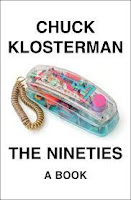
For the past couple of weeks, I’ve been listening to The Nineties by Chuck Klosterman. I’d never heard of him but the book’s cover caught my attention. Couple that with my son’s musical tastes currently residing in the 1990s and I thought why not take a chance with the new book.

It’s a fascinating read and I thoroughly enjoyed. I annotated my audible file with interesting clips and I’ve got the ebook on hold via my library to potentially re-read some passages.


Klosterman focuses on pop culture, politics, TV, music, movies as a means to explain that last decade of the century. It was only by the end that I realized something: I don’t think he mentioned any books. Which got me to thinking about an obvious question:

What are the famous books of the 1990s?


Okay, do something with me. Think about that decade and see if you can recall any titles or authors but do not use the internet. Heck, don’t even look at your bookshelves. Just see if you can come up with any famous books strictly from your memory. I’ll wait.

Okay, so how many did you remember? Truth be told, as I’m writing this, I have not yet turned to Google. I’ve not even turned my eyes to my various bookshelves. In real time, I’ve been thinking about this question, off and on, for about a day, and only in the last few minutes did I remember an author and book that emerged in the 1990s: John Grisham’s The Firm.

I struggled to even remember many books. I went through my mental Stephen King list but could only remember Bag of Bones from 1998. Grisham’s status as the premier writer of the legal thriller instantly brought his other books to my mind. And I think Midnight in the Garden of Good and Evil was a 1990s book. But those were all I can remember.

So, if you’ll excuse me, I’m going to Google now. I suspect I’ll have more than a few “Oh, right! That book!” forehead slaps but such is my memory.

And I’m back, and I’ve slapped my forehead more than once in the category of “How could I have forgotten that book.” Among the titles that slipped my mind are Jurassic Park by Michael Crichton (1990), The Bourne Ultimatum by Robert Ludlum (1990), Truman by David McCullough (1992; my historian cred just went down the tubes), The Bridges of Madison County by Robert James Waller (1993), Men Are from Mars, Women are From Venus by John Gray (1993), Primary Colors by Anonymous [AKA Joe Klein] (1996), and many books by Danielle Steel and Mary Higgins Clark. I used this site to get the Top 10 books per year and not what someone thinks are the important books.

How many did you remember? More than me? That’s good. Heck, I couldn’t even remember all the Stephen King books of that decade. And how many mystery/thrillers did you recall? The presence of Clark and Ludlum tells me that our genres was at least at the table—as was Tom Clancy (more than once) and James Patterson.

Here’s a larger question: how many of those books were influential? How many changed things? I’ll come back to the Truman biography. I was in grad school and in 1992, many of my professors grumbled at McCullough’s book because it was too popular. Like the study of history had to be impenetrable to be good. I, for one, appreciate it when a historian writes a popular enough book that it becomes a bestseller (or a Broadway musical). I saw more history books written in McCullough’s style after 1992 than before.

What is the Nevermind of Books?


What about fiction? Is there a Nirvana moment (there was a Before Nevermind and then there was an After Nevermind) or a Matrix moment (same concept) for books? Historically, I’m guessing something like Agatha Christie or Dashiell Hammett (The Maltese Falcon) or Raymond Chandler’s work (The Big Sleep?) or Mickey Spillane (Mike Hammer’s first book) or Ian Fleming (was he the first huge spy writer?) or Tom Clancy (techno-thriller) or Grisham (legal thriller). I guess Grisham in the 1990s can count as the guy who put legal thrillers back on the map (Erle Stanley Gardner’s Perry Mason was king but I can’t think of any other ones other that Scott Turow’s Presumed Innocent in the interim).

Now, I also admit that I also did a more specific search for mysteries and thrillers in the 1990s. Here is that link. This is likely not an end-all, be-all list, but something is obviously apparent if you scan the list: the large majority of top mystery books in the 1990s involve series characters. I counted twelve out of 100 that were not series related. My guess is that a respective list for the 2000s, the 2010s, the 1980s, will reveal the same thing. Series sell. It’s a testament to a certain type of writer who can publish different stories within a genre and not do a series.

This essay is a thought exercise but also a real question. Were there any truly game-changing books published in the 1990s? Did they influence pop culture? If not, when was the last time a book sat in the middle of pop culture and dominated the national conversation or, at least added to the greater conversation? (I’m mainly talking about fiction because there are certainly non-fiction books that have made their mark on society.)

Saturday, June 5, 2021

Always Try Your Dreams

by
Scott D. Parker

Every year during the first week of June, my mind drifts back to the first week of June 1944. The week leading up to D-Day. Even now, seventy-seven years later, the magnitude of the courage of the men who stormed those beaches never fails to take my breath away.

There have been many books written and documentaries compiled, oral histories recorded and movies filmed. One in particular is Saving Private Ryan which features a grueling opening segment. As horrific as those opening minutes are, you know it’s all just make-believe and that it’s only a taste of what really went down that morning.

Every year, I also take moments to look at the photos of the Allied troops squeezed into those landing crafts. For that one moment when the cameraman snapped his photo, some of those soldiers smiled. Others didn’t. Both tell the same story: the invasion was necessary and they were called on to do it. That was the nature of their birth and world events.

This week, one of those photos really got to me. I honestly can’t find it. It was part of a meme. But in this photo as in so many others, the faces of those men were young. So young. I often wonder how I would have comported myself if history called on me to do what those men did. My son’s nineteen now and he would be called as well. How would he do?

As thankful as we are for the courage of those men, it’s sometimes difficult not to get emotional when thinking of them as individuals. As regular humans on this earth. They, like all of us, had dreams of what they’d do when they got home. Many soldiers returned home. So many did not. Perhaps the cure for cancer was in the brain of one of those men. Maybe a great baseball player or an engineer who could invent something we would now take for granted here in 2021.

But today, I’m talking about creatives. Imagine the books or the songs not created, the paintings and the sculptures, the plays and the actors that never were created. All gone.

The thing is, those men had creative dreams like we do, and then they stormed those beaches to preserve the dreams for all the survivors. For us. For those that’ll come after us.

Perhaps me getting emotional on this commemoration of D-Day is related to my own recent struggles with my writing, my business, and my ideas about the future. I have grand plans and sometimes, I question myself. Why? What’s the point? Who would care?

Well, I care about these plans. I came up with them, after all. They are, to my mind, good and decent ideas. Why not try?

Try because you want to. Try because it could bring you great happiness. Try even though you might fail, but you can learn from that failure. Try because you could reach someone who will need what you create at a precise moment in their lives.

Try because of what happened seventy-seven years ago tomorrow and the men who didn’t get the chance to try.

Try your dreams. Always.

Saturday, June 20, 2020

A Historical Thriller That Will Make You Wonder How It All Turned Out

by
Scott D. Parker

There's a moment in The Lincoln Conspiracy: The Secret Plot to Killed America's 16th President - and Why It Failed where the President-elect hears dire warnings from two independent sources that his life is in danger and he takes action. He agrees to sneak out of a pre-Inauguration Day party in Harrisburg, Pennsylvania, don a disguise, and be whisked away by train, all in an effort to thwart the plot to kill him in Baltimore. That moment consists of me breathlessly wondering: Is he gonna make it?

It's been 155 years since his death. There's a giant statue of President Lincoln in Washington, He's on the penny. He's one of the most famous Americans of all time. He might be recognized in nearly every corner of the world here in 2020. Of course he makes it.

But that's the testament to the writing skill of Brad Meltzer and Josh Mensch: they weave the story and the details in such a way as to make history read like a thriller. And dang if this story won't thrill you.

We all know Lincoln's ultimate fate on Good Friday, 1865, but few know of the first plot to kill him before he even took office. I'll admit I learned about it back in grad school at the University of North Texas but it was only in passing. I knew it was foiled and that private detective Allan Pinkerton played a key role. But I never knew the details that fill over 350 pages in this remarkable book.

Much like they did with The First Conspiracy: The Secret Plot to Kill George Washington (2019), Meltzer and Mensch dig deep into the details of this 1861 plan hatched by a cabal of Southern loyalists. They didn't want the president-elect—who carried no slave-holding states in the recent election—to take his place in the White House. At the time, the Republican Party was against the institution of slavery even if Lincoln himself tried to steer a narrow line between free and slave.

Following a tradition dating back to America's first president, Lincoln traveled from his home in Springville, Illinois, to Washington, D.C., in the weeks leading up to his inauguration. Two things gave the Southerners fuel for their plot: Lincoln's itinerary was published in many papers and the rail-splitter from the west would have to change trains in Baltimore. What made this transfer problematic was not only was Maryland a slave state, but the transfer wasn't merely changing trains in a single station. No, this change from one rail line to another involved literally moving a train car about a mile from one station to the next. In that time, with the expected throngs of Southern sympathizers clogging the streets, the president-elect's life would be in jeopardy.

Hired by one of the railroad men to protect threats against the railroad, Pinkerton and one of his agents, Kate Warne, uncovered the real plot. It was then Pinkerton urged Lincoln to change his plans. The new president demurred until a fateful night when word of the plot arrived from his recent rival and future Secretary of State, William Seward. Convinced of the threat, Lincoln finally allowed himself to be disguised and sneak into the nation's capital under the cover of darkness.

Like they did with their Washington book, Meltzer and Mensch write their prose in the present tense. It gives the story an immediacy, a will-he or won't-he vibe that's pretty darn exciting. Often, they'll recount a scene and then cut to a contemporary scene in another part of the country. You really get a bird's eye view of the whole situation.

If you are a fan of audiobook, preeminent narrator, Scott Brick, reads the book. He could read the phonebook and I'd pay to hear it. He narrates everything he does so well, and I especially like the timbre of his voice as he reaches the end of the book and reads the last lines from Meltzer and Mensch.

History isn't just names and dates, laws and wars, pop culture and events. It is people, real people, living their lives and making decisions based on the best knowledge they have at any given time. Some decisions are momentous: the outcome of the 1861 election, the secession of the Southern states, the foiled assassination in 1861 and the successful one four years later. This book peels away some of the veneer Lincoln now lives with in the American imagination in the 155 years since his death, showing us a real guy, beset by personal and national tragedy, who is doing the best he can. Ditto for Pinkerton, Warne, and the Southerners.

Books like these breathe life into history, and as a historian, we need more books like this so folks in the 21st Century can be entertained and learn a little something along the way.

Highly recommended.

Saturday, May 30, 2020

Year 5 of an Indie Writer: Week 22: Early Momentum Counts

By
Scott D. Parker

Hey! Back to words and not a video. Why? Dunno, really. Just felt like typing some thoughts rather than speaking them.

Keeping a Record


So, Summer 2020 started this week. In case you missed the video in which I talked about the summer writing season, we have a longer-than-normal summer this year which means there are more days and weeks to start and complete projects: 104 days and 15 weeks. Minus the one we just completed.

I woke early on Monday and got back to one of my current stories. One of the best things about earmarking a certain day to begin writing is the eagerness to start. I woke with hardly any effort so excited was I to pick up this Calvin Carter story again.

The enthusiasm continued throughout the work week. Each morning, I started a new habit: wake a 5:00 am and get the writing done before the day job kicks in. I’ll admit: the writing muscles were a tad rusty, but the week went by with new words added to the story and a new transition into Act III. Can’t go wrong there.

I have resurrected an old habit I used to do: keep a word count record per day. Incredibly motivating. Heck, yesterday, I reached a logical conclusion—and the alarm I set to tell me to stop writing and get ready for the day job was sounding—and I realized I had 599 words. Argh! I left it alone and got ready. But it’ll be nice to see those numbers climb.

Another thing that spurs me along is a schedule. If I frequently put myself on a Starting Date, I rarely resort to a schedule. That is, be finished with Project A by a certain date. But I have now. I want to see how it works. If it motivates me to ignore alarms and write even when an alarm’s blaring, I might be onto something.

So, the Summer Writing has kicked off well. How about your writing?

Murder by the Book and Zoom


Did you catch the Facebook Live session yesterday with McKenna Jordan, Gregg Hurwitz, and Michael Connelly? You didn’t? What’s up with that? For nearly an hour, Hurwitz acts as interviewer to Connelly, writer interviewing writer, but with Hurwitz acting as host as well as fan. Excellent interview, including the viewer questions. It’s on Murder by the Book’s Facebook page so go watch.

Grant – The Mini-Series


The big television event of the week was the History Channel’s three-part, six-hour mini-series on Ulysses S. Grant. Loved it. As a historian, I welcome popular histories that can reach a broad audience. I wrote a review about it yesterday in which I give more details. Highly recommended.

The Next Video


I kept up with The Road to The Empire Strikes Back video series this week with Episode VI: The Music. I’ve had a blast with this series and this was one I looked forward to the most (apart from the movie re-watch). Empire ranks in my Top 5 soundtracks of all time.

Saturday, March 28, 2020

Year of an Indie Writer: Week 13 AKA Be a Historian

by
Scott D. Parker

Well, how's everyone doing?

So far, my family has heeded the local directive to stay home and stay safe. It seems like such a small thing, but it's really something giant.

Consider voting. It's our duty and honor to vote, but when we do it, the action itself is small. Here in Houston, we have voting machines that include a scroll wheel. Back in the day, I'd go with my parents into those voting booths with the curtains and the levers. No matter how we do it, casting a vote is a small, simple action on an individual level but can have sweeping power when counted all the other votes.

The same is true for our various stay-at-home orders. My family of three is safe here in the house. The virus--we hope--is outside and we are inside. I've only ventured out last weekend to go to the grocery store and the hardware store. That's it. As of last night, we've eaten take out only twice, both times on Fridays. That's now become the thing we look forward to doing.

We took some extra precautions last night with the food: we used our patio table as a staging area. We emptied the Italian food out of the to-go containers and into clean plates from inside. The plastic containers remained outside until I used a plastic grocery bag to take them to the outside trash can.

I'll admit: it was a little weird going into the restaurant. It was bustling and busy, but I just didn't want to touch anything. I didn't. I had my protocol in place: credit card already removed from my wallet, my own pen, plastic gloves, and a paper bag in the car on which to set the food (and throw away later). Overkill? Nope. Not in this environment.

The New Normal


Speaking of environment, this is still a writing blog and I do have a few writing things I read this week.

Kristine Kathryn Rusch published the second of two business-related post on what she is calling The Waiting Game. In these posts, she discusses how we writers can weather this black swan event and emerge on the other side ready to face the new normal. Because that's what is going to happen: there won't be the old normal. There will only be post-Coronavirus normal. It's best we prepare for it.

Speaking of the new normal, yesterday, writer Kevin Tumlinson published a fantastic series of tweets on his Twitter account (@KevinTumlinson) about the new normal. In his series, he posits that YouTube is well positioned to become the go-to location for on-demand entertainment. Most of us already know this, but not as many writers are there. Our own Beau Johnson does his posts via video on Fridays. Ironically it was something I had considered in 2019, but pushed aside for reasons I can't remember.

Anyway, back to Kevin's thread. Just read it. There is lots of good information in here, and it really makes you think differently about the future.


Be a Historian


The historian in me continues to be fascinated at some of the parallels that 2020 is reflecting. The obvious is the Spanish Flu of 1918-19. Another is The Battle of Britain, 1940, as the folks in England hunkered down every night for nearly three months and endured the constant bombing.

But another is the sacrifice folks made who survived the Great Depression. For most of my 51 years, I looked back at those times with awe and reverence at how everyday citizens survived the greatest economic disaster of the Twentieth Century.

One of the things that lets us know what life was like back in history are personal letters and journals. When I conducted research for my Masters thesis, I studied the 14th Texas Infantry in the Civil War. A key document was a journal of one of the captains. It gave me a first-hand account of camp life, and even provided me with a title.

I encourage everyone to keep records of this time. Write a daily journal, or jot down your thoughts and fears and expectations and the little things you are doing now to get through each day. Save emails in a special folder. I've already got my "Coronovirus" folder in gmail. Write it all down to help you remember.

I used to ask my grandparents what it was like in the Great Depression and World War II. Those questions started in the 1980s, forty years after the fact. Sure, their memories were fine, but imagine if they had kept a journal.

Decades from now, it'll be our grandkids who ask us what it was like to live through 2020 as the Coronavirus inexorably swept across the world. All the events we haven't experienced yet might color our memories. Now, those future memories are real life.

Write them down and remember.

Stay safe, my friends.

Saturday, July 20, 2019

Year of an Indie Writer: Week 29

by
Scott D. Parker

Another really slow week for me, creatively. Finished reviewing the new novel's opening chapters and planned for the next few scenes. After writing into the dark for the previous six novels, I'm doing a hybrid for this new one. Yes, writing into the dark, but there are scenes and guideposts I intend to hit.

There is another new project going on that I've been working on for about a month now, but I don't want to reveal what it is just yet. Why? Because what I'm doing is something I want to do without any or much feedback. Well, that's a bit crappy of a....what's the term when creatives say a thing but never reveal said thing? Can't remember, so let me a bit more direct.

There is a series of movies many in the world have watched and I've never seen. Just last month, I decided to watch them all in order and write reviews about them. I've now watched and reviewed six of the films. My reviews have added up to over 10,000 words so far, and I've still got a few movies left to go. The reason for my comment above about feedback is that these movies have passionate fans and I don't want to get some feedback before I actually watch the movies on my own.

Anyone care to guess?

The Moon Landing at 50


Today is the fiftieth anniversary of the Apollo 11 moon landing! It's been great living in Houston this week and just about every TV station has a special or two. Even the networks are getting in on it. On Tuesday, CBS moved Blood and Treasure up to 8 pm, making me miss it when I tuned in at nine. But there was an Apollo show so I was assuaged.

I finished AMERICAN MOONSHOT by Douglas Brinkley this week. It's a political history of the moon landing through the prism of John Kennedy's evolving philosophy about the validity of the moon shot. Good book. Here's my review.

For those of y'all old enough to remember, what was it like living through that momentous time? What was it like going through your daily life knowing Apollo 11 was flying to the moon? I'd love to hear your reminiscences.

Oh, and if you've not already discovered it, you can follow everything that transpired fifty years ago at https://apolloinrealtime.org/11/. It is exactly what you think it is. Everything that was said back and forth, photos, elapsed time, all in one great website. I joked with a co-worker earlier this week that if you were a space junkie and had some sort of recuperation that involved you laying in bed for days, this would have been a neat way to pass the time.

The actual landing was 20:17 UTC. You'll have to do the math to figure out what you're local time is. For us in Houston and the Central Time Zone, that will be 1:17 pm today. I've already set my alarm on my phone so I can return to the website listed above and scan some TV channels to see if anyone is doing a "live" broadcast. Hope so.

Enjoy the week, and enjoy the moon landing fifty years on.

Saturday, March 24, 2018

A Thriller with a Historical Twist: The Escape Artist by Brad Meltzer

By
Scott D. Parker

Sometimes, a little known fact in history can spark an entire story.
THE ESCAPE ARTIST is the latest novel by Meltzer, a man who has a healthy respect, understanding, and love of history. If you haven’t read any of his books, you might know him from his TV shows “Decoded” and “Lost History.” He first came onto my radar when he wrote “Identity Crisis” for DC Comics, a graphic novel that shows actual death in the DC Universe and how it affects the characters. The ending of that story reverberated through the comics for years after, and it’s still unnerving. I read his Culper Ring Series featuring Beecher White, an archivist at the National Archives. Any author who can make an archivist a hero is a good writer. I earned two degrees in history and while I may have soured on the political aspects of being a professional historian, I still retain the passion. It’s a passion Meltzer shares and it’s why I enjoy his novels. And don’t’ even get me started on his awesome series of kids’ books focusing on heroes for his son and his daughter.

In the weeks leading up to the book’s release, Meltzer’s excitement for THE ESCAPE ARTIST was palpable. His social media and his newsletter (sign up herehttp://bradmeltzer.com/) was filled with anticipation that we would soon meet Nola Brown. She is one of the two protagonists in the new book. Taking a page from lost history, Meltzer made Nola the official painter of the US military. Ever since World War I, the military have hired a painter to capture things a photograph cannot: the anguish of war and what it really means. She doesn’t show up for a little while in the book, but her presence does.

The opening chapter shows a military plane taking off from somewhere in Alaska. Soon thereafter, it crashes, but not before the unnamed female character has a chance to write a last message. The message is received by the other protagonist, Jim “Zig” Zigarowski, a mortician who works at Dover Air Force Base. This base is where all our fallen soldiers arrive after they die in service to our country. Zig and the other morticians help to give families closure by fixing up the dead. When the name “Nola Brown” comes across the big board, Zig personally takes it upon himself to work on her corpse. You see, Nola helped saved the life of Zig’s daughter back when they were Girl Scouts. It doesn’t matter that his daughter died a year after that; Nola gave Zig the extra time, and for that, he’ll pay the debt. But the woman identified as Nola Brown is, in fact, not Nola at all. Zig would know because of a particular physical mark on the real Nola. This unidentified woman’s identity is specifically being targeted so as to wipe away Nola’s existence. What gives Zig even more pause is the note he finds in the most unlikely of places: on a piece of paper in the dead woman’s stomach.  You see, if a person wanted to pass along a message in the seconds before a disaster strikes (like a plane crash), the person can write a note and swallow it. The stomach acids will preserve the paper and the message. It happened in real life on 9/11with one of the people on the plane that crashed into the Pentagon. Meltzer took that unknown piece of history and wove it into a spectacular story.

The narrative is divided into two main POVs: that of Zig and Nola. Often, we get “This is Nola at age sixteen” or “This is Nola at age ten” segments where a particular moment of his life is revealed, giving us a greater understanding of what makes her tick. I listened to the audio with my favorite narrator, Scott Brick, is teamed up with January LaVoy who reads Nola’s parts. The combination is fantastic.

As is the story. There are too many layers to note here without spoiling the fun of this book. In January, I discovered THE SHADOW novels from the 1930s and thoroughly devoured all that were available on Audible. Now, I’ve moved on to the reprints in my library. In breathless prose, Meltzer’s writing is clean and precise as always, delivering a bonanza of excitement that would have been right at home in the heyday of pulp fiction, with a heroine who can stand alongside The Shadow himself.

Wednesday, May 14, 2014

Solving a Different Kind of Mystery

by Holly West

For most of my thirties, I didn't have to work. My husband's position as a video game programmer paid our bills and I was fortunate to have the time to do anything I wanted. During that period, I engaged in various craft-type pursuits--most notably, jewelry making. I flirted with making a career of it, but I just didn't have the business gene required to really make a go of it.

18k gold and tourmaline ring by Holly West, 2008

Truth be told, I was just biding time until I finally decided I was going to get serious about writing fiction.

But besides making jewelry, there was one hobby I had during this time that helped to launch me toward writing. Inspired by an older friend who'd completed a genealogy of his own family, I undertook a year-long research project, during which I wrote detailed genealogies of each side of my family.

I wasn't interested in seeing how many generations I could go back. It didn't matter if I was descended from Julius Ceasar--that sort of thing seemed irrelevant to my own life. My aim was to go back just a hundred years or so and learn my ancestors' stories. Why did my great-great grandparents leave Germany to come to America? What did my great-great-great grandpa do to support his family? Where did they live? Indeed, how did they live?

As it turned out, it was like hunting for buried treasure or solving a mystery. I discovered clues by scouring census reports, ship manifests, military (and even prison) records, and asking questions of my relatives who were still living.

Portion of the 1920 census that includes my great-great grandmother, Mary Ann Rebecca Baker Mansir Yorba.

1) During the depression, my grandpa on my mother's side, the oldest of eight children, drove everyone from Oklahoma to California in an old station wagon with a mattress tied to the top of the car. He got pulled over for speeding on the way.

2) My great-uncle, Jeff Daniel Horn, was left to raise four young children when his wife died unexpectedly. Shortly afterward, he brought the children to my great-grandmother to babysit. That very same night, he was hit by a car and killed, leaving my great-grandmother to raise the kids alongside her own. My guess is that he committed suicide that night, but we'll never really know, will we?

3) Using the 1910 census, I learned that my great-grandparents were employed by the same household before they were married. From this, I guessed that this must've been how they met. My great-grandmother died in 1918 of typhoid, when my grandmother was only five years old, and previously, no one knew this story.

4) My grandpa on my father's side was a bit of a scoundrel. As a youngster, he and his brothers would pull schemes like selling used motor oil as new, calling it "Midnight Oil" to their unsuspecting customers. My short story, ONCE A LOSER, is loosely based on his family. You can download a copy of it free by signing up for my newsletter.

5) When my great-grandpa on my father's side passed away, my uncle remembers going to the house where he'd lived and the relatives were storing beer in the ice under the bed that the body was laid out on.

Perhaps these tidbits are only interesting to me because they involve my own family. But what I learned from writing these genealogies, beyond the facts and figures, is that everyone has stories like these, and that they provide the sparks for larger stories. They are building blocks, if you will, or little details that give depth to our history and to our writing.

I'm curious: have you done any genealogical research? And referring to Kristi's Sunday post, what sorts of real-life stories do you use in your fiction?

Friday, August 26, 2011

Rewriting History

By Russel D McLean

I recently read Shaft, the novel by Ernest Tidyman that of course would also become one of the coolest films ever made.


Shaft is actually a well-written novel, a real fast mover, and just an entertaining read. But one part in particular suck out like a sore thumb. The blatant and rather distaseteful homophobia that sneaks through the novel. At one point, Shaft notices a “queer” checking him out. He gives the guy a wink and says he’ll be at a place in Central Park about one am. The other guy nods excitedly and Shaft leaves the coffee house where he’s been using the phone hoping that the gay man knows karate so that he’ll last ten minutes or so against those muggers. Yeah, he’s setting the guy up just for looking at him funny.

It’s a strange moment in the book, and jarring to someone of my generation. But after reaching the end of the sequence I remembered when the book was written and the prevailing attitudes of the time and place. I accepted it was part of the book’s contemporaneous nature and moved on.

But others might not.

It made me think about the guys who want to remove That Word from Huckleberry Finn or the talk about removing some of the more dated and racist jokes from early episodes of Sitcoms of the seventies.

Really?

Its all about context. Viewing these things with the knowledge that they are historical documents and that time has moved on, you come to gain an understanding about where and when they were written. Your unease at the references allows you to reflect on why these words and ideas are offensive or unsettling.

But what about the children, I hear you cry.

You know what, you can talk openly and frankly to the children about how times have changed and how such ideas are no longer acceptable. You can help your children to understand how times change, how people are capable of change and how society is different now.
I don’t believe its right to change documents as they were written to reflect modern attitudes and ideas. I believe it is better to place the documents in context, to debate, engage with and understand why they say what they say, why they use the ideas and the words that they do.

Because otherwise we are rewriting history, forgetting the past.

And you know what they say about those who forget the past…

Saturday, July 23, 2011

The History of Mystery by Max Allan Collins

by
Scott D. Parker

For folks like me, without the complete knowledge of mystery and crime fiction imprinted on our DNA or who came late to the mystery party, Max Allan Collins is a godsend. He has written The History of Mystery, a nice non-fiction book that traces the origins of crime fiction from the late 1800s until the 2000s. It's a large book, coming in at almost 12 inches square. That's perfect for what this book does best: present old paperback covers and movie art in a large canvas.

Starting with Edgar Allan Poe's C. Auguste Dupin, Collins discusses how the Pinkerton Detective Agency's real exploits gave rise to the dime novels in the 1890s and 1900s. When I read this book, I didn't realize Nick Carter was such an old character. There is, of course, an entire chapter on Sir Arthur Conan Doyle and Sherlock Holmes (natch) until you hit pay dirt: The Pulp Fiction Chapter. Here you've got gorgeous covers of the 1920s and 1930s: True Detective, Argosy, Detective Story Magazine, and, of course, Black Mask. All the main pulp characters are here: The Shadow, The Phantom Detective, The Spider, The Avenger, and others. As a reader, I drooled over all the livid covers of these great magazines. As a writer, I wised they were still being printed.

Dashiell Hammett and Erle Stanley Gardner each get their own sections. Cool and Lam even got an entire two-page spread complete with an original cover from Top of the Heap, the Cool and Lam story reprinted by Hard Case Crime.

Mystery comics are represented here. Besides the obvious Batman and Dick Tracy, there is Perry Mason (seriously?), The Saint, and Collins' own Ms. Tree, among others. Agatha Christie opens a two chapter section on cozier stories, including folks like Father Brown, Encyclopedia Brown, Nancy Drew, and the books of John Dickson Carr. Charlie Chan lands here as does Lillian Jackson Brown's Cat stories.

Once you hit the 1950s and 1960s, this is where paperback characters (Mike Hammer, Shell Scott, etc.) and those wonderfully lurid paperback covers take over. Again, drool commences. The ends with a section on TV detectives (Rockford, Harry-O, Magnum, and Jessica Fletcher) and some modern authors (Estleman, Francis).

All in all, if you want a nice, short (under 200pp) book with lots of fabulous covers and rare artwork, this is a good book to have. It's a coffee table book. Buy it and just set it out as a conversation piece. You'll likely find a whole lot of other people who love this stuff, too.

Comics of the Week: DC's RetroActive 1970s. In a nice addition to throwback summer comics (think DC's Wednesday's Comics from two years ago, a gorgeous piece of neo-nostalgia), the company is putting out a series of one-shots with a particular decade as a theme. Along with the above-the-title tagline, "RetroActive," DC included the logo of said decade (70s, 80s, and 90s) as well as the then-logo of the title character. This week was the 1970s, and we got stories about the Flash, Batman, and Wonder Woman, complete in her white mod suit. Each book has a new story, written in the old style, and a reprinted story from the era. For all the sophistication of modern comic storytelling, there's just something fun about this old stuff.

Saturday, July 24, 2010

The Voice on the Radio

Two of my passions are history and the spoken word. While these things occasionally link up with crime fiction, today’s post won’t be one of them. Here’s your free pass to leave now, if you choose.

Even though I’m a child of television, I love radio. Not just for the music, mind you, but for all the spoken word programming over the years. I adore old time radio programs, with their “visual” storytelling in a non-visual medium. I also love old time radio news programs. Hearing Edward R. Murrow describe the London blitz is sobering enough. You listen to Murrow's broadcast, you realize that pictures were just not needed when he told you how it was.

As an teen in the early 1980s, I became aware of my world through television, books, and, increasingly over the years, through radio news. I’m an NPR junkie. Once I discovered KUHF here in Houston--likely because of the “Star Wars” radio dramatizations (does everything hearken back to Star Wars?)--I was hooked. The news I got from NPR was more in-depth than the network news and it allowed for journalists to channel their inner Murrow as they described the things that they saw but we could not. It's one of my favorite things about radio news, the creative, storytelling aspect. I got to know the voices of the NPR hosts and could identify them within seconds. They became friends and trusted sources of opinion beyond my own.

One of those voices fell silent yesterday. I only knew Daniel Schorr as one of NPR’s senior news analysts. I never knew him from television. His nearly seventy years of experience lent gravitas to topics he discussed. I grew to appreciate his take on the news and found myself making time to listen to him, even if his segment was the only part of a newscast I heard. His Saturday morning discussions with host Scott Simon was a highlight of the week for me. (Plus, he said my name every week and I could almost imagine he was talking to me.) I knew what time of the broadcast they talked and tuned in (if I already wasn’t). Once NPR posted their programs on the internet, I’d seek out Schorr’s take on whatever topic in which I was interested.

For many a citizen, Walter Cronkite was the most trusted voice in America. Again, I am too young for that. If push came to shove, I’d have to say that Tom Brokaw was that guy for me, at least growing up. But Schorr’s voice was something else entirely. It had weight. It had authority. It had occasionally bouts of whimsy, as Schorr, at times, seems to be living his greatest dream come true.

That voice is now gone. I’m just thankful for the many years I got to listen to it. Saturday mornings just won’t be the same.