Showing posts with label George Pelecanos. Show all posts

Monday, September 24, 2018

Breaking Wind at the Crime Fiction Community Clubhouse Meeting

Years ago, Allan Guthrie was reviewing something I'd written and called me out for being melodramatic. Now, that isn't my normal style, but it did make me realize something.

I'm a sucker for melodrama. I cry at Canadian Tire Christmas commercials. Pop some video on Facebook about a person adopting a dog or rescuing a cat and I'm bawling like a baby. Why I don't have stock in Kleenex is beyond me. The emotional stuff gets me every time. When the kids were younger and we'd go to a movie they'd start watching me. "Are you crying?" I was asked.

"NO, I'M NOT CRYING AT TOY STORY III, DAMMIT, SHUT UP!" Of course, I couldn't say that. But it was noted that I was the first one to shed a tear at anything the slightest bit mushy or emotional.

I think a lot of people in crime fiction circles might be surprised at that, because of my reading tastes and my tendency to write characters that are tougher. It's probably stemmed from a degree of self-deprecation; I want to make logical decisions instead of emotionally reacting to things. Want to.

And yet, there are times when emotions get the better of me.

This happens to the best of us. Even people who aren't overly emotional or typically swayed by emotional outbursts or displays. Anyone who has ever felt the need to defend themselves has been feeling something.

And there's been a lot of defensiveness going around lately in the crime fiction community.

This is delicate territory, and my intent isn't to offend anyone. (Except for the people who are racist and/or sexist. I couldn't possible care less about what they think of what I'm about to say.) But... it's an emotional topic. So hopefully, everything comes out as intended. And is taken the same way.

Now, before I really get into the dirt here, this isn't all about Pelecanos. It's about much, much more than women in publishing. Bear with me.

First, something happened at Bouchercon. Now, I wasn't at Bouchercon. However, people who were there, and specifically some who were in the room when this "something" happened have referenced it on social media, including this group blog here.

This means that far more than just the people who went to Bouchercon are aware that there was an incident. 

Prior to Bouchercon there was a push for an anti-harassment policy and some authors made public pledges to be available to anyone who felt harassed or threatened or uncomfortable in any way.

Why mention this? Just to underscore that no community is 100% perfect. Anyone telling you it's all love and happiness inside X community is delusional.

So, to get on with it, Jim Thomsen wrote a piece this weekend about George Pelecanos' latest book. Part of me loathes referencing it, only because Pelecanos needs no extra attention. He's getting profile in the New York Times and elsewhere, and I would rather send a shout out to someone who might actually benefit from gaining readers.

However, Jim's piece is about far more than Pelecanos' book and is well worth the read. It should be a must-read for crime fiction authors and publishers. It cuts to the heart of a lot of issues in the United States, and globally, right now. It touches on problems in the crime fiction community that aren't easy to talk about, either. There are things here that need to be said, and need to be examined. Much of it he says so well already, there's nothing for me to add. However, there are a few points I want to expand on.


[Jim referenced] recent controversy involving Pelecanos, who did a “By The Book” Q&A with The New York Times in which he cited only male authors and their novels as inspirations and recommendations, and took a needless swipe at a female author, Harper Lee. That drew a swift rebuke from author Lauren Groff, and a few female crime-fiction authors. Said M.J. Rose, on Groff’s thread: “(So) damn typical. So many men have similar lists and I’m sick of it.” But, by and large, crickets from the some of the loudest voices in the crime-fiction community, which is often paralyzed by the notion that speaking ill of others is tantamount to exile from publishing (I’ve already accepted that). It’s as if most of the members of the crime-fiction tribe stood silently in the same room, looking fleetingly and self-consciously at one another, faces wrinkled in “who farted?” expressions.
I’m taking aim at the male-driven machine that seems bent on making him into an avatar of the Male Resistance to the Female Takeover of Crime Fiction, in somewhat the same way bad male actors are trying to push their way past #MeToo and back into the spotlight they feel they deserve after all-too-short periods of cultural exile.
As The New Yorker’s Jia Tolentino put it, sardonically: “Women have had their ‘moment,’ their unprecedented time in the spotlight of cultural favor. The gravitational pull of male power is exerting itself, turning our attention back to the place where it has been trained to linger: the hero’s journey of men.”
Well, I certainly had something to say in the wake of all of this. And I'll be blunt. There are people who are often seen as the spokespeople for the genre. They're the ones writing regular articles, maintaining websites that touch on the regular happenings in the genre. They talk author news. They're the ones who are positioned as reporters covering crime fiction.

There are also the loud voices who have usually spoken out about issues relevant to gender and stereotypes in crime fiction that seemed to stay silent. I was watching Twitter for a couple of days, looking to see who would respond. If anyone of any position of real influence within the genre did, other than M.J. Rose, I missed it. (Now, there was more commentary on Facebook. But Facebook has different privacy settings than Twitter. When you say things on Twitter you speak to the masses. Facebook depends person to person... so I can't necessarily cite those as public statements.) On Twitter, the overwhelming majority of the commentary was driven by writers from outside the genre, and it was as though almost everyone within the genre stood shoulder to shoulder to not let anyone know we were all plugging our noses because someone farted in our clubhouse.

This is bigger than just how women in crime fiction are treated. Look, I've read Pelecanos. I've watched episodes of The Wire that he wrote. He's a male-oriented writer. That is neither good nor bad. It just is. I guess I'd say he's a man of his time, and for me, for my personal entertainment, that doesn't really fit my interests currently. I love me some male protagonists (Rebus) but I'm far less interested in men of a certain era who view women a certain way. I'm really interested in the men of the next generation, who have a far more inclusive view of the world and are secure in their masculinity so they aren't threatened by strong women, gay men or anyone else. So bring on those authors and those protagonists. PLEASE.

The thing is, we aren't saying enough about diversity in the genre. Jim said about the crime fiction community that it's


Kellye is quoted as saying, "We need to stop treating diverse writers as a trend and start treating them as the status quo.”

All of this brings me around to the most important question. What can I do to promote inclusion?

This year I have run reviews of books by diverse writers, such as Melissa Tantaquidgeon Zobel, and I've profiled writers such as Chanel Hardy and Willie Davis.

In my own reading, I've been emphasizing works by women and diverse writers. This has included reading works by Willie Davis, Melissa Tantaquidgeon Zobel and Rebecca Roanhorse.

There is still a very long way to go.

The thing is, each and every one of us who is serious about inclusion must make a conscious effort to read diverse writers and to talk about diverse writers. Unfortunately, that puts a certain burden on diverse writers. I have emailed several about doing author features for Toe Six. I only get responses from a fraction of the people I reach out to, across the board, regardless of race or gender. (Women are the hardest group, actually.) Within crime fiction I have a bit less than a 1 in 5 return rate. I expanded to horror and the horror community has a 3 out of 5 return rate. I haven't looked at things in terms of race or gender; however, I am aware that this presents me with a specific challenge. I have to work harder to try to ensure that I am being inclusive... and the trouble is, I only have so much time to devote to this. 

And all y'all who don't have email addresses or ways to contact you? Pffft. I can't even try. So, sometimes I'm hunting down a website or the person on Twitter and they don't allow messages and don't have a public email. And it's not right to call people out on blog comments or Twitter feeds. I don't want to do that, so guess what? I can't even invite you for an interview.

Someone I wanted to email today... isn't getting that email. I wish I could feature them, but I can't. I have an even worse return rate for reaching out through publicists for interviews. It sucks. But I also hate it when people give out my email address without permission. Sometimes it works out fine, but I have an email address on my website that people can use. It isn't my main account but stuff will get to me. Nobody needs to give out my main email address if they have it. I keep things in different places for specific reasons, and my sanity is one of those reasons.

I'm not asking anyone for an author's email address. Even if it's a person who blogs here at DSD. 

Authors, if you don't have a contact form or email system in place, you don't know what you're missing out on. Even if you do have a publicist. I guarantee you. 

I would call on reviewers to focus more on novels that:
  • are written by diverse writers
  • are written by women
  • feature non-white protagonists
  • include LGBTQ characters 
Now, this does put a certain burden on diverse writers, because we can only interview them if they are available. (And like I established, some aren't. Not via email. Not unless you know somebody.) 

However, all of us can make a choice to read more diverse authors and talk about their books.

This isn't about who's at the top of the publishing heap. This isn't about maintaining the status quo. This isn't about accepting the way things are and playing the politics.

This is about the world we want to leave our kids. Do we want to leave them with gender bias and racial stereotypes and exclusion? Or do we want to help usher in a new era of inclusion?

If you are an author or a book-related reporter or editor/publisher and you aren't pushing yourself to read more diverse authors and female authors and books about non-white characters and stories about LGBTQ characters, you are facilitating the current problem in publishing. 

Do we all have the right to read what we like and want to read? Sure. But when this is your business, when you earn bucks from writing or editing or publishing, you are an influencer. You are a person who can shape the industry and the future. Maybe all you do is make someone feel like they belong, or that they have a chance to be published. Maybe all you do is inspire a writer who is black or Indigenous or Hispanic to pick up a pen. It's still something. 

And I'm sorry to break that news to you, but it's a reality. Man, when I started Spinetingler 13+ years ago I just thought about promoting what I loved and sharing what I was passionate about. Eventually, it became clear that there was much more to it. I think one of the first things that really made me aware was an uproar back then about focusing on female writers. And I don't think I took it seriously at all. We did have us some blog spats, back in the day. I recall counting our short story publication numbers by gender and writing about that to someone, or somewhere... I see now I should have treated the issue more seriously than I did.

We will not fix our problems if we don't admit they exist. 

A few months ago, there was an article about how shocked the publishing world was that there were people who didn't live in New York City. There was talk of the scramble to get something published that would interest these peculiar people who'd previously been invisible.

The thing is, as of 2017, 50.8% of the people living in the United States are women. Almost 40% of those people are mixed race or Indigenous, black or Hispanic. 

That means that more than half the country is female and almost half the country identifies as a minority. There is absolutely no way that the overwhelming majority of books in any genre should be primarily written by white men or should be mainly about white men. 

What else can I do?

Obviously, I'm white. I cannot express to you how much I love Middle Eastern and Native American music. There's something in it that calls to my soul, although I have no reason to think that I have any ancestry that is anything but the typical Irish, Scottish, English, French, German mixed bag. I can't change that.

I started searching. Back in April I started an email journey, to find out if there was a directory for Indigenous authors in Canada. Cleo Big Eagle sent me some information and I've continued the journey from there. Now I'm in touch with the HQ Reference Library. I hope to be able to profile more Indigenous authors regularly with the resources they've directed me to.

My writing. My latest book has a protagonist named Moreau who is part white, part Aboriginal. Dana King recently asked me if I was concerned about accusations of cultural appropriation, but as I said to him, "We don't live in androgynous, monochromatic worlds. In order to truly represent society we need to be able to incorporate people with different backgrounds."

What's key is doing this with sensitivity and respect. Moreau's boss is black. Moreau herself faces discrimination and harassment throughout the story, which is intended to show what people actually experience. Some of the stuff I wrote that was directed at her was awful and it bugged me to write it. But I was also really, really pleased when The Masked Reviewer said Moreau was "admirable." 
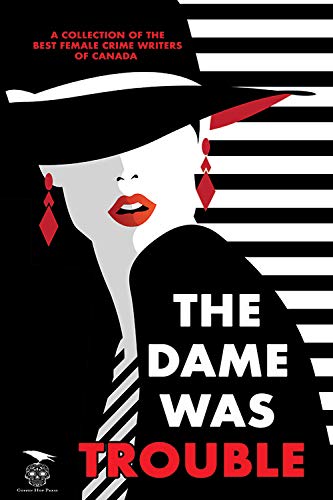

I also wrote a story about a post-op trans woman that was published in The Dame Was Trouble. I wrote it because of a family member who is trans. ("Crossing Jordan by Sandra Ruttan doesn’t feature murder or a shoot-out but does get us inside the head of a trans sex worker as she tries to unsuccessfully kill herself. But it’s not just A Man Called Ove done up in high heels.  It is a story of persistence and strength in the face of misunderstanding, rejection, and violence. A story that will stick with me.")


These are, to me, the greatest compliments I have received as a writer. To have people embrace Moreau as an admirable character, to say, "I look forward to reading future novels about the adventures of Kendall Moreau in the RCMP....  I have confidence in Moreau's ability to handle all the situations that might arise in the course of her career, and Ruttan's ability to portray them." 

That means a lot to me. It's such a small thing, but one can only hope that if people want to spend time with characters who are mixed race that they will welcome diverse writers too. That they will look to the heart of the story. That they will help usher in an era where we aren't just seeing books about white people in white communities. 

I would love to be able to hang a shingle up at Toe Six and say it exclusively focuses on small press, indie and diverse authors. I won't... not any time soon. The only reason is because I'm limited by what returns to me, and if I say that's what I'm about then I am not going to touch anything from big presses. Current limitations aside, there are some up-and-coming authors who are with bigger presses who still can benefit from promotion, too, because they're the small guys swimming in big ponds. But I am going to be putting my emphasis on the small press, indie and diverse authors wherever I can. This year I have read far more books by women and am increasing my numbers of diverse authors.

And I'll be paying a lot more attention to reviews that focus a lot less on the conventional bestseller list and seek out those undiscovered gems that deserve our attention. We have to give our print to what we want to see more of. I'm not always going to succeed, but that's what I'm going to try to do.

Now, about that incident at Bouchercon...

I don't know what happened. I don't need to know. However, I am going to put this out there for the people who do know. Clearly, there's been enough of a ripple effect for some people to feel they needed to address it on social media. And everything I have seen has avoided specifics.

Please. If you were involved or witnessed it, personally go and document the events and keep a record of it.

Why?

The fact that people are aware something happened will lead to gossip and speculation. Like I said, i wasn't even there and I know something big went down. I know what panel it was at. I know some of the people involved.

And my husband and I have had a whole conversation about it.

It begins and ends there and here for us. However, for each person who may know this little tidbit or that supposed fact, there will be stories swirling. This may be a community, but it's a community of associates, some of whom are friendly and some of whom are friends. Make sure you have you account of the facts in case you need it some day. You never know when it may matter to an agent or a publisher or when you may need to address slander that follows in the wake of some drama. I have the kind of mind that connects dots and it's a curse. I have picked up on crazy stuff from small changes to a person's social media account. Stuff my husband was completely oblivious to, and I was proven right. So you do not even want to know what I started thinking as info started coming my way about what happened at Bouchercon. I can only hope I'm wrong.

It makes me very uncomfortable with the idea of attending a convention again. Without understanding what happened it just leaves you to worry that you'll save your vacation money to go to a convention and be attacked when you're on a panel and have a really bad experience. And there are so many other ways I could spend any vacation money I ever have...

The people who need to be paying attention to this are the convention planning committees. Not hte ones who handled this past B'con. The ones who are planning the next one and the one after that. Measures should be put into place that ensure that whatever happened doesn't happen to anyone else in the future.

That involves dialogue. But not publicly. Not on social media. Not with me. With convention organizers.

Here's hoping they're paying attention.

So no, things aren't perfect over in the crime fiction community. It's a real community, filled with real people, which means there are some real problems. But you know what? There are a lot of really great people who are trying to move things in the right direction and things are starting to change for the better. It may be slow, but it's happening. We can celebrate that. We can also see that we still have some work to do, and each of us can ask ourselves what we can do. 

Hopefully all voices - big and small - will start to pull together instead of putting career interests or kissing ass first. Until then it will be baby steps. 

But at least there are steps. Pledge with me. Read more diverse authors. Read more female authors. Read more LGBTQ authors. And talk about their books. The NY Times has the likes of Pelecanos covered. Spread some love to those who have potential and that you want to see still publishing five years from now. 


Thursday, September 3, 2015

The Books That Haunt Us

By Alex Segura

I try not to be too self-promotional in this space, mainly because I think these blog posts shouldn’t serve as hype machines but, you know, share some droplets of knowledge I’ve gained during my relatively new career. That said, I’ve had my books on my mind a lot - in the macro sense. As some of you know, my first novel Silent City is being reissued by Polis Books in March. The following month will see the release of my second novel, Down the Darkest Street. Both books are part of the same series starring washed-up journalist/reticent detective Pete Fernandez.

So, as part of the whole “publishing a book” thing, I have to write new acknowledgements for the Silent City. Doing that got me to thinking about this journey I’m on, and the books that not only got me hooked on reading noir/mystery/crime - but made me want to create it, too.

I was always a reader - whether it was comics, sci-fi, "literary" novels, Sherlock Holmes, what have you. But it wasn’t until my early-to-mid twenties that I got truly tapped into mysteries. I burned through a lot of the classics (though, there are many lost/forgotten classics I need to seek out), like Chandler, Hammett, MacDonald, Highsmith and so on. I was digesting these books as a member of the audience. That said, I very clearly remember a turning point where I went from being a passive reader, enjoying the experience to someone who wanted to do the same thing. To write a book. And while the classic pulps and noir novels certainly helped get me there, it was another batch of books, more contemporary and relatable, that spurred me to take a stab at it myself. I want to talk about a few of them.

I’ve talked about influences on the blog before, so I’ll spare you a grocery list of people I think have played a part in how I write. But I did want to take a minute and write about some of the books that stuck around and still take up real estate in my head, and make up a big chunk of Pete Fernandez’s literary DNA.

I’m not going to do a deep-dive plot description for these - but know that I think each of them is excellent and you should read them all.


A Replacements song in prose form. Shambling, bruised, daring and kinetic, this book crackles with energy and introduces one of my favorite fictional characters ever in Nick Stefanos. Pelecanos has written a ton of great books, but I’ll always have a soft spot for his first three Stefanos novels.


Hands down, one of the creepiest books I’ve ever read. Featuring two compelling protagonists in Pat and Angie and a Boston setting that feels all too real. I loved Lehane’s first PI novel, but this one just blows it out of the water - dangerous, disturbing and the kind of book that keeps you awake.


 I love Tess Monaghan. It’s hard to put into words what a great character she is - charming, flawed, funny, brave and self-aware, unique and more. My favorite part about Tess is she refuses to remain static - and evolves from chapter to chapter. If you haven’t read this series, do yourself a favor and remedy that immediately.


The outlier of Ellroy’s magnificent “L.A. Quartet,” Jazz is pure style and is the kind of book only Ellroy can pull off. While you should read the first three, you don’t have to, and I find myself going back to this weird little closing chapter more often than the earlier installments, though they’re great, too.


The first Harry Bosch novel also seems to be the most noir of the series, which is probably why I like it so much. A little more raw and jagged than future installments, we meet Bosch and learn a bit about his past as it comes back to haunt him during a particularly trying time. Connelly hit it out of the park in his first at bat - supremely impressive.


Miami is a shadowy, sweaty place full of double-crosses, weird characters and a heaping dose of menace. Miami Purity captures it perfectly. The Miami novel I measure all others against. A classic.

I could list books I like/loved/was influenced by for days. But this seems like a good place to stop. Feel free to share your essential, influential reads in the comments below.

Tuesday, October 5, 2010

Exposition? Like Climbing Everest? That Kind Of Exposition?

By Jay Stringer

It seems like it's advice week here at DSD, so I thought I'd wade in with something that's playing on my mind this week. Not that anybody should listen to my advice. Hell, I was the guy telling Warner Brothers to hire Will Ferrell to make the new Superman film. Instead they went with some dude who made a film about watching men, and some other film about naked men fighting in grease.

So if Warners' don't listen to me, there's no reason that you should.

But I'm here today to talk about one of the greatest villains of our time. A character so vile that he appeared in all three Austin Powers movies. Yes, him. Mr Basil Exposition.

The dude is evil, I'm tellin' ya.

No sooner are you sat at your writing station typing away, feeling good about writing the great American word, then Mr Exposition comes and craps all over the page. Prose that should be singing started to stink. Words that should be clean start to mumble. The chapter starts to sink, and it drags the whole start of the book with it.

In no time, you're left with the smoking wreckage of what used to be a laptop and the cracked plaster of what used to be a wall. You are somewhere in the corner, with your pants over your head, trying to turn your internal monologue into internal dialogue.

So how to fix these problems? No, really, tell me, how? I know a few tricks that work for me, but afterwards I'll be interested to hear what works for you.

These tricks work for me and I tentatively suggest there may be something in here that works for you. I also suggest that I will be stating the obvious, because that's what good writing advice always boils down to; shit that you probably already know, if you cut yourself a break and take the pants off your head.

So let me start with the step I have to take before I can slay exposition.

Embrace Exposition.

If you listen to the right kind of advice, they will suggest to you that putting exposition on a page is akin to putting barbecue sauce on a baby. But writing advice always comes down to one thing. It's always about writing well. Sure, Elmore Leonards '10 Rules Of Writing' are great rules. I stick by them as much as I can. But buried away in those rules is the simple idea; "If you can do something well, then to hell with the rules." Lets look at another rule. Never use voiceover in a movie. Hell, has nobody ever seen Goodfellas??

So first and foremost, if you got it, flaunt it. If you can do chunks exposition on a page like nobody else, then go for it. Exposition is not the enemy. Bad writing is the enemy.

We need it during a first draft. That first pass is not the book that the world will see. Hell, it's probably not even the draft that your agent or editor will see. It's the draft that your brain needs to see. That process of throwing 80,000 words onto a page so that you can then go back and turn them into a novel. The plot is not quite formed, the characters are not yet at their devious best. So if you need to throw leaden exposition onto the page to get from A to B, then have at it, and sing while you work, because you is writing. And exposition is important.

Why is exposition so important? Well, Wikipedia, the all-father, has this to say; "The purpose of exposition is to provide some background and inform the readers about the plot, character, setting, and theme.." So, you know, it's that whole story telling thing. It's really just the knack of telling the reader what they need to know, and learning to leave out everything else. So like writers block, the trick is to embrace exposition. To tackle it head on and figure out how to make it work for you.

Dialogue, Dialogue, Dialogue.

All writers have their own crutches. Mine is dialogue. I can do it. Not always very well, and it's all to easy to fall into the trap of writing something that's snappy for the sake of being snappy. Yes, Tarantino, I'm looking at you. If the audience knows it's good dialogue, then it's not good dialogue. Anyway. Point is, if I'm in a whole I know I can use dialogue to get me out of it.

And its true that a lot of exposition anxiety can be resolved through dialogue. You've got your characters at your disposal, you might as well use them. Look at McFet, or Leonard. Look at the Fletch books, which were a huge influence on me for awhile. Characters explain stuff to each other. They debate and discuss. The author is there in the background, somewhere.

But here lies a trap. You have to hold yourself to realism when it comes to dialogue. Two characters who both know something are very unlikely to bring it up in conversation simply for the sake of it. You need to either find a natural way for the information to seep into the dialogue, or find a different way altogether. I love The West Wing as much as the next bod, but Josh was only there for exposition. It was his job to wander through the script telling Donna (the audience) what was going on. If you're Aaron Sorkin, then you can maybe pull it off. If you're anyone else, find another way.

Here are the two things I'm finding key to my writing process at the moment; Honesty and Movement.

Honesty.

Writers need to be damn hard on themselves. It's tempting to treasure every word that you put onto the page. It's your art. It's your jelly baby. It's your rosebud. It's also potentially your enemy. I walk away every now and then, have a drink or a shower, and then come back to the page on a mission to beat the crap out of what I just wrote. Strip away at it, question every word, make everything that's on the page have to earn its place.

The funny thing is, even once every word has justified it's place, the story can still suck. Because now that the words are right, the order might be wrong.

Movement.

I'm cheating here. I see this as two different things, but I'm too lazy to come up with separate titles. The first element is editing. Moving the pieces of the puzzle around. Even after you've done everything else,the dialogue, editing and honesty, you still need to drop a chunk of exposition into the middle of a chapter. And you worry that the readers will spot it a mile off. They probably will, they're a clever bunch. But I find that if I keep moving all the pieces of the chapter around, eventually I find the right shape, and most of what's left falls into place.

And the second part of movement is my simplest, and my current favourite trick. If in doubt, if ever I'm stuck on a chapter with anything at all, I'll start with a movement. (Oi, Weddle, stop snickering.)

If I have to drop in one of those bits of exposition? I'll earn it first. And it can be simple. A character can walk into a room. He can park his car. He can lie on his bed. Any kind of movement, no matter how small, seems to work some magic trick with the readers brain. It gets the story moving.

And it's not just me. I've taken a look around at some other books.

First a couple from our favourite scary man, Allan Guthrie. The opening of his first book, Two Way Split, goes like this;

"Four months and twenty-two days after he stopped taking his medication, Robin Greaves dragged the chair out from under the desk and sat down opposite the private investigator."

Now, that's not the biggest opening ever. No cars were blown up. But it's an opening with a simple trick to it, and it's one that makes you want to read more. It has some fairly big bits of exposition wrapped up in it; it has medication, it has a time frame, it has two character introductions and it tells you roughly what genre of story we're dealing with. But what is the magic trick, if my theory holds any water here? It's the moving of the chair and the sitting down. A simple act of movement right at the top of a chapter (and the book.) By the time you've read this opening, you know a hell of a lot, and you're buying into a scene of two people talking, which will probably be full of exposition. Job done.

Here's another Guthrie, from Savage Night;

"When he opened his sitting room door, the last thing Fraser Savage expected to see was a corpse."

Now you might cry foul here. You might tell me it's the corpse that draws your attention. And yes, you're right. But what is it that eases you into that steady climb of reading the sentence? I'm sure it's the small, simple movement. Something active at the top of the page that gets our brain into gear. Something as simple as opening a door.

And it can get even simpler than that. Here's the opening line from (what I think could be) the best crime novel of the past five years, Drama City, by Pelecanos;

"Lorenzo Brown opened his eyes. He stared at a cracked plaster ceiling and cleared his head. Lorenzo was not in a cot but in a clean, full-size bed. In an apartment with doors that opened and shut when he wanted them too. A place where he could walk free."

Hey, did you see that? A guy opened his eyes. Nothing to it. But you sure read the rest of that paragraph without feeling it, right? And hidden in there is a ton of exposition. It doesn't tell you about his past, it tells you about his present. But that informs all that you need to know about where he's been. And by the end of that extract, you can feel the freedom in his movement. And that freedom will carry you through the rest of the chapter, laced with this kind of exposition. And once you've read that chapter? Hell, might as well read the book, right?

So those are my tricks. Dialogue, Honesty, and lots of little movements. That's how I get around the exposition trap. And I didn't end up at Drama City by accident. When I first started to think about this part of my writing, I re-read that opening and made it my bible. Just look again at how much Pelecanos tells us in that paragraph, and how easy it seems. I can only imagine the sweat that goes into an opening like that.

So, those are my ticks, and that is my gold standard.

What are yours?

Friday, February 19, 2010

Cover Stories

By Russel D McLean

I’ve talked about this before on me main blog, but again I’m thinking about covers. Following my reading recently of Barry Eisler’s “open letter” to his French publishers (and all publishers) I’ve found myself thinking about covers. And its true that covers affect the way I think about a book.

One of my favourite series of covers, as anyone whose heard me wax lyrical on the subject will know, was the sequence of covers that Serpent’s Tail did the early books of George Pelecanos. Indeed, it was the cover of the sublime King Suckerman that persuaded me to get into Pelecanos in the first place.

The immediately recognisable reminded me just a little of the old Elmore Leonard covers I used to buy my dad when I was a kid. They were two tone, simple designs, and absolutely striking. Strange as it sounds, one of my main memories is me and mum trying to decide which Leonard to buy him based on the colours of the covers (we couldn’t have told you the titles – I was too young and mum, well, she wasn’t a Leonard reader). I’ll be honest with you, much as I love Leonard’s books, the covers have never really been as striking since.

I love the idea of branding in that sense. Not every Leonard book is the same inside, but outside you knew you were getting a Leonard. Same with Pelecanos – an author who, despite some hiccups, has generally had his own branding from the brilliance of Serpent’s Tail through to the simple “crime tape” tagging of a couple of years back to the stark white and blue covers that predominate his current incarnation. And I couldn’t go without mentioning the old Richard Stark covers – the ones with the bullet hole in the front and the tagline: “A novel of violence”. Everything you need to know, believe me.

I also love the whole-series branding that is happening in the Hard Case Crime Line-up. Not every cover painting stands equal (some I like less than others), but again you are hard pressed* to mistake them for anything else.

Interesting aside note – I managed to grab an early copy of one of HCC’s first books – Allan Guthrie’s excellent Two Way Split – which was actually part of print run that was somehow damaged. The cover wore easily, cracked and peeled. But the strange thing is that given the nature of the HCC design, this really looked right and the edition now stands proud among the real old pulps that clutter my bookshelf, looking like it belongs, like it was truly part of the era it is echoing.

But I digress. And to return to covers, let’s boil it down like this: I like strong images. I like an uncluttered feel. I like something original. Something that says: this is what’s going on. So in one sense, myself and Mr Eisler agree on that: a cover should not only be strong, it should vibe what’s inside the book.

Where we disagree of course, is over his choice of cover preference. While Eisler prefers his UK covers, I find them overly busy and muddy. The French cover – while, perhaps, not capturing the mis-en-scene of an Eisler novel, is less cluttered and more clear to my eyes. Which goes to show that sometimes, cover art is in the eye of the beholder.

So how would one convey an action cover well?

I do like the cover to Sean Black’s recent thriller, Lock Down. The cover is busy and explosive, but the focus is on the title and the central explosion, unlike the Eisler covers where the eye is not drawn to any one thing in particular (other than the title, but beyond that? I just see a morass of colours).

One of the best covers I’ve seen in ages plopped its way into my inbox recently – the cover for the upcoming Busted Flush anthology, Damn Near Dead 2. It’s an absolute doozy, and conveys precisely the tone of the anthology while managing to stand out from the crowd effectively. In fact, I’d say that as BF are continuing, their covers are getting better and better. Simple, clear and effective. Not branded in an HCC sense but perfectly adapted to their authors.

And I think that’s the key – so many covers fail to create a proper sense of the book inside through sloppy design or inappropriate imagery. There is more to cover design than you might believe, even if so many houses seem to believe that copying another author’s style may be the key (step forward the Da Vinci Code Rip Offs and the Lee Child Alikes, please). Those that get it right create mini masterpieces. Does it tell you anything that I have a collection of old paperbacks collected not for the stories inside, but for the love of the covers, of the moods and ideas they represent?

And, of course, inkeeping with this week’s theme, I give unto you the cover of a book by a guy who’s a hell of a writer… oh, yes, we warned you it was McFetridge week here at DSD…

*was that a pun? It was nearly a pun.

Saturday, August 29, 2009

George Pelecanos and Stephen King are Brothers

by Scott D. Parker

What, you say? How can one of the masters of modern horror and a master of modern crime fiction be related? King's a lad from Maine while Greek-American Pelecanos was born and bred in our nation's capital. As far as I know, they've never met. One writes about monsters, ghouls, and things that go bump in the night. The other writes about the city, other types of monsters, and gunshots that sound in the night.

Aha! That must be it, you are now thinking. Both men write about evil. King's evil things are often supernatural although there are enough real-life evil-doers (Annie from Misery, anyone?) to fill a Pelecanos crime novel. Pelecanos for his part fills his books with characters that some of us view as evil and fictional (how about Wayne from The Way Home?) and others of us know as real and misunderstood. That's all true and I don't discount it.

Instead, however, I am going to focus on something else: the normalcy in their writings. Fiction, in general, is make believe. You know you are reading a story because you're sitting at home, on your couch, reading. If you like to read science fiction or romances set in the Middle Ages, the veneer of normalcy is non-existent. How can any of us relate to an astronaut meeting an alien for the first time? We can't. Even horror fiction, King's specialty. I mean really? Demonic clowns, possessed dogs, little girls that can make fire? C'mon. That stuff Just Doesn't Happen.

The beauty of King's stories, and what makes them so terrifying, is in the ordinary. One of his underrated gifts is the ability to conjure a world that we know and can understand. Before King, many authors would write the following type of sentence: "Hank sat on his porch, drinking a cold beverage, listening to the ballgame on the radio when the creature emerged from the edge of the woods." Yeah, that's scary. King, however, would write something like this: "Hank sat on his porch drinking a Bud listening to the Red Sox game on the radio when the creature that would have made Lovecraft proud emerged from the edge of the woods." By naming names and being specific with his prose, King grounded his characters squarely in the real world. His readers could easily see themselves in this real world. Thus, when things all went downhill, the reader could relate to the characters as they battled Pennywise (or whatever) and ask themselves if they'd do the same thing. It was the normalness in King's world that made the supernatural that much more terrifying.

As I read Pelecanos's latest novel, The Way Home, I realized that he writes the same way King does. In crime stories, there's a veneer of normalcy but it's often thin and breaks down easily. If Raymond Chandler is right about the detective hero, that he's the one who must go down the mean streets, how many of us would recognize what's it truly like to *live* in those mean streets? Sure, we like to watch from afar but how few of us can actually relate to that kind of existence?

The Flynn family in The Way Home is a normal family, folks to whom we can relate. The son, Chris, spent time in juvenile prison and finds life on the outside not easy. His father, Thomas, considers himself a failure but he's trying to make his business work for his family and his employees. For the bulk of the book, Pelecanos gives us back stories and slice-of-life vignettes. For awhile there, I started to wonder if I was reading a crime story or a piece of general fiction. However, this normalcy is threatened as soon as the bad guys are introduced. Having painted a world we can understand, the presence of evil disturbs us and makes us feel the grown sense of dread. The normalcy is so natural, we ask ourselves "What would I do?" Frankly, it made the book.

Sure, it's fun to read the exploits of government agents, detectives, dazzling heroines, or rumpled archaeologists. It gets our blood pumping and our heart racing and palms sweaty. It's why we read books (or go to movies). But there's a little something extra you get when you can enter a world, recognize it, and then be terrified by something out of the ordinary. Stephen King and George Pelecanos are two modern storytellers who can create believable worlds and introduce evil. That makes them brothers.

Who are some of your favorite authors who can do the same?