Showing posts with label #ownvoices. Show all posts

Monday, June 3, 2019

Writing While Trans, Part 3: We Deserve to Be Heroes

Here is the evolution of trans representation in crime fiction created by cisgender people:

STEP ONE: Trans people? Do they really exist? Nah!

STEP TWO: Trans hookers, always good for a laugh (not) or awkward moment.

STEP THREE: Dead trans hookers. Oh how tragic. And still a little awkward. Oh well.

Beau Bridges as a trans cop on The Closer
STEP FOUR: Trans cop or lawyer reunites with former colleagues for awkward laughs. Usually played on TV by cis men with embarrassing dialogue and stumbling around on heels. Lots of misgendering and use of transphobic slurs.

STEP FIVE: Dead trans person, but not a hooker. Look how woke we are! Still lots of misgendering and focus on body parts.

STEP SIX: Wait, is there a step six yet?

And that's in the television arena. I can count on one hand (with fingers left over) the number of times I've read a trans character in a crime novel written by a cisgender person in any of the above scenarios.

There is an assumption that because I'm transgender, I write transgender fiction. That my stories are written for trans people. Nope. Traditional publishers tried to stick me in that box and I walked away and started Dark Pariah Press instead.

I don't write coming out stories or transition stories or trans romance or trans erotica. I write gritty crime fiction, but from a trans point of view. Because we deserve to be represented as more than the tired tropes of sex workers and murder victims. We deserve to be heroes.

We deserve to be represented as people with agency, people with dignity, people who fight back against injustice. We deserve to be the lead detectives in police procedurals. The private eyes solving the crimes. And in the case of my Jinx Ballou series, the badass bounty hunters.

June 2019 marks the 50th anniversary of the Stonewall Riots, when queer people of all stripes (including trans women) fought back against years of police brutality. And while we have made some progress, so much has been pushed back since Trump took office.

I can't stop the horrific actions that Trump and his vile supporters are doing to actively and viciously make life even harder for queer people. Stripping away what few rights and protections we briefly enjoyed.

But I will continue to write exciting, balls-to-the-wall, hard-to-put-down thrillers from a transgender point of view. I write them not just for trans people, but for all fans of gritty crime fiction, to give them a glimpse of the realities faced by my community.

And I'm not alone in my quest for trans representation in crime fiction. I highly recommend Renee James's Bobbi Logan series (starting with Transition to Murder) and Jennifer Finney Boylan's recently released Long Black Veil.

And as proof that cisgender people can write fabulous trans protagonists, I also recommend Laurie Rockenbeck's Bound to Die.

So after all that, here is Step Six.

STEP SIX: We deserve to be heroes.

P.S. In honor of this historic LGBTQIA Pride Month, CHASER is on sale for only 99 cents until June 8. Get your copy now!


As one of the only transgender authors in crime fiction, Dharma Kelleher brings a unique voice to the genre, specializing in gritty thrillers with a feminist kick. She rides a motorcycle, picks locks, and has a dark past she’d rather forget.

She is the author of the Jinx Ballou bounty hunter series and the Shea Stevens outlaw biker series. You can learn more about Dharma and her work at https://dharmakelleher.com.

Monday, May 20, 2019

Writing While Trans Part 2: Figuring Out My Brand


As many of you know, I am a transgender woman. But that's not all I am.

I am also a living kidney donor. I'm a wife. I'm a professional caregiver. I ride a motorcycle. I'm a desert dweller. I'm a recovering alcoholic. I'm a rape survivor. I've also been a goldsmith, a librarian assistant, and a web developer.

One of the things that drew me into writing was the fact that the vast majority of queer fiction were coming out stories, romance, and erotica. But there is so much more to life as a queer person than coming out, falling in love and having sex. Where were all the adventure stories, the sci-fi operas, the urban fantasies, and crime dramas with queer protagonists?

Cover art from Iron GoddessMy first series, which was eventually picked up by Random House's digital-only imprint, Alibi, was about a lesbian outlaw biker. Think Sons of Anarchy meets The L Word. Pretty fucking awesome, right? I certainly thought so. My agent thought so.

But before Alibi said yes, publisher after publisher passed. Not because they didn't like it. The vast majority said they loved it, but didn't know how to market gritty biker crime fiction with a lesbian protagonist.

Turns out they didn't understand how to market a thriller with a lesbian protagonist unless it was a coming-out story or had a romantic subplot. God forbid anyone writes about lesbians who actually have a career and a life outside of a relationship.

When Alibi decided not to extend the series beyond the first two books, I realized I had to now start focusing on a new series. With a lot of input from my wife, I decided to write about a modern day bounty hunter who happened to be a transgender woman.

This time I didn't bother going the traditional route. I was going indie. If publishers didn't get crime fiction with a lesbian protagonist, they certainly wouldn't be interested in a thriller with a trans protagonist. Even when the story wasn't about her being transgender. The story was about her tracking down someone who jumped bail. You know, crime fiction.

Now I was faced with the question about how to market my stories. Do I disclose in the book blurb that the Jinx Ballou the badass bounty hunter is transgender? Will that potentially turn away readers who might otherwise enjoy the story and not really care if Jinx is trans? If I don't mention it and readers learn about her past during the middle of the story, will they be turned off then?

Time Magazine cover featuring Laverne Cox
One the one hand, since Laverne Cox and Caitlyn Jenner appeared on the covers of glossy magazines, the media has finally started to treat trans people as human beings worthy of respect. There's been a sort of trans chic thing going, much like there was a lesbian chic going on in the 1990s. And I'm not ashamed to take advantage of it.

And the crime fiction community tends to be very inclusive and welcoming, anyway. When I reach out to media, such as podcasts who want to interview me, part of my pitch is that I'm one of the few (just me and Renee James, as far as I know) crime fiction authors who are trans.

At the same time, when it comes to the decision to buy, white heteronormative readers tend to stick with what they're familiar with: white, heteronormative protagonists. Not that they're overtly bigoted toward other kinds of protagonists. There is simply a subtle bias, a subconscious resistance, perhaps a fear of the unfamiliar.

Since the launch of Chaser and Extreme Prejudice, the first two books in the Jinx Ballou series, I have tried a wide range of approaches. Disclosing up front that Jinx is trans. And not disclosing she's trans, except in the book. I find the latter the more productive of the two.

Cover art for Chaser
I don't feel the need to disclose everything about who my character is in the Amazon book description. The book description is supposed to hook the reader into the story. And that's what I focus on. A bounty hunter who runs into trouble while pursuing a fugitive and chaos ensues.

Occasionally I will get a review or even an irate email complaining that while they loved the story, they don't care to read about queer characters. I once got a three-star review from a Trumpster who didn't appreciate the liberal agenda that crept into the book. Honestly, I was tickled the little shit gave me three stars.

Bottom line, I don't write queer fiction. The stories aren't about transitioning or falling in love with someone of the same sex. Few if any of my stories have a HEA as far as a romantic subplot is concerned.

Instead, I write crime fiction from a queer perspective. Or better yet, I write gritty crime fiction with a feminist kick. Like Sara Paretsky. Like Stieg Larsson. Like a lot of successful crime fiction authors who aren't afraid to challenge the patriarchy in fiction.


As one of the only transgender authors in crime fiction, Dharma Kelleher brings a unique voice to the genre, specializing in gritty thrillers with a feminist kick. She rides a motorcycle, picks locks, and has a dark past she’d rather forget.

She is the author of the Jinx Ballou bounty hunter series and the Shea Stevens outlaw biker series. You can learn more about Dharma and her work at https://dharmakelleher.com.

Monday, March 11, 2019

The 3 Essential Principles of Storytelling

I’ve been actively pursuing a career in writing for more than a decade and have read countless books on writing. I’ve read Stephen King’s On Writing, Elmore Leonard’s 10 Rules, and was a devotee of Lawrence Block’s column on fiction writing in Writer’s Digest.

plants growing out of a manual typewriter
Photo credit: Shelby Miller on Unsplash
In all that time, I’ve boiled down what I’ve learned into three general principles. The overarching idea is to keep the reader reading.

The reader wants to be entertained. If your story does that (and your reader is hoping it does), then you will reap the rewards.

But all too often, a writer will violate one of these three principles, and the reader gets pulled out of the story. They stop reading.

When that happens, they don’t leave glowing reviews. They don’t recommend it to their friends. And they don’t buy your next book.

So before you submit your book to your publisher, or hit publish on KDP, take time to ask whether your story passes muster on these three points.

Principle #1: Don’t bore the reader.

Life is short. There are too many great books out there for your reader to waste time on a boring story. So you better make damn sure your story isn’t boring.

a bored man sitting in front of a taxi cab
Photo by Julian Howard on Unsplash
Elmore Leonard said he left out the parts that readers skipped over. He didn’t want to bore his readers. Which is why he would sometimes sum up bits of dialogue with a line of narration. Because maybe we already know what the characters would say.

If Raylan Givens tells a cop who just showed up on the scene what just happened, we don’t necessarily need to hear three pages of Raylan recounting what we already witnessed as readers.

So Elmore Leonard might instead just say, Raylan told Officer Jones what just happened, leaving out all the boring parts.

Info dumps also tend to be boring, especially in the middle of a scene. It’s like racing down the street and suddenly killing the engine for no reason. The action abruptly stops. The thrill is gone, baby. The reader tosses the book aside. Next!

Without giving the readers a full accounting of our character’s histories at the beginning of the book, we’re afraid we will pull the readers out of the story. But doing so can put readers in a coma.

The best way to fix this is by identifying the absolutely critical elements in the info dump, intersperse those bits into action and/or dialogue, then toss the rest. Because readers are smarter than you think. They are used to figuring things out from context. And what they don’t figure out right away can introduce a sense of intrigue that will keep them reading.

Also, look at how you describe characters. Does the reader need to know that the receptionist in the office has blond hair? Or is it more revealing that his clothes are rumpled? See what I just did there? You were assuming the receptionist was a woman, huh?

Describe characters in ways that reveal who they are, not just what they look like. Jim Butcher is especially good at this. He can tell you three things about a character, and you know as much about their personality or history as what they look like.

Okay, enough on this principle. You get the point. I don’t want to bore you.

Principle #2: Don’t insult the reader or their intelligence.

a woman with shocked expression staring at a laptop
That whole thing about writing what you know? It's bull hockey! Well, to an extent.

It's okay to write about things you don't have personal experience with, provided you do the proper research. This applies to writing about space exploration, police procedures, and locations you've never visited.

One of my pet peeves are scenes where someone’s house has been broken into and the cop says, “The lock doesn’t appear to be picked. There are no scratches on the lock.”

Granted most people aren’t as familiar with lockpicking as I am (long story for another time). Thing is, unless a burglar is a complete klutz, they won't be scratching up the outside of the lock. The picks go INSIDE the cylinder.

If you don't want to look like a fool, do your research and have an expert in the field beta-read your story to check for glaring errors. Because readers will tell you when you screw up and ding you in reviews. Better to learn about it before it goes out to the world.

woman holding a rainbow pride flag
Photo credit: Sharon McCutcheon on Unsplash
The same goes for writing about marginalized communities of which you are not a member. As an outsider to that community, you are missing a lot of context—lingo, cultural references, and social taboos, just as an example.

So if you are writing about a transgender woman, do your freakin’ research on what it’s like to be transgender in this day and age. There are lots of YouTube channels from trans people who share what they face on a day-to-day basis.

I can’t count the number of poor representations of trans characters I’ve read or seen on the screen. Trans women stumbling around in heels or the trans hooker trope, that kind of crap. It just turns me off.

Once you’ve done your research and have written as authentic a character as you can, have a sensitivity reader take a look at it. Not only will they help you avoid alienating readers, but they will help you create a more nuanced, authentic character.

Principle #3: Don’t confuse your readers (at least not for too long)

Stranger Things logo
It took me three or four episodes before I had any clue what was going on in the Netflix series Stranger Things. A lot of people quit watching after one episode because it was too confusing. Eventually, I caught on and fell madly in love with the show.

I also struggled quite a bit reading the first book in Jim Butcher’s Cinderspire series because the world was so different than what I could relate to. And I’m a big fan of his Dresden Files novels.

If you throw so much at your readers at once that they get completely confused, they will stop reading.

A little confusion is okay and can generate intriguing questions in the reader’s mind, propelling them through the story. But if you push it too far, they will toss the book aside. Readers don’t mind figuring things out from context, but don't make them do advanced calculus along the way.

I struggled with this a little bit with my outlaw biker series. There is a lot of lingo that is foreign and confusing to non-bikers. What’s a bitch seat? What does it mean to ride sweep? What’s a cut? What are twisties? What does it mean to scrape the pegs? I knew what they were because I'm a biker. But most of my readers are not.

So much of this is a balancing act. You don’t want to bore the readers or insult their intelligence by overexplaining things. At the same time, you don’t want them so confused that they throw your book at the wall in frustration. So how do you know where the happy medium is?

Get feedback from critique partners or beta-readers, especially people who may not be as versed as you are on the topic.

Final Thoughts and Parting Shots

Your book is a partnership between you, as the author, and the reader. Your goal is not only to tell a story, but to tell it in a way that keeps the reader reading. Because if they stop reading, they probably won't leave a review. They won't recommend it to their friends. And they won't buy or read your next book. So keep the readers reading. Follow these three principles.


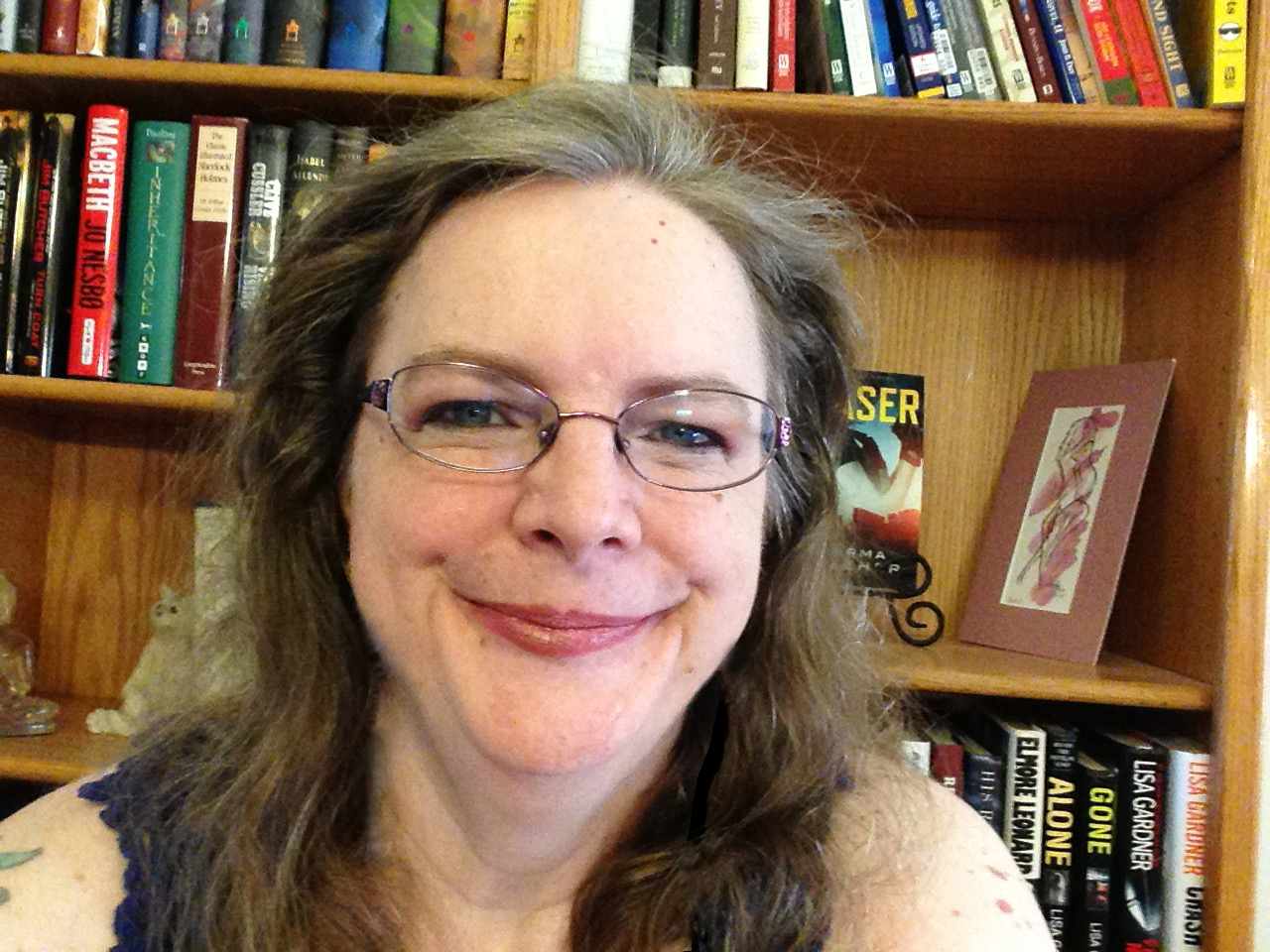
photo of dharma kelleher
As one of the few transgender authors in crime fiction, Dharma Kelleher writes gritty stories for misfits, oddballs, and eccentrics. 

She is the author of the Jinx Ballou bounty hunter series and the Shea Stevens outlaw biker series. You can learn more about Dharma and her work at https://dharmakelleher.com.
Monday, February 25, 2019

The Curious Case of Dr. James Barry, Military Surgeon

by Dharma Kelleher

A Man of Mystery

This past week, I learned a little bit of history. In the early 1800s, there was an Irish-born surgeon named Dr. James Barry, who served in the British Army in South Africa. Of his many accomplishments, he is credited as the first European to perform a cesarean section procedure in Africa in which both mother and child survived.

However, something else was discovered about Dr. Barry shortly after his death. He was transgender. That is, while he identified and presented as male throughout the entirety of his adult life, he was assigned female at birth. This discovery was made despite his specific instructions that his body NOT be examined after his death.

Sadly, that revelation would not be the last time his wishes and identity would not be respected.

A Troublesome Book

Just this past week, Publishers Weekly announced a book deal between publisher Little, Brown and author E.J. Levy, who has written a novel about Dr. James Barry's life. Problem is, Levy insists on misgendering Dr. Barry as female. As it turns out, Levy is what is known as a trans-exclusionary radical feminist (TERF), someone who refuses to acknowledge that trans people are who they say they are.

TERFs routinely harass and spread misinformation about transgender people. They fuel violence and discrimination. Most recently, they have been aligning themselves with the far right wing to further efforts to pass transphobic laws.

This book, which misrepresents who Dr. Barry was, contradicting his own journals about how he identified, is a classic example of erasure by cisgender (non-trans) individuals to deny the historical existence of trans people. It is also an example of misappropriation of trans culture.

Imagine if a member of the Ku Klux Klan wrote a biography about Dr. Martin Luther King, Jr. Or a serial rapist wrote about the women's suffrage movement. Absurd, right? And yet Levy, in her cisgender privilege and hatred toward trans people, has taken upon herself to misrepresent the identity of a courageous military surgeon.

A Community Speaks Out

Fortunately, thousands of transgender people and allies have spoken up and contact Little, Brown to cancel this book deal. As yet, there has been no response.

Personally, I think it would be foolish of Little, Brown to follow through with publishing the book. After all, who would buy it? Not transgender people or their allies. We will be speaking out in favor of a boycott. And not those who oppose transgender people. Why would they want to read about a transgender surgeon? So where's the market for this book? Is Little, Brown foolish enough to invest time in editing, design, layout, printing, and marketing for a book destined to fail? Time will tell.

There is also a movie in the works about Dr. Barry's life and work. But sadly, Hollywood has once again snubbed its nose at the transgender community and chosen to cast Rachel Weisz in the title role. While I am a big fan of Weisz (loved her in the Mummy movies, The Constant Gardner, Constantine, etc.), casting a cis female actor to play a trans male role is another example erasure and misappropriation.

We're Here, We're Queer, And We Demand Representation

cover art of Bound to Die
Too rarely are trans people cast even in trans roles, much less cisgender roles. And yes, there are lots of trans actors including Chaz Bono, Laverne Cox, Ian Harvie, Asia Kate Dillon, Jamie Clayton, Ruby Rose, Elliot Fletcher, Michelle Hendley, etc. Personally, I think Ian Harvie would be perfect for the role, though Asia Kate Dillon wouldn't be a bad choice either.

I don't mind when cisgender authors write stories with a transgender protagonist. Laurie Rockenbeck is a cis author who has written two great mysteries featuring a trans male detective. She gets it right and tells great stories to boot. Bound to Die was a nail-biter. And I could hardly put down the last one, Cleansed By Fire.

The important thing is to do the proper research and treat trans characters and trans people with respect. Respect our identities, respect our pronouns. No one knows better than us who we are.

This is why so many are calling for authors, editors, and publishers to utilize sensitivity readers, not to coddle to our feelings, but to ensure that the portrayal of trans people is realistic and respectful. Levy and Little, Brown have failed in this matter and done so with contempt.

At a time when murders of transgender people are at an all-time high, when trans suicides are soaring, when we are met at every turn with laws that prohibit us from being treated with the same respect as everyone else, that refuse to allow us to have access to life-saving medical treatment, that block us from correcting identifying documents with our correct names and gender markers, we still face forces trying to whitewash our history and erase our existence.

It is one of the many reasons why I write crime fiction with trans people as heroes rather than just victims, and why I choose to do it as an indie author. Because I refuse to be erased. Because we as transgender people deserve to tell our own stories to reflect the realities we face in everyday life. Because Trans Lives Matter.


As one of the few transgender authors in crime fiction, Dharma Kelleher writes gritty novels with a progressive bent, including the Jinx Ballou bounty hunter series and the Shea Stevens outlaw biker series. Her work has appeared on Shotgun Honey and in the upcoming Murder-A-GoGo’s anthology. 

She is a former journalist and a member of Sisters in Crime, the International Thriller Writers, and the Alliance of Independent Authors. She lives in Arizona with her wife and three feline overlords.

You can learn more about Dharma and her work at https://dharmakelleher.com.