Showing posts with label new yorked. Show all posts

Thursday, December 17, 2015

Dave White talks BAD BEAT with Rob Hart and Alex Segura


By Alex Segura

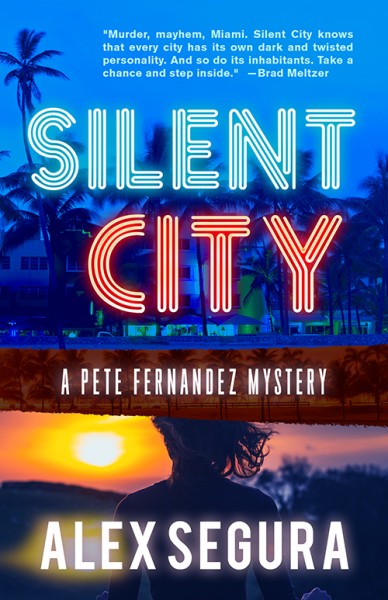
What happens when you get two crime writers talking about comic books? They start brainstorming crossovers of their own. At least that’s what happened earlier this year when I got a bite with fellow novelist (and Polis Books author) Rob Hart. Aside from being friends, we were also fans of each other’s work. I dug Rob’s debut Ash McKenna novel, New Yorked, and Rob said a few nice things about my first Pete Fernandez book, Silent City.

The idea seemed almost too good to be true: a story that featured both our series stars, set before both debuts and timed to hit in advance of the Polis reissue of Silent City and Rob’s second Ash novel, City of Rose. We ran the idea by Polis head honcho Jason Pinter and we were set. The theoretical story would also feature teases for both Silent City and New Yorked, serving as a teaser trailer for our debuts.

Now we just had to write the damn thing. A little crime caper that would eventually become Bad Beat.

Collaboration is always where things get interesting. Everyone, in theory, likes the idea of working with another creative person. But the fact is, writing is a solitary and personal thing, at least when it comes to novels and prose. Luckily, Rob and I both come from a journalistic background. I’ve also written a bunch of comics - we were used to getting feedback and adapting to hit a larger goal. We’re also both kind of workaholics. The ideas flowed easily and the writing happened fast, creating a final product that was unique and gave a fair share of screen time to both Ash and Pete, allowing readers a peek into their lives before New Yorked and Silent City. Most importantly, aside from making the work good, was that the story counted - it’s an essential and important chapter in Ash and Pete’s lives - and made for a tasty appetizer to fans that might be interested in reading their ongoing adventures.

Bad Beat is a dark, dirty short pulled from the New Jersey gutters that features backroom deals, old friends, kidnapping and the dark side of college football - all told through the prism of Ash and Pete’s first meeting. I guess “first” implies there’ll be more…

We wrangled fellow Polis author Dave White (pre-order An Empty Hell!) to serve as DSD’s own James Lipton for a quick interview with Rob and I. Hope you enjoy.


Dave: So, how did the idea for Bad Beat come around?

Alex: It was pretty organic. Rob and I had dinner and were talking shop, which veered into comic books. We both grew up reading comics and I work in the industry, too. We were going on about how cool crossovers were, and we wondered aloud why that didn't happen much with mysteries. Then we started theorizing about having our characters interact and it grew from there. We pitched Jason Pinter, our publisher at Polis Books, on the idea and away we went.

Rob: I sort of assumed it wouldn't happen! Alex and I are both pretty busy with our day jobs, and most things sound good over a couple of drinks (I'm sure I had a couple of drinks). But it turned out, we're pretty simpatico on a lot of things, in terms of process, and keeping our egos in check. That helped keep things moving.


Having already read Silent City and New Yorked, it strikes me that Ash McKenna and Pete Fernandez are very different protagonists.  Did their differences help or hinder the story coming together?

Rob: The difference between Ash and Pete is what makes it work. If they were too similar, there wouldn't be anything for them to do. It'd be two tough guys posturing the whole time, or two quieter guys unwilling to make a bold move. Ash likes to hit things. Pete likes to think things through. They compliment each other well.

Alex: I think it helped. They provide contrast to each other. We'll get into the timeline of it all later, but when you see Pete in this story, he's very different. Kind of proto-Pete in relation to Silent City and its sequel, Down the Darkest Street. So, having Ash, who's more of a bruiser and less emo than Pete really helped propel the story, and hopefully it worked the other way, too. I had a fun time writing Ash - and it really did have the same feel as those older Marvel comics, where the heroes meet, disagree/fight, then join forces against a common enemy. Plus football.


Where in the chronology of your two books does Bad Beat come into play?  Was it more difficult getting into your characters' mindsets at that point in their lives?


Alex: The story happens before our first novels - Silent City for me, New Yorked for Rob. So, it serves as a prequel. You meet Pete before he moves back to Miami - and you get a sense for how bad things have gotten for him.

I liked zooming out a bit and writing an earlier version of Pete - I wrote a short story that ran in Crimespree Magazine called "Quarters for the Meter" that happened shortly after Pete returned, involving Pete, his best friend Mike and a robbery, but it was fun to really explore the world he lived in prior to Silent City. I felt like there was a lot of room to play that I hadn't expected.

Rob: Writing Ash before New Yorked was fun. Because New Yorked was about him accepting things about himself--he needed to grow up, he needed to be less of an idiot. So I got to go back to him as an immature idiot, which was a good bit of fun.


Rob, in the announcement interview on LitReactor, you talked a bit about having concerns with third person, which you eventually overcame. Were there any moments where you two really had to discuss and compromise on a story point?  How did you deal with it?

Rob: I don't think we had any big objections. We're both former journalists, so we're both used to getting edited. I think early on we promised each other there'd be no egos--the story has to win. A few times we had to look at whether something was working, but we were never far from a solution.

Alex: The only disagreement I remember was so minor it’s not really even worth a mention. The whole process was painless, which I didn’t expect - not because it was Rob, but because collaborating is like being roommates with someone, in a weird way - you get a peek under the hood that you wouldn’t normally get as friends or colleagues. But it was totally fine, and elevated both of us a bit, I think.


Both of you really get into a strong sense of place in your books.  Is the setting in Bad Beat different for either of you?  Was switching locales tricky?  

Alex: It definitely involved more research. But even writing about Miami, I find I have to double-check stuff to make sure I'm not completely off, or writing from memories that are no longer relevant. The fact that we were writing a story set in Jersey, near Rutgers, makes me wonder if Jackson Donne was around at all. Sequel, perhaps?

Rob: I had fun writing about Jersey because Jersey is the worst and it was important for me to convey that. I hope I did!

Okay, lightning round.  Rob, your second Ash McKenna book is City of Rose, and Alex, you have two books out in the next few months in Silent City and Down the Darkest Street.  Give me the elevator pitches for both, and how (if at all) they tie into Bad Beat.

Alex: In Silent City, we meet down-on-his-luck journalist Pete Fernandez. His fiancé’s ditched him, his father's died and he's on the brink of unemployment. He's also drinking himself sick. When a colleague asks him to help find his missing daughter, Pete's dragged into a dark, unexplored corner of the Miami underworld that involves an urban legend known as the Silent Death - one that turns out to be much deadlier than anyone anticipated. Down the Darkest Street jumps forward, and we find Pete trying to get his life in order after the tragic events of Silent City. But just as Pete starts to create some semblance of an existence together, he finds himself forced to investigate a series of grisly murders - pitting Pete against true darkness when he's most vulnerable. Bad Beat really gets the ball rolling for both of these books and serves as a nice primer for both characters, I think. It's really smart marketing by Polis - you can pick up the story and then read the first two chapters of Silent City and New Yorked - a perfect teaser to get tapped into these two PI series.

Rob: In City of Rose, Ash has moved to Portland. He's working as a bouncer in a vegan strip club. One of the dancers tries to hire him--her daughter has gone missing. He refuses to take the job, because he's in a place where he's trying to avoid his past habits. Later that evening a guy in a chicken mask throws him in a trunk, holds a gun to his head, and tells him to stay away from the girls. That just serves to piss him off. So he takes the job and then things get bad. Because it's Ash, and he's not nearly as clever as he thinks he is.

He does meet with a journalist and I was going to work in a joke about Pete and like a dummy I forgot and it's already gone to press. Sorry, Alex. :(

Alex: Dammit, Rob. I did manage to tweak something in Silent City to reference Ash - so there’s that.


Please write a 70,000 word essay on how awesome Dave White is.

Alex: No. But Dave, lemme ask you - if you could cross Jackson Donne with any other writer's protagonist, who would it be?

Rob: Yeah. Just don't say Bryon. No one needs that.

I always thought Donne would get a lot out of a long sit down with Spenser.  Kind of a "Shut up and figure out your shit" talk from an east coast master.  As a more contemporary team-up?  Donne would fall right in line with Todd Robinson's Boo and Junior, who'd essentially run roughshod over Donne so he'd have no choice but to get caught up in whatever hi jinx they'd gotten themselves into this time.  Donne follows and then tries to catch up and take the lead at the end.

Alex: Dude - I was totally setting you up to say Ash and Pete. Sigh.

Thursday, May 7, 2015

A Conversation with Rob Hart, Part II

By Alex Segura

Last week, I got to sit down with fellow Polis Books author and friend Rob Hart to talk about his writing, his debut novel New Yorked and more – but why stop there? Rob was kind enough to take on two rounds of questions and I think it made for a more thoughtful, engaging chat. You decide. Here’s the rest of my conversation with Rob. Read it and then pre-order New Yorked. It's one of my favorite debuts in recent memory. Get it. You will not regret it.


OK, Rob - last week we talked about you, your journey and what influenced your first novel, New Yorked. But I want to zoom out a bit and look ahead. But before we do that, can you give us a bit more on Ash and his story - from a publishing perspective and as a character? How long will the Ash series of novels run?
It’s five books, to my mind. The second, City of Rose, is already in, and scheduled to come out in early 2016. The third is tentatively titled South Village. I’m pretty deep into research mode on that. Which means learning about: cam girls, political philosophies of Karl Marx and Mikhail Bakunin, how to procure and transport liquid nitrogen, what the topography is like around Jekyll Island, the process of fracking, the history of the Earth Liberation Front, and how to get a library card in Georgia. Research mode is fun.
Each book is about Ash growing up, but it’s also playing at different genres within the crime and mystery umbrella. New Yorked is hard-boiled. City of Rose is sort of like a Western. South Village, in my head, is like a war novel, but set on a hippie commune. The fourth will be a spy thriller. And the final entry… I’ll keep that one to myself (in part because I haven’t totally figured it out).
I like the idea of having an end point. I know what the final chapter of the fifth book is. I know what I want to accomplish. Fingers crossed I can pull it off.
What was THE book for you? And by that, I mean, what was the book that made you realize this is what you wanted to do with your life. For me, it was George Pelecanos's A Firing Offense.
I’ve got two. Fahrenheit 451 by Ray Bradbury. That was the first book that knocked me on my ass, and showed me what books were capable of. And Survivor by Chuck Palahniuk made me want to be a writer.
Great choices. Now, as you know, we live in a world that's always on - the constant stream of media, social or otherwise, can be overwhelming. But it's also pretty cool that we're able to get so much so easily. What are you taking in now? Books, movies, TV - plug away.
I’m working on getting through Daredevil on Netflix, which I am enjoying, though it’s a tad slow. I’m hoping that by the time this interview runs I’ll have finished reading Hit by Delilah S. Dawson, The Mercy of The Night by David Corbett, and maybe even The Last Illusion by Porochista Khakpour. That might be wishful thinking, but those are the three books that have priority right now. Also, Orphan Black. Holy shit Orphan Black is so under watched and so, so good.


I think it's fair to say you've experienced a lot of publishing ups and downs in a short amount of time. What's the best bit of advice you could give to an up and coming writer?
Be patient.
Patience is so important, because so much of this game is just sitting around and waiting. There’s a deal my agent cut recently that took a while to go through and I started freaking out--because as much as I say it, I still haven’t totally learned that lesson. But that’s just the way the industry moves. Slow as molasses.
If you can’t be patient and channel that nervous energy into something positive, this job will tear you apart.
You're also a prolific short story writer, and for whatever reason, I feel like that market is not fully appreciated by new writers - a lot of people seem to think you need to dive in with a novel first. Can you talk a bit about how writing shorts helps your bigger pieces and the market itself?
Shorts are important on a couple of levels. Since they’re smaller and easier to see the breadth of, you can experiment, try new things, feel out your voice. Sometimes I’ll test an idea with a short, with the sense I might use it in a longer work later on. Sometimes I’ve just got a goofy idea, and it’s like playing with a new toy.
They’re also a great shot in the arm. When you’re down in the dumps and a short gets accepted, it’s a rush, and it can give you that extra little push you need to move forward.
One of the highlights of my short writing life thus far is when a complete stranger pulled me aside at Bouchercon and complimented me on a story I had in Thuglit. Doesn’t get much better than that.
Like most writers, you have a day job and you have a home life - how do you find yourself able to balance it all?
I have two day jobs, technically—MysteriousPress.com is my office job, while LitReactor is nearly worthy of full time, and that I fit in whenever I can.
Time management is important. So is a little bit of sacrifice when it comes to leisure activities. I got two video games for Christmas I haven’t even opened yet. I’ve had people practically beg me to watch The Flash. I need mountain climbing equipment to reach the top of my to-be-read pile. It’d be nice to do those things, but it’s not always easy to make the commitment.
When my wife and I are sitting around and watching TV, I’ll generally keep my laptop handy so I can knock out busywork while I’m otherwise distracted. And sometimes when the baby falls asleep, I’ll sit at my computer and work furiously until she wakes up.
My wife is incredible. She’s very understanding and supportive. If I need to sit in my office for a few hours or skip out on a social function and knock out some work, she’s cool with that. Within reason, of course. And there are plenty of times I could be working but I’d rather to put the laptop aside and sit on the floor with the baby and make faces at her.
All work and no play, et cetera, et cetera.
Give me a few writers you think are deserving of more attention and why.
Tom Spanbauer. It’s criminal he’s not more widely read.
Todd Robinson, who has one of the most unique voices in crime fiction. I got a sneak peek of his next Boo and Junior novel recently and it’s so fucking good.
Charles Williams, who was a great noir writer from the 50s—sort of like Jim Thompson, if Jim Thompson was slightly less fatalistic and also really liked boats.
I could do this forever, but I’ll stick with those three for now.
Any parting words about New Yorked, or anything you'd like to share with the DSD crowd?
Thanks for having me! I’m a fan of DSD, so it’s a nice thing, being here. Also, please buy ten copies of my book.
Kidding.
(Not really though.)

Thursday, April 30, 2015

A Conversation with Rob Hart, Part I

By Alex Segura

I can't recall the first time I met Rob Hart - I'll wager it was probably at a Noir at the Bar reading in Manhattan, or an event at The Mysterious Bookshop. At first blush, he struck me as focused, whip-smart and sarcastic. I knew we'd get along. Like many people, I've had the chance to follow Rob's journey to becoming a published novelist through his social media and his regular Path to Publication column at LitReactor - from the highs of signing a book deal to the lows of losing it to the even higher high of finding a better home for said book, Rob's journey isn't as unique as you'd think. But it's all about the story, and how it's told.  Rob does this well.

  His first Ash McKenna novel, New Yorked, hits in June from Polis Books. (Full disclosure, Polis is the publisher of my two upcoming Pete Fernandez novels - Silent City and Down the Darkest Street.) New Yorked is a rough and tumble, dirty, raw and addictive read. Ash isn't a hero, per se - or even a detective. But mystery and crime readers will take to him immediately, and you'll be left scouring your shelves or ereader for the next book once you hit the end of New Yorked. It's that good. One of the strongest debuts I've read in a good, long while.

I had the pleasure of chatting with Rob briefly this week about the book, his career path, the music that fueled some of his writing and more. We'll continue the convo next week, too. Thanks to Rob for taking the time.

Rob, I know you're a comic book guy too - or at least aware of the tropes of superhero stuff. So, that being said, what's your origin story?
I don’t have a Crime Alley or radioactive spider. There was no defining moment. Maybe something more like the slow burn of an Irish Catholic upbringing, which instilled a strong distrust of authority. Now I make up stuff in my head and try to get people to pay me for it. Which is a little like religion. I guess I’ve come back around.

I do have one superpower, and this is something my wife will vouch for: Whenever I go to the movies, I always sit near the asshole who wants to talk through the entire thing. As superpowers go, this one sucks. 

Your first novel, New Yorked, is coming out in June from Polis Books. What's the elevator pitch?
People call Ash McKenna a private eye, but he calls himself a blunt instrument. Point him to a job, he gets it done. When the woman he loves turns up dead he goes looking for the killer, with all the grace of a wrecking ball. He runs afoul of a drag queen drug lord, a hard-boiled role playing game, and a hipster turf war, all while barreling toward the consequences of his own violent tendencies.

That counts as an elevator pitch if you are in a very tall building.

I'm a sucker for process pieces and influences. What's the genetic makeup of NEW YORKED? Which writers informed your own work, and how did it come to life in terms of the actual writing? Why was this the book you had to write?
This is a tough question to answer. It’s a mix. On one hand, I was playing at some of the classic hard-boiled tropes, with some nods to the masters, like Chandler and Hammett. But there’s also an element where I’m exploring my relationship with New York City. I’ve lived here my whole life, and like most natives, love and hate it in equal measure. So there are a lot of influences that weren’t necessarily books, but had such a singular vision of the city that they inspired me: the movie Shortbus, the music video for Girl Talk’s album All Day, which is one long dance sequence stretched across the five boroughs.

And then there’s In the City of Shy Hunters by Tom Spanbauer, which ruined me--it’s the best book ever written about New York City. I’m not even going to claim I attempted to do what he did, which was write something definitive. I’m just glad to have that influence in my life.

I know there's a lot of me in Pete, and I imagine there's a bit of your misspent youth in Ash. How hard is it, as a writer, to be mindful of keeping your own wish fulfillment out of the creation of a strong, standalone character?
There wasn’t a huge problem with wish fulfillment here. Ash is my id. He’s every bad decision I never made. And I don’t think he’s strong. Physically, sure. Developmentally, he’s been held back, both by tragedy and his own stubbornness. This series, which I’m hoping will be five books, is about him growing up and finding his moral compass.

That said, I definitely feel a little bit of my voice in his. Because he’s a wiseass, and I’m a wiseass. The difference is he’s usually goading people into something stupid. And I’ve accepted that I’m full of shit and don’t understand anything about the world. He still thinks he’s got it all figured out, as most kids in their mid-20s do.

One of my favorite things about your work - in addition to enjoying the hell out of the book - is how transparent you've been about the publishing journey. Tell us a little bit about how New Yorked came to be. What were some of the challenges and lessons learned?
Put on a pot of coffee.

I wrote the book, I thought it was done, an author I respect a great deal read it, and he told me I needed a page one rewrite. It was devastating news, but it was news I needed to get. That was strike one.

That rewrite got me an agent, Bree Ogden, and she sold the book to Exhibit A. Four or five months later the imprint got shut down and I got kicked to the curb. Strike two.

Now I’m with Polis, and to cap off this cheesy baseball metaphor I’m building up to—I feel like I hit a home run. I couldn’t be happier with how things are going. Jason is brilliant, and he works his ass off, and he gets results. He’s got the reach of a major publisher with the soul of an indie house. It’s a great place to be.

It was a long and stressful process. I tried to figure it out recently. Something like five years, from first draft to pub date. I learned some important lessons.

First, patience is a virtue. Especially in publishing. Nothing happens with any sense of expediency and it’s very easy to get yourself worked up. You have to take a deep breath and channel that energy into the writing. Put your head down, do the work.

Second is, just because things suck doesn’t mean they’ll suck forever. When I lost my first deal, it was easy to feel like that was the end of the world. Then I got over it and did the work.

Third, nothing about this business makes sense, and anyone who says they understand it is a liar or naive. Best to not worry about it. Put your head down, do the work.

That’s the biggest lesson: This is work. Fun, cool, and awesome, but work nonetheless. You get out what you put in.

Best bit of advice you've ever gotten - about writing, life or anything?
Here’s one my favorites: I used to work for a politician who chaired the New York City Council Finance Committee. So he’s a powerful guy. We were at another politician’s campaign headquarters, and while all the other politicos were bullshitting at a table in the corner, he sat down with the grunts and sealed envelopes. Someone told him he didn’t need to do that. He shrugged and said, “Everybody works.”

Translation: No one is too good to do anything, especially when there’s a job that needs getting done. So don’t be the asshole who sits in the corner.

I personally don't listen to music while writing, but play a ton of music while thinking about writing. What albums remind you of New Yorked? What's on the book's soundtrack?
I listened to a lot of punk in preparation for this, and during the writing process. Bands that played at CBGB, or around that era, because that was the feeling I was trying to tap into. So, the Ramones, the Dictators, Iggy Pop, Cock Sparrer, Stiff Little Fingers. Ash has a punk-rock sensibility--not overtly, but he’s got a very strong “fuck authority” mentality.

Then, too, there’s Neon Golden, an album from The Notwist, which is the exact opposite end of the spectrum. I used to listen to it at the end of the night to wind down, after doing silly things in the East Village until 4 or 5 in the morning. That’s another feeling I wanted to tap into--that transitional period from the roaring 20s to the chilled-out 30s. Neon Golden always brings me back to that period of my life in a very visceral way. 

Come back next week for part II of my conversation with Rob Hart.