It will come as no surprise to anyone who knows me that I'm a fan of the Fargo TV series. There are few crime series that I think rival The Wire as best ever, and Fargo is a contender for the crown. The first two seasons of Fargo have been exceptionally tight, for viewers like myself, who love a series with a long overriding arc and strong characters, Fargo is top shelf.
We've recently been re-watching Fargo in preparation for the upcoming third season. It isn't necessary. Each season is a standalone season, with a different story. Most of the characters are different, and in the case of season 2, the few returning characters are much younger than they were in season one, and you're delving into a part of their history that informed them in season 1.
The real reason for the re-watch is simple. This is a great show that holds up to repeat viewing. As I told Brian yesterday, I think it's more enjoyable the second time around because there are so many things you pick up on that make more sense or have relevance that you may have missed in the first viewing. The attention to detail is phenomenal, and it's just that layered.
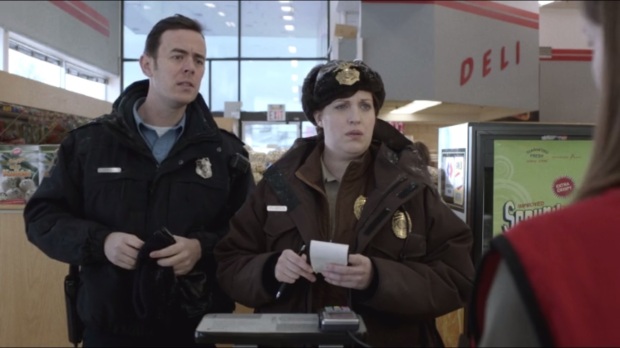
The series has been filmed in Calgary, Alberta, and the surrounding area. That's never bothered me at all, even as someone who lived in Calgary and the surrounding area for many years. In season one, a key part of the story includes Stavros Milos, who started Phoenix Foods.
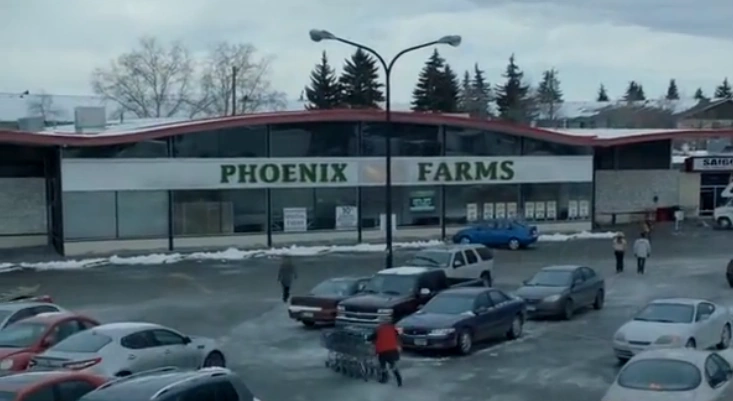
The actual grocery store used? My grocery store, from when I was in college. I lived about a block and a half from it.
This weekend I learned that the third season, again filmed in Calgary and the surrounding area, would venture even closer to home for me.
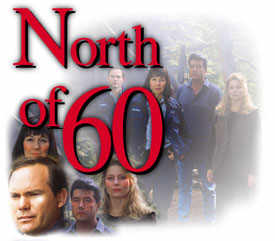
Parts of the show have been filmed in Beiseker, where my ex and I owned a house and lived for several years. And another filing location is the Beiseker library... A place that I worked at. Other locations included Bragg Creek, where North of 60 was filmed.
Personally, I'm really excited to see familiar sites and how they play out on the small screen. However, I also realize that this season will cut the closest to home. There may be flashes of stores I shopped in dozens of times, as well as restaurants I ate in. And part of the backdrop will be a place I worked in for a period of time.
While I don't think that will detract from my enjoyment of the show at all, I'm aware that when things cut close to home for some people it can be very distracting. How many cop shows follow police procedure to the letter? How many police procedures follow every detail precisely? They don't. Reality is almost always filtered to accommodate the needs of fiction.
The balancing act that writers must contend with is weighing the needs of the story versus the credibility of the content. When you can get a reader or viewer to completely embrace your work and dispense disbelief, or buy into your fiction, then you can successfully tell your story.
The setting may inform the story. There are things about specific places that, if gotten wrong, may make a local cringe or even abandon a story. I think as a Canadian, I'm accustomed to the distortion of Canada in story. One of my favorite slips was a reference to a town named Muskoka, when Muskoka is a district and not a town. Others might ignore than, but when you grew up in a town in Muskoka you can't deny they didn't do their homework. Did I stop watching the show? No. Canada is used as a fictional film backdrop for so many American shows it's just become something I think we overlook. Fargo isn't the first series to feature filming in Calgary or the surrounding area, and it won't be the last.
However, there is something distinct about how they've utilized their settings and created their world. It really works as a whole. I think Ewan McGregor said it best when he talked abut filming in the brutal cold winter this year. "I quite like it. I think when it gets really down to the minus 20s, I’m like ‘This is the real deal.’ This is what it’s meant to feel like. This is what it should feel like.”
The authenticity of the experience informs the art. How many of you have had that moment, when something in the fiction spoke to you as being so real that you connected with it deeply? I had that reading Laura Lippman's To The Power of Three, because the description related to the foot injury was so real that I - as a person who had their foot partially severed as a child - knew Laura must have suffered a foot injury she drew inspiration from, which she confirmed in an interview I did with her over ten years ago. Or when I read the opening of The Murder Exchange, and knew - as someone who almost drowned as a child (I was a nightmare kid, okay?) - that the author must have had an experience where they thought they could die.
When a setting I know is utilized in a way that creates a new setting, that makes it really become the fictional universe, it enriches the story. Done wrong, it can be a black mark. It's easier to do this in film than it is in books, but if you feel daunted by writing about a setting that you haven't visited or lived in, consider this: most people determine whether a work feels authentic to a location based on their perception of the location, rather than their experience with it. Sometimes, being believable is more important than reality... And if you're really stuck, there are usually community associations where you might be able to get in touch with someone who is more than happy to answer your questions and help you create an accurate representation of their world.
Back to Fargo, I'm going to put this challenge out there. If you haven't experienced Lorne Malvo messing with the minds of those around him for his own amusement, if you haven't watched Mr. Wrench and Mr. Numbers in action, if you haven't experienced Mike Milligan and the Kitchen brothers, if you haven't watched at least one season start to finish and weighed it as a whole, then you cannot argue that there's a better crime fiction show currently on television. This is one of the best shows that writers can watch to study villains who are so damned entertaining, you almost hate to see them brought down.
Showing posts with label calgary. Show all posts
Monday, March 27, 2017
The Distraction of Reality
Labels:
Beiseker,
calgary,
Ewan McGregor,
Fargo,
Lorne Malvo,
Mike Milligan,
The Kitchen Brothers,
The Wire
Wednesday, May 25, 2011
Horripilation
By
John McFetridge
It means, “the erection of hairs on the skin due to cold, fear or excitement,” according to the dictionary feature of my iPad. I had to look it up as I was reading Stephen King’s Under the Dome . At first it seemed odd that I’d have to look up a fancy word for goosebumps in a Stephen King novel, usually he’s a master at getting across so much with the use of simple, everyday words, but after reading forty or fifty novels of his I don’t mind interrupting one for a trip to the dictionary. I know I’ll be right back to the book.
Most people I know have a Stephen King story about how they were affected by his books. Here’s mine.
It was the late 70’s and I was working as a night shift security guard in an office building in downtown Calgary. There were so many construction cranes in Calgary then people called them the official city bird. Almost everyday someone said, “This will be a great city when it’s finished.” The place was in such a hurry that the office building I worked in wasn’t even finished, half of the fourteen stories were still under construction, but the other half were already in use.

All I had to do was sit in the lobby from 11:00 pm to 7:00 am. I had a little desk, a chair and a phone. I guess if someone smashed the windows looking out onto 4th Street S.W. I was supposed to phone someone. And once a night I had to do my rounds; ride the elevator to the top floor, look around and then walk down the stairs, stopping to take a look around on each floor. Simple enough, and even kind of fun. The top couple of floors were finished and I could sit behind the big desk of what I figured must have been the president of the company and look out to the great view of the city and the Rocky Mountains to the west. I really liked the view of the city because there were so many buildings under construction that looked like giant skeletons of buildings. You could see right through one to another.
And the floors that were still under construction were just huge empty rooms with wires coming out of the ceiling and tools and equipment strewn on the floor wherever the workers seemed to drop them at the end of their shifts.
So, of course, for most of the night I just sat at my little desk in the lobby and read books.
One night I started to read The Stand.
A car crashes at a gas station in rural Texas and before I knew it there I was with Larry Underwood crawling over dead bodies and crashed cars trying to make it through the Lincoln Tunnel in the dark.
By the time I took my first look up out of the book it was a couple hours past the time I was supposed to do my rounds so I rushed to the elevator, rode to the top floor, walked down the hall, saw my reflection in the window, freaked out, ran back to the elevator in a panic and got in. But I didn’t push a button so the elevator didn’t move. Then, you know, I laughed at how silly I was for being so scared and pushed the button to open the door and walked back out onto the empty fourteenth floor.
But then I decided the fourteenth floor was probably just fine, and certainly the thirteenth was, too, so I went to the elevator and rode down to the twelfth floor where the elevator doors opened and I stepped out into the shadows of the dark unfinished room – wires hanging form the ceiling, tools scattered on the floor, some kind of scaffolding – and all around the outside walls the windows looked out on a city that had clearly been destroyed. The buildings all looked bombed out, skeletons of buildings, the streets were empty, no cars, no people, nothing.
And there were no sounds, the whole place was silent; the twelfth floor, the building, the city – for all I knew the whole world. I was in the middle of The Stand.
Holy crap, talk about horripiliation – all over my goddam body.
Then behind me the elevator door closed.
And let’s just say I took the stairs back to the lobby. In a bit of a hurry.
I grabbed The Stand and slammed it into the desk drawer and swore I’d never to look at it again.
Of course, a few minutes later I just had to get the book out and start reading it again. I had to know what happened next.

But I never did do rounds of the building again. I got fired a few months later for letting a homeless guy sleep on the couch of the company on the third floor and forgetting about him when I left in the morning, but that’s a different story.
What’s your Stephen King story?
Subscribe to:
Posts (Atom)


