Showing posts with label agents. Show all posts

Monday, January 29, 2018

Dear [Unnamed Wannabe Author Who Thinks They Are God's Gift to Agents]

My husband recently alerted me to a generic letter to agents that was making the rounds on Twitter. I have no idea who actually wrote it, and he didn't either. I tried searching Twitter and didn't succeed in identifying the person.

However, the Internet is where your sins go to die a thousand deaths over and over again because nothing can be truly, permanently eliminated. Screen shots and archival services see to that.

This was the letter:


I am not an agent. However, on behalf of all the decent authors trying to get agents or editors who may be in a justifiably bad mood after getting a submission such as the one above and based on my experience as an editor reviewing submissions, I do have a response.

Dear [Unnamed Wannabe Author Who Thinks They Are God's Gift to Agents]

Please don't be offended that I haven't taken time to read your query letter to the point where you present your name because it's actually better that I forget who you are. NOW. Otherwise, I'd be likely to tell fellow agents and editors of the incredibly unprofessional submission you sent and you wouldn't just be banned from submitting work to me again in the future.

When I was a teenager applying for my first job I didn't photocopy my application form for McDonald's and drop that off at Burger King or Wendy's. I filled out each form. You know why? Despite the volume of applications I was putting out I understood that each place I hoped would hire me had specific application requirements.

A submission to an editor or agent is like an application. The employer has told you what they want to see to evaluate your application to advance to the next round in the publishing industry. You're either going to get a book deal or get one step closer to a book deal than you were before you submitted.

When you don't follow my submission guidelines it tells me several things. You don't respect my time enough to ensure that I have just what I've asked for.That doesn't suggest to me that we'll have a good working relationship.

I did you the courtesy of providing clear directions. You just showed me you can't follow them. That worries me because if I present your work to an editor I need to know you'll follow their directions for editorial revisions. I need to know you'll respect their time. I need to know you'll do your job like a professional. If you don't then the editor won't be happy with me and that can jeopardize my business and my reputation. Right now, you're begging me for my attention and you've given me several reasons to believe that representing you would be a headache and could cost me future business.

Remember how I said I didn't photocopy my McDonald's application and hand it in at Wendy's? I didn't want the managers to think I wasn't that serious in an opportunity at their business. You're sending in so many submissions you can't be bothered to properly format them or send the required material? Have you researched your subgenre and the agents who specialize in that type of content? Clearly you aren't very serious about having me represent you because any one of hundreds will do. I know you aren't concerned with my submission guidelines so I doubt you even know what type of writers I work with.

You clearly think you're too special for guidelines to apply to you but I'm the one who is a gainfully employed professional in this business. While having my ass kissed isn't something I expect I do appreciate being treated like a respected professional.

I'm not sure what you define as a reasonable sample and a reasonable synopsis. I'm also not going to find out. The reality is that on any given day I receive dozens of submissions. This is a very competitive industry and part of how people distinguish themselves is by showing they are ready to take their work as an author seriously. That means doing pesky little things like using punctuation and following submission guidelines.

In sending this response I've actually shown you more courtesy than you've shown me. I've explained why we have submission guidelines. In case you didn't connect the dots, part of what we're looking for is someone who knows how to read well enough to follow directions. How you present your material is an indication of your professionalism, or lack thereof.

For every hundred submissions I receive I may only seriously consider representing three writers. Out of those writers given serious consideration I will only represent a handful. Publishing is an industry that favors buyers rather than sellers. For every book that is traditionally published there are hundreds to thousands of writers who received a rejection letter. Consequently, I'm looking for reasons not to work with someone so that I can devote my time to the writers who have the potential to have a serious writing career.

And those writers are not the people who decided to make a bad first impression by presuming their time was more important than mine, that the rules don't apply to them and that they can do whatever they want and still get a publishing deal. That may be true if your name is Brad Pitt. It is not true if you are a nobody.

Sincerely,

The Agent You Didn't Bother To Identify

I've said it before and I'll say it again. If a writer doesn't follow our submission guidelines their work may be deleted without further correspondence or consideration. In some cases, they may find themselves on our shitlist and be barred from consideration for publication in the future.
And as much as I want to discover great new writers and give people a chance I sleep perfectly fine at night with that policy. I've been sworn at too many times by people who were rude, I've given up time with my family dealing with someone who didn't think they should put in the work on their own writing.
No more. No respect for me means you can take your sub and shove it.

Wednesday, November 2, 2016

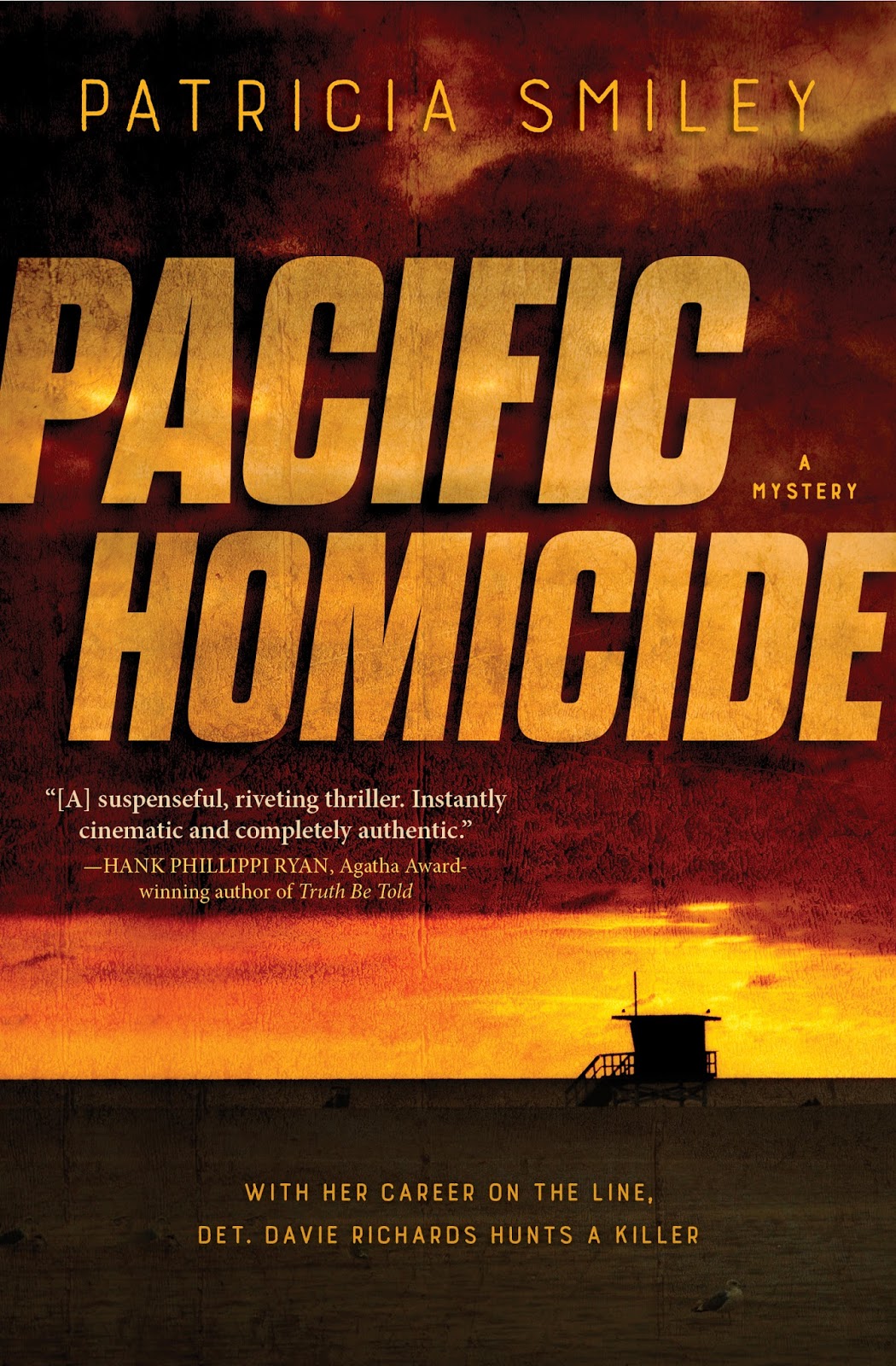
Pacific Homicide - Interview with Patricia Smiley

by Holly West

I met Patricia Smiley back in 2012, when co-chaired the 2013 California Crime Writers Conference and I was the registration chair. Eventually, she roped me into becoming Vice President for Sisters in Crime/LA, which I still haven't forgiven her for... (I kid--it was a great experience and I'd still be on that board now if it wasn't the fact that I moved out of the area).

After publishing four books in the Tucker Sinclair series, Patricia took a writing hiatus of several years, which strikes me as a brave thing to do in this uncertain world of publishing we reside in. But I'm happy to say her latest novel, PACIFIC HOMICIDE (Midnight Ink), will be published in just a few days. I was excited to read it, as it's set in my old stomping grounds of West Los Angeles, and though I have scant experience with the police/crime in the area, Patricia brings the whole setting to vivid life, along with her protagonist, a smart, tough homicide detective named Davie Richards.

Holly West (HW): Your new book, PACIFIC HOMICIDE, comes out on November 8. What’s it about?

Patricia Smiley (PS): I’ll borrow from a blurb written by the talented Kim Fay, author of THE MAP OF LOST MEMORIES, who so beautifully encapsulated the essence of the novel. It’s about “…the emotional wounds that drive the best of cops to buck the system in search of justice.”

Some people may not know this, but patrol officers in high crime areas may draw their weapons every workday but most cops spend their entire careers without firing a gun in the line of duty. Davie Richards is a petite, red-haired woman, a second-generation LAPD detective, and an expert marksman. She’s also an outlier, a cop who killed a suspect to save her partner’s life.

While she waits for the police commission to rule that the shooting was within policy, she’s called out to investigate the gruesome murder of a young Russian girl whose body is found in the Los Angeles sewer system. As she hunts for the killer, somebody from her past is hunting her…and it’s no longer just her job that’s on the line.

HW: The Los Angeles police procedural is well trod, but always compelling, territory. Still, it’s important to set oneself apart. With this in mind, what when into planning the Davie Richards series, particularly Davie Richards herself and the West Los Angeles setting?

PS: Davie Richards is a composite of every strong woman I’ve ever known. Other characters in the novel speak dialogue that jumped directly from the detective squad room and onto the page. Those people probably recognize themselves, but they haven’t come after me—yet.

The LAPD is the subject of numerous police procedurals, but the only other novel set in Pacific Division (at least that I know of) is Miles Corwin’s series featuring Det. Ash Levine. Michael Connelly’s early books were set in Hollywood Division, as are many others. My book takes place in the LAPD’s Pacific Area Police Station, which covers the Westside of Los Angeles from Venice Beach and Playa del Rey to LAX, abuts Culver City to the east and extends to the intersection of Westwood and National Boulevards. Pac-14 is a diverse area that includes public housing, upscale homes, movie stars, and thirty-five known street gangs. It’s also the station closest to where I live. However, Homicide detectives travel far and wide to track down leads, so Davie will continue to venture outside the area in search of justice.

HW: As a procedural, PACIFIC HOMICIDE is a departure from your previous series, which featured an amateur sleuth. It’s also tremendously well researched. How did you conduct your research? Did you find writing a police procedural more challenging than your previous books?

PS: Researching this book wasn’t a challenge because I spent fifteen years as a volunteer and Specialist Reserve Officer (not sworn) for the LAPD at Pacific Area Police Station where the book is set, including five years working in the detective squad room. While at Pacific, my supervisor gave me responsibilities that were highly unusual for a civilian. He sent me to the LAPD’s Homicide Investigation School and Detective School, as well as to courses where I learned how to use law enforcement databases that enhanced my ability to support Burglary/Theft detectives in their work. I was eventually given my own caseload. I interviewed witnesses and suspects, wrote search warrants, presented cases to the DA’s office, and a variety of other tasks that supported the Burglary table. I also helped Homicide detectives as needed, including preparing for court and even reviewing a cold case, searching for possible new leads.

The challenge was my reluctance to write about my experiences, because I was afraid I wouldn’t do justice to the people I’d come to admire and respect. When I finished the book, I was still hesitant, so I sent the manuscript to a friend, an LAPD Homicide detective with over 200 murder investigations under his belt. I asked him to read it and tell me what I’d gotten wrong and if the book just plain sucked. His response is full of hilariously positive comparisons to famous authors (did I mention he was my friend?) and ended with the best unprintable blurb I’ll ever get: “FUCKINBITCHIN. Nailed it.”

HW: Are there elements of the book (or even the main plot itself) that are based on true-life situations?

PS: I would say they are “inspired” by real events. There was an actual case I read about online of a woman whose body was found in the sewer, but I fictionalized the details. That story, however, sent me off to research L.A.’s sewer system, which was fascinating reading.

Setting always inspires my writing. For example, there’s a scene at the L.A. Equestrian Center that was patterned on my recent foray into horseback riding lessons. I also drove to the Malibu Country Mart for coffee (hazardous duty pay, right?) and watched kids on the playground, as Davie Richards did when she interviewed Sheriff’s Deputy Moran. While I was there I observed a little girl on a slide confronting her fears. I used that as a metaphor that mirrors the decision confronting Davie. Lastly, working with officers and detectives over the years I often heard stories about the questionable and sometimes unfair discipline meted out by the LAPD brass and others. I created a plot twist inspired by those stories.

HW: Who are some of the authors who’ve influenced your writing?

PS: I’ve always been an avid reader and fell in love with mysteries as a young child when I discovered the Trixie Belden series. After I powered through those books, I went on to Agatha Christie and other classic mystery novels. I’ve always loved police procedurals, especially those written by Michael Connelly and Joseph Wambaugh. However, I was never inspired to write until I discovered two books: AFTER ALL THESE YEARS by Susan Isaacs and G IS FOR GUMSHOE by Sue Grafton. Both were well written and they made me laugh, something I love to do. They also had a romantic element. That’s when I thought it might be challenging and fun to try my hand at this writing thing. So, I created the four novels in my Tucker Sinclair series.

But the author who had the greatest influence on my career is Elizabeth George. I first heard her speak at the Mystery Annex of Small World Books on the Venice boardwalk at a signing with James Lee Burke. Later, I became a member of her writing group for nine years, during which time she taught me volumes about writing and the writing life. I’m a huge fan of her work, but I’m also honored to call her mentor and friend.

HW: You recently changed agents, which, to a lot of authors, is a daunting thing. How was that process for you and do you have any advice for writers facing a similar dilemma?

PS: I’ve actually had four agents in my career. I first signed with an agent at William Morris in New York. She loved my book and was just getting ready to send it out when 9/11 happened. New York publishing ground to a stop and nobody knew when it would come back. Two weeks later, she called to tell me she was leaving New York. Her colleague eventually agreed to represent me and sold the book soon after.

While writing those four books I was also taking care of my elderly mother, so after my fourth Tucker book, agent #2 passed along interest from my publisher for starting a new series, I turned it down and instead took a hiatus from writing. I’d started Pacific Homicide during those subsequent years, but didn’t have the time or inclination to finish it. One day out of the blue my mother said, “Your book deserves to be published.” She’d always been my biggest fan but she’d never read any of the pages and I kidded her about that. She just repeated the sentence. Those were the last words she spoke to me. She died the next morning. That’s when I returned to writing.

When I had a presentable draft, I sent it to my agent. He was willing to send it out, but didn’t have much faith in the outcome. He had done a great job for me in the past and I was extremely grateful, but I wanted an agent who agreed with my mother. We had always had a professional relationship and parted on good terms.

Looking for a new agent was a daunting experience because the new book was a departure for me. I’d gone from humorous amateur sleuth to hard-boiled homicide detective. I found the experience more difficult this time around. Back then you sent a letter. Most of those letters were answered, if only to jot a note on the query and return it, saying “Not for me.” This time I found most agents didn’t even acknowledge my email. The relationship with my third agent was short-lived. It wasn’t a good fit, so I moved on.

By this time I realized how important it was to know what I wanted and to say it out loud. I wanted an agent who loved my work, had a keen sense of humor about life and publishing, and who would actually read and critique my manuscript. And then…somehow the universe heard me and sent Sandy Harding of Spencerhill & Associates. She is everything I dreamed of and more.

HW: I know you’re part of a well-established writers group. How important has this been to your writing and career? How often does the group meet, what’s the format and do you have any pointers for writers who want to establish their own group?

PS: Writers groups aren’t for everybody but I can’t imagine functioning without one. You just have to make sure fellow members aren’t trying to rewrite your book and aren’t criticizing you, only suggesting how to make the words on the page better. If you’re starting a group from scratch and don’t know the members well, you should set some ground rules. If you are joining an existing group that’s been together for a long time, ease into the group gently and bring chocolate.

I first joined Elizabeth George’s writing group in 1996 and would still be there now if the group hadn’t disbanded when she moved to the Pacific Northwest. We met every Wednesday when she was in town. There were four readers and each was allotted thirty minutes for reading and critiquing. She set a timer so nobody would encroach on another reader’s time. Each writer had two choices: 1) we could either ask in advance for a “free for all,” a sort of brainstorming session during which anybody could speak at any time or 2) a “go around,” i.e., one person would critique without interruption, and then the next, and the next, and so on until all had spoken. The writer was not allowed to talk during this time, could not defend, justify, or explain their work. They could only listen and take notes. At the end, they could ask for clarification if needed. This worked exceptionally well for me and I still use this technique. My feeling is if the reader doesn’t understand something I’ve written, it’s my job to fix it. Being defensive is never a good choice.

After Elizabeth left Southern California, I joined another group for a while until I stumbled onto my current group. All members are successful published novelists, produced screenwriters and TV writers, including a director and a multiple Emmy winner. Their critiques have made me a better writer and a better person in ways I cannot even describe. We meet at members’ homes every week from 7:00 p.m. until 10:00 p.m. unless we are touring or otherwise committed. Group members travel from as far away as Hermosa Beach to the south to Agoura Hills to the north, so we try to converge somewhere in the middle. Writers generally read around 10-12 pages unless somebody has a pressing deadline, i.e., they’re pitching a series idea to studio executives and need to read the entire pitch. Over the years we have become close friends and supportive fans.

***

Patricia Smiley is the bestselling author of four mystery novels featuring amateur sleuth Tucker Sinclair. PACIFIC HOMICIDE is the first in a hard-boiled series about LAPD homicide detective Davie Richards and is set for release on November 8, 2016. Patty's short fiction has appeared in Ellery Queen Mystery Magazine and TWO OF THE DEADLIEST, an anthology edited by Elizabeth George. She has taught writing at various conferences, in the US and Canada. She served as vice president for the Southern California chapter of Mystery Writers of America and as president of Sisters in Crime/Los Angeles. For more information, please visit patriciasmiley.com.
Sunday, September 8, 2013

The next step...

by: Joelle Charbonneau

Labor Day has passed.  School has started.  And in the publishing universe, editors, agents, and publishing professionals are back in the office and ready to do business.  When I first started writing, I didn't understand that publishing has several periods during the year where lots of the people in the industry are on vacation.  August is one of those periods.  Yep...the month of August is basically a wash if you're looking to acquire an agent or are on submission to editors.  Not to say that no business gets done.  Of course it does.  But it goes at a slower pace.  And when it comes to submissions and acquisitions--well, it's harder to get a book past the editorial board if large portions of the editorial board are enjoying some well-earned downtime.

However, now that September has rolled around, publishing is firing on all cylinders.  That means, if you have a project to query - now is the time.

With that in mind, here are a few rules of thumb when it comes to the query game.  Most of these are going to sound so obvious they are silly--but you'd be amazed at what agents and editors see in their query box.  You can separate your query from many of the others by following a few simple rules.

1)  Make sure you query an agent or editor by name.  Do not use "Dear Editor or Dear Agent".  Industry professionals are more inclined to read your query with interest if they believe you haven't pulled their name from the world wide web hat.  Equally as important - make sure you spell their name correctly.  Oh - and use Ms. and Mr. properly.  While some might be amused at your assumption that they have had a sex change, most will consider it a knock against your attention to detail.

2) Make it short.  One page or less.  Agents and editors receive hundreds of queries every week.  Make it easier on them to find the information they need by keeping your query uncluttered and to the point.

3) Tell what your book is about.  Yep...this is one of those points that will probably make you giggle.  I mean, the whole point of a query letter is to tell the agent or editor about your book.  Yet, I can't tell you how often I've heard an industry professional say they have read a query and haven't a clue what the story was about.  Think backjacket copy.  Have someone else read it and see if they understand what the book is about.  If an industry professional doesn't understand what the story is, they aren't going to ask to read it.

4) Follow directions.  Each agent or editor has specific submission requirements.  Please follow them. The agent or editor has these requirements in place for a reason.  Whether you think it is right or wrong, you will be judged on your ability to follow those submission requirements.

5)  Be professional.  Don't try to be cute or snarky or self-depreciating or sarcastic or...yeah--you get my point.  I'm amazed at the number of queries that are submitted with lines like "You'll probably reject this right away, but..."or "I know agents like you love to crush writers so..." or "I've read the authors you represent and I know I'm better than them."  You're just setting yourself up for failure by including those things in your query.  (Yes, people put those in their queries all the time.) This is a business introduction.  You'll do best if you always treat it as such.

6) Keep writing.  Once the queries are sent, get back to work.  This book might not get the results you want.  You may choose to self-publish it and query with another book.  You may choose never to query again.  Regardless of the path you take--keep writing.  Because that's what writers do:)

Tuesday, March 12, 2013

How To Query An Agent

By Johannes Climacus

The drunk people at Needle have tweeted some tips on querying an agent. Here are two:


Which reminds one of query posts from:

Rachelle Gardner

Holly Root

Ava Jae

Nathan Bransford

Feel free to add your own tips below or on Twitter.

As always, the best advice is essentially this: Don't be an asshole.

Don't be an asshole by querying for unfinished work. No one buys part of a novel. Unless you've written GATSBY. Which you haven't.

Don't be an asshole by ignoring an agent's stated guidelines for submissions. She wants to see your first five pages for a reason, dick.

Don't be an asshole by sending in work that isn't your best. Why waste someone's time just because you "wanted to take a chance?" Show some respect, dick.

Give it some thought. Most agents are decent human beings and should be treated as such. Don't be an asshole.

Speaking of writing tips, be sure to check out the new E.L. James writers guide, filled with tips and notes on what inspires her.

“As E L James traveled and met with her readers, there was a great curiosity about how she got started writing,” explained Vintage/Anchor’s Anne Messitte, the acquiring publisher of the Fifty Shades series, in a statement. “Her personal story as a writer is inspirational to many women, and journaling has been an important part of her creative process from the start.”

Sunday, August 19, 2012

Making it better


By: Joelle Charbonneau

I’ve said it before and I’m sure I’ll say it again – I love revising.  The process of taking something and making it better.  Writing the story is enjoyable.  Since I don’t write with an outline, I learn where the story is going along side the characters.  Writing the first draft is like riding a roller coaster.  Sometimes the story turns out the way I think it’s headed.  More often than not it takes a turn for the unexpected and I am both entertained and panicked as I hope it all makes sense in the end.  There are lots of loop-da-loops and sharp dives along the way.  Some make me scream with joy others…um…not so much. 

But once the book is finished I get to rewrite and tweak and polish.  To me, that is where the real fun begins.  I examine my characters’ story arcs, the plot points and the word choices I’ve made.  Then, when I’m done, I say a small prayer that the book isn’t crap and send it off to my agent.  Once the manuscript hits her inbox, I try to pretend I’m not nervous as I wait to hear her verdict.

Some authors don’t want their agent to weigh in on the quality of a book that has already sold.  They are more than happy to ship it directly to their editor and wait to see what the editor thinks.  Not me.  I want my agent’s feedback.  In fact, I can’t imagine doing without it.  Each person that reads the book with a fresh, knowledgeable eye is instrumental in making the story stronger.  And I want to make the story as strong as possible.  Will it be the best book I’ll ever write?  Who knows.  But if I really consider each point my early readers and editors make and look at the story in new ways, I ‘m doing my utmost to make it the best book that I can write at that moment.

Last week, I received editorial notes from my agent on Independent Study.  My gut instinct is always to dive right into the comments and begin to make changes.  However, I have learned that, for  me, it is best to read all the comments in the manuscript, reread the editorial letter, then let the commentary bop around in my head for a few days.  Giving the comments time to simmer means giving me a chance to really think about the way the story pieces need to fit together to strengthen the elements that are working and eliminate those that are not. 

Today, I embark on that process.  I always think it will take me a few days.  Sometimes I’m right.  Other times it takes far longer.  I always have to tell myself that the process can’t be rushed.  I mean, the book took more than a couple days to write.  Cutting corners now is just silly.

When I’m done layering in more depth and tweaking some scenes, I’ll reread the whole book then send it off to my fabulous agent again in the hope I’ve done the right work.  Trust me, she’ll let me know if I went astray.  If so, we’ll do another round of revisions until we agree it is as strong as we can make it.  When that moment comes, we’ll ship it off to my editor who will pick and prod and poke at the story some more all the while pushing me to make it better.

I can’t wait.

Am I crazy?  Maybe.  But I wouldn’t change this part of the process for anything. 

Revisions, here I come!

Sunday, March 4, 2012

Are you and your manuscript ready for submission?

by: Joelle Charbonneau

There is a question that I get asked pretty frequently by aspiring authors.

“When do I know my work is good enough to submit?”

Ha! Fun question. Unfortunately, there isn’t a really good answer to that question. I mean, that’s kind of like asking “When do I know if I’m in love?” You know you’re in love when you feel it. I guess Dr. Phil or Cosmo might have some kind of cool questionnaire to fill out to make sure, but knowing you are in love is a gut feeling. Kind of like figuring out if your story is ready for the submission world. Although, the idea of a questionnaire is kind of fun. I mean, wouldn’t that be great if there was a check list you could go through to make totally sure you and your manuscript are ready for the submission process? So, with that in mind, and in honor of Chuck Wendig who loves lists, here is 15 ways an author can know a manuscript is ready for submission. (Yeah – Chuck would have come up with 25, but I’m not as cool as he is. So maybe he’ll find another 10 to add to the list.)

1. The manuscript is finished. Yes, that’s right sports fans. You need a beginning, a middle and an end. Two out of three won’t cut it. I don’t care that it takes agents and editors months and months to read a submission. Don’t submit the beginning now and get around to writing the end while you’re waiting or them to fawn over your brilliance. Do that and you’re going to be waiting a hell of a long time. You might have that kind of time to kill. I do not.

2. The manuscript length fits genre parameters. Yes, I know your novel is special. It requires 200,000 words to fully develop the characters and the fifteen storylines that eventually converge into one ending. But if you are writing genre fiction I’m fairy certain that particular word count is going to get you a lot of head shaking and not much else. No one is going to get excited about a story that is over twice as long as the genre conventions. Yes, there are exceptions to the rules. A book can be a little longer or a little shorter, but unless you’re Stephen King no one is going to offer you a contract on a book that defies the genre standards. Do your homework. And if you start telling me you need every one of those 200,000 words and not a single one can be cut—well, let’s just say I’m probably not going to believe you.

3. You’ve proofed your book. No typos should be a given. And yes, this is easier said than done because while word processing programs are fabulous, they look for words that aren’t in the dictionary. They aren’t going to find the words that are spelled correctly, but aren’t the word you were looking for. Only you can find those. A typo won’t sink your manuscript, but a bunch of them is a sign of a sloppy writer. You don’t want to be a sloppy writer.

4. Your book is not printed on pink, scented paper. While Legally Blonde’s Elle Woods makes the whole pink scented resume seem like a brilliant idea, it isn’t. And you probably think I’m joking about this, but people do it. They print queries (yes, some places still want printed queries although I haven’t a flippin’ clue why) on floral, colored, scented paper. Now often the scented part is an accident. Smokers might not realize that the cigarette they have been enjoying while stuffing their query envelopes has been preserved in the envelope for the agent or editor to enjoy. I’ve heard dozens of stories about animal hairs, smoke, crumbs and other tidbits being added to queries to give them that personal touch. This is a personal touch you do not want. Trust me!

5. You’ve opened the book with a fabulous hook. Remember that agents and editors get a lot of submission. Thousands of them during the course of a year. You don’t get to hope they read far enough to get to the good part. The first line better be the good part. And the line after that. And the one after that. You have to hook them fast and then pull them into your story. If you find yourself saying “if only they read X scene” you know you aren’t ready for submission. Because that scene should be your first scene.

6. You’ve cut your prologue. Nope, I’m not kidding. You know that prologue you think is brilliant and you love. Cut it. Honest! I’m not being mean. While I know you poured your heart and soul into that prologue, I can promise you now that agents and editors aren’t going to read it. Most industry professionals I’ve talked to say that when sample pages come with a prologue, they skip the prologue and turn to chapter 1. 99.9% of all prologues get axed. And the ones that survive are typically the NY Times Bestsellers who are basically allowed to do whatever the hell they want because…well, they’re a NY Time Bestselling author. When you get to be a NY Time Bestseller, you can have a prologue, too. I promise. Until then—put it under your pillow so you can cherish the memories.

7. Your first chapter ends on a fabulous, page turning hook. You know those authors that you love to curse out because they kept you up all night reading when you should have been getting sleep. You want to be one of those people. If your characters go to sleep at the end of a chapter, your reader will probably remember that they are supposed to get rest and put the book down. End the first chapter in a great hook and the reader will flip the page with you and suffer at work for it the next day.

8. All your chapters end on a fabulous, page turning hook. See above. Don’t settle for a mediocre chapter hook. Make them all rock.

9. You don’t have more than one point of view per scene. Okay, this one might annoy some people, but I really think this is an important rule for authors breaking into the biz. One point of view in a scene is pretty standard. Are there authors out there who use multiple points of view in their scenes. Yes. These are those same authors who get to use prologues. They’ve been at this a really long time and get to break the rules. Unfortunately, you have to follow the rules for a while until you’ve earned the right to break them. Sorry!

10. You’re manuscript starts in action. If you start with “It was a dark and stormy night.” you’re going to be in trouble. Pick a scene where the main character has something at stake. Put them in a situation with conflict. This will pull the reader in and at the same time allow the reader to really learn about your main character. The best way to get to know someone is to see how they respond to difficulties.

11. You’ve cut the boring parts. A favorite NY Times Bestseller that I know loves to talk about cutting the boring parts. Anything that slows down the plot or the pacing no matter how lovely the writing needs to go. Sorry!

12. The plot resolves in a logical way. For some reason a lot of manuscripts I’ve seen feel like they use Monty Python’s Holy Grail as inspiration for their ending. The plot is racing along and then the author realizes the book is 100,000 words and they need and ending fast. So BAM – they end the book. The killer is revealed. The love story is resolved. Only there wasn’t a build up to either. The ending comes out of nowhere. While a book that is too long is bad, so is a book that cuts corners to ensure it isn’t too long. Nothing is more depressing for a reader than an unsatisfying ending. Give us a payoff worthy of all the words that came before.

13. You’ve done your homework. This means you’ve actually figured out who your target audience is for your book and you have a list of appropriate editors and agents to submit to. It doesn’t matter how brilliant your work is, if you don’t send it to the right people you’re hosed.

14. You’re prepared for rejection. No, I’m not being doom and gloom by assuming you’re going to get rejected. Rejection happens. It doesn’t matter how high up the publishing ladder you go – you are going to get rejected. And when you’re on the bottom rung (and I know that rung because I hung out on it for a really long time) rejection is almost a guarantee. Just because your manuscript is brilliant doesn’t mean the editor or agent you’ve submitted to will have space on their list for it. Sometimes you need to knock on a bunch of doors before someone opens one. Sure, we all hear stories of the person who got an agent on their first query and landed a publishing deal a week later. That could happen to do, but you need to assume it won’t. If you go into the process with realistic expectations you’ll be a happier person. Trust me on this!

15. You are ready to begin the next project – because every book you write makes you a better writer. When that agent or editor comes knocking, you want to be able to show them you are a pro.

If you have answered yes to all all of the above - have at it. And good luck! Remember that publishing is a marathon, not a sprint. Everything from queries to manuscript submissions to the book landing on the shelves takes time.

Wednesday, January 18, 2012

Always Be Connecting

By Johannes Climacus


Who are you trying to sell your book to? If you think you’re trying to sell your book to your “readers” then you’re a damned moron.


You wrote your book and now you're sending it out to People In The Industry. Good on ya, mate. Here’s a test to see who you want to buy the damn thing. Look in the email. Yeah, up there above where it says “Subject Line.” See where it says “TO:”? That’s who you want to buy the thing. Probably. Unless that person is trying to sell it to someone else. And, of course, unless that one is trying to sell it to someone else and so on. But you have to sell it to that one person. Let your editor sell it to the sales force and the sales force sell it to the buyer for the bookstore and the salesperson at the bookstore show it to someone in the store who goes home and orders it off Amazon. You don't need to worry about that. You just have to sell it to the one person in your "TO:" field up there. 


If you’re trying to land an agent or an editor, you pretty much need to do two things. One: write a decent book. Presuming you’ve already done that, you’ll need to do one other thing: make them want to buy the book. That’s it. A two-step process. 


Now, what makes people want to buy the book? Look, there’s a shitload of good books out there. Sure, you like to think that the cream will float to the top, but you know what else floats? A big old turd. You want your floating cream separated from everyone else’s floating turd. You have to connect with the buyer, whatever you’re selling.


I was in sales for a long fucking time. That Gary Ross guy says ABC stands for “always be closing.” Well, that guy's a moron. Stands for “always be connecting.” You connect, you sell. Simple as that. When I was selling crap, one minute I’d be a huge Vince Ferragamo fan. That afternoon, nobody could hold the jock of Kenny Stabler. The hell did I care? My job was 1. to sell widgets and 2. get from one end of the day to the other without getting blackout drunk. And the key to selling was and always will be connecting. (Someday I'll tell you the story of running into the woman playing Vanessa in 'Corvette Summer.' I think she took a liking to me, but I lost track of her.)


These days connecting is super-damn easy. You floating turds don’t know how easy it is. I’d have to scope out a site, look in the parking lot for the guy’s car and bumper stickers, talk to some nudge of a secretary. Take people to lunch. Talk to them. All the while I'm trying to memorize the names of his kids while he's throwing back a couple martinis on my account and I'm drinking perri-flippin-aye and sweating through a 10-year-old wool suit. All you people have to do is hit the internet. Google. Facebook.


I’ll show you how to do this.


Let’s say you’re sending your book out to an agent or an editor. Pick one or two, maybe three tops. Before you send your precious jewel off, track down the MyFace page of your target. Oh, she likes Bob Marley songs? Well, damn, Einstein, go grab a Marley quote and slap it up on your wall. Stay away from the pot references, though. Just to be safe.  


Now let’s look at your next target. Books. Authors. Run through the list of authors this person likes. Maybe people this author represents. Then track those authors down on MyFace. Send a few of them friend requests. Most authors on MyFace are so competitive that they're just trying to get to 5,000 friends so they can do the old “I’m too popular and must create a FAN PAGE!!” Help them and yourself out at the same time. Friend that jackhole. Then when the editor or agent sees your names together, that’s gotta help. Or just say you like MURDER BY LANTERNLIGHT or whatever crap book your target also likes.


The key is to make connections. Like what your target likes. Unless you’re submitting to a Nickelback fan. Nickelback sucks.


You have to remember, the world is full of books that are just like yours. Oh, I'm sure you're convinced you have a precious flower unlike anyone else's. You know what you share with every other writer out there? The same thought. All writers think their book is the cream and not the turd. They believe in it. Why? Maybe because their friends told them so. Maybe they're in one of those writing groups in which everyone says nice things hoping to have their own works loved. Or maybe it turns out your book really is good. (Hell, I don't know. I haven't read your book. I'm too busy suing Jeremy Thomasson for the crap job he did on my ebook covers.)


So if you want your book to stand out from big pile of slush floating around out there, make a connection with your target. If the editor or agent likes you, they might give your book just a wee bit more attention.


Think about the times you've picked up a book because the author is from your hometown. Or has your first name. Or seemed like your kind of person on that local talk show. You connect with authors, don't you? You'll read the next Lee Child before you know what the plot is, won't you? Stand in line for the next Stephen King? As a reader, you're relying on connecting to these authors. Make sure you use this to your advantage. Connect with the agents and editors. You think Vince Ferragamo got to be the greatest California QB in the 70s without working his butt off? Or Stabler? Oh, you're from San Diego? I meant Dan Fouts. Go Bolts.

Sunday, December 11, 2011

It's all in the timing

by: Joelle Charbonneau

Recently, I’ve done a lot of thinking about how and why things happen. I tend to be a believer that all things happen for a reason. Sometimes I can’t even begin to imagine what the reason could possibly be, but all things that happen in our lives impact who we are and how we see the world.

For writers, how we see the world changes how we write. The book I am writing now would read completely different if I’d written it five years ago. The plot might have been similar, but the characters, their emotional development and the feel of the story would have been different. Because I’m different.

And not only does timing impact the telling of the story it also changes how the story will be received when the story is submitted to an editor or agent. They might have just signed a similar kind of story and while yours is great – they can’t justify taking yours on. Or the opposite could be true. They have been looking for something specific to fill a hole in their list and your book fits the bill. Timing matters.

Timing has been a big factor in my writing career. I started writing about 8 years ago. When I started querying agents, I researched their client lists, found agents with clients who wrote in the same genre I did. That was smart, right? I got no after no after no. A few of those were closer to HELL NOs, but you get the point. I took a break from the querying and rejection merry-go-round when my son was born and my father was diagnosed once again with cancer. The break lasted months after my father’s death. When I finally started querying again, I did my research and learned a former mystery editor had just become a literary agent. Since she was brand new at the agenting gig, she didn’t have a client list for me to look at. The idea of having a skilled editor as my agent was appealing so I sent a query and the specified number of sample pages. Two days later she asked for the full manuscript. Nineteen days after that she offered me representation.

Holy crap!

At the time, I was over the moon delighted. I’m still happy with that decision because Stacia Decker is the best agent ever, but I realize the timing in that query worked in my favor. Had she been established, as she is now, and had a client list for me to look at I never would have queried her. Her list is heavy with noir, literary fiction, horror, thrillers and some science fiction thrown in for good measure. Totally not me. Had I waited another two or three months to start querying agents, I would have done my research and passed right by querying Stacia. And that would have been the worst mistake of my life.

So, I guess what I am saying is that there are rules in this business that I believe in. You finish a manuscript and edit it to the best of your ability before you start to submit it. You do your research on editors and agents and try to match your work to the appropriate ones. Those things are important. But equally important is timing and dumb luck. My luck was pretty amazing the day I researched Stacia and decided to send an e-mail that changed my life. I don’t think that having an agent is the right choice for everyone, but I do say that if you are looking for one, keep at it and I’ll be hoping that the timing becomes right for you.

Friday, September 4, 2009

Secret Agent Man (or woman)

By Russel D McLean

Agents.

What are they good for?

Some people will tell you, like war, that the answer is “absolutely nothing”. Those people, I have found are generally rather self-deluded eejits who talk constantly about John Grisham selling his first novels from a wheelbarrow and complain about “someone else” getting a percentage of their deal, of their “work”. A good agent, you don’t mind paying that percentage. You don’t mind it at all.

I would encourage every would-be writer to find a good agent. And not just because most of the big boys are only accepting unsolicited queries (I got my deal with a UK indy press through my agent) but because a good agent earns their keep.

A good agent is many things to a writer. They are an initial sounding board, a first editor, an advisor and above all a salesperson. Without my agent, I’d still be making some huge mistakes in my manuscripts and probably being ignored by publishers big and small alike. Agents are the people who take you by the hand and help you negotiate the insanity that is the publishing industry.

I believe in agents, not as “Gatekeepers” (as they are described in this Bookseller article about MacMillan New Writing) so much as intermediaries between writers and publishers. As a writer, I am concerned with one thing: writing the best damn book I can. My agent allows me to do that by ensuring that everything else in the process works. He cuts the deals, finds the editors, explains the bits of the contract I don’t understand (and there’s usually a lot in the contract I don’t understand) and generally frees me up to concentrate on the business of working with an editor *on the book* rather than on the less sexy business side of the deal. He also helps me to understand the market and what editors are looking for as well as providing that all important first look at my precious manuscripts. And, yes, he tells me when I’m screwing it up. Pretty brutally, too. But that’s what I need, that’s what I ask for. An agent doesn’t have to be your friend, but they do have to have your respect.

Now, agents aren’t for everyone, I admit. I believe that the very fine transplanted Dundonian author Carol Anne Davis works without an agent. And I know that such schemes as MacMillan New Writing (which has produced some very fine writers, such as Ireland’s Patrick McGilloway) allows writers to bypass that part of the process and there are pros and cons to both sides of the argument about how that works. And then there are tales of the good old days where a genius like (The Artist Formerly Known As Colin) Bateman could submit his novel to the slush pile and be picked up for a nice deal. But the times they are a-changing and for someone like me, really, I just wanna write the book. I don’t have a business brain. I don’t want to think about negotiating royalties, advances, rights, all that stuff. I want someone I know can do that for me and do it right. Someone who’s not going to screw me over. Someone I’m happy paying that percentage to.

But how do you find a good agent?

That’s the question that people ask me a lot and the honest answer is I still don’t know. Basically, you just have to put yourself out there. Do research online or through books like The Writer’s Handbook (still a must-purchase for me, just to see what’s going on). Read the submission guidelines. Respect the agent as a person and a reader. And accept that not all of them will see the worth in your work. Deal with them professionally. Do not send them books that are not appropriate to their list. Do not send pre-bound manuscripts with glittery covers. Or cakes (well maybe in some cases the cakes will be eaten, but it won’t influence their opinion of your manuscript).

I think getting an agent is a bit like getting a good date. You have to just keep trying and accept that sometimes there is simply no chemistry no matter how good a prospect someone seems on paper. And sometimes, as I found, you might have to go through several agents before you find the right one for you. And, yes, some of them will be awful (but generally your initial homework should have steered you away from them) and some of them will think you awful (once the honeymoon period wanes) and some of them – no matter how well suited you seem – will just be unable to sell your work. But when you find a good agent, you’ll be thankful for them.