By Jay Stringer
Not for the first time, my day has been changed by reading something that the mighty Chuck Wendig has written. His words will tip your head over onto your ass. It's also a scary thing; I have his novel Blackbirds next to my bed, but it has to remain unread until I've finished the first draft of my own novel, because I know his prose style and decisions would creep into my own work.
But on this particular day, it's a little different. He's posted on the subject of a meme that's doing the rounds on the facebook, and (whilst I'm in full agreement with him on the issue) It was inspiring a long reply from me. But hey, why post a reply on Terrible Minds when I had a DSD slot to fill? Cheers, Chuck!
And sure, some of my thoughts will overlap with things he's already said. But when he says them he has a beard, and when I say them I have an English accent. When he says them, he still has a beard, but I have the full authority of William Shakespeare and Alan Rickman. To be or not to be, thrown off the Nakatomi building. I might be rambling, have you noticed?
Anyway. Here's the meme that Chuck points to-
I'm not here to weigh in on the whole "indie author" thing -nor to try and grapple with what that phrase actually means- because I think it's a silly conversation. And that's not a dig at Wendig, he agrees on that too, I believe. And I'm not here to point out that the meme disproves it's own position. No, I'm here to weigh in on rejection.
Did I miss a memo? When did this become a bad thing?
One of my worries with the ease of publication in the modern age is that we're beginning to think that rejection is a step to be avoided. An inconvenience that we can all sidestep at the touch of a button. On this very subject Paul Cornell once wrote; "a boxer doesn't learn to fight by avoiding getting punched in the face." Show me a comedian who has never faced rejection and I'll show you one who has never told a joke. We learn to succeed by failing. We learn to walk by falling over often enough that we learn to miss the ground.
Looking at that list, the easiest thing in the world is to say, "pfffft, 22 people didn't know what the hell they were talking about when James Joyce showed them his work." But the honest professional writer looks at that list and thinks, "I wonder what state Dubliners was in for those first 22 submissions."
Here's the (open) dirty secret in writing; You don't sit down and write a good book. You sit down and fail at writing a good book. You show your work to people, you take criticism, and then you fail better.
The first person to whom I showed a completed first draft of Old Gold told me exactly what was wrong with it. (I won't name names, but he was an agent and novelist, and has recently added publisher to that list, and also is Scottish. And may or may not be named Allan.) After seeing a sample of the book he lead off with a compliment, "the writing is, on the whole, excellent." That got my ego up and told me what I already knew- I had written the best book of all time. But after luring me in with the praise he gave me a list of all the ways the book failed. (The word "failed," wasn't used, but only because he was being polite.) After another edit, and after many of those problems were fixed, he gave me another list. This one contained one of the most important pieces of criticism I've ever received, "if you want people to read it, you need to learn formatting." He the had to explain to me some very basic conventions of formatting a book. Until that moment I hadn't realised I was using my learning difficulty as an excuse- my brain doesn't do certain things and therefore I had decided I should get a free pass on them. Nuh uh.
The first short story I placed online at a crime fiction webzine was one that had already been rejected twice. Not because the first two people were idiots, but because the story wasn't ready. On the third attempt, and with some additional editing input from Elaine Ash at BTAP, the story got an award nomination and saw me wind up in a print anthology beside Rankin, Guthrie and Banks. Professor Weddle rejected a story of mine for Needle, and he was right- it wasn't a very good short story. It's looking like it may be a good opening to my current novel instead.
Hearing, "no," in any of it's forms is not pleasant. It's not a happy experience. But it's also vital. The meme above seeks to rob us all of this. It states that, "the readers opinion is all that matters," and suggests that each of the numbers in the list represents a failure of taste or decency. I look at each of those numbers in the list and see opinions that may well have helped the author, or strengthened to book. Even if it was an opinion that wasn't taken on board (because we each develop a sense of when to listen and when to hold firm) it's still a test, a moment that has helped the story stand on it's own to feet either through change or resilience*.
It would be lovely to sidestep all of this. It would be nice to sit and write thousands of words then simply walk away from them and call it finished. It would be lovely, but it wouldn't be writing. The above meme is really advocating not trying.
I give out writing advice as rarely as I can get away with, but here's one that I think needs to be said;
If you want to be a writer, you need rejection. You need to fail. Only then can you fail better.
*I'm pretty sure the list is wrong. As far as I know it's a total misrepresentation of the publication of The Diary Of Anne Frank. Though it would be odd to think -even after everything I've just said- of 16 editors saying that the book lacked drama and tension.
Thursday, June 14, 2012
Wednesday, June 13, 2012
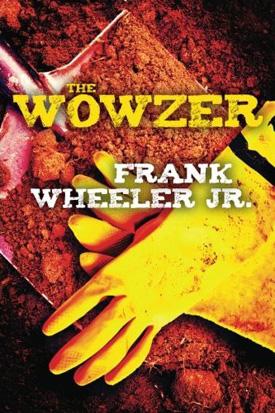
WOWZER: The Frank Wheeler, Jr Interview
By Steve Weddle
Fellow Team Decker member Frank Wheeler, Jr. stopped by to talk about his critically acclaimed debut, THE WOWZER.
In the Arkansas Ozarks, old-timers spin tales of the Wowzer, a giant panther-like creature that decapitates those who wander too far into the woods. County sheriff’s deputy Jerry was raised on Wowzer stories, but they aren’t enough to stop him from carrying out his own business in the remote hills. Jerry’s more than a sheriff’s deputy; he moonlights as muscle for local drug traffickers, who sometimes need people to get hurt—or get dead.
Fortunately, Jerry’s pretty good at his job. And since Tom Haskell runs the sheriff’s office and the drug-protection racket, Jerry doesn’t see much of a moral dilemma. That is, until he starts thinking about getting out of the trade, and then things get complicated fast. For starters, Jerry’s girl Maggie flees the state after learning about a disturbing diagnosis tucked inside Jerry’s psych report. And now Sheriff Haskell is dragging his feet paying Jerry his cut of the drug money. Is Haskell just reluctant to lose his top muscle? Or is he plotting to take out the man who knows his dirtiest secrets? Fans of hardboiled, “country noir” fiction will love gnashing on Frank Wheeler’s violent and darkly comic debut, sneaking a glimpse into the mind of a killer whose inner monster is about to be unleashed.
Steve Weddle: What’s the one book you most often suggest to people?
Frank Wheeler, Jr: There’s a couple, of course. For fiction fans, I often suggest “Old Man and the Sea.” I’m still in awe at how Hemingway managed to pack so much into a hundred pages and change. That’s how you do it.
For writers looking to improve their craft, I suggest Forster’s “Aspects of the Novel.” It still gives the best, simplest, and most useful overview and breakdown of how a novel works.
SW: You’ve said your family stories pushed you towards THE WOWZER. What other family stories have you heard that would make good stories? Or what other overheard stories are you wanting to tell?
FW: My former-cattle-rancher great uncle in Oklahoma told me plenty. I’ve got another great uncle who, along with my grandma, was raised in northern Louisiana. He was a one-legged truck driver and later raised dachshunds. Another uncle, from the Arkansas bunch, was a submarine commander in the nuclear navy. I’ve grown up in the best possible place for a storyteller to be… surrounded by other storytellers whose experience I may profit from.
SW: Do you think being labeled “Crime Fiction” helps market your book? Does a label like “Rural Noir” provide too tight a limit?
FW: Sure. There are lots more people who read “Crime Fiction” than there are people who are turned off by it. I don’t object to the label “Rural Noir” because that’s what this book is. A story set out in the woods can be just as interesting as one set in a big city.
SW: What’s your ideal book reading as an author? As a listener? Do you prefer readings from the work followed by questions and answers? Do you prefer stories about how the book came about?
FW: Truth be told, I haven’t given a reading of my work in close to ten years, so I really couldn’t say. As a listener, I like the Q&A to follow the reading. And I find that the stories about how the book came to be are often the most interesting part of the reading. Frequently, I can relate to them, and it makes my own process not seem so arbitrary or directionless.
SW: As a debut novelist, what’s the one thing you know now that you wished known two years ago?
FW: I wish I’d known that it can take a lot of time to get a manuscript from a submitted draft to a printed book. And I don’t just mean the calendar days. The time feels different, passes more slowly. That whole watched-pot-never-boils thing. Yeah, I was pulling out my hair for a while. I wish I’d known that even though mine didn’t take that long (relative to the publishing business norm), that space between acceptance and publication was going to feel like an eternity.
SW: Patricia Highsmith was a hot topic at the last NoirCon. How does THE WOWZER fit into a world with what she and others – including Jim Thompson – have done in terms of the protagonist’s state of mind?
FW: I heard someone say about James Cagney that all the bad guys he played didn’t know they were bad guys. I love Highsmith’s work, and her Ripley novels were a big part of my decision to make the character a psychopath. But to be honest, I didn’t know who Jim Thompson was until I read what Scott Wolven wrote, comparing THE WOWZER to Thompson’s work. What I like about this type of character is that it’s a kind of day-pass into a world without the constraint of conscience. You get the experience of doing lots of bad things, and don’t have to feel guilt over it. And then you get to come back from it.
SW: Why does THE WOWZER have to take place in the Ozarks? Why not Florida? Seattle?
![]() |
| Frank Wheeler, Jr |
I love the Ozarks. A lot of relatives on my mother’s side lived there, and we’d visit now and then. Being a flatlander most of my life (Central Texas, Eastern New Mexico, Nebraska), the mountains made quite an impact. So did the great uncles who showed me what storytelling was. That was the voice I tried to capture: my uncles from the area, spinning a yarn.
SW: THE WOWZER has been called “a profane, violent, strangely captivating romance.” How is it that a hard-boiled piece of country noir can also have a romance?
FW: Even monsters need love. Well, some of them, anyway. That’s what I learned from those old HBO “Iceman” documentaries. The guy did love his family, but kept that separate from his job as a hitman. That’s in our nature. We seek companionship and intimacy with others. Even those who are profoundly detached, they still have that instinct, even if they can’t conventionally, or safely, express it.
SW: Why don’t you have a website? Why aren’t you on Twitter all day? Are you sure you’re a real author?
FW: I’m what you might call a “slow learner” when it comes to computers. My brother in law, a programmer-genius, is actually helping me develop a website that should be up in the near future. As for Twitter, see, I have a couple of these things called jobs. And also a wife I like to spend time with. But I drop in occasionally to shoot my mouth off.
SW: What are you working on next?
FW: I’m in the last stages of revision for a new novel. It’s set in Nebraska, in a place very like my hometown. If I just call it hardboiled WESTERN noir, then that means it’s hardboiled noir set between 1865 and 1900. So I guess it’s hardboiled CONTEMPORARY western noir. Or whichever sequencing of those words works best. Maybe I just invented that category. This novel is actually based on my short story “The Good Life,” which appeared in issue #7 of CrimeFactory magazine. And I’m also chipping away at a sequel to THE WOWZER.
Labels:
author interview,
Frank Wheeler,
interview,
interviews,
Steve Weddle,
team decker,
The Wowzer
Tuesday, June 12, 2012
Are we the 99 percent? Are we the 1 percent? Who cares?
The other day I raged out on Twitter about seeing the same arguments over and over about self-publishing and traditional publishing. Both sides grip their arguments tight to their chests, unwilling to let go of their side, unwilling to even loosen their hold.
I think this mentality actually ties into the world's view right now. Or at least the view of the country. With all that's raging on and on about the "99 percent" and the "1 percent," that mentality has begun to bleed into many other aspects of life. And I think self-publishers believe they're the 99 percent.
And so they protest.
They yell and scream and push and prod trying to get people to believe that this is the new way. The only way it will work. Self-publishing will soon shut down the EVIL PUBLISHERS, everyone will sell millions of copies, and everyone will be happy bestselling writers.
Meanwhile, with this new assault, a lot of traditionally published people have taken to the streets warning everyone about the dangers of self-publishing. You won't get exposure. You won't sell millions of copies. You'll have a crappy cover. Life will be horribly awful for you and you'll never win.
Traditional publishing the is only way to go.
Tastes great.
Less filling.
Shut up.
Seriously, everyone shut up. Take a deep breath. Take a step back and shut up. Look at what you're doing.
This is not an either or. There are pros and cons to both.
You can do both.
You can sell millions self-published, but still have the support and help that a traditional publisher brings.
Find what works for you, and exploit that.
But don't try to convert everyone. I'm okay with you if you're a Self-Publisher.
I like that you're traditionally published.
Neither of you are failures in my eyes.
Come on now.
Group hug.
Just stop speaking in absolutes. The world works in many ways. And there are more than 50 Shades of Grey in life.
Ugh, after that joke... I'm bailing out of this post.
I think this mentality actually ties into the world's view right now. Or at least the view of the country. With all that's raging on and on about the "99 percent" and the "1 percent," that mentality has begun to bleed into many other aspects of life. And I think self-publishers believe they're the 99 percent.
And so they protest.
They yell and scream and push and prod trying to get people to believe that this is the new way. The only way it will work. Self-publishing will soon shut down the EVIL PUBLISHERS, everyone will sell millions of copies, and everyone will be happy bestselling writers.
Meanwhile, with this new assault, a lot of traditionally published people have taken to the streets warning everyone about the dangers of self-publishing. You won't get exposure. You won't sell millions of copies. You'll have a crappy cover. Life will be horribly awful for you and you'll never win.
Traditional publishing the is only way to go.
Tastes great.
Less filling.
Shut up.
Seriously, everyone shut up. Take a deep breath. Take a step back and shut up. Look at what you're doing.
This is not an either or. There are pros and cons to both.
You can do both.
You can sell millions self-published, but still have the support and help that a traditional publisher brings.
Find what works for you, and exploit that.
But don't try to convert everyone. I'm okay with you if you're a Self-Publisher.
I like that you're traditionally published.
Neither of you are failures in my eyes.
Come on now.
Group hug.
Just stop speaking in absolutes. The world works in many ways. And there are more than 50 Shades of Grey in life.
Ugh, after that joke... I'm bailing out of this post.
Subscribe to:
Posts (Atom)