Thursday, August 3, 2017

Marcus Sakey's AFTERLIFE

By Steve Weddle

I was quite a way into Marcus Sakey's excellent new novel, AFTERLIFE, before I understood what the title was about. 

What's odd is how much I enjoyed this book despite its doing a couple things early on which I don't much care for.

First, it opens in the past, with a sort of prologue that doesn't pay off for a while. Look, I'm certainly not anyone to give Marcus Sakey writing advice. And. you know, that's a good thing for him. Mr. Sakey, you do you, man.

And, yet, I was a little scared. But, you know, I have faith in the dude.

Then not too much later, we get a guy cop and a gal cop doing sexxxy time on each other. I believe the record will show that I'm no prude. But, you know, I'm not terribly fond of reading about two people doing sex to each other. I don't much care for detailed, play-by-play fisticuffs, either. I tend to skip along to the dialog. Also, I skip over anything too technical, such as a 250-word description of a timing mechanism someone might drop into a thriller. Gracious, is there anything I don't skip over?

Well, I didn't skip AFTERLIFE, that's for sure. Because it moves. Because I care about the characters. Because I'm invested in the story, which gets hella weird.

What's nice about, I don't know, living on this planet, I guess, is that you can hit a couple spots in a novel that you don't normally enjoy or might otherwise cause you to toss the book. And, yet, you keep going because reasons. So I did. Which is great.

I mean, the story doesn't really get going until the cop is killed.

The last thing FBI agent Will Brody remembers is the explosion—a thousand shards of glass surfing a lethal shock wave.
He wakes without a scratch.
The building is in ruins. His team is gone. Outside, Chicago is dark. Cars lie abandoned. No planes cross the sky. He’s relieved to spot other people—until he sees they’re carrying machetes.
Welcome to the afterlife.
Claire McCoy stands over the body of Will Brody. As head of an FBI task force, she hasn’t had a decent night’s sleep in weeks. A terrorist has claimed eighteen lives and thrown the nation into panic.
Against this horror, something reckless and beautiful happened. She fell in love…with Will Brody.
But the line between life and death is narrower than any of us suspect—and all that matters to Will and Claire is getting back to each other
.

So, you know, it's kinda police procedural, thriller, love story.

It's a weird story. You'll dig it.

“Edgar finalist Sakey follows his Brilliance Trilogy with a remarkably conceived and passionately realized supernatural thriller.…Balancing lyric romance and altruistic self-sacrifice with horrifying scenes and wrenching violence, Sakey comes up with a fascinating answer to the eternal question of why humans exist.” —Publishers Weekly (starred review) “Sakey follows up his incredible Brilliance Trilogy with an otherworldly stand-alone thriller about a subterranean war between gods and monsters...employ[ing] all his storytelling gifts to craft a noodle-bender of the first order. A love story enmeshed in a twisty thriller that peels back the universe to see what lies beneath.” —Kirkus Reviews (starred review) “AFTERLIFE is simultaneously a beautiful love story, a grim tale of apocalyptic conflict, and an opportunity for an insightful writer to ruminate on the eternal verities. Great appeal across genres.” —Booklist (starred review) “Sakey has crafted an original and unpredictable tale that puts a different spin on the battle between good and evil.” —Associated Press “Sakey has crafted a compulsive thriller.…His world-building is pretty epic, and the community of characters…reminded me of Stephen King’s The Stand. It’s amazing what a skillful writer with ‘a sense of theater’ and a brilliant imagination can do.” —The Minneapolis Star Tribune “AFTERLIFE drags the reader along at a breathless pace.…Excellent, addictive, and eminently re-readable fiction.” —RT Book Reviews (Five Star Gold review) “Imagine the love story in the film Ghost dropped into The Matrix. Astonishing.” —Don Winslow 

Buy it here. 

Wednesday, August 2, 2017

The Long and Faraway Gone

I was reading a great book last week, The Long and Faraway Gone by Lou Berney, when my father-in-law unexpectedly died.

It was a good book to be in the middle of, when hit with grief, as that is its subtext. The story flips between two characters consumed by loss and survivor's guilt. One is Wyatt, now a PI, who survived a bloody robbery that while avenged, was never fully solved. Why was he left alive?

And Julianne, whose older teenage sister disappeared at the county fair twenty six years ago, never to be seen again. Julianne was left eating cotton candy, a few years her junior, and the loss has defined her life.

Berney crafts a solid story around these tragedies from 1986 that does not wallow in nostalgia, but shows the wounds of unresolved grief in realistic ways. Julianne and Wyatt are both self-destructive in ways that they don't fully understand. She is consumed with solving the mystery, while Wyatt has run away from it, until a job he needs forces him back to his home city to confront his past.

We get enough to be satisfied without an unrealistic, tidily tied up story. Which is all we can hope for in closure. I have not survived a brutal murder spree or had a loved one vanish, but like many, I've dealt with tragedy; twenty years ago, my father committed suicide. You can never really know another person, but I've tried to understand what was on his mind that day for a long time. You never get a neat answer tied in a bow, so perhaps that's why endings with varying levels of ambiguity appeal to me. A favorite is Tana French's In the Woods, which infuriates some readers, but it ends the way it should.

And so does Berney's excellent The Long and Faraway Gone.

My father-in-law's story is less a mystery, more a tragedy. He died too young, a year after retirement, after a life of service to his school district, his wife and children, and his many, many, friends. He was a fine man and a great role model, and I am better for having known him, as the world is lesser for having lost him. His wife was at his side to the end, so there is no mystery, but is there ever closure?

No, I don't think so. Unlike stories, lives often end abruptly, without meaning, with unfinished business, leaving us to fill in the blanks. Perhaps that's why we like a neatly tied bow on the end of a story, sometimes. Because it's the only way we'll get one.


Tuesday, August 1, 2017

The Bride Wore Black


I've read some good tributes to Jeanne Moreau since she died on July 31st.  Over at his blog, Detectives Beyond Borders, Peter Rozovsky wrote a short bit about the film that made her an international name, Louis Malle's black and white crime film, Elevator to the Gallows (1958).  And at the movie criticism site, Roger Ebert.com, Dan Callahan presents a superb career overview:
http://www.rogerebert.com/balder-and-dash/jeanne-moreau-1928-2017.


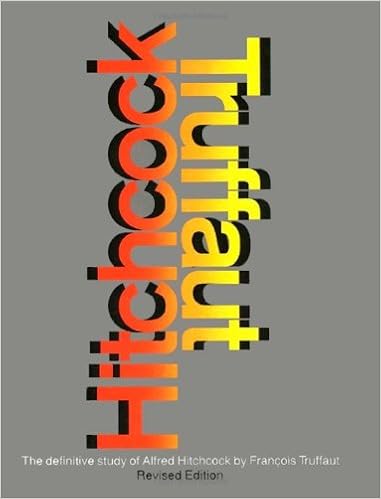
There is one film she stars in that neither piece mentions, though, and I think it's worth talking about for crime film fans. That's Francois Truffaut's The Bride Wore Black, from 1968. The movie, in color, is an adaptation of a William Irish (Cornell Woolrich) novel, and Truffaut makes no bones about it being an homage to Alfred Hitchcock, a director he loved and who he interviewed for a book.


In The Bride Wore Black, Moreau plays a woman who, one by one, over the course of the movie, kills five men. In each case, she assumes a different personality and look.  She finds a way to get close to each man she has targeted and, if it's helpful to her purpose, to make herself attractive to her intended victim.  One is a lonely bachelor, one a politician, one a hedonistic, partying type, and so on.  Not until near the end of the film do we learn why she has sought out and killed these men, but her reason turns out to be a good one.  It's revenge, pure and simple, for something they did to her, and in flashback we see what they did.

The Bride Wore Black is not a great film and it's certainly nowhere near being Truffaut's best.  As you watch and the killings occur, with Moreau's character crossing another name off the list of five names she has in a notebook, it becomes clear that she will almost certainly eliminate each man she wants to get.  The film doesn't have all that much suspense. But once you realize that, you allow yourself to indulge in the pleasure of watching her character carry out a self-appointed job with wit, ruthlessness, and precision.  The role allows Moreau to play act a different type of woman each time she closes in on a target, and it's fun to watch her operate.  She is by turns reserved, playful, seductive, reflective, coldly murderous,.  And it's apparent from how she transforms herself to appeal to each man she hunts that she is a master psychologist.


The initital critical reaction to the film, at least in France, was poor, and Truffaut wound up expressing dislike for the movie. Audiences disagreed with the critics and him, however, and The Bride Wore Black did well at the box office.  It deserved to.  It's not a masterpiece, but Truffaut working at slightly below his best is still better than almost everybody else. And if you like Jeanne Moreau, chances are you'll enjoy the film a lot.  Playing about six different women in one woman, she employs her intense expressiveness to maximum effect. Revenge has rarely been served up more satisfactorily.